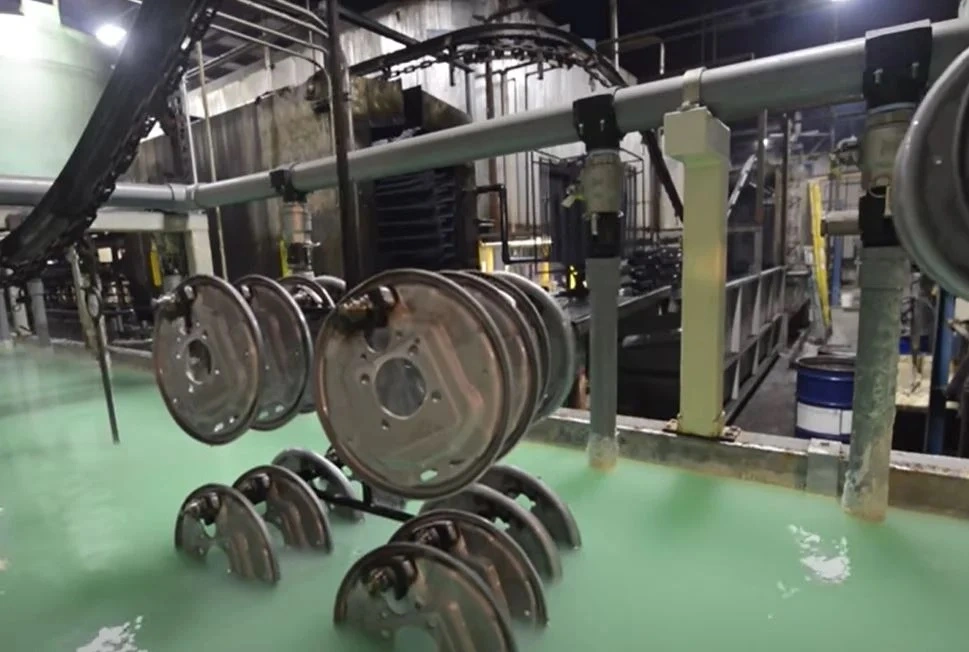
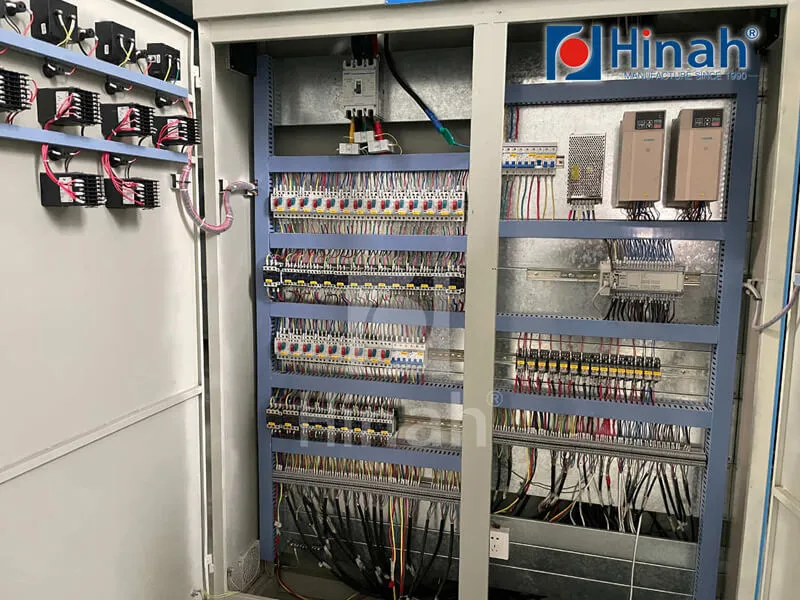

Industrial finishers face a persistent challenge: applying a uniform, defect-free layer on parts with recesses, edges, and varying substrate conductivity. A well-engineered powder coating system must balance electrostatic charge control, powder cloud distribution, reclaim purity, and thermal management. Unlike liquid painting, powder application relies on charged particles and subsequent fusion. In this guide, we examine critical sub-systems—from corona or tribo guns to cure ovens—while addressing real production pain points. Companies like HANNA design integrated solutions that minimize Faraday cage penetration failures and maximize first-pass transfer efficiency. This article references field data from high-mix, low-volume to high-volume continuous lines.
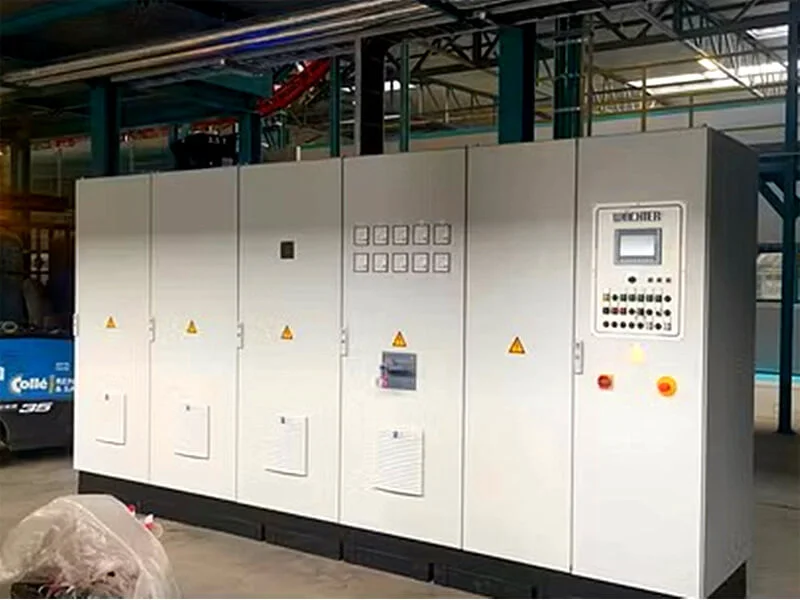
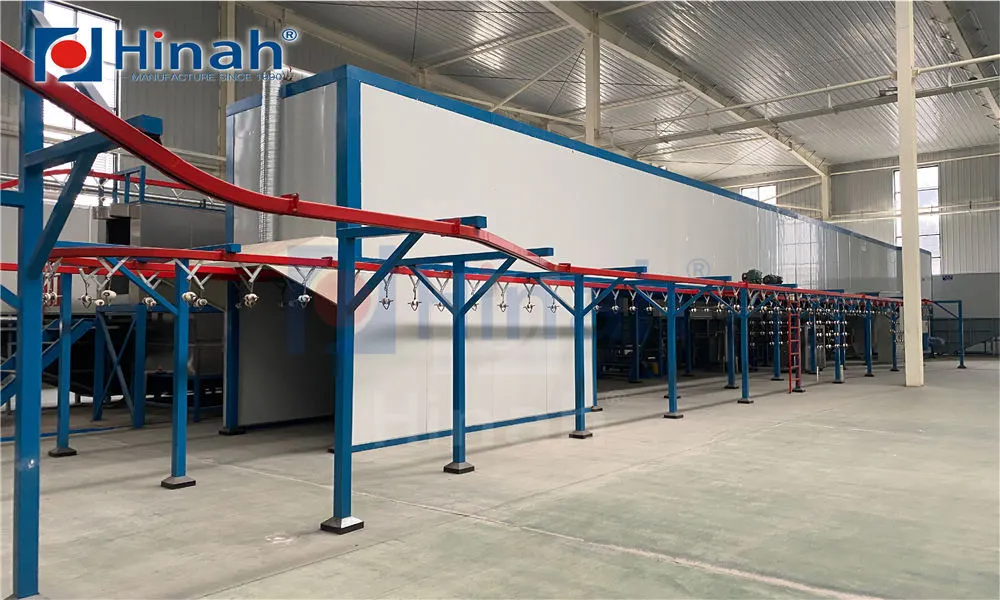
A modern powder coating system consists of four interdependent stations: pretreatment (optional but common), spray booth with recovery, curing oven, and material handling (conveyor). Each component must be matched to part geometry and production rate. Below are the engineering details:
Spray booth design: Stainless steel or polypropylene walls, filtered airflow (vertical or horizontal), and cartridge filter arrays for overspray capture. Booth air velocity typically 0.5–0.8 m/s to contain powder without disturbing the cloud.
Application equipment: Corona charging guns (ionized air) or tribo-electric guns (friction charging). Corona suits most powders but creates more Faraday cage back-ionization risk; tribo works for complex parts and thin films but requires tribo-compatible powder chemistry.
Recovery systems: Cyclone + sieve or multicyclone + final filter. Closed-loop reclaim allows reusing overspray powder (up to 98% efficiency) but demands strict contamination control between color changes.
Curing oven: Convection, infrared (IR), or hybrid. Convection provides uniform heating for thick substrates; IR delivers fast ramp for thin sheets or heat-sensitive parts.
Selecting an integrated powder coating system involves matching these modules to part flow, color change frequency, and available floor space. For instance, a job shop with 20 color changes per day will prioritize quick-booth cleaning features and mobile powder hoppers.
The Faraday cage effect occurs when charged powder particles are repelled from recessed areas (corners, box sections, internal flanges) due to electrostatic field geometry. This leads to thin coating or bare spots. Advanced powder coating system configurations mitigate this through:
Modern gun controllers reduce kV as the gun approaches a recess, lowering repulsive forces. Some systems automatically switch from constant voltage to constant current mode (50–80 µA) to maintain powder penetration. Operators can pre-program gun trajectories for each part family.
Tribo guns generate charge via friction (PTFE or nylon elements) without external high-voltage electrodes. This produces a denser, lower-charge cloud that wraps into faraday areas with less back-ionization. A tribo-based powder coating system often achieves uniform coverage on perforated metal, heat sinks, and automotive brackets.
Adjusting shaping air to create a narrower or wider spray pattern. Soft-feeding powder (dense-phase conveying) reduces surging and improves deposit consistency. Additionally, rotating the part or using multiple fixed guns at different angles helps mechanical penetration.
Overspray accounts for 30–60% of powder in a typical booth. Reclaim systems are not optional for cost-effective operation. However, degraded powder (fines or agglomerates) causes orange peel and reduced fluidization. A robust powder coating system includes:
Cyclone separators: Classify particles >10µm. Fines under 10µm are often rejected because they charge poorly and create dust. A secondary filter (cartridge or baghouse) captures fines for disposal or low-grade use.
Sieve stations (vibratory or centrifugal): Remove agglomerates, fibers, and debris. Sieve mesh size 100–140 µm for standard powders; finer meshes for textured or thin-film powders.
Color-change modules: Quick-release cyclone and sweep-air booths reduce cross-contamination. For critical applications, dedicated reclaim hoppers per color.
Monitor reclaim powder particle size distribution (PSD) with a laser diffraction analyzer monthly. When fine content exceeds 20% (by volume), coating appearance suffers. HANNA integrated systems provide automatic fresh powder topping to maintain PSD within ±5%.
Even incomplete cure leads to poor adhesion, reduced chemical resistance, and early corrosion. Factors to evaluate:
Convection ovens require balanced recirculation to avoid cold spots. Thermocouple mapping (9 to 16 points) per load validates ±3°C uniformity. For high-density parts, adjustable baffles and frequency-controlled fans improve airflow distribution.
Gas-fired direct or indirect: Lower operating cost but risk of combustion byproducts (high NOx).
Electric IR emitters (medium-wave or short-wave): Instantaneous response, ideal for line speeds >5 m/min but less effective for heavy castings.
Hybrid oven: IR zones for rapid surface gel, followed by convection for complete crosslink.
The temperature profile must match powder supplier’s curing schedule (e.g., 10 min at 200°C metal temperature). An under-specified oven creates bottlenecks: if a powder coating system cannot hold dwell time, coaters resort to slower line speeds, reducing throughput.
Common field issues and corrective actions for a powder coating system:
Orange peel / rough texture: Excess film thickness or wrong powder particle size. Reduce gun flow rate (m³/h) and increase line speed. Verify reclaim sieve integrity.
Back-ionization (pinholes/volcanoes): Over-charging; reduce kV to 50–60 and increase gun-to-part distance. Consider tribo replacement.
Poor fluidization in hopper: Compacted powder or blocked porous plate. Replace fluidizing membrane every 2000 hours. Use dry, oil-free compressed air (dew point ≤ -40°C).
Inconsistent film thickness across hangers: Unbalanced electrostatic field. Adjust grounding of conveyor; clean hangers weekly. Use a thickness gage on reference coupons.
High powder consumption without coverage increase: Inefficient reclaim cyclone (low d50 cut). Measure pressure drop across cyclone; clean or replace tubes.
HANNA's engineering team provides remote diagnostics via real-time gun and booth sensors. Their modular powder coating system includes recipe storage for 200+ part numbers, automatically adjusting parameters based on bar code scan.
Downtime prevention requires scheduled checks:
Daily: Inspect gun nozzles for wear (replace every 400-600 operating hours). Clean booth walls, filters, and reclaim sieves.
Weekly: Measure corona needle protrusion; clean or replace. Check conveyor chain lubrication and hanger conductivity (resistance < 100Ω).
Monthly: Calibrate oven thermocouples and gun kV/µA meters. Perform particle count in booth (≤0.3 mg/m³ for worker safety).
Quarterly: Extract powder sample from reclaim, run melt-flow index (MFI) and gel time to detect thermal degradation.
Document all maintenance in CMMS. A proactive schedule extends component life by 40% and reduces reject rates below 2%.
Q1: What is the difference between a corona and tribo powder coating
system?
A1: Corona guns use a high-voltage electrode (typically
40–100 kV) to ionize air, charging powder particles as they pass through the
field. Tribo guns generate charge solely by friction between powder and a
special polymer tube (e.g., PTFE). Corona gives higher first-pass transfer on
flat parts but may cause Faraday cage issues. Tribo provides superior
penetration into recesses but requires powders with tribo additives. Many
powder coating
system vendors offer convertible guns.
Q2: How do I determine the correct booth air velocity for my powder
coating system?
A2: Air velocity is measured at the booth face (or
opening). For manual booths, 0.6–0.8 m/s is typical; for automatic booths with
high powder output, 0.5–0.6 m/s prevents powder blow-off. Too high velocity
pulls powder before it reaches the part; too low allows powder to escape. Use an
anemometer monthly. HANNA booths include variable frequency drives for velocity
control.
Q3: Can I use a single powder coating system for both epoxy and
polyester powders?
A3: Yes, but require thorough cleaning between
chemistries. Epoxy and polyester cross-contamination causes adhesion failure and
surface defects. Install a quick-change cyclone and dedicated transfer pumps.
For critical applications, maintain separate booths or schedule long production
runs. A well-designed powder coating
system with color-module carts reduces changeover to under 15
minutes.
Q4: Why does my cured film show pinholes only on certain part
edges?
A4: This indicates back-ionization from excessive charge
buildup on sharp edges (high field concentration). Reduce gun voltage to 40–50
kV, increase gun distance to 200–250 mm, or switch to a pulsed corona mode
(on-off cycles of 100 ms). Also verify part grounding: hangers must be stripped
of coating weekly.
Q5: What are the signs that my powder recovery cyclone needs
replacement?
A5: Visible wear holes, increased fine powder in
reclaim (fines >30% by weight), pressure drop outside specification (±25% of
baseline), or diminished separation efficiency (overspray powder not collected).
Most cyclones last 5–7 years with moderate usage. Regular pressure checks
prevent unexpected failures.
Q6: How does part density on the conveyor affect powder coating
system performance?
A6: Dense loading creates shielding: parts block
electrostatic fields from reaching those behind them. Maintain minimum spacing
of 1.5× part width. For complex geometry, use rotating spindles or oscillating
gun movers. An overloaded conveyor increases reject rate by up to 15%.
Every industrial finishing line has unique constraints—part mix, floor layout, target cycle time, and quality standards. Selecting an appropriate powder coating system requires a structured audit of your current rejects, powder consumption per shift, and oven temperature uniformity. HANNA provides a no-obligation line assessment using laser particle sizing and thermal imaging.
Send your production data for a customized proposal:
→
Submit part drawings, desired line speed (m/min), number of color changes per
shift, and material (steel/aluminum/MDF). Our engineers will recommend gun
technology, booth size, reclaim configuration, and oven zoning.
Inquiry form: https://www.autocoatinglines.com/contact.html (response within 24 hours including technical specs and layout draft).