
In modern industrial manufacturing, achieving a durable, high-quality surface finish is key to protecting metal substrates from environmental wear, chemical exposure, and mechanical impact. For manufacturing facilities, custom coaters, and high-volume production operations, the transition to high-capacity electrostatic finishing lines represents a major step forward in operational efficiency. When looking to acquire a complete, integrated system, sourcing a robust powder coating plant for sale requires a comprehensive understanding of the engineering stages, component compatibility, and automation configurations.
Industrial surface finishing demands a seamless flow from raw metal preparation to the final thermal cure. Professional systems designed by experienced engineering firms, such as HANNA, focus on minimizing waste, reducing energy consumption, and ensuring consistent film thickness across complex part geometries. Selecting the appropriate system configuration involves evaluating specific material handling layouts, chemical pretreatment processes, and powder recovery efficiencies to match the exact throughput requirements of your production schedule.
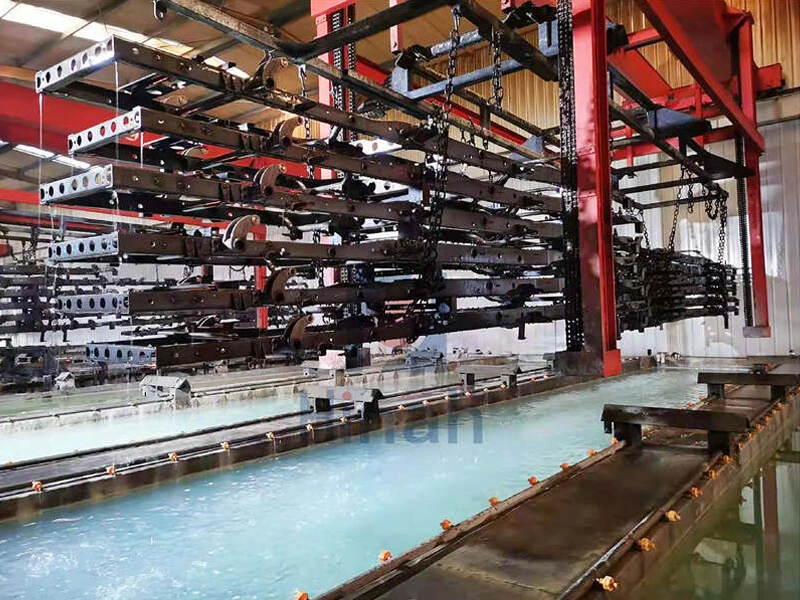
An industrial powder coating system is not a single piece of machinery, but a continuous, integrated production line. Each stage must be balanced with the preceding and succeeding processes to prevent production bottlenecks. To evaluate a powder coating plant for sale, buyers must inspect the specifications of several main sections.
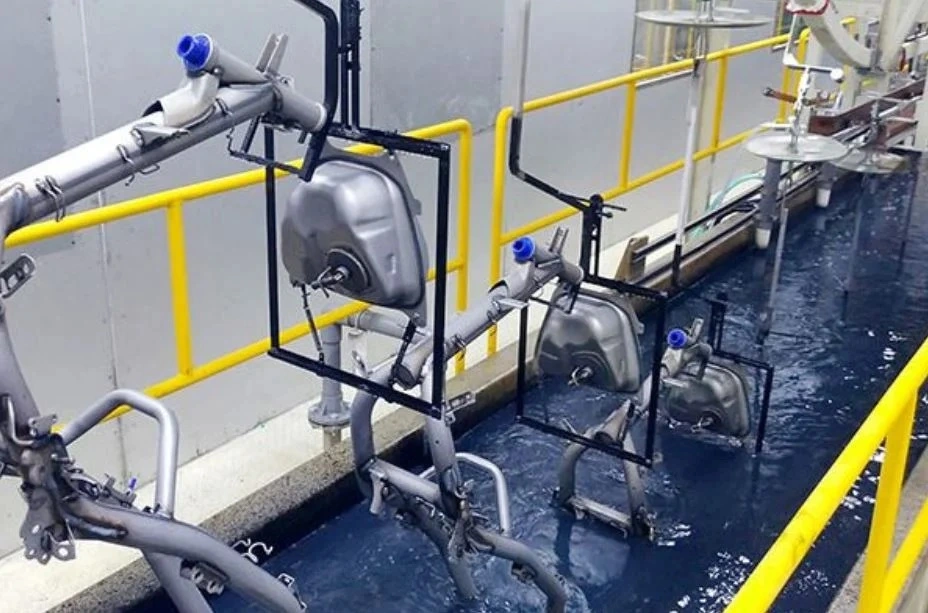
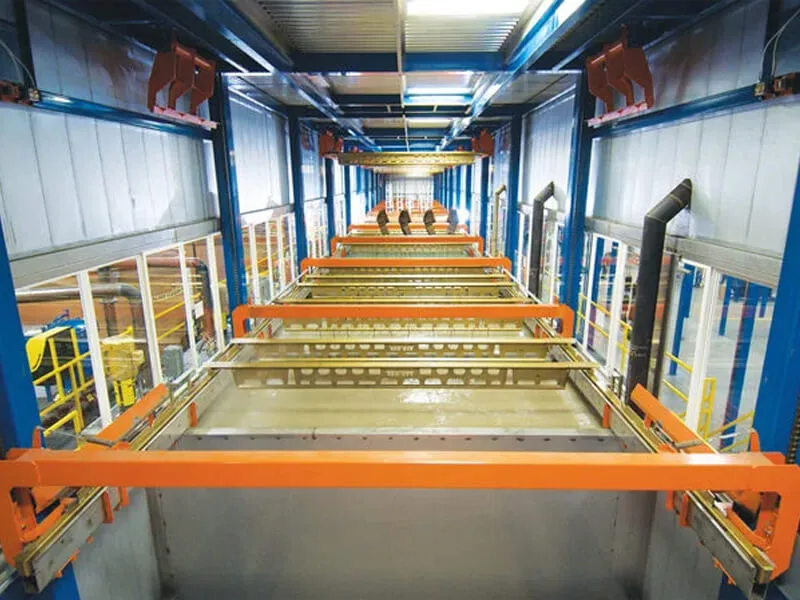
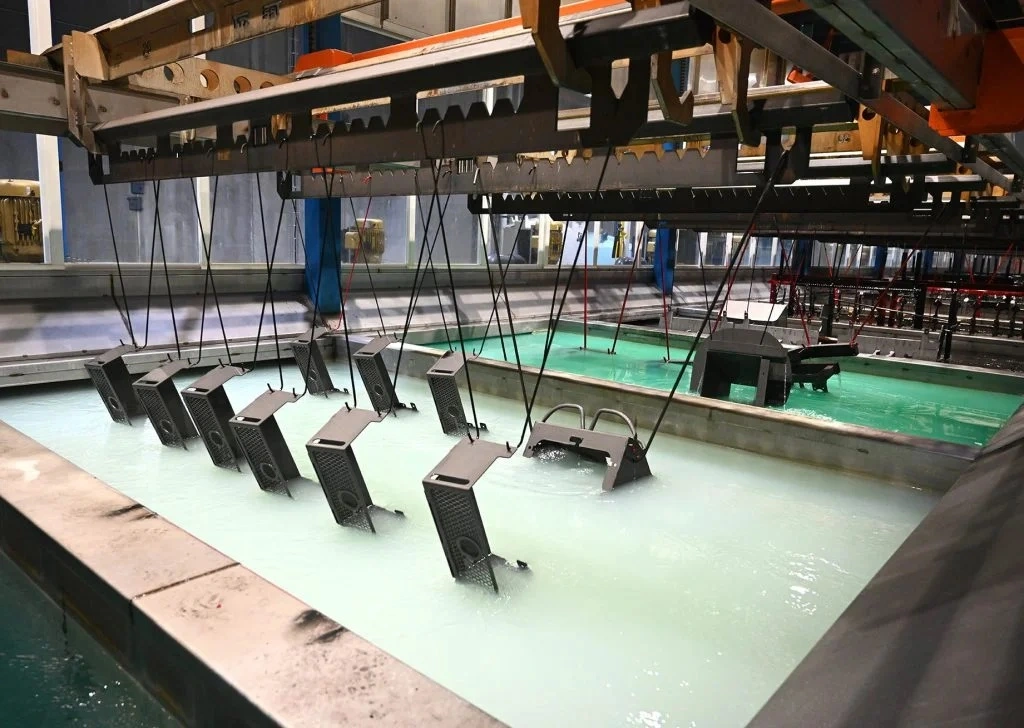
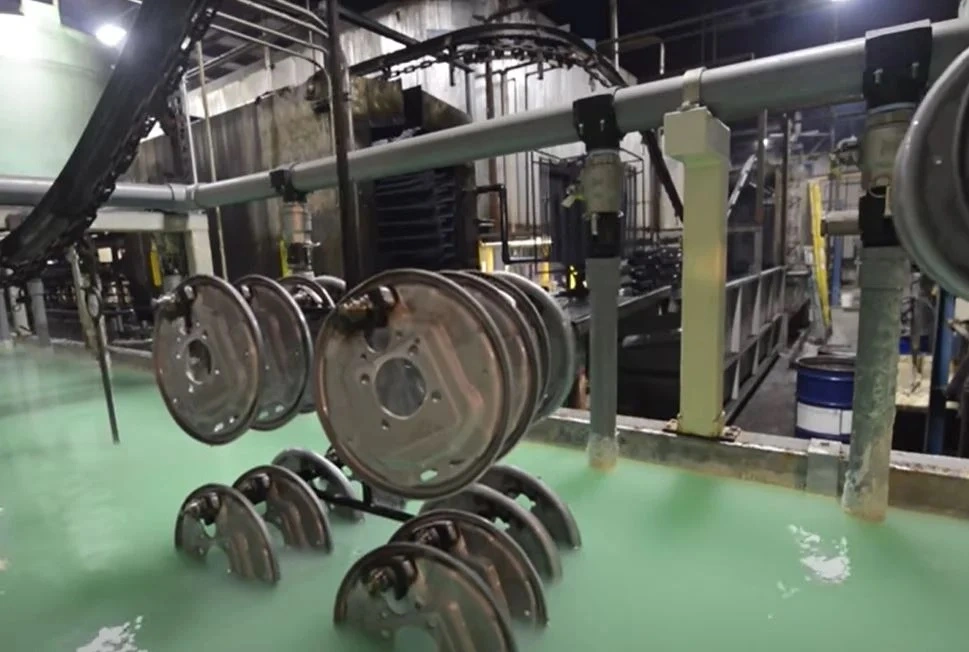
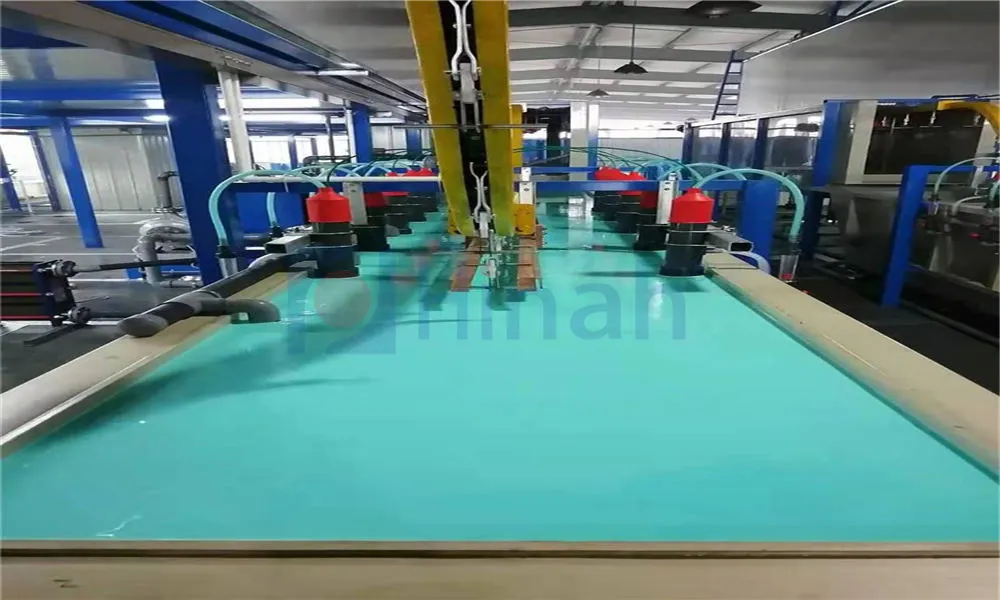
Surface preparation is a highly important stage in determining the long-term adhesion and corrosion resistance of the powder coat. Without proper cleaning, organic contaminants, mill scale, and oxides will cause premature coating failure. Pretreatment configurations generally fall into two categories:
The chemical sequence typically includes degreasing, water rinses, acid pickling (if rust removal is required), and a conversion coating stage. Modern systems often utilize zirconium-based nano-ceramic coatings as an environmentally friendly alternative to traditional zinc or iron phosphating, requiring fewer rinse stages and operating at ambient temperatures.
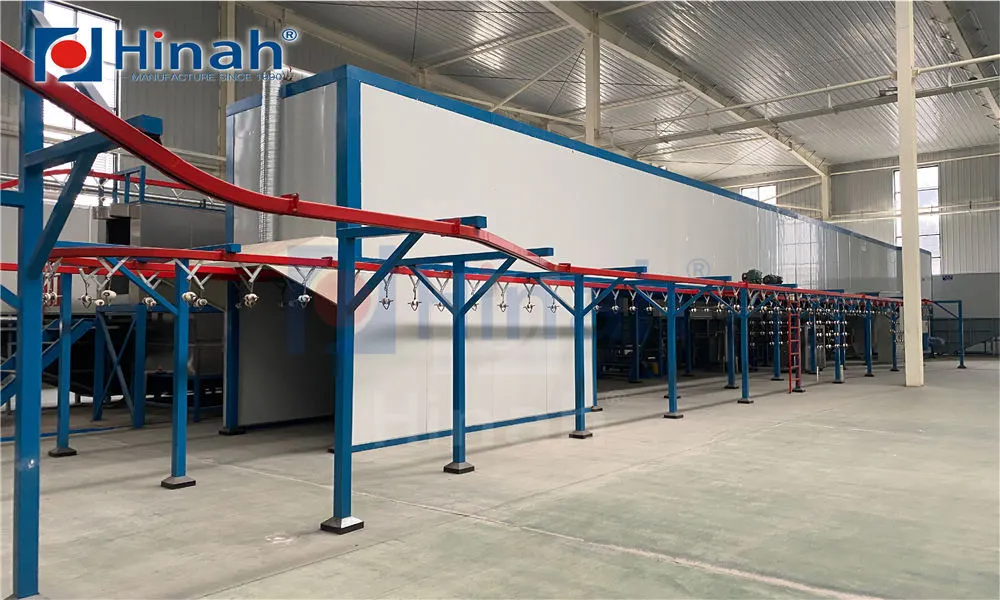
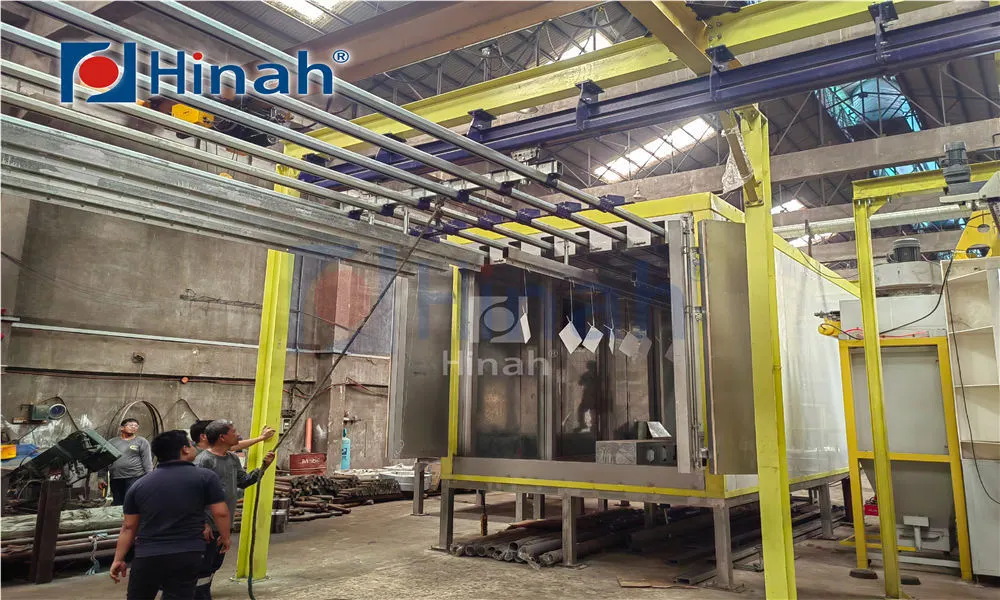
Thermal processing represents a major portion of the operational energy footprint. High-capacity plants require two types of ovens, each serving a distinct function:
The powder booth is the workspace where electrostatic charge is applied to the dry powder particles, causing them to cling to the grounded metal parts. The design of the booth dictates color-change speed and powder recovery efficiency, which is a decisive factor in material utilization. When selecting a powder coating plant for sale, understanding the recovery technology is fundamental:
The speed and path of the conveyor system determine the total throughput of the finishing line. The conveyor must be designed to handle the maximum weight load per hook while maintaining a consistent travel speed that aligns with the pretreatment chemical contact time, dry-off duration, and curing cycle parameters.
| Conveyor Type | Load Capacity | Application Suitability | System Characteristics |
|---|---|---|---|
| Overhead Monorail Conveyor | Light to Medium (up to 500 kg per trolley) | Continuous high-volume production of uniform parts. | Consistent chain speed; simpler maintenance; highly reliable for automated lines. |
| Power and Free Conveyor | Heavy Duty (up to several tons) | Complex manufacturing lines with varying process times. | Allows individual carriers to stop, accumulate, or switch tracks without stopping the entire line. |
| Floor Conveyor / Spindle Line | Lightweight, small components | High-speed small part coating (e.g., automotive trim, bottles). | Parts rotate during spray application to ensure uniform coating coverage. |
In a continuous powder coating plant for sale, the line speed is calculated by balancing the curing time of the powder with the physical length of the oven. For example, if a powder chemistry requires 15 minutes of cure time at 200°C and the production line speed is set at 2 meters per minute, the curing oven chamber must have a minimum travel path of 30 meters. This calculations-based approach ensures that parts are neither under-cured nor over-baked, maintaining the structural integrity of the finish.
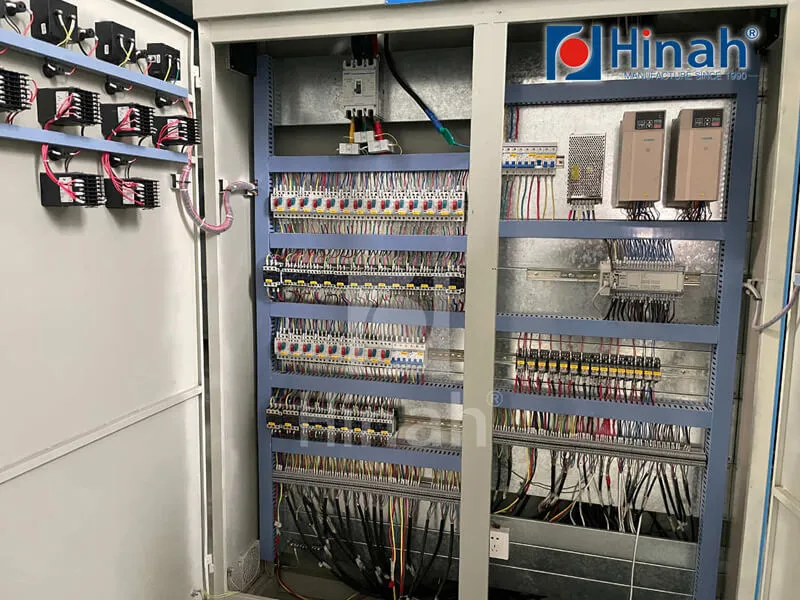
Integrating modern control interfaces is necessary for achieving process repeatability and reducing reliance on manual labor. Centralized control panels allow operators to monitor and adjust real-time parameters across the entire finishing line. Systems developed by HANNA rely on programmable logic controllers (PLCs) with human-machine interface (HMI) screens to store recipes for different part configurations.
Automated powder application utilizes reciprocating gun movers, height-sensing light curtains, and automatic spray gun controls. The light curtains detect the dimensions of incoming parts on the conveyor line and transmit this data to the PLC. The controller then adjusts the stroke height of the reciprocators and activates only the spray guns facing the metal surfaces. This targeted application minimizes overspray, reduces powder waste, and maintains a highly consistent film build across varying batch runs.
Standard, off-the-shelf finishing systems rarely match the specific layout constraints and part profiles of a complex manufacturing plant. Sourcing a tailored powder coating plant for sale involves detailed collaborative planning between the production engineering team and the line manufacturer. Consulting with engineering specialists such as HANNA allows manufacturers to configure lines around several key variables:
Industrial coating operations frequently face challenges that affect production yield and finish quality. Addressing these issues requires systematic adjustments within the plant design.
When coating parts with deep recesses, sharp internal angles, or complex welded joints, the electrostatic field naturally directs powder particles to the outer edges. This phenomenon, known as the Faraday cage effect, leaves internal corners under-coated. To resolve this, modern powder plants integrate adjustable electrostatic voltage controls, allowing operators to reduce the voltage (kV) while increasing current (µA), or utilize Tribo charging guns which rely on friction rather than high-voltage air ionization to charge the powder, allowing the particles to penetrate deep recesses uniformily.
In job-shop environments where color changes happen multiple times per shift, cross-contamination leads to surface defects and rejected parts. High-performance lines utilize non-conductive plastic powder booths (such as sandwich-structured PVC or PP). These materials do not attract powder particles, making the booth walls easier and faster to clean. Combined with automated powder feed centers that flush the delivery hoses with high-pressure air pulses, color change times can be reduced from hours to under fifteen minutes.
Q1: What are the main differences between a cyclone recovery system and a cartridge filter recovery system?
A1: A cyclone recovery system uses centrifugal force to separate reusable powder from the air stream, allowing for fast color changes and high recovery rates in multi-color operations. A cartridge filter recovery system draws air directly through physical filters, which is highly efficient for single-color operations but requires a extensive cleaning process or filter replacement when changing colors to prevent contamination.
Q2: How does the conveyor type affect the capacity of an automatic powder coating line?
A2: Overhead monorail conveyors provide a continuous, fixed-speed flow best suited for high-volume, uniform parts. Power and free conveyor systems allow individual carriers to stop or diverge onto separate tracks, making them suitable for complex lines where different parts require different pretreatment times, manual detailing, or variable cure durations.
Q3: What chemical pretreatment process is required for a mix of steel and aluminum parts?
A3: Multi-metal lines typically use a zirconium-based nano-ceramic pretreatment system. Zirconium formulations create a high-performance conversion coating on both steel and aluminum surfaces, providing excellent adhesion and corrosion protection without the sludge formation and hazardous waste disposal issues associated with traditional zinc phosphating.
Q4: How do curing oven temperature variations impact the final coating quality?
A4: If the temperature inside the curing oven varies beyond the recommended limits (typically ±3°C), it can lead to under-curing in colder zones—causing poor impact resistance and weak adhesion—or over-curing in hotter zones, which can result in color discoloration, loss of gloss, and brittle finishes.
Q5: What are the primary variables needed to design a custom powder coating line?
A5: The design team requires the maximum dimensions and weight of the largest parts, the target production volume per shift, the types of metal substrates being coated, the available energy sources (gas, electricity, steam), and the physical footprint of the installation facility.
Implementing a high-capacity industrial finishing line is a significant long-term investment that requires meticulous planning and precise mechanical execution. To assist your team in evaluating the design of a custom system, please prepare your manufacturing parameters, including typical workpiece dimensions, material composition, desired conveyor speed, and available factory floor dimensions. Our engineering team is ready to analyze your production goals and develop a detailed mechanical configuration tailored to your operational requirements. Contact us today to submit your inquiry and begin the system design process.