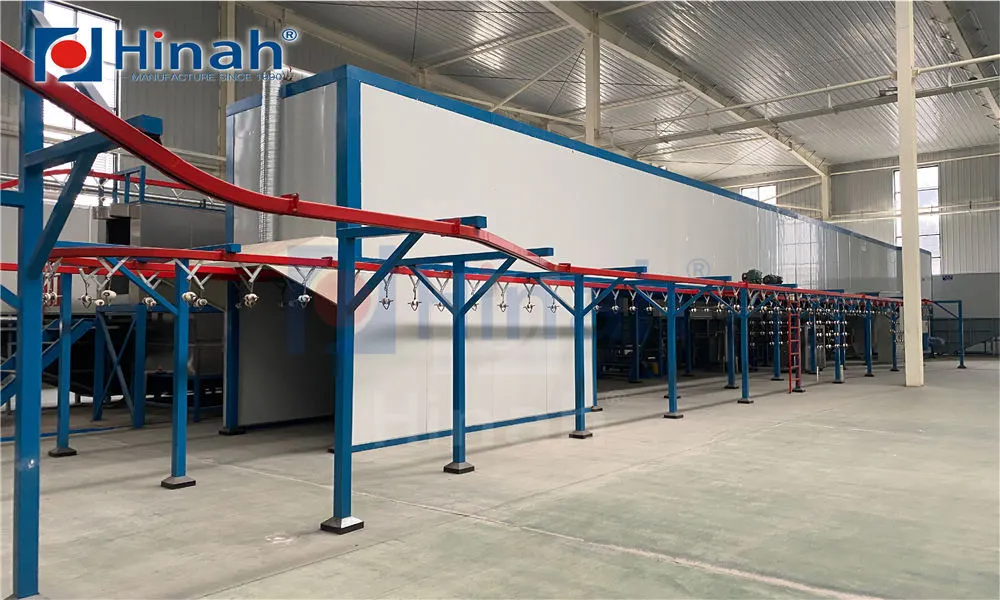
For many metal fabricators, a powder coating line represents the single largest investment in their finishing department. It’s also the key to unlocking higher capacity, lower per-part costs, and a finish that wins new business. But not all lines are created equal. The difference between a profitable asset and a constant bottleneck lies in the integration of each stage.
A true powder coating line is a synchronized system. It moves parts through cleaning, preparation, application, and curing in one continuous flow. When designed correctly, it operates with minimal manual intervention. This automation drives consistency and throughput that manual or batch processes simply cannot match.
At HANNA, we’ve been engineering integrated powder coating lines for global manufacturers for decades. We understand that the line’s performance dictates your shop’s overall output. This article breaks down the components, benefits, and critical decisions involved in setting up a line that delivers a strong return on investment.
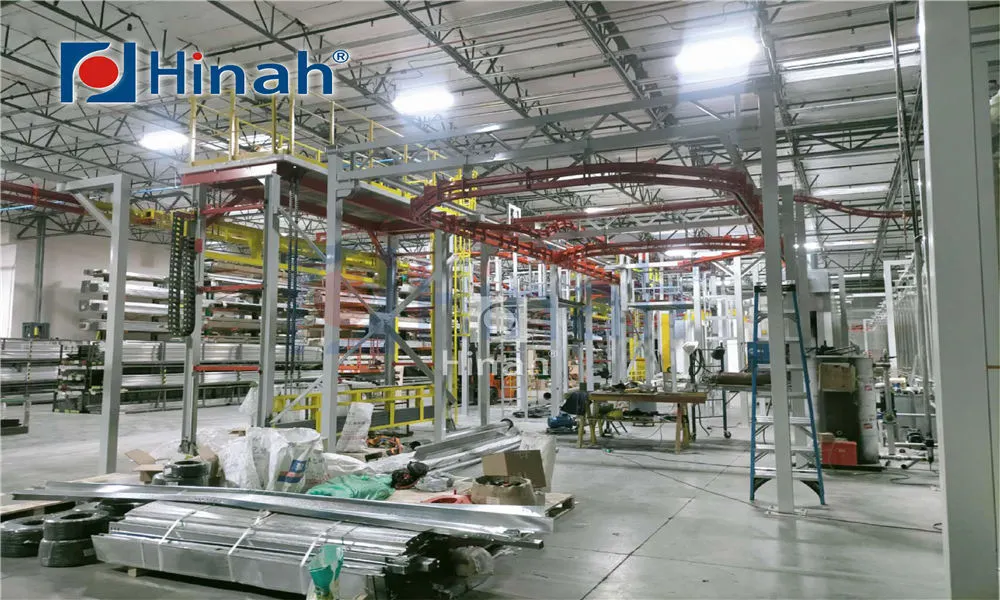
Think of your line as a journey for the metal part. Each stage prepares it for the next, with the conveyor as the guiding path. Missing or short-changing one stage compromises the entire finish.
Stage 1: Pre-Treatment and Cleaning
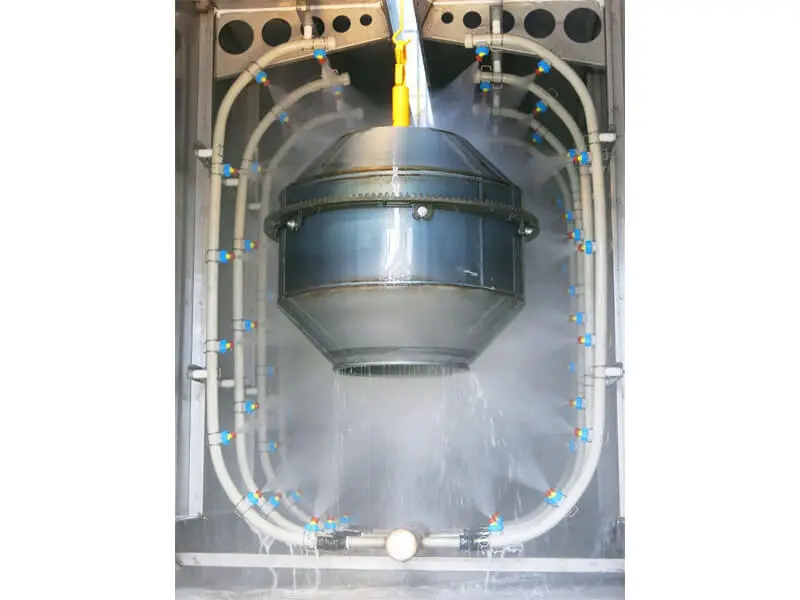
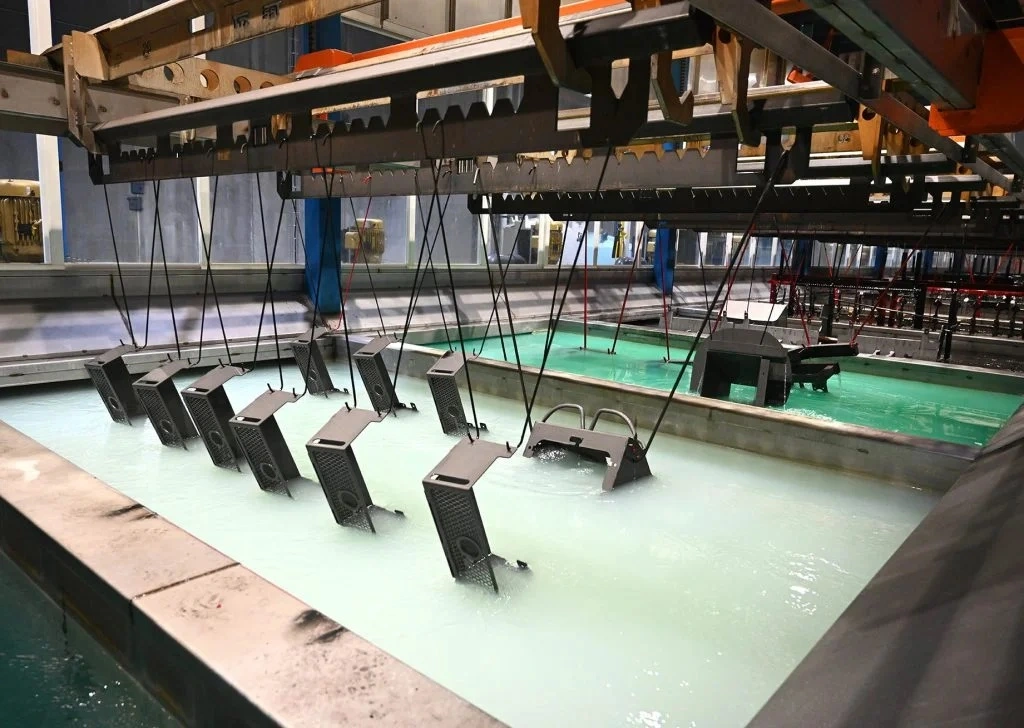
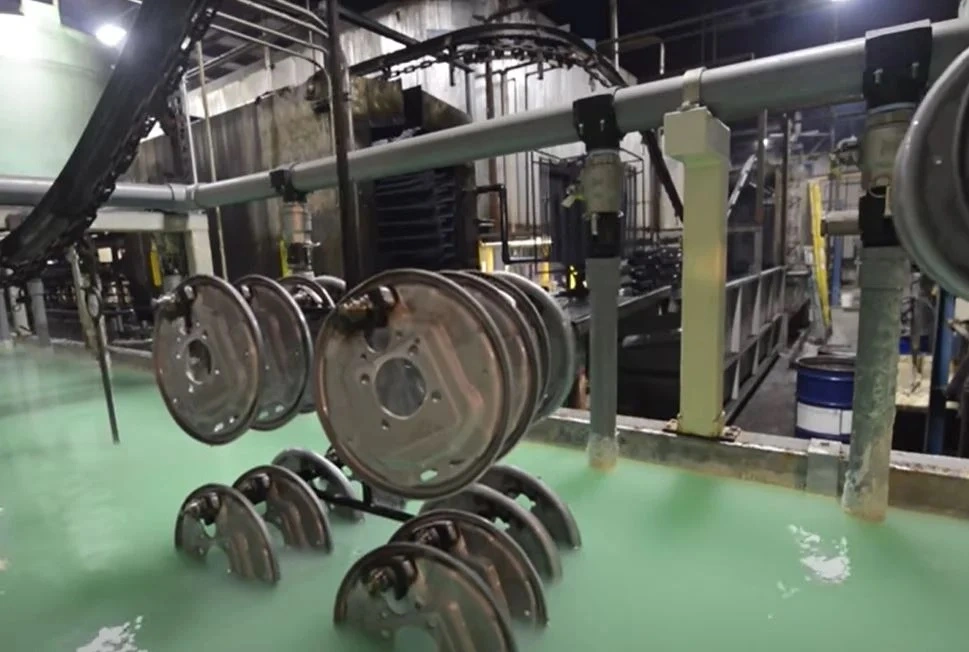
This is the non-negotiable foundation. Any oil, rust, or mill scale left on the metal will cause adhesion failure. A modern pre-treatment system typically involves multiple stages: an alkaline wash, rinse, conversion coating (like zinc phosphate or zirconium), and a final rinse.
These stages can be spray tunnels or immersion tanks. The choice depends on part geometry and volume. The final step is a dry-off oven, which removes all moisture. A flawless powder coat starts with a perfectly clean, dry, and chemically prepared surface.
Stage 2: The Powder Application Booth
This is where the color and protection are applied. Parts enter an enclosed spray booth. Here, charged powder particles are attracted to the grounded part. The efficiency of this stage is paramount.
Modern booths, like those from HANNA, feature high-efficiency cartridge filters and powerful, consistent airflow. This captures overspray effectively, maintaining a clean environment and allowing for high powder recovery rates. The booth design directly impacts your material usage and first-pass transfer efficiency.
Stage 3: Curing and Cooling
After application, the coated part enters the cure oven. Here, heat triggers a chemical cross-linking reaction in the powder. It melts, flows, and forms a durable, continuous film. Precise temperature control and even heat distribution are critical.
Following the oven, a cooling zone allows the parts to solidify sufficiently before handling. This completes the powder coating line process. The part is now ready for inspection, packaging, or assembly.
The conveyor is the central nervous system of your powder coating line. It dictates the pace and rhythm of the entire operation. Choosing the right type is a strategic decision.
Overhead monorail conveyors are the most common. They are incredibly versatile, handling parts of various sizes and shapes on hooks or racks. They make excellent use of vertical space, allowing lines to navigate around facility obstacles.
For heavier, flatter items like panels or large enclosures, an inverted or flat-line conveyor might be better. These systems keep the workload at an ergonomic height. HANNA’s engineers assess your part mix and facility to recommend the optimal conveyor solution.
Automation extends beyond movement. It includes automated gun movers for consistent application, fluidized bed powder pumps for steady supply, and PLC controls that synchronize the entire line.
Design is more than connecting equipment. It’s about creating a process that runs smoothly for years.
Calculating Line Speed and Capacity
Your required output determines your line speed. The formula is straightforward but vital: Line Speed = Cure Oven Length / Required Cure Time. You must also factor in part size, spacing on the conveyor, and pre-treatment dwell times.
Underestimating your capacity needs is a common pitfall. A HANNA design analysis always plans for future growth, ensuring your line can scale with your business.
Space Planning and Workflow
A logical, linear workflow minimizes wasted movement. Consider the “dirty” and “clean” sides of the process. Unloading, racking, and pre-treatment should flow naturally into the clean booth and oven areas, with cooled parts exiting near packaging.
Good design also accounts for maintenance access around ovens and recovery systems. Ample space for color change and booth cleaning is essential for flexible operations.
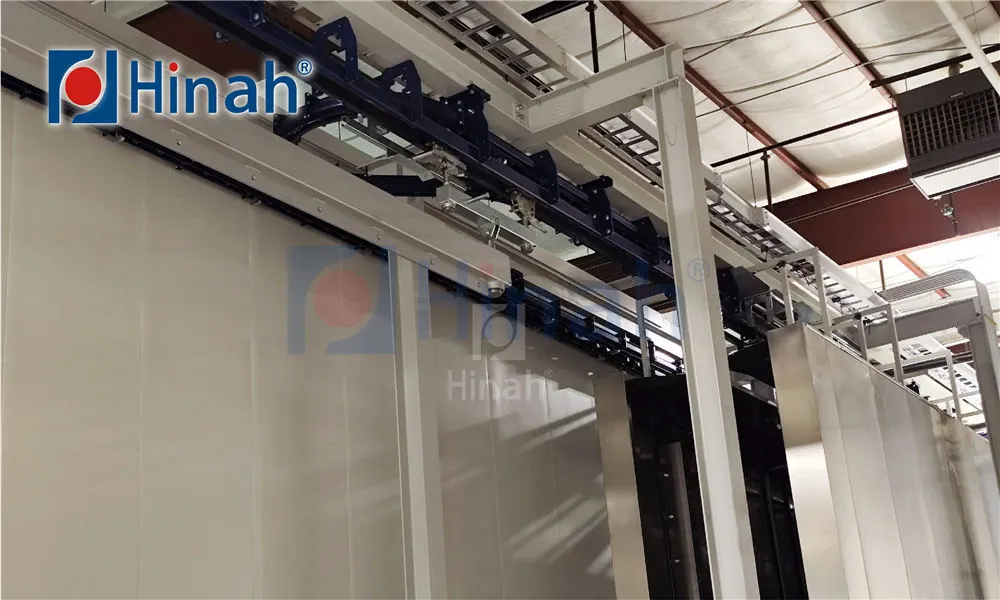
A line is a major capital investment. Proactive maintenance protects that investment and prevents costly unplanned downtime.
Daily and Weekly Routines
Daily tasks are simple but crucial. Visually inspect the conveyor chain, trolleys, and hooks for wear. Check powder booth filter pressure gauges. Ensure reclaim systems and sieves are clean and functional.
Weekly, inspect oven burners and airflow. Verify safety interlocks and emergency stops. Lubricate the conveyor chain as specified by the manufacturer. These small habits prevent big problems.
Troubleshooting Common Coating Defects
Many finish defects can be traced back to the line process. Poor adhesion often points to pre-treatment failure. Check wash chemistry concentrations and spray pressures.
Orange peel or inconsistent film build might relate to uneven curing or grounding issues. Verify oven temperature profiles with a data logger and ensure your conveyor system is properly grounded. HANNA’s service support specializes in this diagnostic work.
Upgrading and Expanding an Existing Line
Most shops don’t start with a complete turnkey system. They grow into it. The good news is that a well-planned powder coating line can often be upgraded.
Common upgrades include adding an automated gun system to increase consistency, expanding the cure oven for larger parts, or integrating a new color booth for faster changeovers. Retrofitting a more efficient powder recovery system can also offer a quick return on investment through material savings.
The key is working with a partner who understands your original system. HANNA frequently performs upgrades, ensuring new components integrate seamlessly with existing equipment.
Your powder coating line is not just a set of machines. It’s the production engine of your finishing department. Its efficiency determines your profitability on coated work. Its consistency defines the quality your brand delivers to customers.
Investing in a properly designed, integrated system from an experienced international partner like HANNA mitigates risk. It ensures each component—from pre-treatment to cooling—works in harmony. This delivers the throughput, quality, and reliability needed to stay competitive.
Evaluate your needs thoroughly. Plan for growth. And build a powder coating line that becomes a core competitive advantage for your business.
Q1: What is the main advantage of an automated powder coating line over a manual batch process?
A1: The primary advantages are dramatically increased throughput and superior consistency. An automated line provides precise control over dwell times in each stage, especially curing. This eliminates the variation common in batch ovens, resulting in uniform finish quality on every part, shift after shift. It also significantly reduces direct labor costs per part.
Q2: How much space do I need to install a basic powder coating line?
A2: Space requirements vary greatly based on output. A compact, streamlined system might fit in a 60-foot long bay. However, a comfortable layout with room for racking, staging, and maintenance often requires 100 feet or more in length. Vertical space is also crucial for overhead conveyors and oven exhaust. HANNA provides detailed floor plan layouts as part of the design quotation process.
Q3: Can a single powder coating line handle multiple colors efficiently?
A3: Yes, but it requires planning. Lines designed for frequent color changes feature dedicated quick-change powder hoppers, easy-clean booth interiors, and sometimes multiple recovery systems. For shops with very high color change frequency, a “clean room” style booth or multiple application booths might be recommended. The right approach balances flexibility with the cost of changeover downtime.
Q4: What are the biggest energy consumers in a typical line?
A4: The cure oven is by far the largest energy consumer, followed by the dry-off oven. Pre-treatment wash tanks with heated chemistry can also use significant energy. Modern, well-insulated ovens with high-efficiency burners and recirculating airflow are designed to minimize this cost. Investing in an energy-efficient design from HANNA lowers your operating expenses for the life of the line.
Q5: How do I know if my existing line needs an upgrade or a full replacement?
A5: Consider upgrade if your core infrastructure (conveyor, oven structure) is sound and your issues are related to capacity, controls, or specific components. Signs include inability to meet demand, high reject rates due to inconsistent curing, or excessive powder waste. Full replacement is typically needed when facing major facility changes, a radical shift in part size/volume, or when the existing line is fundamentally inefficient or failing structurally. A HANNA audit can provide a clear, unbiased recommendation.