
Establishing a new powder coating plant setup requires a systematic blend of process engineering, facility planning, and regulatory compliance. Unlike liquid painting, powder lines demand precise control over pretreatment chemistry, electrostatic application, and thermal curing. A poorly planned installation leads to costly rework, downtime, and safety hazards. This article provides a technical roadmap for investors, plant managers, and engineers undertaking a powder coating plant setup, covering everything from throughput calculations to utility integration.
1. Preliminary Planning: Capacity, Part Mix, and Site Selection
Before ordering any equipment, define the production scope. Key parameters include:
Target throughput: Calculate required line speed based on parts per hour and hanger density. Example: 150 parts/hour on 2‑foot centers needs 5 ft/min line speed.
Part geometry and material: Complex shapes may require tribo guns or IR boosters; aluminum needs chrome‑free pretreatment.
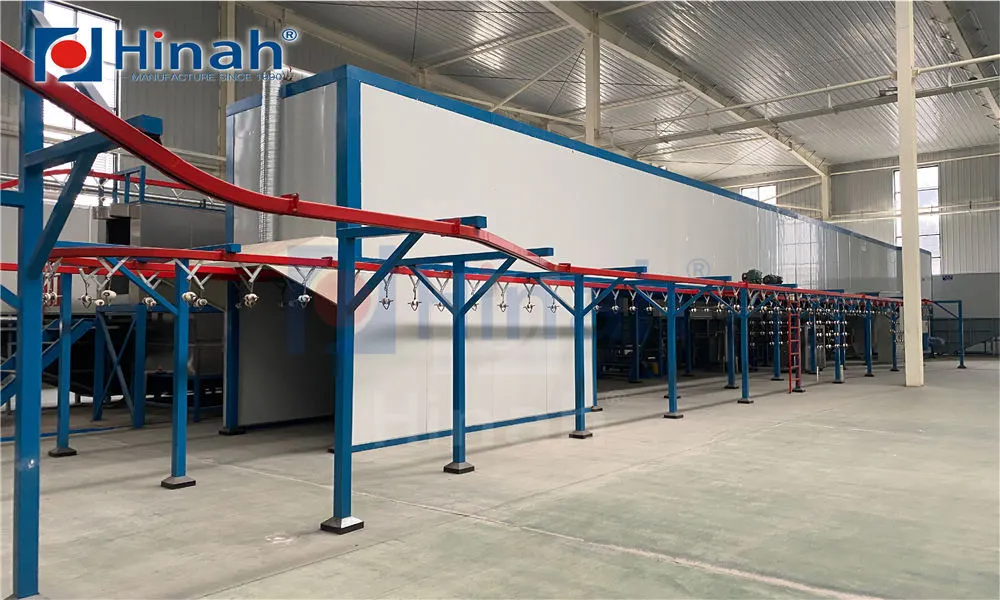
Facility constraints: Minimum ceiling height of 6 meters for overhead conveyors; floor load capacity of 2,500 kg/m² for heavy ovens; proximity to utilities (gas, water, three‑phase power).
Future expansion: Allow 20‑30% extra floor space for additional booths or longer ovens.
A thorough site survey prevents surprises during installation. HANNA offers feasibility studies that match powder coating plant setup designs to real‑world building constraints.
2. Process Flow Design: From Raw Part to Finished Product
A logical material flow minimizes handling and contamination risks. The standard sequence for a powder coating plant setup is:
Load/unload zone: Allow 10‑15 meters for hanging and inspecting parts.
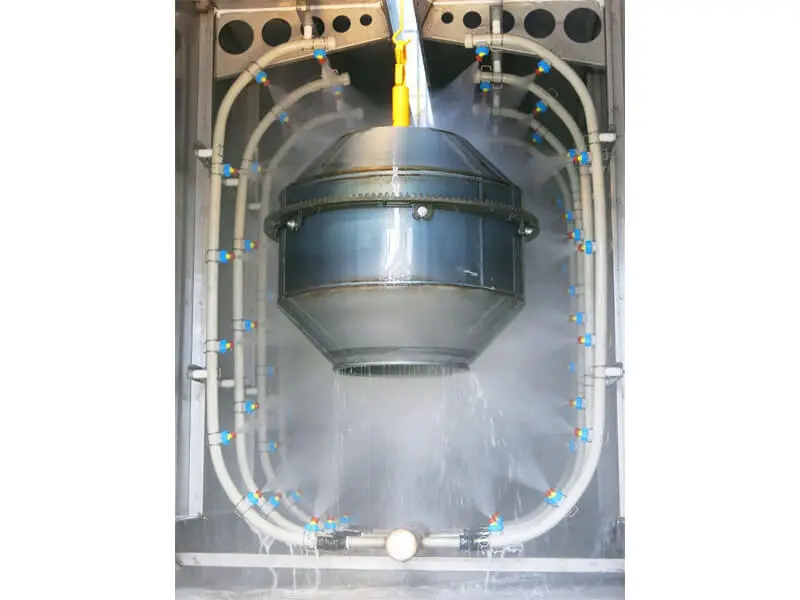
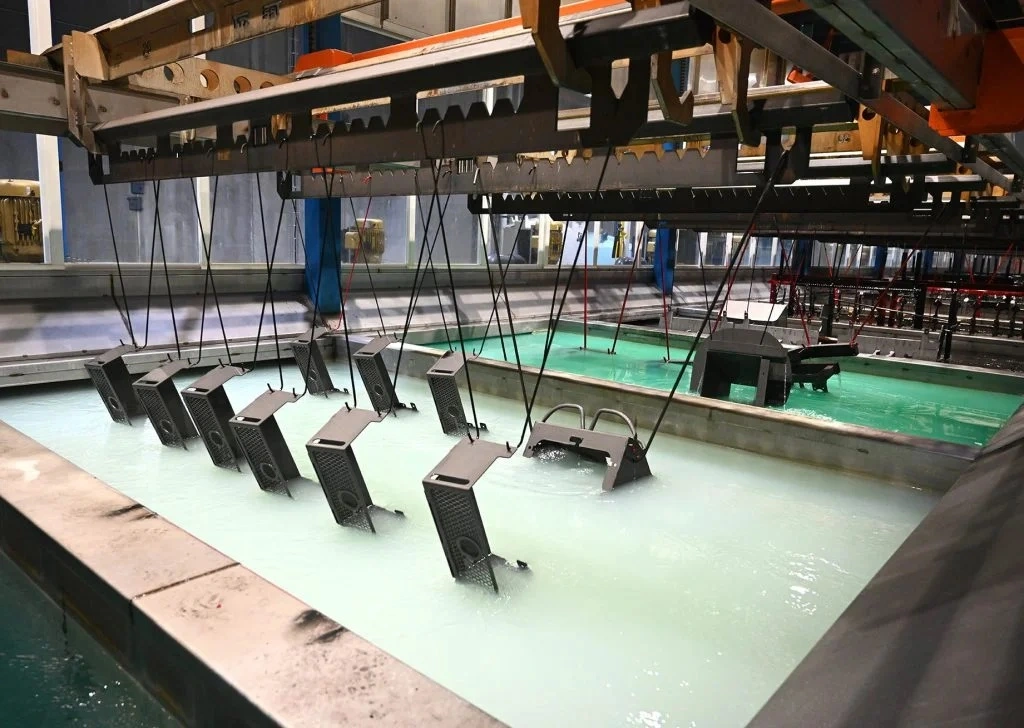
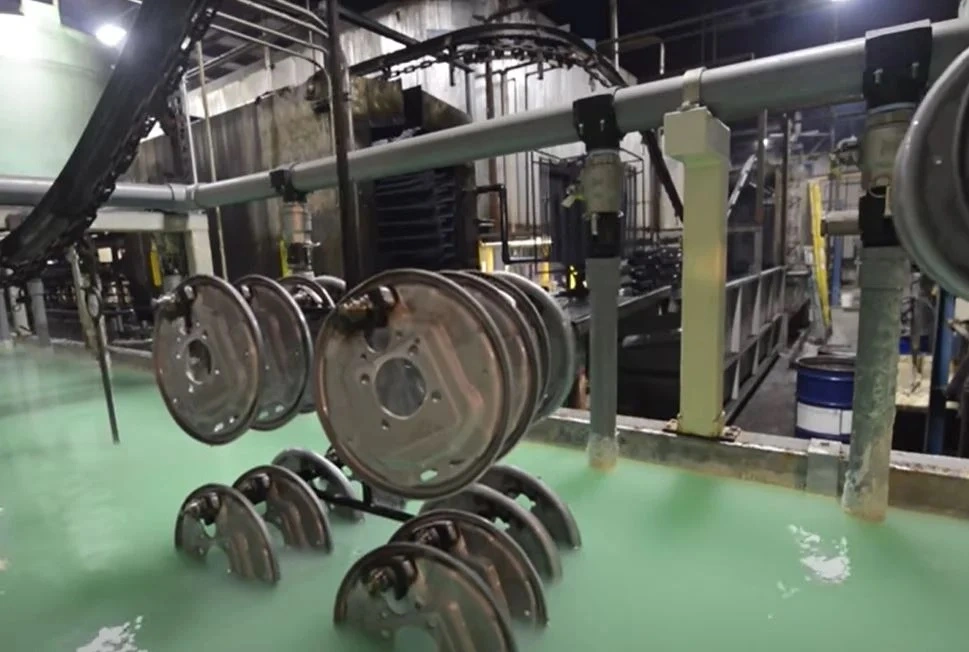
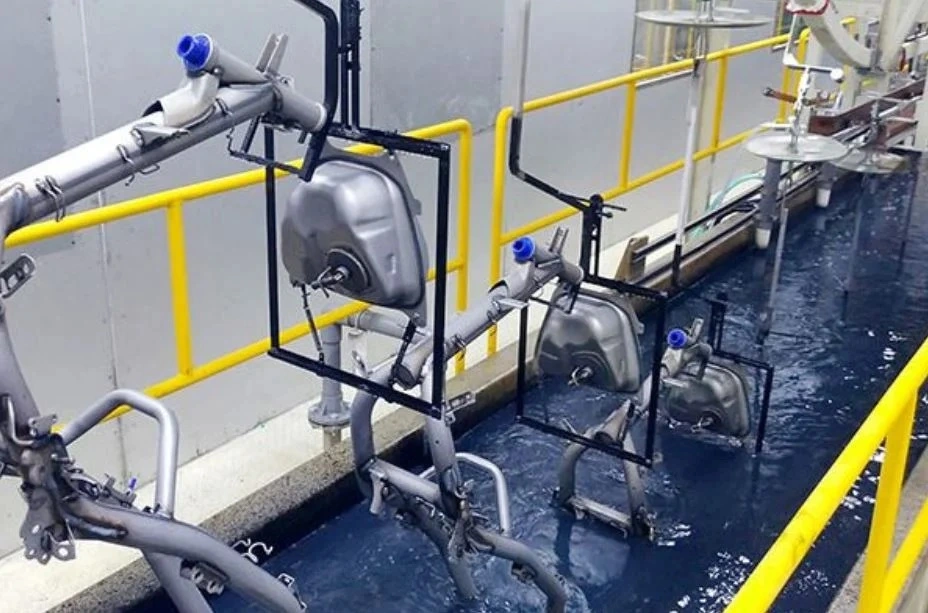
Pretreatment: Multi‑stage spray washer with immersion options for complex geometries.
Dry‑off oven: 100‑120°C to remove moisture before coating.
Cooling tunnel: Ambient or forced air to bring parts below 35°C.
Powder booth(s): Manual or automatic, with recovery system.
Curing oven: Convection, IR, or combination; length determined by dwell time.
Final cooling: For handling and downstream assembly.
Use 2D/3D layout software to verify clearances, conveyor turns, and operator access. HANNA's engineering team provides CAD layouts optimized for your specific part mix.
3. Selecting the Right Equipment for Your Powder Coating Plant Setup
Equipment choices directly affect quality, throughput, and operating cost. Critical components include:
Pretreatment Systems
Spray washers: Compact, suitable for most parts; 4‑6 stages typical (clean, rinse, conversion, seal, DI rinse).
Immersion tanks: For intricate shapes or heavily soiled parts; longer dwell times but larger footprint.
Material: Stainless steel 304 or 316 for tanks and piping to resist chemical corrosion.
Powder Booths and Recovery
Cartridge booths: High efficiency (>99.9%), fast color change with automatic purge cycles.
Cyclone booths: Lower maintenance, better for high‑volume single colors; requires secondary filter.
Gun technology: Corona guns for general use; tribo for metallic and deep‑recess parts. Reciprocators ensure consistent coverage.
Curing Ovens
Convection: Gas‑fired with high‑velocity air nozzles; best for complex shapes and heavy mass.
Infrared: Electric IR for rapid heating of flat panels; often used as booster before convection.
Insulation: 100‑150 mm mineral wool with aluminum cladding; R‑value >20.
HANNA manufactures all core equipment, ensuring seamless integration within your powder coating plant setup.
4. Environmental Compliance and Safety Systems
Modern powder coating plant setup must meet strict regulations:
Air permits: Powder emits negligible VOCs, but particulate matter from booth exhaust requires HEPA filters (typically >99.97% efficient).
Wastewater: Pretreatment baths require neutralization and precipitation systems; many regions mandate zero liquid discharge.
Fire safety: Comply with NFPA 33 (spray booths) and NFPA 86 (ovens). Install explosion venting, deluge systems, and spark detection.
Worker protection: Grounding straps, non‑sparking tools, and PPE against powder inhalation.
Incorporate these requirements early to avoid costly retrofits.
5. Utility Requirements and Energy Efficiency
A typical medium‑scale powder coating plant setup demands:
Electrical: 200‑600 kVA depending on conveyor, pumps, fans, and IR boosters.
Compressed air: 10‑30 m³/min at 6‑8 bar, dried to dew point of -40°C to prevent powder clumping.
Natural gas: 500,000‑2,000,000 BTU/h for ovens; consider propane backup.
Water: 5‑20 m³/day for pretreatment; softened or deionized for final rinses.
Energy efficiency measures include VFDs on fans, heat recovery wheels on oven exhaust, and high‑efficiency burners. These can reduce utility costs by 15‑25%.
6. Project Management and Installation Timeline
A full‑scale powder coating plant setup typically spans 6‑12 months:
Month 1‑2: Detailed engineering and permitting.
Month 3‑4: Equipment fabrication (conveyor, washer, ovens).
Month 5‑6: Civil works (floor trenches, pits, foundations).
Month 7‑8: Equipment installation and mechanical interconnection.
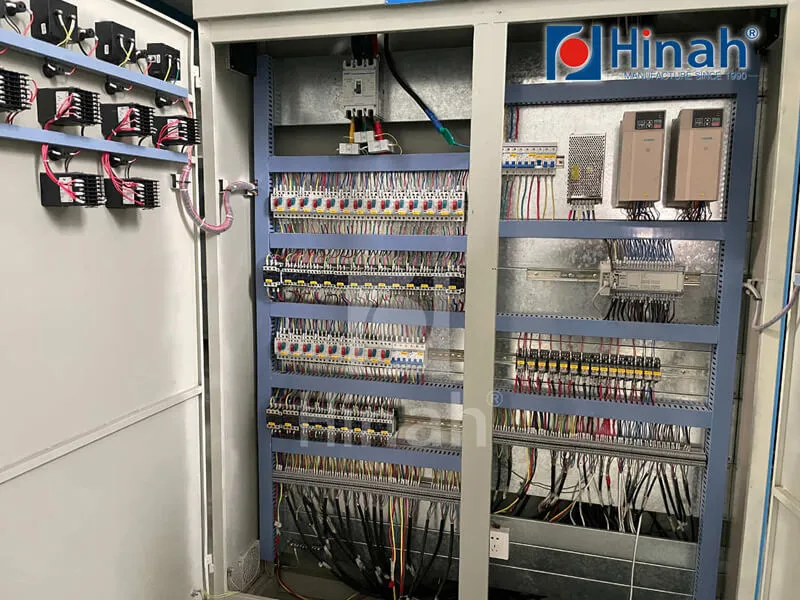
Month 9: Electrical wiring, PLC programming, and HMI setup.
Month 10: Commissioning, thermal profiling, and operator training.
Single‑source suppliers like HANNA reduce coordination risks and accelerate timelines through parallel work streams.
7. Cost Analysis and ROI Considerations
Capital expenditure for a powder coating plant setup varies widely:
Small batch line: $150,000 – $400,000 (manual booth, walk‑in oven).
Medium continuous line: $800,000 – $2,000,000 (automatic guns, 4‑stage washer, 100‑ft oven).
High‑volume automated line: $2,500,000 – $5,000,000 (robotic application, multi‑zone oven, smart controls).
Operating costs: powder ($3‑8/kg), energy ($0.10‑0.20/part), labor, and maintenance. A well‑designed line achieves payback in 2‑4 years through reduced rejects and higher throughput.
8. Common Pitfalls in Powder Coating Plant Setup and How to Avoid Them
Undersized oven: Always add 10‑15% to calculated length for part variability and future line speed increases.
Poor grounding: Install continuous conveyor grounding with regular brush inspection; resistance <1 ohm.
Inadequate compressed air quality: Use refrigerant or desiccant dryers with automatic drains; oil‑free compressors recommended.
Ignoring waste treatment: Plan for sludge disposal and pH neutralization from day one.
Lack of spare parts: Stock critical spares: gun tips, filters, burner controls, conveyor chain.
Learning from others’ mistakes saves thousands in downtime.
Conclusion
A successful powder coating plant setup demands meticulous attention to process design, equipment integration, and regulatory compliance. By following a structured approach—from capacity planning through commissioning—manufacturers can achieve first‑pass yields above 95%, low operating costs, and a safe working environment. Partnering with experienced integrators like HANNA ensures that your plant is built on proven engineering principles and ready for future challenges.
Frequently Asked Questions About Powder Coating Plant Setup
Q1: What is the minimum space required for a small powder coating
plant setup?
A1: A basic batch line with manual booth and walk‑in
oven typically needs 200‑300 m². This includes pretreatment area,
loading/unloading, and space for part storage. Ceiling height should be at least
4.5 meters for overhead conveyors.
Q2: How much does a complete powder coating plant setup
cost?
A2: Costs range from $150,000 for a small job‑shop line to
over $5 million for a fully automated, high‑volume facility. HANNA provides detailed quotations
based on your throughput and part specifications.
Q3: What environmental permits are typically
required?
A3: You'll need air permits for particulate emissions
(often below 50 mg/m³), wastewater discharge permits for pretreatment effluents,
and possibly hazardous waste registration for spent chemicals. Local regulations
vary; consult an environmental engineer early.
Q4: How long does it take to set up a powder coating plant from
scratch?
A4: Typical project duration is 6‑12 months, depending on
size and complexity. Factors include permitting, equipment fabrication, and
construction. Turnkey suppliers like HANNA can compress the schedule with
parallel workflows.
Q5: Can I retrofit an existing building for a powder coating
plant?
A5: Yes, but assess ceiling height, floor load capacity,
ventilation, and utility availability. Older buildings may need structural
reinforcements or new electrical services. A feasibility study is
recommended.
Q6: What pretreatment is best for aluminum parts?
A6:
Chrome‑free zirconium or titanium‑based conversion coatings are now standard due
to environmental restrictions. They provide excellent adhesion and corrosion
resistance. For aggressive environments, anodizing or chromate conversion may
still be specified.
Q7: How do I ensure uniform curing in a continuous
oven?
A7: Conduct thermal profiling with 12+ thermocouples attached
to parts. Adjust zone temperatures, airflow, and conveyor speed to achieve the
required cure schedule (±3°C across all part surfaces). Annual re‑profiling is
recommended.
By addressing these key questions and following the technical guidelines above, your powder coating plant setup will be positioned for operational success and long‑term profitability.