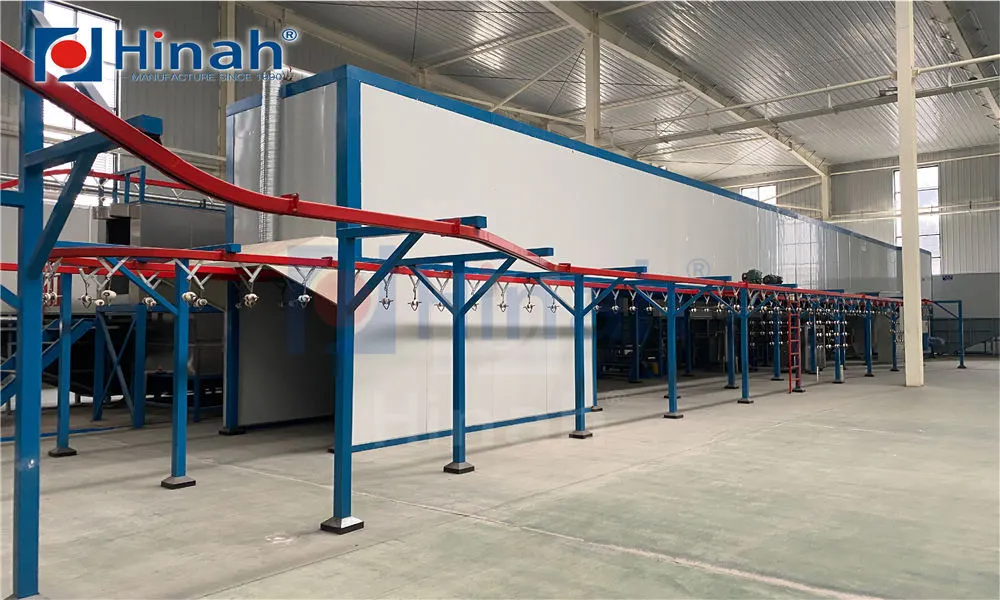

For any industrial finishing line, the curing oven determines mechanical properties (impact resistance, adhesion) and appearance (gloss, orange peel) of the final coating. However, not all Powder coating oven manufacturers provide the same level of thermal control, insulation quality, or airflow design. A poorly specified oven leads to under-cured areas (poor adhesion) or over-cured zones (color shift, brittleness). This guide examines engineering criteria that separate top-tier suppliers from commodity builders. Drawing on field data from 90+ industrial installations, including solutions from HANNA, we analyze convection, infrared, and hybrid oven technologies, burner modulation strategies, and validation methods such as temperature uniformity surveys (TUS).
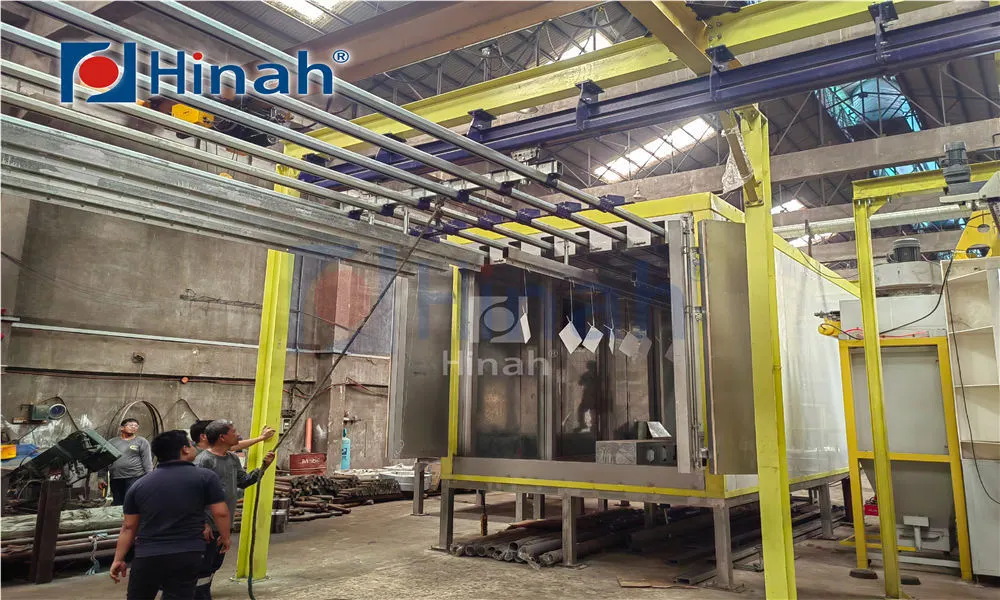
Reputable Powder coating oven manufacturers typically offer three thermal platforms. Each has distinct advantages depending on part mass, geometry, and throughput requirements.
Convection curing ovens – Heated air circulated via fans and ductwork; temperature range 150–220°C. Best for heavy parts, thick substrates, and complex assemblies. Key specification: air change rate (6–12 volumes per hour) and velocity uniformity (±0.5 m/s across the load.
Infrared (IR) curing ovens – Medium-wave or short-wave emitters; rapid heat transfer (30–90 seconds). Suitable for thin sheet metal, heat-sensitive substrates, and high-speed lines. Parameter: power density (20–50 kW/m²) and zone control (individual lamp groups).
Combination IR + convection ovens – IR boost zone for fast gelation followed by convection for complete crosslinking. Reduces total oven length by 30–40% compared to pure convection.
Beyond basic dimensions and max temperature, experienced buyers demand documented performance metrics from Powder coating oven manufacturers. The following five parameters directly affect first-pass yield.
A temperature uniformity survey (TUS) uses 9–15 thermocouples placed at critical locations inside the oven. Acceptable tolerance: ±5°C for general industrial powder, ±3°C for automotive or architectural finishes. Request the raw TUS data, not just a statement of compliance. Some Powder coating oven manufacturers achieve ±2°C using multi-zone burner control and adjustable air baffles.
When cold parts enter, oven temperature dips. Recovery time (to return to setpoint) should be under 3 minutes for convection ovens. Measure using a data logger at the oven entrance. IR ovens recover almost instantly but may cause edge overheating if not zoned properly.
Air leaks at entry/exit vestibules reduce efficiency and can pull plant dust into the oven. Specify inflatable silicone seals or adjustable labyrinth seals. Also, the oven should maintain a slight negative pressure (-5 to -10 Pa) relative to the coating booth to prevent vapor migration.
Turndown ratio (maximum to minimum firing rate) of 10:1 or higher allows precise temperature control during low-production periods. Many powder coating oven designs now include variable-frequency drives (VFDs) on circulation fans, reducing energy use by 20–35% during idle periods.
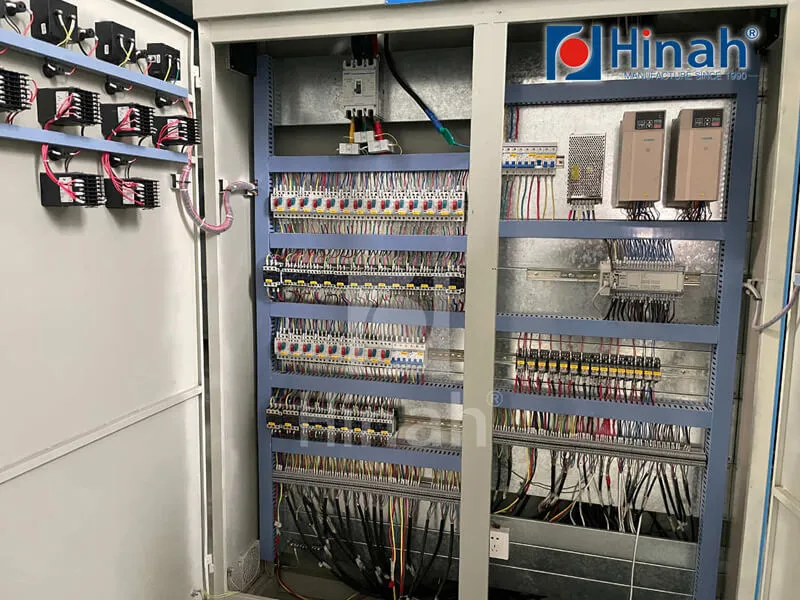
An industrial oven must include a programmable logic controller (PLC) with touchscreen HMI that records temperature profiles for each batch. Look for compliance with ISO 9001:2015 traceability requirements. Some advanced systems offer remote monitoring via OPC UA or MQTT.
Leading Powder coating oven manufacturers tailor designs to vertical markets. Below are proven setups for three demanding applications.
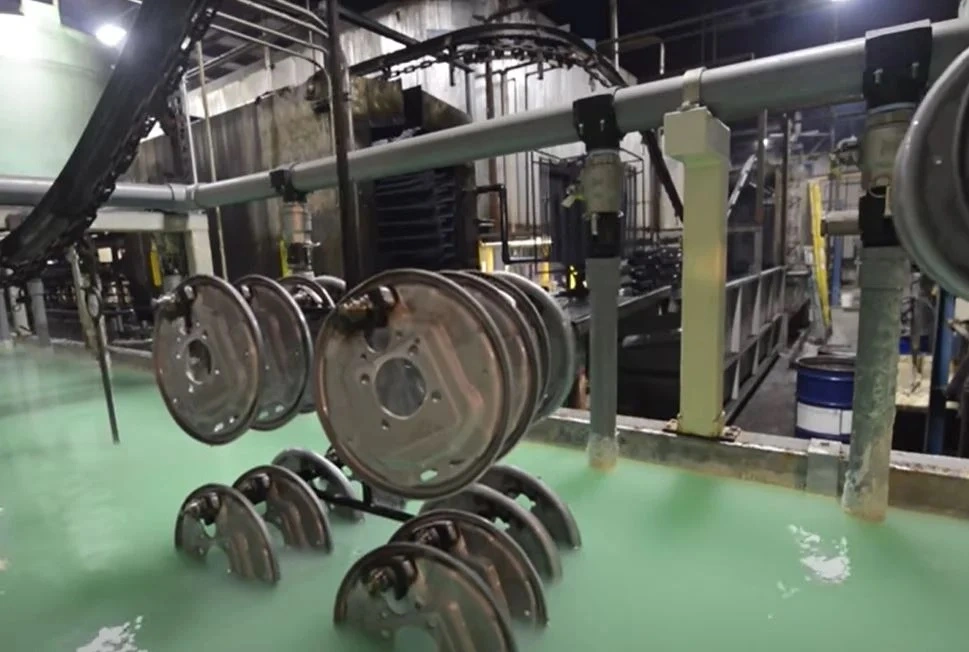
Requirement: 190°C for 15 minutes metal temperature; gloss retention above 90% after 1,000 hours QUV.
Oven type: 3-zone convection with adjustable air nozzles directed at wheel barrels and spokes. Each zone has independent burner and recirculation fan.
Conveyor: monorail with 300 mm vertical oscillation to ensure uniform heating of both inner and outer surfaces.
Challenge: even heating of thin-walled profiles without sagging or distortion.
Solution: Horizontal curing oven with side-mounted IR emitters in the first zone (low intensity, 12 kW/m²) to gel the powder, followed by a long convection zone for full cure. Air velocity maintained below 2 m/s to avoid moving uncured powder.
Key supplier feature: adjustable side curtains to seal around the extrusion entry points, reducing heat loss by 18%.
Requirement: 200°C metal temperature with dwell time based on thickest section (thermocouple embedded in a test coupon).
Oven type: Walk-in batch oven (not continuous) with two-speed fans (low speed for heating, high speed for temperature equalization).
Safety: purge timer before ignition (10 air changes) and flame arrestors for solvent residue from previous cleaning processes.
Based on post-installation audits of 120 lines, the following oversights are frequent when buyers do not verify supplier claims.
Under-specified insulation thickness: 100 mm of mineral wool (density 128 kg/m³) is standard for ovens operating up to 220°C. Some low-cost suppliers use 50 mm, causing surface temperatures above 60°C (unsafe and energy-inefficient). Request a thermal image of the oven exterior at operating temperature.
Inadequate exhaust air balancing: Too much exhaust reduces efficiency; too little leads to vapor accumulation (risk of combustion). The correct range is 3–6 air changes per hour for most powder formulations. Curing oven manufacturers should provide a mass balance calculation.
No provision for thermal expansion: Ovens expand by 3–5 mm per linear meter at 200°C. Without expansion joints or sliding supports, structural distortion occurs. Check for documented expansion compensation in the proposal.
Missing cool-down zones: Parts exiting at >60°C are hot to handle and may stick to conveyor hooks. A forced-air cooling tunnel (3–5 meters) reduces temperature to <40°C, improving downstream efficiency.
Progressive suppliers now integrate features that reduce operating costs without compromising cure quality. When evaluating Powder coating oven manufacturers, ask for demonstrated savings data on the following technologies.
A plate or run-around coil heat exchanger captures waste heat from oven exhaust (typically 150–180°C) and preheates fresh combustion air or plant makeup air. Payback period: 12–18 months for lines running two shifts. One HANNA-supplied oven saved $21,000 annually in natural gas using a 62% efficient heat recovery system.
Instead of constant-speed fans, VFDs ramp down airflow during idle periods (color change or breaks). Energy savings of 30–50% are typical. Additionally, VFDs reduce mechanical wear on bearings and belts.
Traditional 2 mm steel liners have high thermal inertia. Newer designs use 0.8 mm aluminized steel with reinforced framing, reducing warm-up time by 40% and enabling faster production startups. Some Powder coating oven manufacturers offer modular panels with cam-lock connections, allowing future line reconfiguration.
Model predictive control (MPC) uses load cell data from the conveyor (part weight and surface area) to anticipate temperature drop and pre-adjust burner firing. This eliminates overshoot and reduces energy use by 12–15% compared to simple PID control.
Selecting an oven from a reputable supplier is only half the equation; proper integration with the powder booth, conveyor, and curing schedule is equally important. HANNA provides a turnkey approach that includes a thermal profiling study before commissioning. Their team uses a 12-channel data logger with surface and air thermocouples to validate that every part reaches the required time-at-temperature (e.g., 10 minutes above 180°C). If any cold spot is detected, HANNA adjusts air baffles, burner positions, or conveyor speed – at no extra cost – until the uniformity target is met.
Additionally, HANNA provides a 3-year warranty on oven insulation integrity and burner components, with remote monitoring access for predictive maintenance. For a recent agricultural equipment manufacturer, this approach reduced curing-related rejects from 6.2% to 0.8% within three months.
A1: Oven air temperature is what the thermostat reads; metal temperature is the actual substrate temperature measured by a contact thermocouple or infrared gun. Powder requires the metal to reach a specific temperature (e.g., 190°C) for a defined dwell time (e.g., 10 minutes). Because thick parts heat slowly, the air temperature may need to be set 10–20°C higher than the target metal temperature. Always request a thermal profile of your heaviest part from Powder coating oven manufacturers before purchasing.
A2: Yes, partial conversion is feasible. Install medium-wave IR emitters in the first 2–3 meters of the oven to gel the powder quickly, then use the existing convection zone for full cure. However, ensure your electrical service can handle the additional load (typically 150–300 kW for a 6 m IR section). Also, check that the oven structure can accommodate the IR panels without blocking airflow. HANNA offers retrofit kits with modular IR cassettes.
A3: For non-automotive applications, a full TUS every 12 months is sufficient, or after any major maintenance (burner replacement, fan bearing change). For automotive or aerospace coatings, follow AIAG CQI-12 guidelines: every 6 months and after any line speed change exceeding 10%. Use a certified test house or invest in your own 12-channel data logger (e.g., from Datapaq or TQC Sheen).
A4: A well-maintained oven lasts 20+ years. Consumable components: circulation fan bearings (replace every 5–7 years), gas burner igniters (every 3–4 years), and door seals (every 2–3 years depending on usage). Also, clean heat exchanger surfaces annually to maintain efficiency. Powder coating oven manufacturers usually provide a recommended spare parts list with the initial purchase.
A5: Oven length (m) = conveyor speed (m/min) × required dwell time (minutes). Dwell time depends on part thickness and powder chemistry. Example: for 2 m/min conveyor speed and a required metal temperature dwell of 12 minutes, the heated tunnel must be 24 meters long. Add 1–2 meters for entry and exit vestibules to prevent heat loss. Always add a 15% safety factor for future speed increases. Request a curing oven sizing worksheet from your supplier.
A6: Inconsistent gloss across the part width, orange peel on one side only, or “teabag” staining (uneven color). Perform a smoke test: inject non-toxic smoke at the oven entrance and observe flow patterns. Uniform laminar flow moving from top to bottom (downdraft) or side to side (crossflow) should be visible. If the smoke swirls or recirculates, ask your oven manufacturer to rebalance the duct dampers or add turning vanes.
Generic oven quotations often miss the specific thermal requirements of your part mix, conveyor layout, and powder chemistry. HANNA provides a no-cost, three-step engineering assessment for qualified B2B buyers: (1) remote review of your current curing data (if available) or part drawings, (2) proposal of a tailored oven configuration with TUS guarantees, and (3) a written energy savings projection based on your local utility rates and shift schedule.
Send the following details to receive a detailed technical comparison within 3 business days: part dimensions (min/max), material type (steel, aluminum, etc.), weekly throughput (parts or m²), current oven performance (if any), and floor space available. All inquiries receive a digital thermal simulation video showing heat distribution inside the proposed oven.
Contact HANNA’s thermal engineering team now: https://www.autocoatinglines.com/contact.html – mention “Oven inquiry” in the subject line for priority engineering support.