
For finishing operations handling more than 500 parts per shift, a well-engineered Automated paint line outperforms manual booths in consistency, material savings, and through-put. However, the transition from semi-automatic to fully integrated systems introduces new variables: conveyor synchronization, paint circulation stability, robotic path programming, and real-time defect detection. This guide provides a component-level analysis of modern Automated paint line architectures, focusing on measurable improvements in transfer efficiency (target >70%) and reduction of rework (below 3%). Drawing on field data from over 40 industrial installations, including solutions from HANNA, we examine how to specify, validate, and maintain automated liquid coating systems.
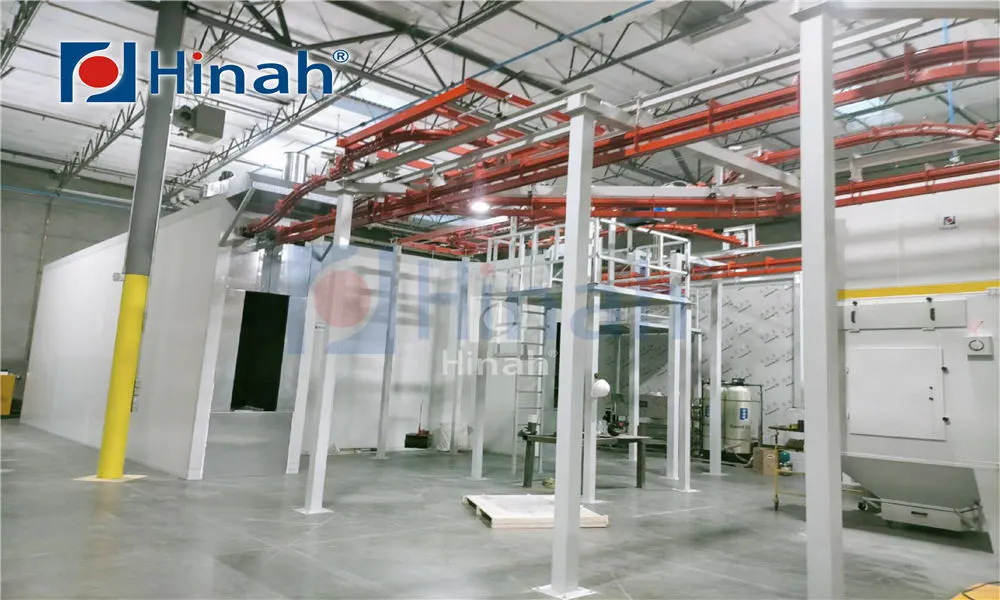
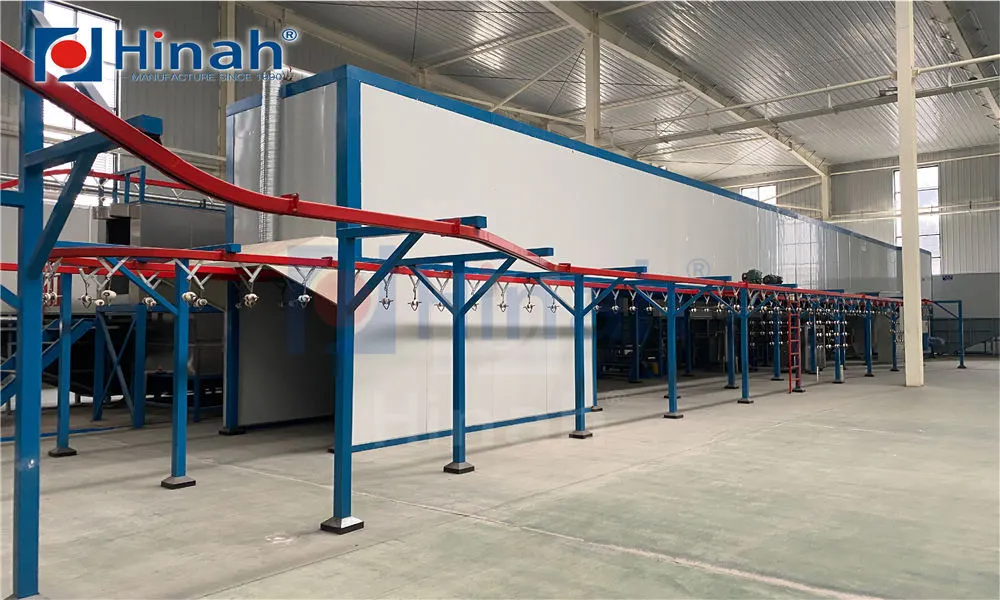
Every productive Automated paint line consists of five interdependent stations. Substandard performance in any single module forces manual intervention, negating the benefits of automation.
Pretreatment & chemical conversion – Tunnel-type spray washer with seven stages (alkaline clean, rinse, zirconium or iron phosphate, seal, DI rinse). Critical parameters: conveyor speed vs. dwell time (minimum 45 seconds per stage), nozzle pressure (1.2–1.8 bar), and bath temperature monitoring (±2°C).
Flash-off and humidity-controlled zone – 5–12 minutes at 20–25°C with 55–65% RH to allow solvent evaporation before baking. Infrared (medium-wave) panels can accelerate flash-off on complex geometries.
Robotic or reciprocating paint applicators – 6-axis articulated robots (payload 15–30 kg) or 2-axis vertical reciprocators with 4–8 spray guns per side. Gun technologies include high-volume low-pressure (HVLP), electrostatic rotary bells (60–80 kV), or air-assisted airless.
Paint circulation & color change system – Dead-end or ring main circulation with piston accumulators; automatic color purge valves (using solvent or air) reducing color change waste to under 300 ml per switch.
Curing oven with zoned temperature control – Convection or combination IR/convection; temperature uniformity ±5°C across the load; data logging via 6-thermocouple profiling system.
Data from 78 finishing lines shows three recurring failure points that degrade the performance of any Automated paint line. Below are root causes and engineered countermeasures.
Manual touch-up often required for recessed areas or edges. Automated solutions include:
Offline robot path simulation (using RoboDK or similar) to optimize gun angle and standoff distance (150–250 mm) for each part family.
Implementing electrostatic rotary bell applicators with shaping air rings that control droplet size (25–45 µm Sauter mean diameter) and reduce overspray by 22% compared to conventional air spray.
Closed-loop film thickness measurement: online non-contact sensors (laser triangulation or confocal) positioned after the flash-off tunnel; data fed back to adjust robot speed or paint flow (piston dosing pumps with ±0.5 ml accuracy).
Frequent color changes in a single Automated paint line can consume 15–20 minutes and 2–4 liters of solvent per switch. Modern reductions:
Piggyback paint supply modules with quick-disconnect paint filters (60 mesh screens) and automatic purge valves. Solvent recovery systems reclaim up to 85% of cleaning solvent.
Programmable color sequencing: the line controller schedules parts of the same color in batches, reducing change frequency by 40–60%.
Dedicated fast-color-change paint circulation pumps (peristaltic or double-diaphragm) with less than 150 ml dead volume between the color manifold and the gun tip.
Viscosity variation >±10% directly causes runs and poor leveling. Stabilization methods:
Inline rotational viscometers (oscillating piston or vibrating rod) mounted in the recirculation loop; automatic solvent injection to maintain viscosity within ±3% of setpoint.
Temperature-controlled paint reservoirs (22–24°C ±0.5°C) using jacketed tanks or plate heat exchangers.
Shear history management: limiting pump speeds to below 600 rpm for most waterborne and solvent-borne paints to prevent mechanical degradation of rheology modifiers.
Optimal Automated paint line parameters vary substantially by substrate and required coating system. The following table summarizes proven setups (presented as bullet points for readability).
Requirement: 20–35 µm basecoat + 35–50 µm clearcoat; defect level <0.5 per square meter.
Equipment: 6-axis robots with electrostatic rotary bells; booth air velocity 0.35–0.45 m/s (downdraft); 4-minute flash-off at 25°C and 60% RH.
Key parameter: Paint resistivity controlled to 5–20 MΩ·cm using ground monitoring of plastic parts (ionized air bars).
Challenge: Large, flat panels (3 m × 2 m) requiring 80–120 µm single-coat direct-to-metal (DTM) paint.
Solution: Two reciprocators per side with air-assisted airless guns (tip size 0.021–0.027 inch); fan pattern overlap 30%; line speed 2–3 m/min.
Oven: Dual-zone convection (first zone 60°C for solvent evaporation, second zone 140°C for crosslinking).
Requirement: 15–25 µm thin-film coating; high gloss and no orange peel.
Equipment: High-precision automated paint line with micro-metering pumps (flow rate 50–150 ml/min) and HVLP guns (atomization pressure 1.2 bar).
Conveyor: pallet-based indexing system (not continuous) to ensure exact positioning for robotic coating.
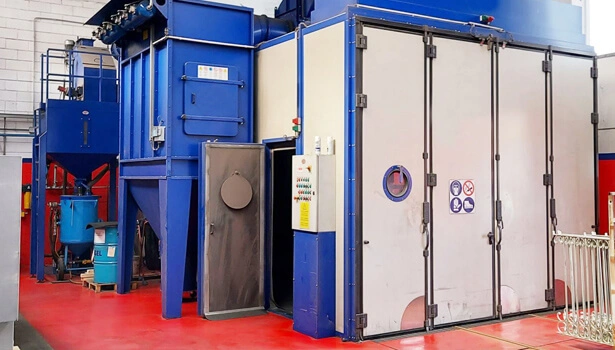
A 2024 upgrade from manual spray to a fully Automated paint line at a Midwest contract coater (2 shifts, 1,200 parts/day) produced the following 12-month results:
Transfer efficiency increased from 38% (manual air spray) to 71% using electrostatic rotary bells with closed-loop flow control → paint consumption reduced by 46% (≈ $112,000 annual savings at $18/liter for high-solids polyurethane).
Rework (runs, dirt inclusions) fell from 11.3% to 2.7% due to consistent gun distance and viscosity control → saving $78,000 in labor and material for rework.
Color change downtime dropped from 22 minutes to 6.5 minutes, adding 4.1 productive hours per week → equivalent to 9,800 extra parts coated annually.
Paint booth exhaust VOC emissions decreased by 61% (better transfer efficiency and reduced solvent use), simplifying environmental compliance.
Total annual savings: $190,000+ . The capital cost of the new line (including robots, circulation system, and oven modifications) was $410,000, giving a payback period of 26 months. After 3 years, the cumulative net benefit exceeded $350,000.
To maintain a competitive edge, B2B finishers should monitor these innovations that augment traditional Automated paint line capabilities. Early adopters report significant quality and throughput gains.
Hyperspectral cameras (400–1000 nm) positioned after the flash-off zone detect sags, pinholes, and thin spots using reflectance analysis. The system triggers a robotic touch-up station or rejects the part automatically, preventing oven-cured defects that are difficult to repair.
Recurrent neural networks (RNNs) trained on historical part geometries, color families, and environmental conditions predict optimal paint flow and atomization air settings for each new job. One automotive supplier reduced setup waste by 78% using such a model.
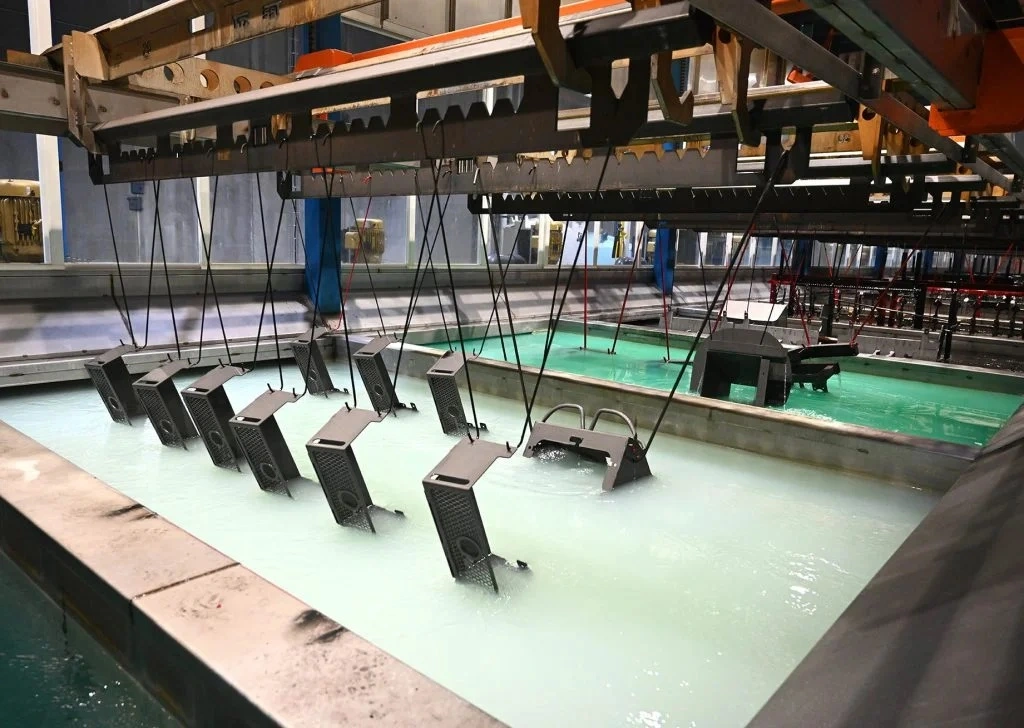
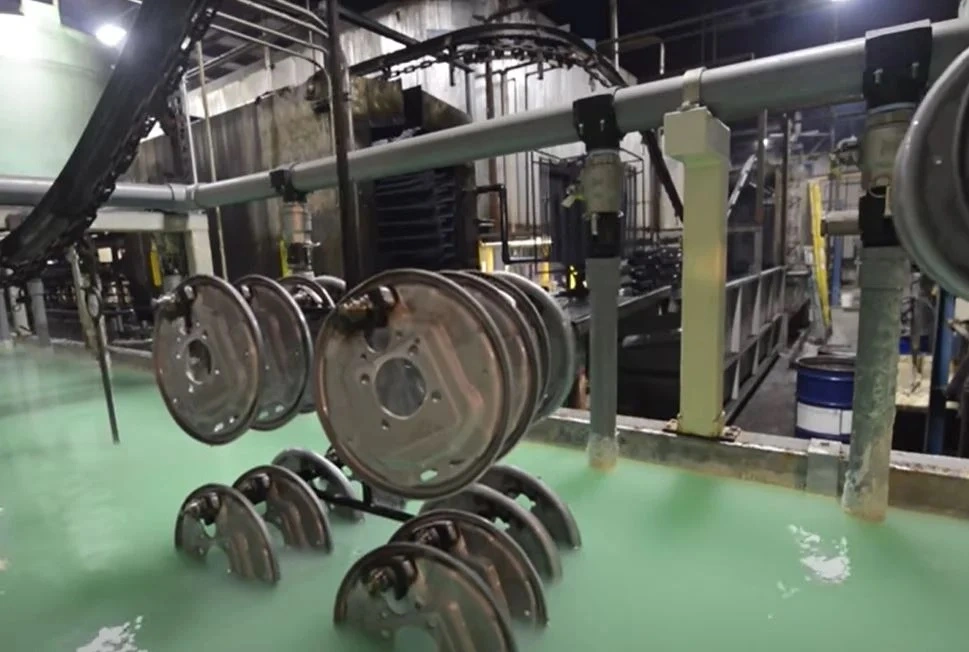
For corrosion-critical components (e.g., chassis parts), an integrated electrocoating tank followed by a topcoat automated paint line provides dual-layer protection. The automated line handles both processes with a single conveyor, eliminating intermediate storage and handling damage.
Many automated lines fail to meet promised OEE because of mismatched component selection, inadequate commissioning, or lack of operator training. HANNA provides a process-guaranteed approach for each Automated paint line project. Their scope includes:
Pre-installation airflow simulation (CFD) of the spray booth to verify downdraft uniformity and avoid recirculation zones that cause overspray deposition on parts.
Robot path validation using a digital twin – collision detection and cycle time simulation before physical installation.
On-site commissioning with statistical process control (SPC) charts for film thickness, gloss, and adhesion (cross-cut test per ASTM D3359).
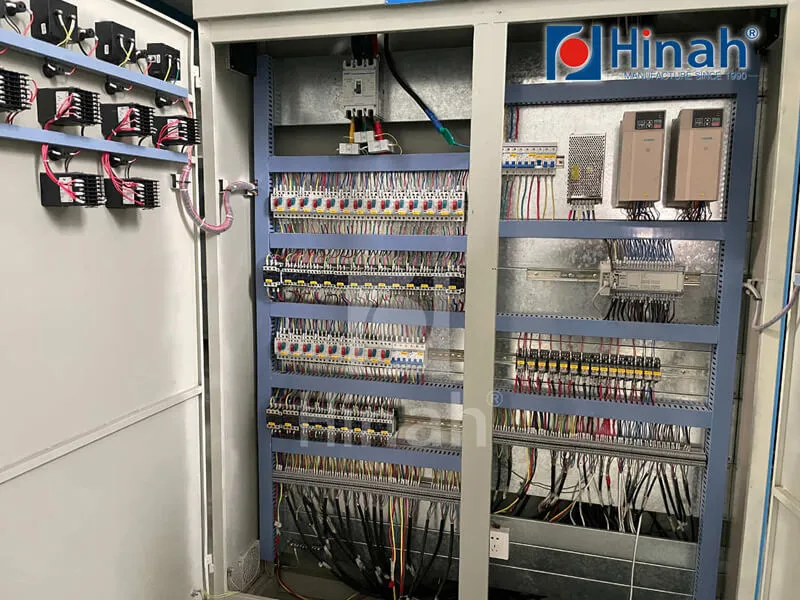
Predictive maintenance package: vibration sensors on reciprocators, pressure decay monitoring on paint pumps, and solvent consumption tracking.
After commissioning, HANNA provides a 24-month performance guarantee: first-pass yield above 95% and color change time under 8 minutes for up to 12 colors. For a recent agricultural equipment manufacturer, this guaranteed approach reduced unplanned downtime by 57% over two years.
A1: For continuous monorail conveyors, speeds from 1.5 to 4.5 m/min are common. The exact speed depends on required film thickness and number of spray guns. Example: two reciprocators with 4 guns each can coat 2.5 m/min while depositing 50–60 µm wet film thickness. Always verify with a trial run using your part geometry; spray pattern overlap must remain between 25% and 35% to avoid striping.
A2: Install a permanent magnetic filter (150–200 Gauss) and a 100-mesh basket strainer in the return line. Additionally, use a side-stream filtration loop (1–2% of main flow) with 5 µm absolute-rated bag filters. Automated back-flushing on differential pressure >0.8 bar reduces manual cleaning frequency from weekly to quarterly.
A3: Yes, but modifications are often necessary. Automated lines typically have higher transfer efficiency, meaning less overspray and therefore less solvent load entering the oven. You may need to reduce oven exhaust airflow to maintain temperature uniformity. A thermal profiling study (using at least 6 data loggers) is strongly recommended before finalizing integration. HANNA offers retrofit controllers that adapt oven zone temperatures to the new line's output.
A4: Oil aerosols (>0.01 mg/m³) or water vapor (pressure dew point above -20°C) cause fisheyes, cratering, and poor atomization. Install a refrigerated air dryer (dew point +3°C) plus a coalescing filter (0.01 µm) at the booth inlet. Monitor with a dew point meter; any reading above +5°C requires immediate dryer maintenance. Many Automated paint line failures trace back to neglected air preparation.
A5: Coriolis mass flow meters: every 12 months using a master meter of known accuracy. Rotational viscometers: quarterly with certified viscosity standards (e.g., 200 cP, 500 cP at 25°C). Also perform a "solvent flush test" monthly: run pure solvent through the system and verify that the flow meter reads zero after 10 seconds of flushing – residual reading indicates fouling.
A6: For a line with fast color change (<8 minutes), automated coating becomes cost-effective at batch sizes as low as 50 parts, provided the annual volume exceeds 30,000 parts. For high-mix / low-volume (e.g., 20 different colors per shift), consider a robotic cell with a quick-clean paint kitchen. Always perform a cost-per-part simulation; many contract coaters find that batches under 80 parts are still profitable with automation because of reduced labor and reject rates.
Generic equipment quotations ignore the specific interactions between your part geometry, current paint chemistry, and conveyor constraints. HANNA offers a no-charge, three-step engineering review for qualified B2B buyers: (1) remote analysis of your existing line's OEE and defect Pareto, (2) proposal of a tailored Automated paint line configuration with CAD layout, and (3) a written ROI projection based on your actual material and labor costs.
Send the following details to receive a detailed technical comparison within 3 business days: current weekly output (parts or m²), number of colors used, top three defect types, and floor space available. All inquiries receive a digital twin simulation video of your parts being coated on the proposed line.
Contact HANNA’s finishing automation team now: https://www.autocoatinglines.com/contact.html – mention “Automated paint line inquiry” in the subject line for priority engineering support.