Industrial finishing faces constant pressure to improve quality, reduce material waste, and increase throughput. While manual spraying and fixed reciprocators have served the industry for decades, the complexity of modern part geometries and the demand for consistent film build have driven a shift toward intelligent automation. Powder coating robots represent the apex of this evolution, offering adaptive control and repeatability that static systems cannot match. This article examines the engineering principles, application benefits, and integration strategies for robotic powder coating, providing a data-driven perspective for finishing professionals.
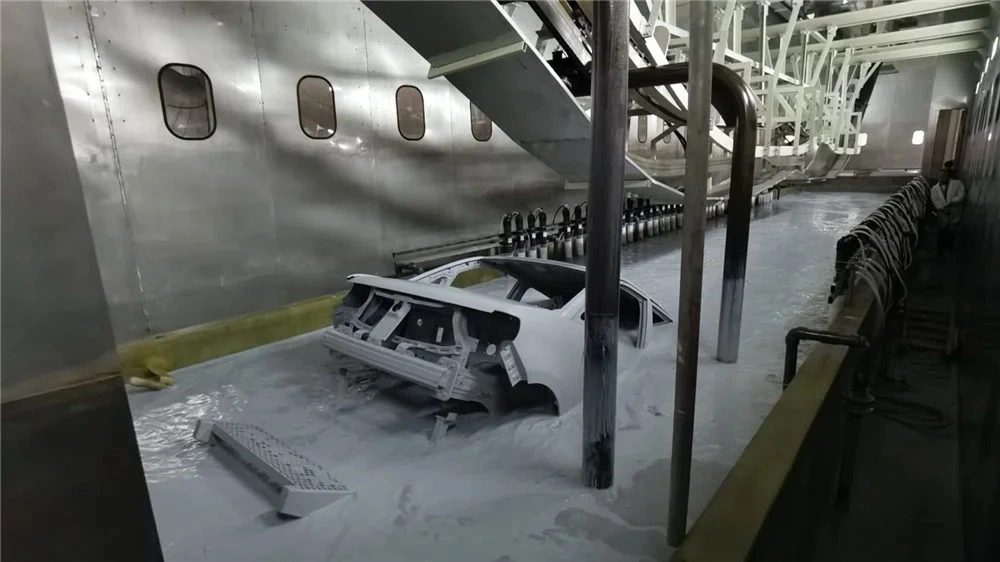
Selecting the right robotic platform is the first critical decision. The mechanical structure dictates reach, payload, and the ability to access complex cavities. Modern powder coating robots generally fall into two categories, each suited to specific production environments.
Articulated Arm Robots: Typically with 6 axes of freedom, these mimic the dexterity of a human wrist. They excel at coating parts with deep recesses, internal corners, and varying orientations. Their compact footprint allows them to be mounted on pedestals or overhead rails, enabling them to service multiple spray booths.
Linear (Gantry) Robots: These operate on an X‑Y‑Z Cartesian coordinate system. They are ideal for extremely long or wide parts, such as architectural extrusions or large vehicle chassis. While they offer less flexibility in wrist movement, they provide superior rigidity and can carry heavier payloads, including multiple guns.
Both architectures, when properly configured as powder coating robots, deliver film thickness tolerances of ±5 microns, a level unattainable with manual application.
The adoption of robotic application is not universal; it is driven by specific part characteristics and production volumes. Below are three sectors where powder coating robots have become indispensable.
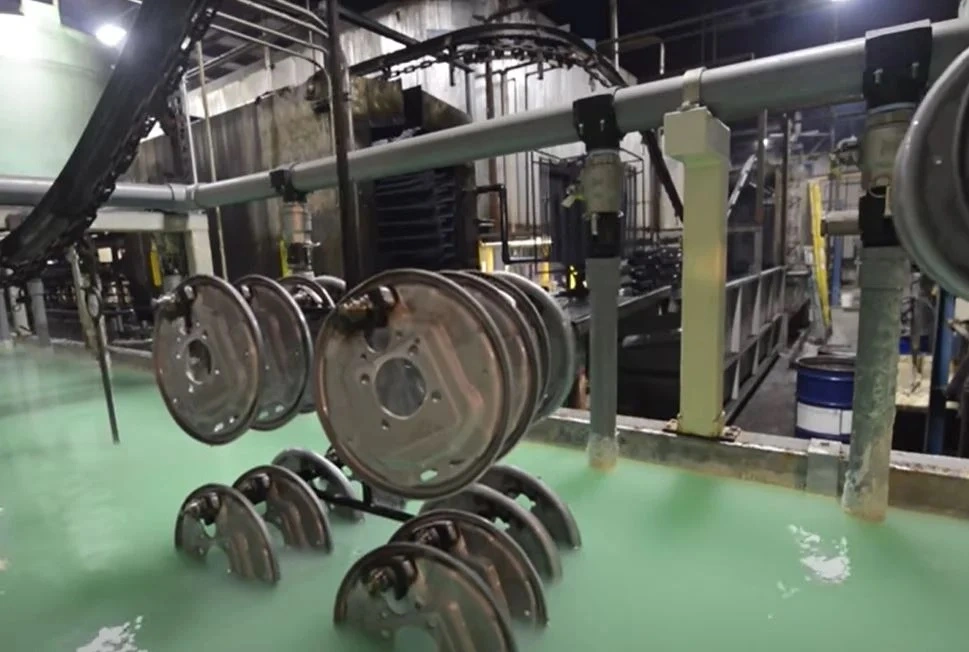
The automotive industry demands both aesthetics and corrosion resistance. Wheels, with their complex spokes and barrel interiors, present a classic Faraday cage challenge. Robots equipped with smart‑scanning software can adjust gun angle and distance in real time to ensure electrostatic powder penetration into recessed areas, eliminating light coats and reducing rework by up to 30%.
Heavy equipment parts—such as tractor frames, lift arms, and counterweights—are large, heavy, and often have irregular geometries. Manual coating of these parts is physically demanding and prone to operator error. Powder coating robots with high‑payload wrists can manipulate heavy guns and maintain consistent standoff distances, achieving uniform film build even on sharp edges and weld seams.
Long aluminum extrusions used in window frames and curtain walls require a flawless finish for aesthetic appeal. Gantry‑style robots with multiple guns can coat these profiles in a single pass, adjusting powder flow for varying cross‑sections. This approach eliminates the striping effect often seen with stationary guns and reduces powder consumption by precisely targeting only the substrate.
Investing in robotic automation is justified by measurable improvements in key performance indicators. Data from recent line integrations, including those executed by HANNA, demonstrate significant gains.
Transfer Efficiency: Robotic systems consistently achieve first‑pass transfer efficiencies of 75‑85%, compared to 40‑60% for manual spraying. This reduction in overspray translates directly to lower powder purchases and reduced landfill waste.
Cycle Time Reduction: By programming optimal gun paths and eliminating operator fatigue breaks, robots can reduce coat times by 20‑35% on complex parts. The ability to run multiple shifts with minimal supervision further enhances throughput.
Defect Reduction: Film thickness variation is a primary cause of orange peel, poor adhesion, and color mismatch. Robotic application, guided by thickness feedback sensors, keeps variation within ±5‑8 microns, slashing rework rates from 10‑15% down to under 2%.
While the benefits are clear, integrating powder coating robots into an existing line requires careful planning. Common hurdles include programming complexity, synchronization with conveyors, and safety compliance.
Modern robotic systems rely on offline programming (OLP) software. Engineers import CAD models of parts and simulate gun trajectories before any physical installation. This digital twin approach allows for collision detection and cycle time optimization without halting production. HANNA utilizes such simulation tools to validate robotic paths for multi‑part families, ensuring changeovers are seamless.
To coat moving parts without stopping the line, robots must synchronize with the conveyor. This requires precise encoder feedback and real‑time kinematic calculations. Advanced systems incorporate 2D/3D vision sensors to identify part presence and orientation, allowing the robot to adapt its program if a part is skewed or of a different variant. This level of adaptive control is a hallmark of modern powder coating robot installations.
Powder coating environments contain combustible dust. Robots and their controllers must be rated for hazardous locations (Class II, Division 2 or Zone 22). Additionally, safety fencing, light curtains, and interlock systems must prevent operator access during automatic operation, complying with ISO 10218 and ANSI/RIA R15.06 standards.
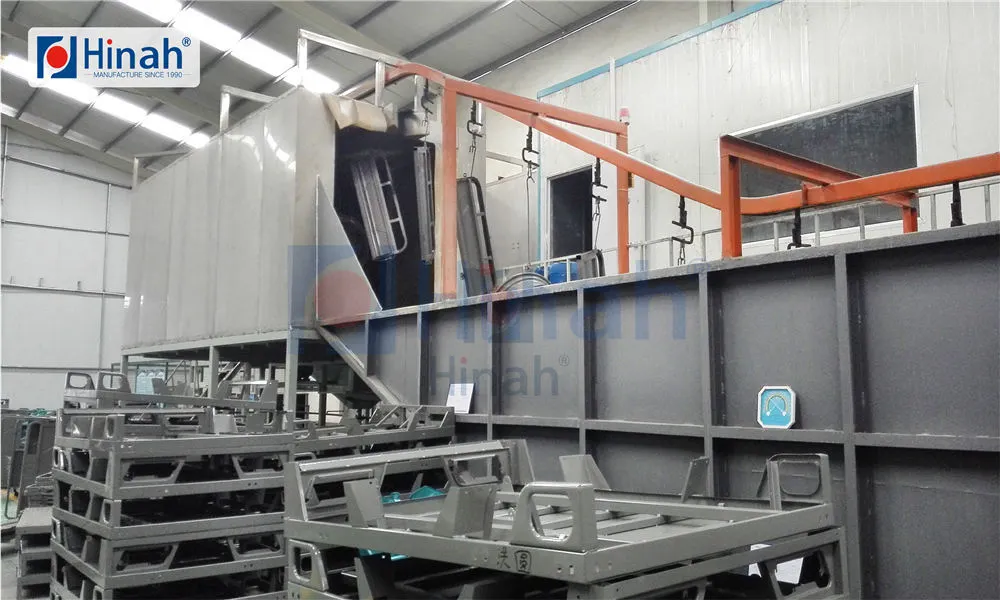
The technology continues to evolve, driven by sensor advancements and artificial intelligence. We are seeing the emergence of self‑learning systems that analyze coating thickness data from each pass and automatically adjust parameters (voltage, powder flow, atomizing air) to compensate for environmental changes. Predictive maintenance, using vibration analysis and current monitoring on robot servos, is becoming standard, reducing unplanned downtime. These innovations ensure that powder coating robots will remain at the forefront of finishing technology.
For manufacturers seeking to upgrade their finishing capabilities, the decision to automate with robots is no longer a question of "if" but "when" and "how." The precision, consistency, and material savings offered by modern robotic systems are essential for competing in markets with rising quality expectations and tightening environmental regulations.
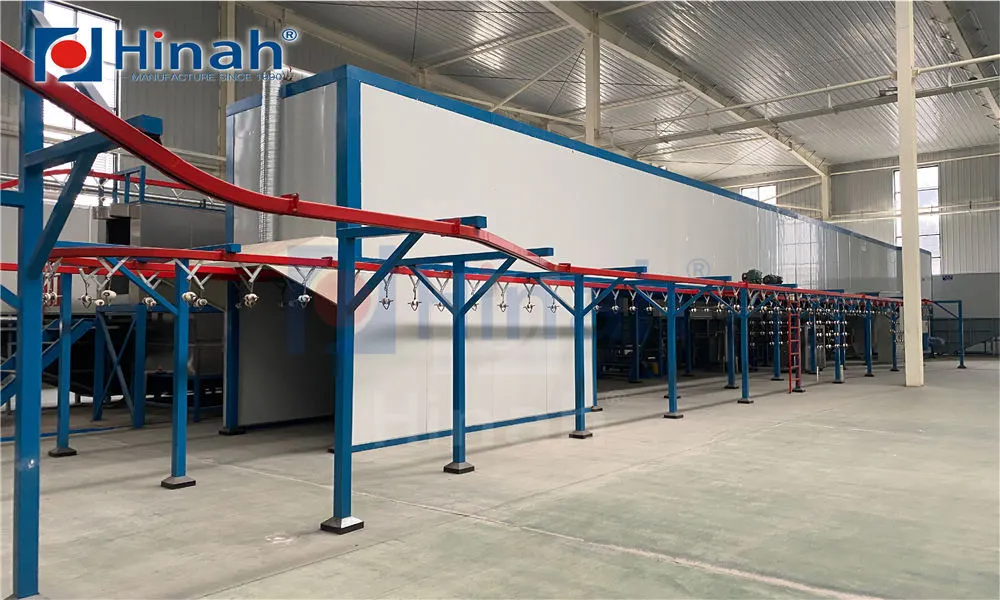
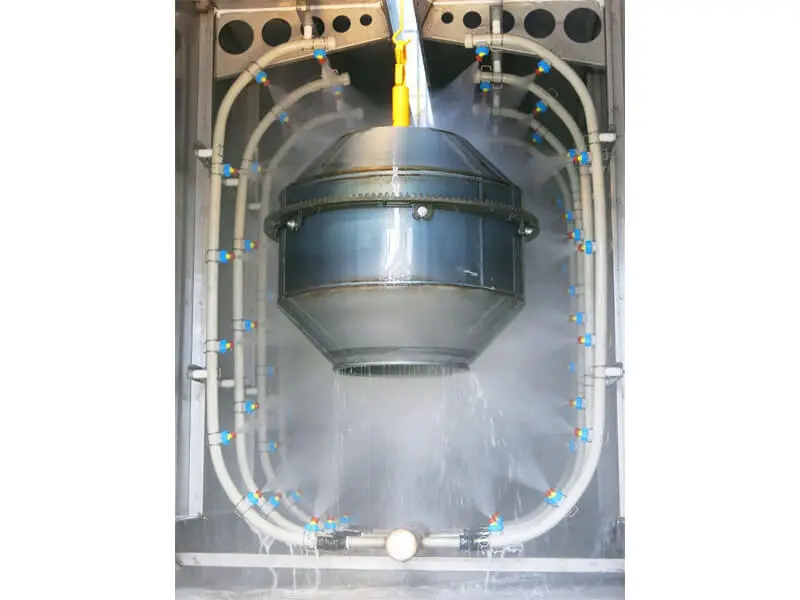
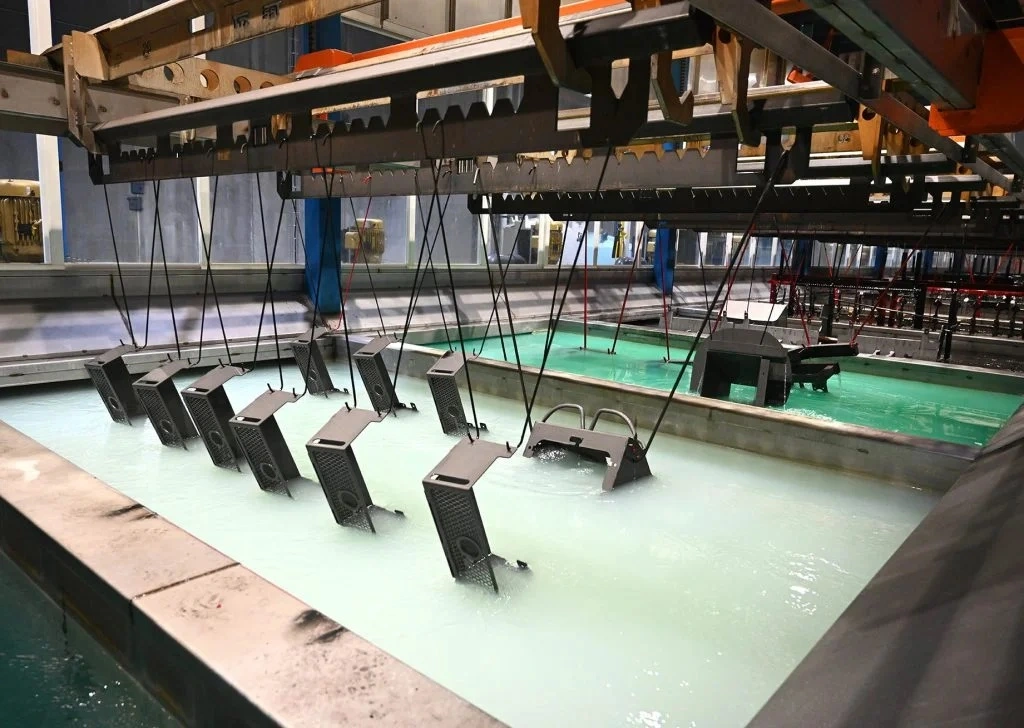
HANNA provides complete powder coating lines that integrate state‑of‑the‑art robotics with pretreatment, application booths, and paint drying ovens. Their engineering team works closely with clients to select and program the optimal robotic configuration for specific part mixes, ensuring a seamless transition to automated finishing.
Q1: What is the typical ROI for integrating powder coating
robots?
A1: ROI depends on current manual labor costs, powder waste,
and rework rates. Most manufacturers see payback within 18 to 36 months. The
savings come from reduced labor (one operator can oversee multiple robots),
20‑30% lower powder consumption due to higher transfer efficiency, and a
significant drop in defective parts.
Q2: Can powder coating robots handle multiple colors and quick
changeovers?
A2: Yes. Modern robotic cells are designed with
quick‑change gun systems and color‑dedicated feed lines. The robot controller
can switch color programs in seconds, and purge cycles are automated to minimize
cross‑contamination. For high‑mix, low‑volume production, robots equipped with
vision recognition can automatically select the correct program based on the
part entering the booth.
Q3: Are powder coating robots difficult to program for complex
parts?
A3: Programming has become significantly easier with offline
simulation software. Engineers can import CAD models and use drag‑and‑drop
interfaces to define gun paths. For parts that are frequently changed, some
systems offer “teach by demonstration” where an operator manually guides the
robot arm through the desired path, and the controller records the
trajectory.
Q4: How do powder coating robots handle the Faraday cage
effect?
A4: Robots address Faraday cages through adaptive control.
They can dynamically reduce the electrostatic voltage as the gun approaches a
recess, lower the powder flow rate, and increase the gun’s angle of attack. Some
systems use tribo‑charging guns on the robot wrist, which rely on friction
rather than high voltage, further improving penetration into corners.
Q5: What maintenance is required for powder coating
robots?
A5: Routine maintenance includes cleaning the robot arm and
protective bellows to prevent powder buildup, inspecting cables and hoses for
wear, and checking gearbox oil levels. Modern robots have predictive maintenance
features that alert operators when servos or bearings show signs of degradation,
allowing for scheduled repairs without unplanned downtime.
Q6: Can existing manual powder booths be retrofitted with
robots?
A6: In many cases, yes. Retrofitting involves installing a
robot pedestal or rail system, upgrading the booth controls for safety
interlocks, and adding conveyor tracking encoders. HANNA offers
retrofit packages that integrate seamlessly with existing booths and curing
ovens, minimizing capital expenditure while providing the benefits of
automation.