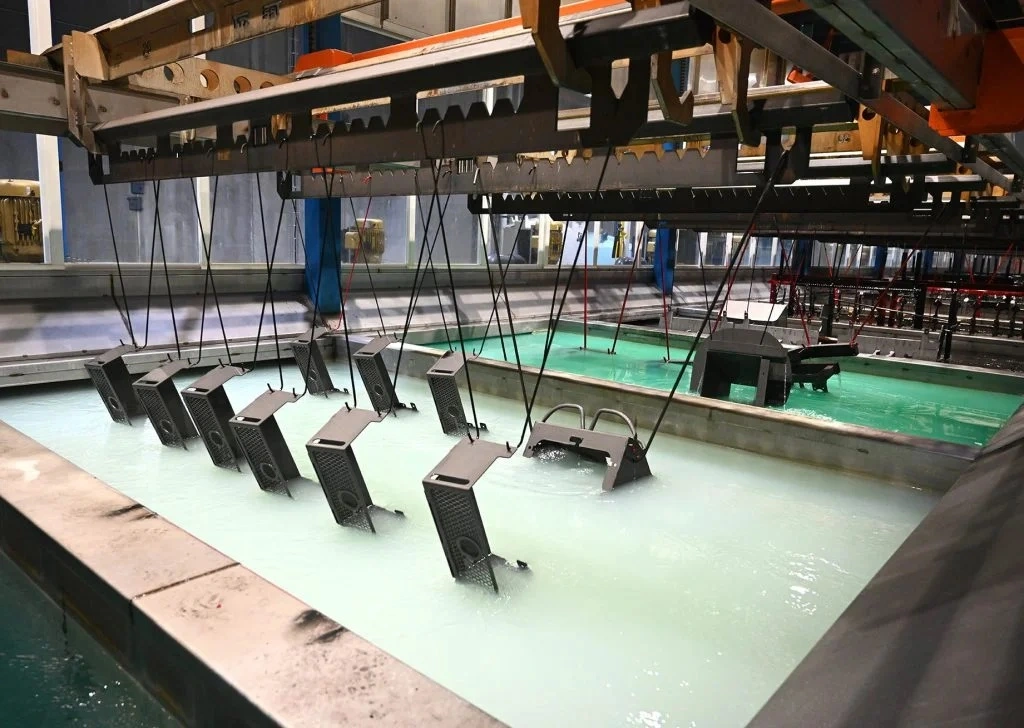
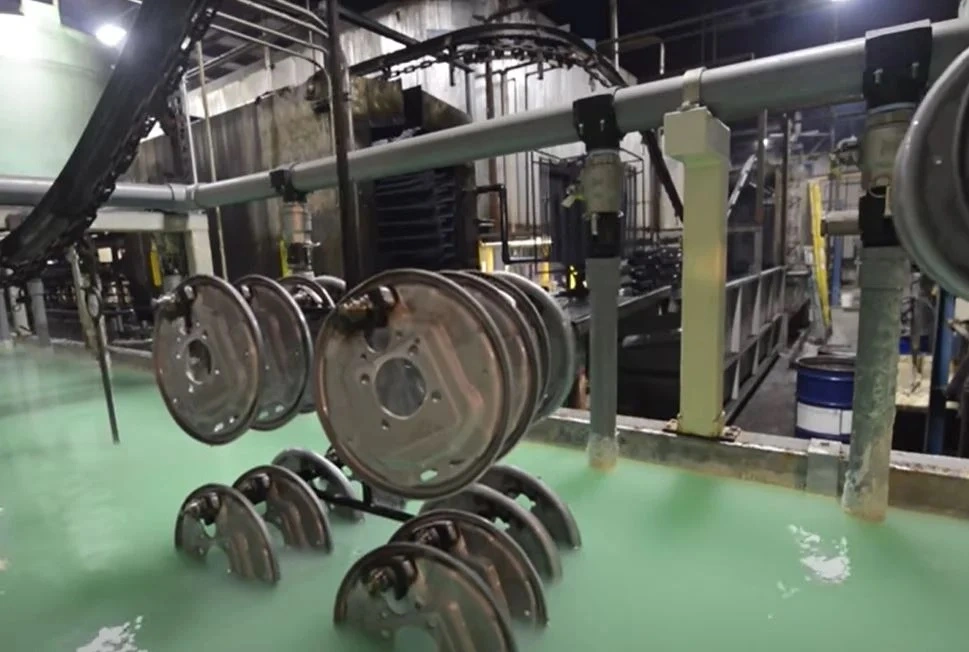
For manufacturers coating massive parts—wind turbine towers up to 25 meters, railway carriage frames, mining equipment, or structural steel beams—a standard batch oven is insufficient. The Big powder coating oven must address unique challenges: extreme part dimensions, dramatic variations in thermal mass between thick flanges and thin sheets, and the need for uniform heat distribution across long conveyor paths. A poorly designed large oven results in under-cured heavy sections, over-cured edges, energy waste exceeding 30%, and scrap rates that erode profit margins. This article, based on field data from over 150 industrial installations, provides process engineers and plant managers with technical criteria for specifying, optimizing, or upgrading Big powder coating oven systems. HANNA has delivered such systems across Europe, Asia, and the Americas, integrating them with complete finishing lines.
Large-scale components introduce three categories of difficulty that smaller ovens never encounter:
Thermal stratification over height: When the oven interior exceeds 2.5 meters in height, hot air naturally rises, creating a temperature gradient of 15–20°C from floor to ceiling. Without forced vertical recirculation, parts on lower conveyor hangers will under-cure while upper sections may over-cure.
Mass-induced thermal lag: A 1,200 kg steel fabrication might require 50 minutes to reach peak metal temperature (PMT), whereas attached thin brackets reach PMT in 12 minutes. This difference demands zoned temperature control and sometimes separate boost zones.
Conveyor integration for heavy loads: Power-and-free or heavy-duty monorail conveyors must withstand prolonged heat (up to 230°C) while carrying loads exceeding 2,000 kg per carrier. Misalignment at oven entries causes jams and cold air infiltration.
Energy density and distribution: A 30-meter-long Big powder coating oven can consume 3–5 MW of thermal power. Balancing zone-by-zone demand with heat recovery is mandatory for operational cost control.
Engineers evaluating Big powder coating oven specifications must verify the following subsystems. Each parameter is validated by HANNA’s proprietary design methodology.
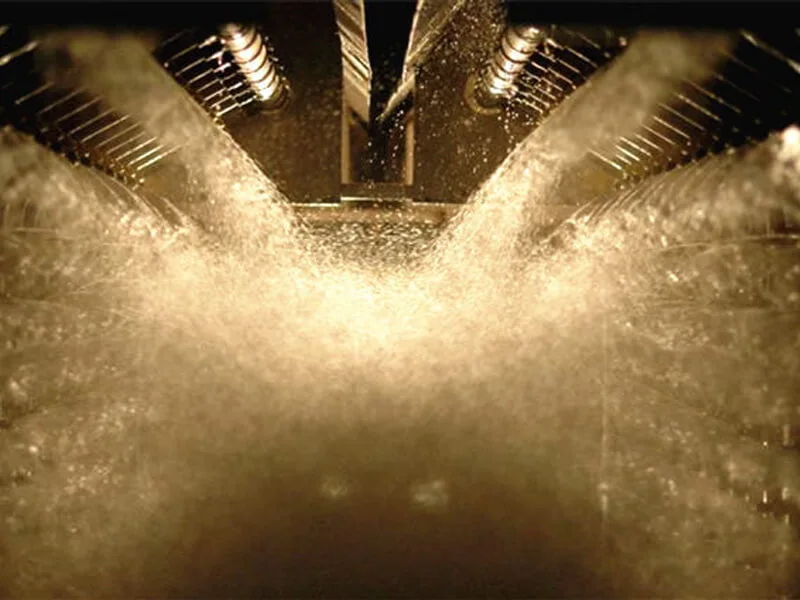
Downflow nozzle banks: High-velocity jets (4–6 m/s) spaced every 600 mm on both side walls and ceiling, directed vertically downward. Computational Fluid Dynamics (CFD) modeling ensures top-to-bottom ΔT ≤ ±3°C at up to 3.5m height.
Recirculation ratio: 85–92% recirculated air minimizes fuel consumption while maintaining stable oven pressure. Supply fans with VFDs maintain static pressure regardless of conveyor load.
Adjustable baffles: Allow field fine-tuning of airflow to compensate for asymmetric part loading or variations in part geometry.
Mineral wool density ≥160 kg/m³, thickness 200–250 mm: Achieves external wall temperature < ambient +12°C, reducing radiant heat loss for long ovens by approximately 22% compared to 150mm insulation.
Labyrinth entry/exit seals: Three-stage curtain systems with air knives prevent cold infiltration when tall parts pass through. This alone reduces energy use by 8–10%.
Expansion-resistant panel joints: High-temperature gaskets (rated 260°C continuous) and bolted lap joints avoid thermal warpage over long oven lengths.
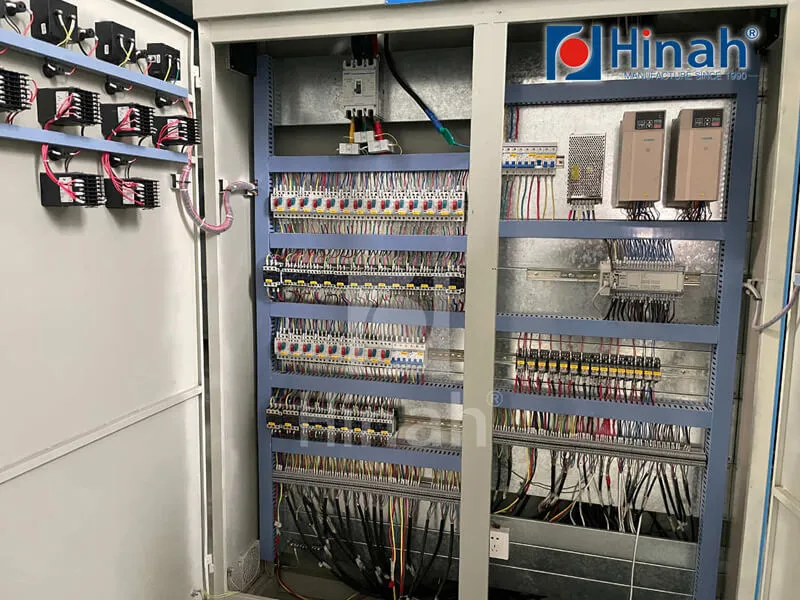
Minimum 6–8 independent control zones: Each zone has its own burner, recirculation fan, and PT100 sensor array. For a 30m oven, 6 zones of 5m each provide granular control.
Dynamic mass-flow algorithm: The PLC tracks conveyor load (via weigh bridge or power consumption of drive motors) and automatically adjusts zone setpoints to maintain consistent PMT across varying part densities.
Continuous thermal profiling: Traversing thermocouple systems (6–12 probes) travel through the Big powder coating oven every 4 hours, generating a real-time uniformity report. Data is stored for ISO 9001 traceability.
A Big powder coating oven operating 6,000 hours per year can incur gas bills exceeding $400,000 annually. The following energy recovery technologies deliver rapid ROI (typically 12–18 months).
Exhaust gas recuperators: Stainless steel crossflow heat exchangers preheat fresh combustion air using oven exhaust (typically 180–230°C). Achieves 15–20% fuel reduction. Ensure condensate drains for low-temperature operation.
Variable frequency drives (VFDs) on all circulation fans: During reduced production (night shifts or weekends), fan speeds drop to 40%, cutting electrical consumption by 65% while maintaining minimum holding temperature.
High-turndown modulating burners (20:1 ratio): Maintain optimal excess O₂ (3–4%) across a wide firing range, avoiding the inefficiency of on/off cycling. Modern burners also reduce NOx formation by 30%.
Flue gas condensation stage (for natural gas): Recover latent heat from water vapor in exhaust. This advanced step adds 5–7% efficiency but requires corrosion-resistant alloys (e.g., 316L stainless steel).
Practical example: A European wind tower manufacturer replaced an aging radiant-panel Big powder coating oven with a HANNA engineered convection system featuring 250mm insulation, recuperators, and VFDs. Annual natural gas consumption dropped by 210,000 therms (33%), electricity by 85,000 kWh, and PMT variation improved from ±9°C to ±2.5°C—reducing scrap from 11% to 2.3%.
The conveyor system inside a big oven must withstand prolonged heat exposure (up to 230°C) and heavy point loads. Key specifications include:
Power-and-free or enclosed track conveyor: Allows accumulation and independent carrier movement. Chain pins should be heat-treated alloy steel; bearings must be high-temperature grease (rated 250°C).
Expansion loops: Steel rails expand up to 35mm over 30m length. Fixed expansion joints or “floating” supports prevent buckling.
Load bars & heat shields: For parts exceeding 1,500 kg, use ceramic fiber heat shields between carrier and part to avoid localized heat sink effects.
Integrating the conveyor controls with the big powder coating oven’s PLC ensures that if the line stops, the heating system automatically reduces power to prevent over-curing of stationary parts. Complete powder coating plants from HANNA include pre-fabricated conveyor interface modules, reducing field installation time by 40%.
Even with a well-built oven, operator practices and maintenance schedules determine final quality. Below table maps common defects to root causes and corrective actions specific to large ovens.
Edge over-cure / discoloration (on mixed-thickness parts): Caused by slow ramp-up of heavy sections while thin edges already cured. Solution: implement infrared pre-heating zone at oven entrance (short wavelength, 1.2–1.6 μm) to raise thick masses faster. Alternatively, re-route airflow to reduce velocity on sharp edges using perforated baffles.
Soft coating in central zones of large panels: Typically due to “air shadow” effect—large flat surfaces block convective heat transfer. Remedy: install high-impingement nozzles (30° angle) directed at 90° to panel surfaces every 500mm. Increase recirculation fan static pressure.
Dust contamination embedded in cured film: Often from deteriorated oven insulation fibers or rust particles from conveyor. Solution: replace old mineral wool with bio-soluble fiber; schedule quarterly oven interior cleaning using HEPA-filtered vacuum systems.
Uneven gloss across long profiles (e.g., 15m beams): Caused by temperature drop near oven exit due to cold makeup air. Correct by adding a short after-heating zone (last 2–3m) with independent burner and reduced recirculation to maintain PMT until part leaves the oven.
Preventive maintenance for Big powder coating oven must include semiannual airflow velocity profiling (hot-wire anemometer at 25 points), annual insulation thermal imaging, and quarterly calibration of all thermocouples against a NIST-traceable reference.
Modern large ovens function as data nodes in smart factories. Key capabilities that reduce downtime and energy waste include:
Predictive maintenance dashboard: Vibration sensors on fan bearings and burner pressure transducers send alerts when thresholds (e.g., 4.5mm/s vibration) are exceeded, preventing catastrophic failures.
Digital twin thermal simulation: Using historical production data and real-time conveyor load, a cloud-based model predicts PMT for each unique part SKU and recommends optimized zone setpoints. This feature is now standard on Industry 4.0 powder coating plants.
Remote expert access: HANNA engineers can log into the oven’s edge gateway to analyze temperature traces, burner modulation patterns, and recirculation ratios, resolving 80% of process issues without a site visit.
A North American heavy-truck frame coater reduced unplanned oven downtime by 74% after installing HANNA’s predictive monitoring package, directly adding 118 production hours per year.
Q1: What maximum part dimensions can a big powder coating oven
handle?
A1: Custom-engineered ovens routinely accommodate parts up
to 25m length, 4.5m width, and 3.5m height. Conveyor loading capacity can reach
3,000 kg per carrier. Big powder coating oven dimensions are dictated by your product envelope and production volume;
HANNA provides modular designs that can be
expanded later by adding 3–4m sections.
Q2: How do you maintain temperature uniformity when curing mixed
batches of heavy and light parts?
A2: Use zoned control with
variable airflow dampers. Heavy parts should be placed on carriers with higher
heat capacity and positioned near nozzle impingement zones. Modern systems
employ an “intelligent zoning” algorithm that increases setpoint in zones where
heavy loads are detected (via conveyor weight sensors). Also consider a 4-zone
infrared pre-heat to elevate thick sections before entering the main convection
oven.
Q3: What is the typical ramp-up time from cold start to operating
temperature for a big oven?
A3: For a 30m gas-fired oven with 200mm
insulation, expect 45–75 minutes to reach 200°C, depending on ambient
temperature. To shorten this, specify high-fire bypass burners (150% of normal
capacity) that operate only during warm-up. However, for 24/7 operations,
maintain a “standby” temperature of 120°C overnight, reducing warm-up to 18
minutes.
Q4: Can I convert my existing large oven from gas to electric
infrared?
A4: Yes, but typically as a hybrid. Install medium-wave IR
emitters (2.0–2.5 μm) in the first 4–6 meters of the oven. This pre-heats heavy
sections without overshooting thin materials. Gas-fired convection remains for
the rest of the cure cycle. This hybrid configuration reduces overall oven
length by 20% and improves ramp-up control. Hybrid powder coating plant
designs from HANNA integrate this seamlessly.
Q5: How often should air filters be replaced on a big powder coating
oven?
A5: Primary intake filters (G4 grade) require monthly
inspection and replacement every 3 months in dusty environments. Secondary
filters (F7) downstream of the fan should be replaced every 6 months. Clogged
filters reduce airflow, causing temperature stratification and increasing fan
energy by 15–20%. Install a differential pressure monitor (setpoint 250 Pa) to
alert operators automatically.
Q6: What safety systems are mandatory for a big powder coating
oven?
A6: At minimum: excess temperature limiter (backup thermostat
that cuts fuel at 250°C), flame supervision with UV scanners, purge timer
(ensures 4 air changes before ignition), and explosion relief panels (0.1 m² per
10 m³ of oven volume). For ovens using flammable powder residues, also install
LEL (lower explosive limit) monitors with automatic shutdown.
Q7: How do I calculate the required fresh air makeup for my big
oven?
A7: Fresh air requirements are typically 10–15% of
recirculation volume to remove solvents and volatile compounds from powder
outgassing. For heavy-gauge parts with thicker coatings (≥150 μm), increase to
20%. A proper heat recovery system should pre-heat this fresh air using exhaust
gases; otherwise, each 1 m³/s of cold air (10°C) raised to 200°C adds 230 kW of
burner load.
Selecting or upgrading a Big powder coating oven requires a partner who understands thermal dynamics, heavy material handling, and production economics. HANNA delivers engineered-to-order systems backed by CFD modeling, energy simulations, and 24/7 global support. Every oven includes a performance guarantee: ±2.5°C uniformity, 20% lower energy use than baseline conventional designs, and full integration with your existing conveyor, booth, and pretreatment sections.
Stop compromising between throughput and coating quality. Contact our technical sales team to request a free thermal consultation, detailed quotation, or a virtual walkthrough of a reference installation in your industry.
Send your inquiry now: https://www.autocoatinglines.com/ – A HANNA process engineer will respond within 8 business hours with preliminary analysis questions and case studies relevant to your application.