Investing in a new finishing line represents a significant capital expenditure. When procurement managers and business owners begin their search, the query "powder coating plant price" often yields a wide spectrum of figures, from seemingly affordable entry-level systems to multi-million-dollar turnkey solutions. The variance is not arbitrary; it reflects fundamental differences in throughput capacity, automation level, energy efficiency, and the specific engineering required for different part geometries. This article deconstructs the components that determine the total investment, providing a framework to evaluate proposals and align expenditure with production goals.
Before analyzing the powder coating plant price, one must define the system boundaries. A complete plant is not merely a spray booth; it is an integrated sequence of material handling, surface preparation, application, and thermal curing. Each subsystem contributes proportionally to the total cost.
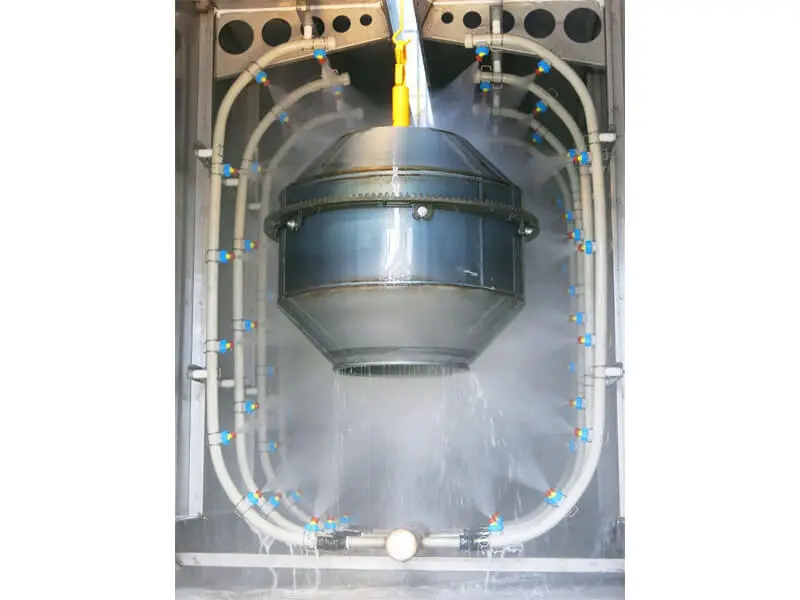
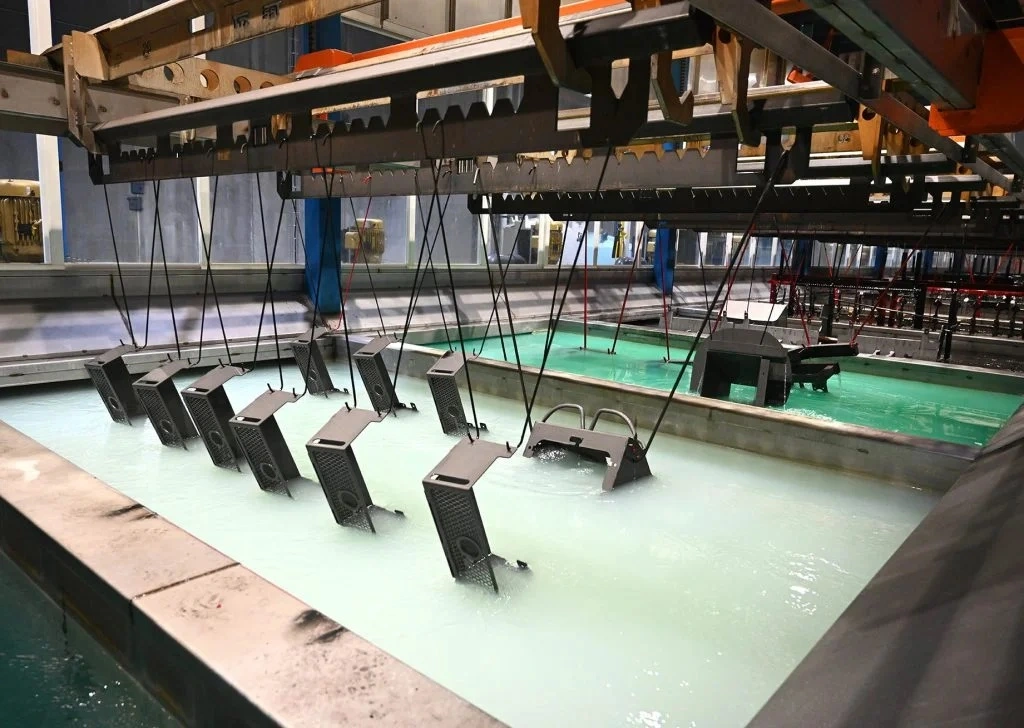
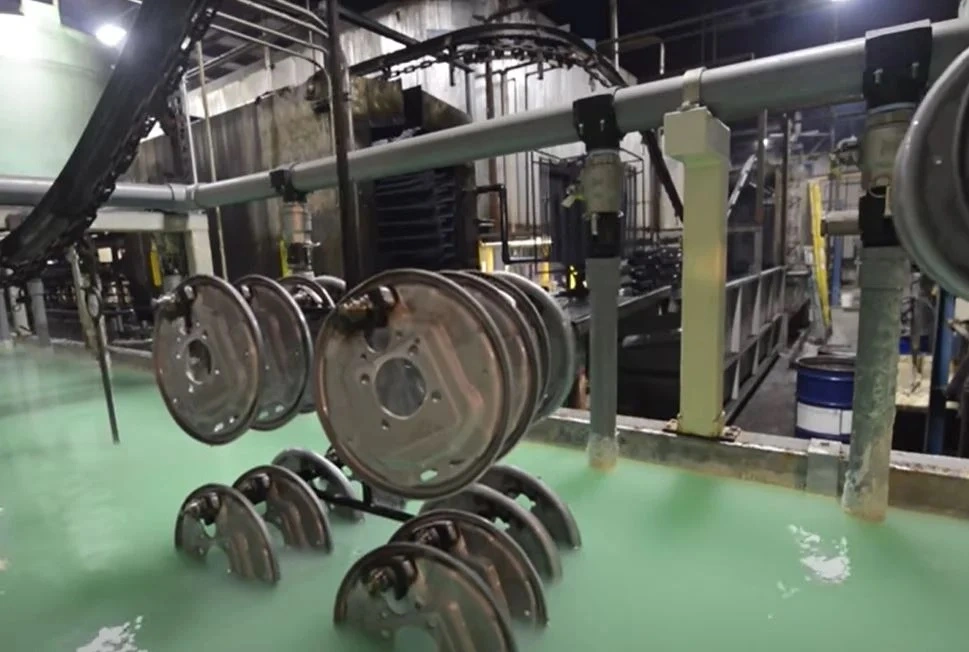
Pretreatment System: Washer stages (spray or immersion), chemical dosing, water treatment, and dry-off oven.
Application Area: Spray booths, powder recovery units (cyclone and cartridge filters), and manual or automatic gun systems.
Curing System: Paint drying ovens (convection, infrared, or combination), designed for specific heat-up rates and part densities.
Material Handling: Overhead conveyors (power-and-free or I-beam), part carriers, and load/unload stations.
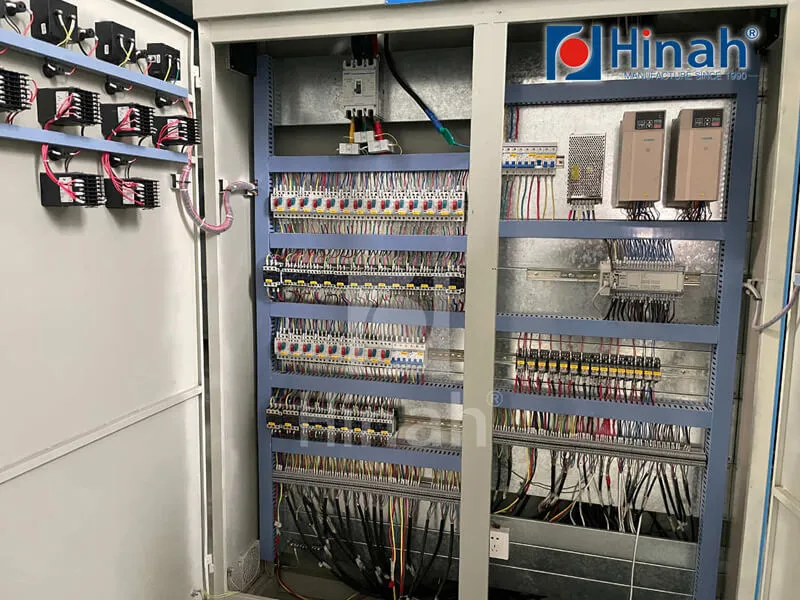
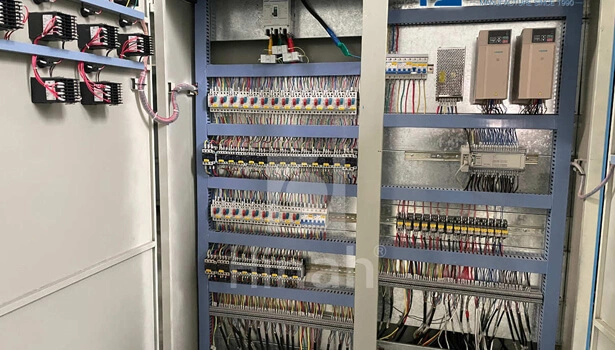
Controls and Environmental: PLC automation, HMIs, emission control systems, and waste treatment.
A comprehensive quotation must itemize these elements. A low headline powder coating plant price often excludes critical components like pretreatment or the curing oven, leading to budget overruns later.
To understand where your budget is allocated, examine the typical cost distribution for a mid-to-high-volume industrial line. These percentages are based on industry benchmarks and projects executed by HANNA.
Chemical pretreatment ensures coating adhesion and corrosion resistance. A multi-stage wash system with heated tanks, stainless steel construction, and precise chemical dosing represents a significant investment. Skimping here leads to premature coating failure. The complexity rises with part geometry; parts with deep recesses may require immersion pretreatment, which is more expensive than spray washers.
This includes the spray booth, powder management system, and application devices. Automated systems with powder coating robots or reciprocators cost more upfront than manual booths but drastically reduce labor and material waste. The recovery system—whether a simple cyclone or a high-efficiency cartridge filter with color-change capabilities—also impacts the powder coating plant price. Multi-color operations require quick-change systems, which add engineering complexity.
The thermal enclosure is the heart of the curing process. Costs are driven by insulation thickness (typically 100-150mm rockwool), heating method (gas-fired, electric, or infrared), and air circulation design. A well-insulated, direct-fired oven with high-uniformity airflow costs more initially but yields lower operational expenses over its lifespan. The size is dictated by line speed and part dimensions; longer ovens for higher throughput proportionally increase the price.
Conveyor systems are the circulatory system of the plant. Power-and-free conveyors offer flexibility for accumulation and variable line speeds but are mechanically complex and more expensive than simple I-beam systems. The pitch of the carriers and the weight of the parts dictate the drive motor size and structural supports, all factors in the final equipment price.
Often overlooked, installation costs include site preparation, assembly, electrical connections, and process piping. Freight, customs, and commissioning engineering services add 15-20% to the equipment FOB price. Some suppliers, like HANNA, offer comprehensive installation packages, ensuring the line performs to specifications from day one.
A major variable in the powder coating plant price is the level of automation in the application booth. The decision impacts not only the initial Capex but also the recurring Opex.
Manual Booths: Lowest initial investment. Suitable for high-mix, low-volume job shops. However, labor costs are high, transfer efficiency is operator-dependent (often 40-50%), and consistency suffers over long shifts.
Reciprocator Systems: Moderate investment. Fixed or oscillating guns provide consistent coating on flat or uniformly shaped products. They improve transfer efficiency to 60-70% but lack flexibility for complex parts.
Robotic Systems: Highest initial investment. Six-axis robots offer maximum flexibility for complex geometries. They achieve 75-85% transfer efficiency, reduce rework, and can run unattended. The ROI calculation must factor in the elimination of manual errors and the ability to coat parts that would otherwise be impossible to automate.
When comparing quotes, ensure the automation level proposed matches your part family and future labor strategy.
Beyond the equipment list, several technical and logistical factors will modify the powder coating plant price.
Part Geometry and Size: Large parts require wider booths, larger oven openings, and heavier conveyors. Complex shapes may necessitate custom fixturing and additional robots, increasing engineering costs.
Production Throughput: Line speed (feet per minute) directly dictates the length of the washer and oven. Doubling throughput may require significantly longer tunnels, not just faster conveyors, due to dwell time requirements.
Material of Construction: Stainless steel for washer tanks and oven interiors costs more than mild steel but offers longevity and easier cleaning, especially in corrosive pretreatment environments.
Energy Efficiency Features: Variable frequency drives on fans, high-efficiency burners, and thicker insulation increase the initial price but provide a rapid payback through lower utility bills. Some jurisdictions offer incentives for energy-efficient equipment, which should be factored into the net cost.
The lowest quoted powder coating plant price is rarely the most cost-effective solution over a 10-year horizon. A professional evaluation must consider operational costs. For example, an oven with poor insulation may cost $50,000 less initially but consume $15,000 more in fuel annually. Similarly, a booth with a low-efficiency cyclone will send more powder to the landfill, increasing material costs.
Powder coating plant price inquiries should be accompanied by a detailed specification sheet. Reputable suppliers like HANNA provide life-cycle cost analysis, helping clients see beyond the invoice to the total cost of ownership. By optimizing each subsystem—from the efficiency of the pretreatment chemistry to the heat recovery in the curing oven—the long-term value of the plant is maximized.
Investing in a finishing line is a strategic decision. A transparent breakdown of the powder coating plant price into its core components allows for informed trade-offs between initial budget, production capacity, and future operational efficiency. Engaging with an experienced integrator who understands both the equipment and the coating process ensures that the final investment delivers the required quality and throughput for years to come.
Q1: What is the typical price range for a small manual powder coating
plant?
A1: A basic entry-level system suitable for a job shop,
including a manual spray booth with a cyclone, a batch curing oven, and a simple
3-stage washer, typically ranges from $80,000 to $150,000. This excludes
building preparation and installation labor.
Q2: What is the price range for a fully automated, high-volume
production line?
A2: Turnkey automated lines with multi-stage
pretreatment, automatic booths with powder coating robots, and
high-efficiency gas-fired ovens generally start at $500,000 and can exceed $2.5
million for very high throughput or specialized applications like automotive OEM
finishing.
Q3: How much does installation add to the equipment
price?
A3: Installation costs vary by location and site readiness.
As a rule of thumb, budget an additional 15-25% of the equipment FOB price for
freight, site preparation, mechanical assembly, electrical wiring, and
commissioning. Overseas projects may have higher logistics and travel costs.
Q4: Are there cost differences between buying from a local integrator
vs. an overseas manufacturer?
A4: Yes. Overseas manufacturers often
offer lower FOB equipment prices due to labor and material costs. However, this
must be balanced against higher shipping, potential import duties, language
barriers, and the cost of sending engineers for installation or bringing them to
your site. Local suppliers may have higher initial quotes but offer faster
service and lower logistical expenses.
Q5: How can I get an accurate quote for a powder coating
plant?
A5: To receive a meaningful quotation, provide potential
suppliers with detailed information: part drawings (including size and weight),
desired production volume (parts per hour or square feet per hour), required
coating specifications (thickness, color changes), and available facility space.
The more precise your production requirements, the more accurate the
powder coating plant price will be.
Q6: What financing options are available for purchasing a powder
coating line?
A6: Many equipment manufacturers and third-party
financial institutions offer equipment leasing or financing plans. These can
spread the capital cost over several years, aligning payments with the revenue
generated by the new line. Some regional economic development programs also
offer grants or low-interest loans for capital investment in manufacturing
equipment.