
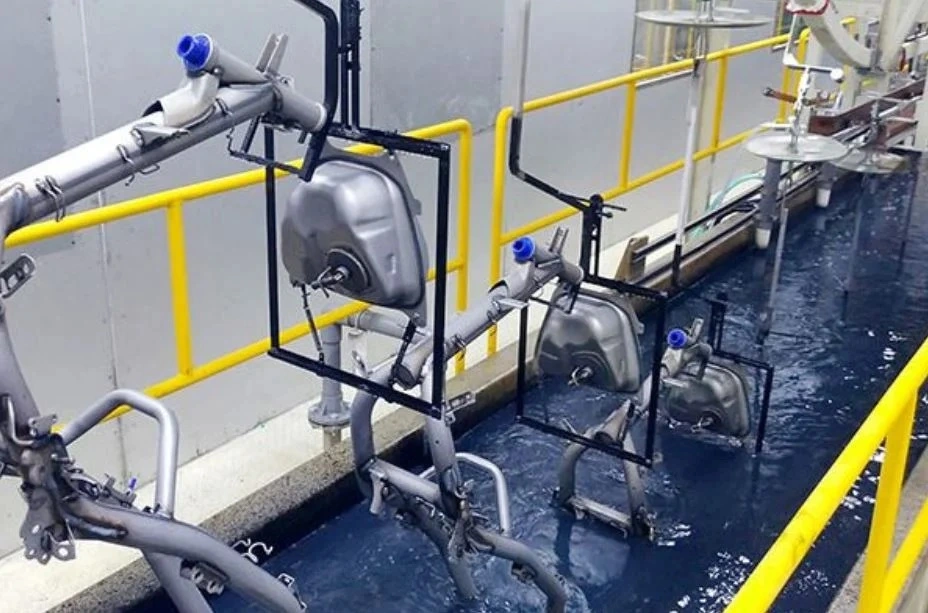
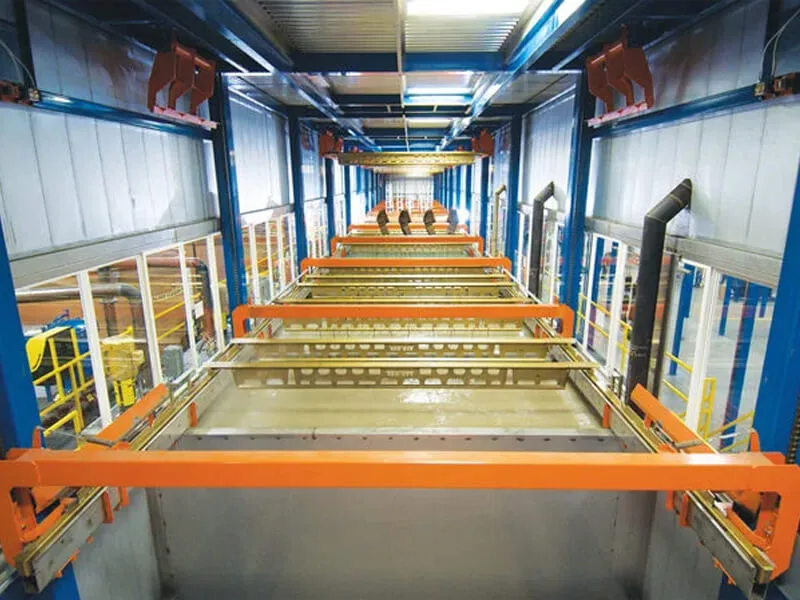
Establishing a high-efficiency powder coating line requires balancing pretreatment chemistry, booth design, curing oven profiling, and conveyor logistics. A proper powder coating plant setup reduces orange peel, improves first-pass transfer efficiency, and ensures consistent film thickness across mixed production runs. This article delivers a systems-engineering approach based on field data from automotive, appliance, and architectural coating facilities. We examine each module’s influence on final finish quality, focusing on measurable parameters like gel time, air velocity uniformity, and part grounding resistance.
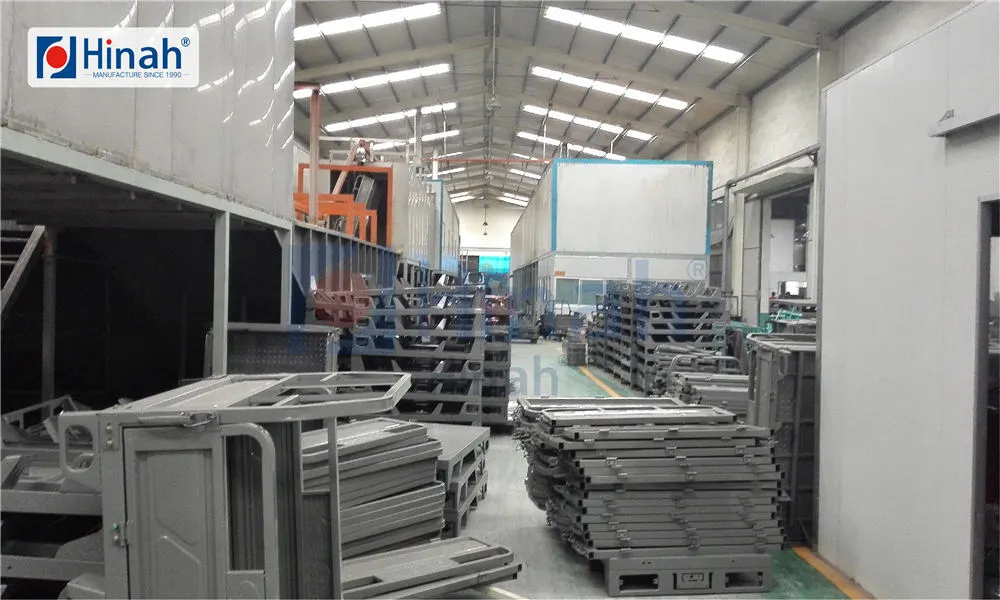
Many coating lines suffer from three recurring failures after a new powder coating plant setup is commissioned:
Inconsistent film build over recessed areas – Faraday cage effects lead to thin coating (<40µm) inside corners or cavities, causing premature corrosion.
Oven under-cure or over-cure – Temperature variations exceeding ±5°C cause poor adhesion or discoloration, especially with TGIC-free polyester powders.
Contamination from pretreatment carryover – Improper drain times or nozzle placement leaves residual phosphate solution, leading to osmotic blistering under the cured film.
A well-engineered powder coating plant setup addresses these through validated dwell times, optimized gun positioning, and real-time oven profiling. Beyond equipment selection, layout zoning (dirty vs. clean) prevents cross-contamination from grindings or overspray.
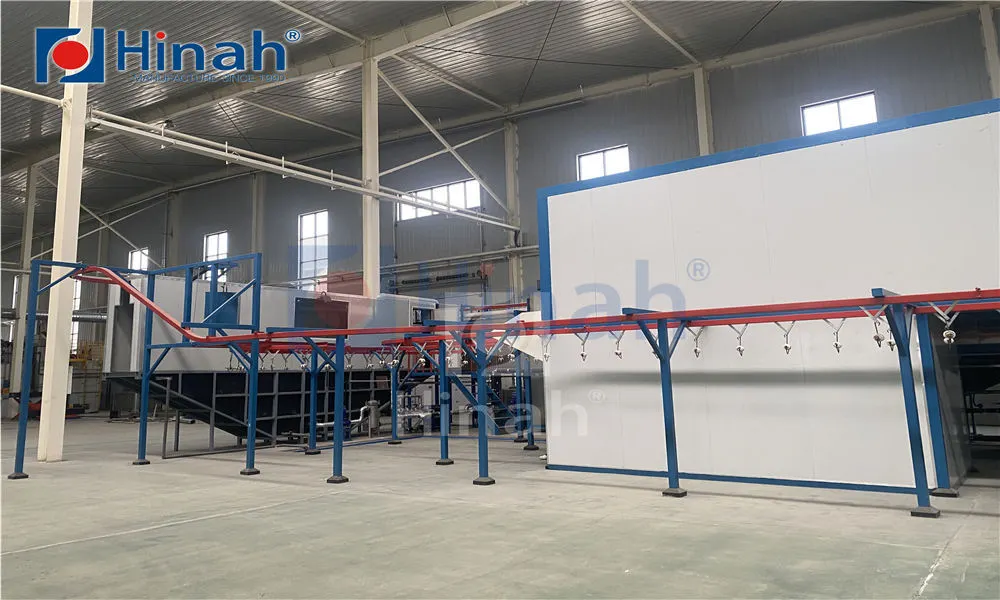
Every industrial line comprises five mandatory modules. Their integration determines maximum line speed (typically 2–5 m/min for hanging parts).
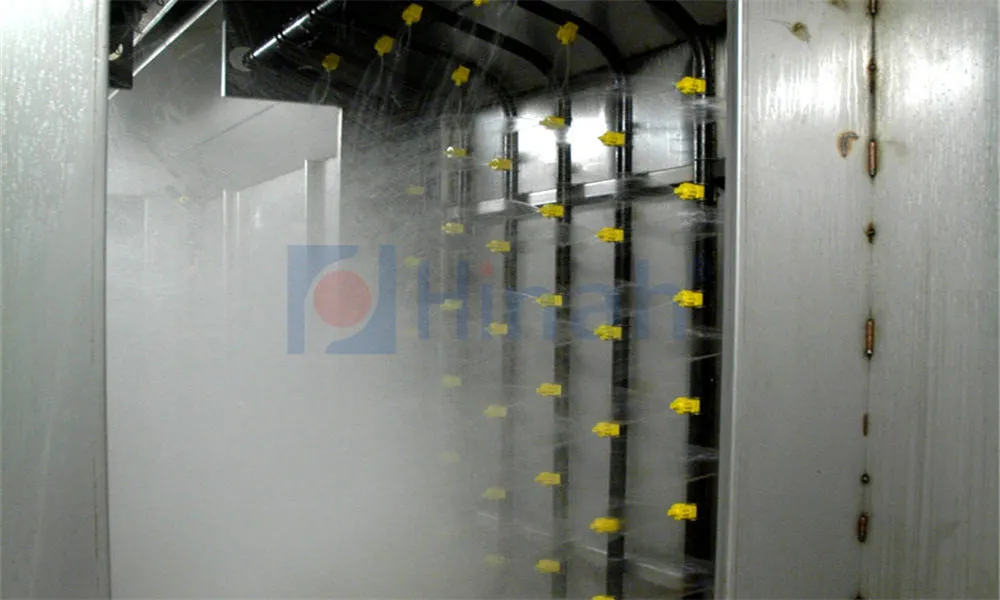
For steel substrates, a 5-stage zirconium or iron phosphate process is standard. Stages: alkaline clean, rinse 1, conversion coating, rinse 2, and sealed DI rinse. Important parameters:
Spray pressure at nozzles: 0.8–1.2 bar (higher pressure damages soft metals).
Bath temperature: 40–55°C for iron phosphate; zirconium works at ambient (20–30°C) saving energy.
Drain time after each stage: minimum 30 seconds to avoid carryover (measured by conductivity rise < 150 µS/cm).
Many failures in a powder coating plant setup originate from skipped weekly bath titration. An automated chemical controller with pH and conductivity feedback reduces variability. For aluminum, add a non-chrome sealer stage to meet AAMA 2603 standards.
Before powder application, parts must have surface moisture below 0.5% (measured via heat gun at 110°C, stable reading within 2 minutes). Drying oven design considerations:
Air impingement velocity: 3–6 m/s across part surfaces.
Residence time: 8–12 minutes at 120°C for complex shapes.
Exhaust rate: 20–30% of recirculated air to maintain dew point < 5°C.
In a high-speed powder coating plant setup, a combined dry-off and cure oven is sometimes used, but this risks moisture flash-off interfering with powder adhesion. Separate zones are safer.
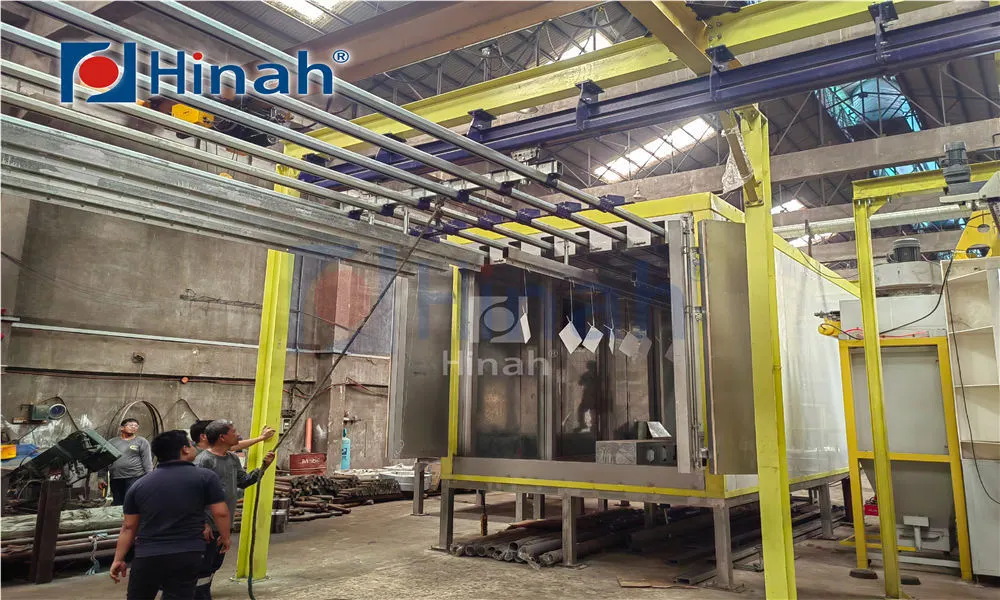
Choice of charging method affects first-pass transfer efficiency (TE). Corona guns (60–80 kV) work for standard polyester-epoxy hybrids but suffer from Faraday cage issues on deep recesses. Tribo guns (friction charging) achieve 85% TE on complex profiles but require specific powder formulations (tribo-additive grades). For a general-purpose powder coating plant setup, install both systems on reciprocators that can be swapped. Booth design must include:
Airflow patterns: down-draft booths with 0.3–0.5 m/s vertical velocity to contain overspray without disturbing powder cloud.
Cartridge filter efficiency: HEPA H13 for reclaim powder (particle size down to 0.5µm).
Relative humidity inside booth: 45–55% (too dry increases static clumping; too humid reduces charge).
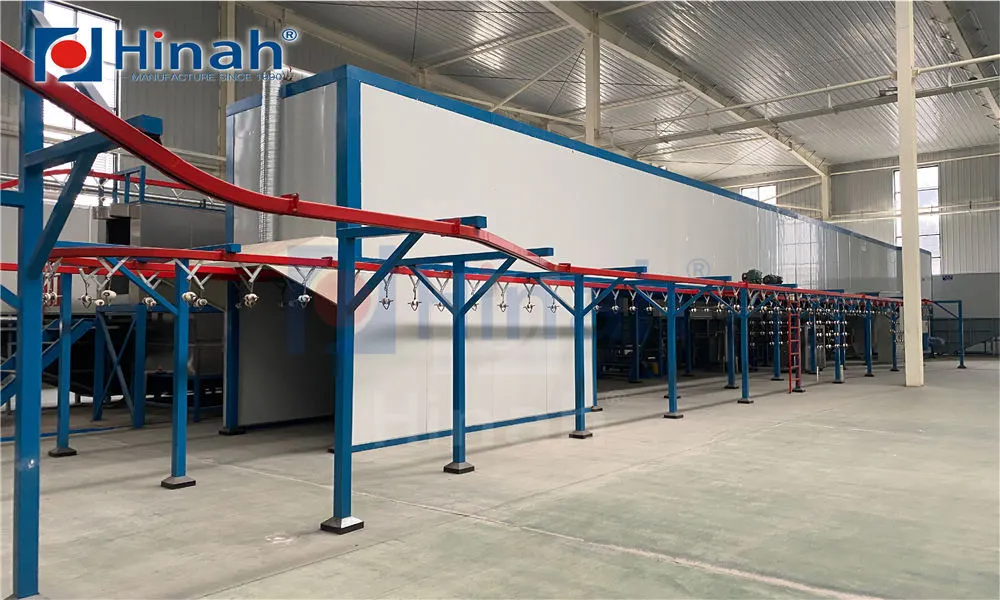
Powder crosslinking requires part metal temperature (PMT) sustained for specified time (e.g., 10 min at 190°C for polyester). Oven type: gas-fired convection ovens dominate due to uniform heating; IR boosters help with thick substrates. Validation protocol:
Place 9 thermocouple probes on a test part (top, middle, bottom, edges).
Run at full line speed; record temperature variation across all probes. Allowable spread: ±3°C from setpoint.
Check gel time via solvent rub test (MEK double rubs > 100).
Without this profiling, a powder coating plant setup will produce under-cured parts that fail cross-hatch adhesion. HANNA provides oven mapping service as part of line commissioning, ensuring PMT uniformity across 50% load variation.
For batch processing, overhead monorail with variable frequency drives (VFD) allows speed changes. For continuous high-volume lines, power-and-free conveyors enable accumulation zones and separate carrier indexing. Critical design choices:
Hanger spacing: 600–900mm dependent on part width.
Chain lubrication: high-temperature grease (max 230°C) for oven sections.
Grounding continuity: each hanger must have less than 10 ohms resistance to earth; use copper braids at load/unload stations.
A poorly grounded conveyor ruins electrostatic attraction, dropping transfer efficiency below 50%. Many issues traced to powder coating plant setup originate from oxidized hanger contacts – include automatic burn-off oven every 200 operating hours.
After a new powder coating plant setup is installed, follow this 72-hour validation matrix:
Day 1 – Dry run: Measure conveyor speed repeatability (max deviation ±2%). Check all spray nozzles for clogging and oven door seals for air leaks.
Day 2 – Powder application check: Apply a single powder type on flat panels; measure film thickness at 15 points (target 60–80µm; standard deviation < 7µm). Map booth static pressure.
Day 3 – Cure validation: Run parts with embedded thermocouples; produce cure graph. Perform impact resistance (ASTM D2794) and pencil hardness (ASTM D3363).
Document all parameters in a central control log. HANNA integrates SCADA systems that auto-record pretreatment chemistry, oven zone temperatures, and booth humidity – providing batch traceability per ISO 9001:2025.
Parts with inner corners, channels, or deep blind holes pose a challenge. Standard corona guns produce a strong external field, leaving inner surfaces uncoated. Solutions that can be integrated into a powder coating plant setup:
Dual-voltage guns: Switch to low voltage (40 kV) and high current (120 µA) to push particles into cavities.
Electrostatic field manipulation: Use back-ionization reduction via pulsed spray (duty cycle 30–70%).
Pre-heating: Warm parts to 70–80°C before coating; reduces the potential difference required for powder attraction into recesses.
Robot path optimization: Program slower traverse speed (150 mm/s) with oscillating tilt for cavity coverage.
Without these measures, a powder coating plant setup for automotive wheels or battery enclosures will show exposed metal in bolt holes – causing warranty returns. HANNA offers optional robotic cells with vision-based gap detection to adapt gun positioning.
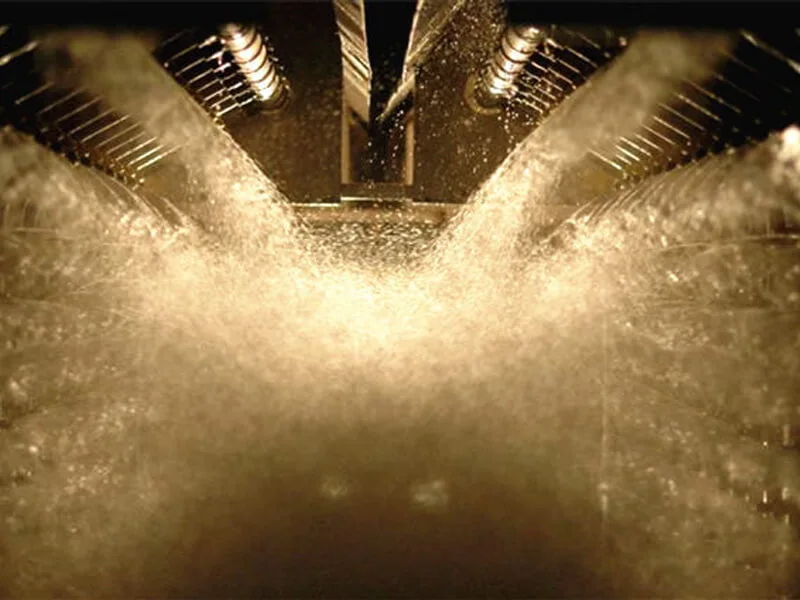
Regulations (NFPA 33, OSHA 1910.107) demand strict control of powder dust cloud concentrations. Design elements for a compliant powder coating plant setup:
Explosion venting on cartridge collectors (venting area 0.1 m² per 10 m³ of booth volume).
Grounding verification system with interlock that stops guns if resistance exceeds 10 ohms.
Class II Division 2 electrical components inside spray booth.
Daily dust load check: powder accumulation on ledges must be < 0.8 mm thickness.
Also, VOC emissions from pretreatment are minimal (water-based), but oven exhaust must be routed through a thermal oxidizer if powder contains semi-volatile components (e.g., low-temperature cure additives). A professional powder coating plant setup includes ATEX-certified extraction and optional heat recovery for energy efficiency.
Q1: What is the recommended air consumption for a manual powder coating booth vs. automatic?
A1: A manual booth with single gun requires 6–8 m³/min at 6 bar (including reclaim filter pulsing). An automatic booth with 4 guns and reciprocators needs 18–25 m³/min. Undersizing leads to poor powder fluidization and clogged injectors. Always add 15% reserve for future expansion.
Q2: How to prevent "orange peel" surface defect in polyester powder?
A2: Orange peel originates from incorrect curing ramp (fast initial heating causing skin formation before melt flow). Fix by: (a) increasing oven air velocity to 5 m/s for better heat transfer uniformity, (b) reducing conveyor speed to allow longer melt flow time (target 120–150 seconds before gelation), (c) checking powder particle size distribution – too many fines (<10µm) cause poor leveling. Use a grindometer to verify.
Q3: Can a single powder coating plant setup handle both epoxy and hybrid powders without cross-contamination?
A3: Yes, but only if you install separate booth modules or a quick-color-change system with high-efficiency filter cartridges and purge cycles. Epoxy residues as low as 0.1% in hybrid powder cause curing incompatibility (blisters). HANNA supplies color-change booths with self-cleaning cyclone + HEPA cascade, reducing changeover time under 15 minutes.
Q4: What is the maximum acceptable part temperature variation across a curing oven?
A4: For most powders, a ±3°C spread across the part is acceptable. Beyond ±5°C, edges will over-cure (brittle, yellowing) while recesses under-cure. Use adjustable air baffles and zone dampers to tune uniformity. For a new powder coating plant setup, demand a thermal uniformity certificate (TUS) per AMS 2750G.
Q5: How to measure film thickness on irregular surfaces (weld seams, castings)?
A5: Standard magnetic induction gauges work on flat areas but give false readings on rough surfaces. For welds and castings, use a non-destructive eddy current gauge calibrated with similar surface roughness standards. Alternatively, destructive method: take a cross-section, view under microscope (50x magnification) and measure 10 points. The goal is minimum thickness of 50µm at any location.
Q6: Is a cooling tunnel necessary after curing?
A6: Yes, forced air cooling (ambient to 40°C within 4 minutes) prevents stacking damage and allows immediate handling. Without it, parts remain above 80°C and hot powder film is soft – leading to picking marks from gloves or hangers. A cooling section also reduces oxidation on aluminum parts.
Designing a powder coating line that delivers consistent, defect-free finishes requires precise integration of chemistry, mechanics, and thermal control. For layout proposals, airflow simulations, or site-specific engineering support, contact our coating specialists. Request a consultation for your powder coating plant setup with full documentation and commissioning assistance.