Surface finishing in high-volume industrial manufacturing requires continuous operational uptime, consistent film thickness, and repeatable coating adhesion. Manual spray application methods inherently introduce human variance, inconsistent film build, powder over-spray, and erratic line speeds. Transitioning to a fully integrated automated paint line transforms batch surface finishing into a streamlined, closed-loop process. Systems manufactured by specialized suppliers such as HANNA integrate chemical cleaning, surface conversion, electrostatic powder application, and thermal curing into a single continuous workflow.
Achieving defect-free surface coatings on complex three-dimensional metal components requires precise coordination across multiple mechanical and chemical disciplines. Fluid dynamics inside multi-stage pretreatment washers, electrostatics within automated powder booths, and thermodynamic transfer inside curing ovens must operate under strict synchronized control. Evaluating these individual process stages reveals how modern system architecture ensures uniform film formation and long-term durability for demanding industrial applications.
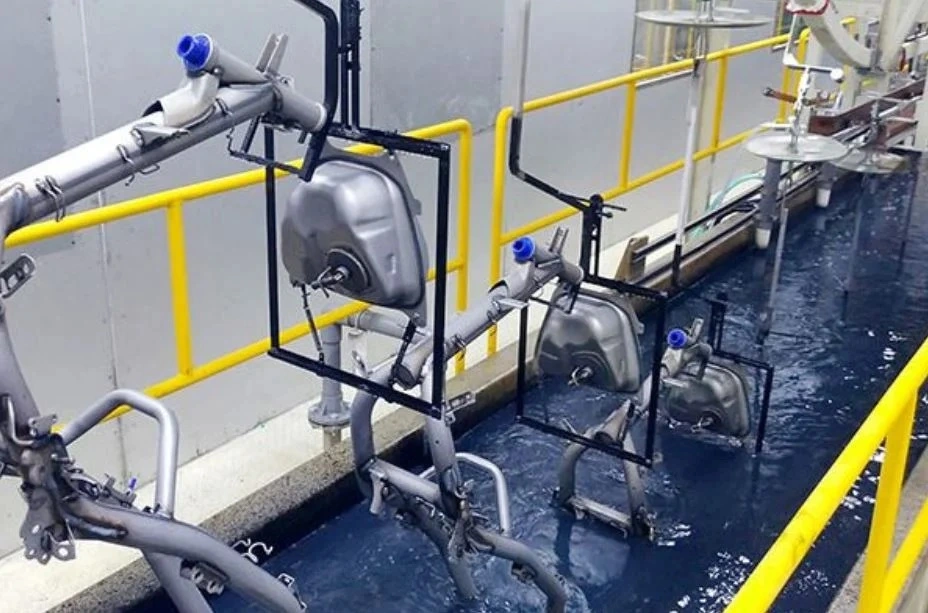
Adhesion quality and corrosion resistance depend heavily on surface preparation prior to powder application. Substrates arriving from machining or stamping operations carry mill scale, anti-rust oils, drawing lubricants, and particulate debris that prevent organic coatings from bonding directly to metal.
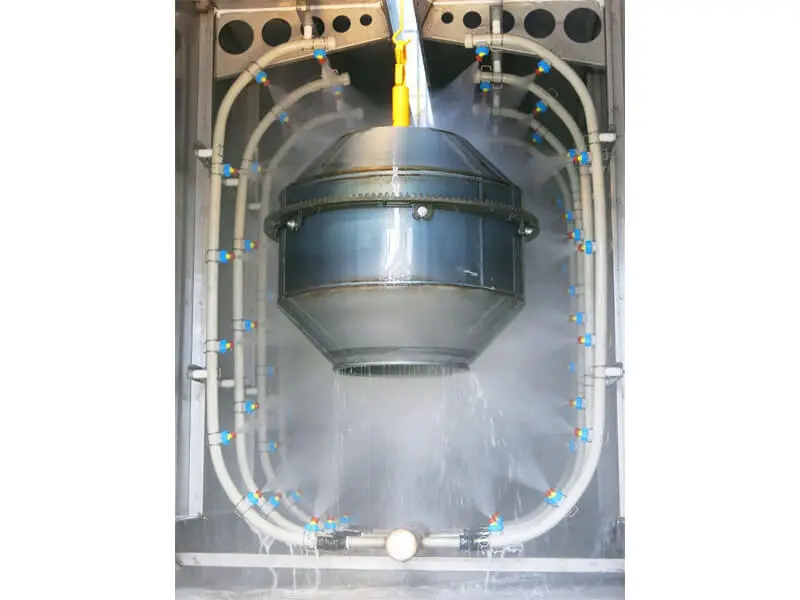
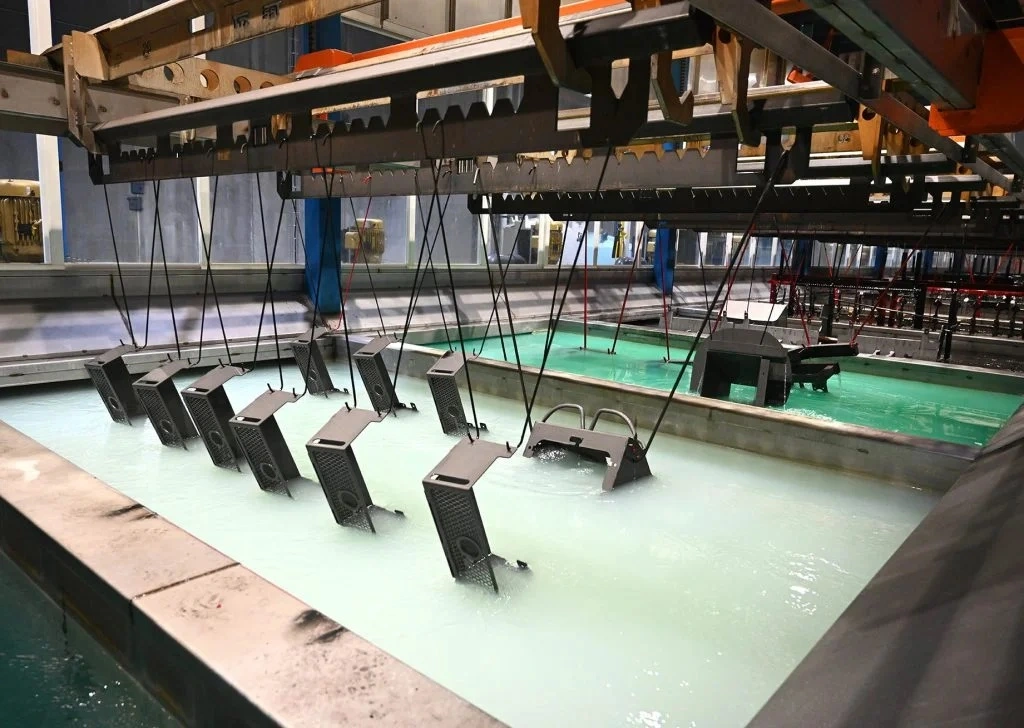
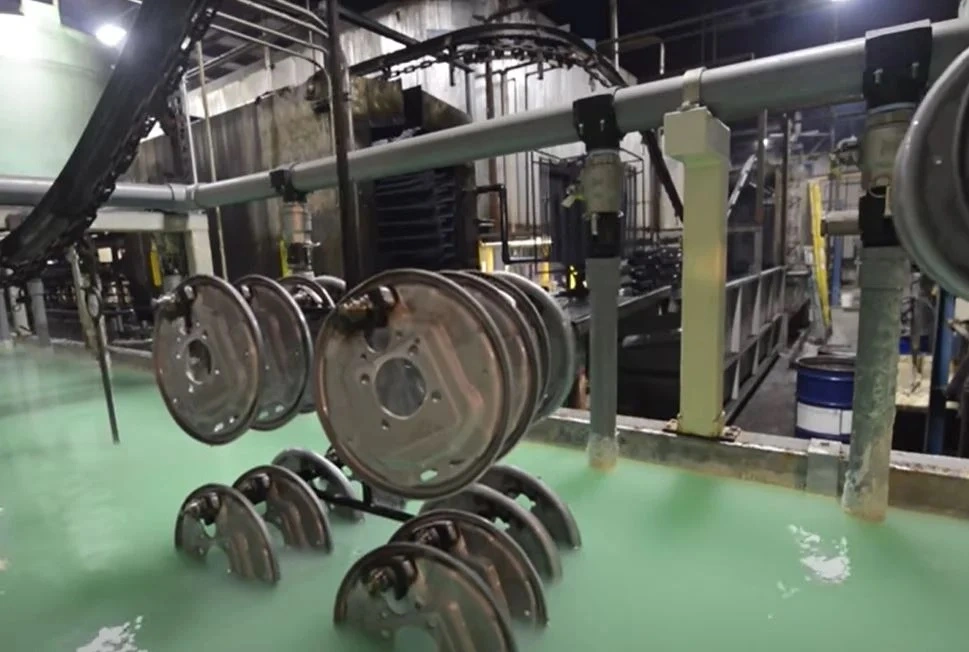
Modern pretreatment washers employ multi-zone spray tunnels or deep immersion tanks designed to process continuous streams of hanging parts. A typical high-performance sequence utilizes clean chemical stages separated by reverse-osmosis water rinses:
Following chemical treatment, parts pass through a direct-fired dry-off oven to eliminate surface moisture from deep recesses, blind holes, and complex seams prior to entering the coating zone.
The transport infrastructure forms the backbone of any continuous surface finishing system. Mechanical handling systems must move parts smoothly through chemical spray chambers, powder application enclosures, and high-temperature curing environments without introducing vibration, oil drippings, or line speed fluctuations.
Overhead continuous monorail systems utilize high-strength drop-forged chain running inside enclosed tracks or I-beam guides. Variable frequency drives govern line speed, allowing operators to match cycle times precisely to substrate thickness and powder gel requirements. For heavier structural components or complex multi-line routing, power-and-free conveyor systems offer advanced switching capabilities. Power-and-free setups allow individual carriers to stop, accumulate, or transition into high-density bank ovens without stopping the main coating line.
Proper carrier design and rack grounding are vital to the electrostatic process. Hanger attachments must provide continuous electrical grounding from the part through the conveyor rail to earth. Insufficient ground connections reduce powder attraction, creating thin film defects and excessive powder loss within the spray booth.
The core deposition stage relies on electrostatic physics to draw atomized powder particles toward grounded metal components. Integrating an automated paint line replaces human gun operators with multi-axis automated reciprocators, dynamic powder positioning units, or industrial robotic arms.
Electrostatic spray guns utilize either Corona or Tribo charging mechanisms:
Automated powder application utilizes vertical and horizontal reciprocating columns driven by servo motors. Light curtain sensors or optical vision systems at the booth entrance scan part geometry in real time. The master control unit uses this dimensional profile to trigger individual spray guns, adjust reciprocator stroke lengths, and maintain optimal gun-to-target distances as parts move past the application zone.
Managing powder overspray within the application zone directly affects operating uptime and product quality. Advanced spray booth structures utilize non-conductive plastic wall materials, such as double-skin composite PVC, to prevent powder from adhering to booth walls. Because the booth structure holds no electrostatic charge, powder remains suspended in air until collected by down-draft ventilation systems.
Continuous powder recovery relies on high-volume multi-cyclone separators coupled with secondary cartridge filter units:
Airborne overspray powder enters the multi-cyclone inlet at high tangential velocities. Centrifugal forces throw solid powder particles outward against the cyclone wall, where gravity drops them down into a rotary valve for immediate sieving and reuse. The remaining ultra-fine particles pass into secondary cartridge collectors equipped with pulse-jet cleaning systems.
Complete color changeover speed depends on booth engineering. Rapid color-change systems manufactured by HANNA incorporate automated floor sweepers, smooth ductwork, and fluidizing powder centers that clean internal feed lines automatically within minutes. Rapid changeover capability allows manufacturing facilities to transition between different resin formulations and color specifications with minimal production downtime.
Once powder attaches electrostatically to metal components, parts transition into the curing oven to convert thermosetting resins into a continuous structural film. Curing requires two distinct thermodynamic stages: powder melting/gelation and thermal cross-linking.
Convection curing ovens utilize high-efficiency gas burners and high-velocity circulation blowers to maintain uniform temperature distribution across the entire heating chamber. Ductwork design must balance internal air velocity; excessive air movement risks blowing un-gelled powder off parts, while inadequate circulation creates thermal dead zones and uneven film curing.
Infrared (IR) pre-heat boosters are frequently positioned at oven entrances. High-intensity catalytic IR panels rapidly heat the metal surface, melting powder within seconds before full air movement encounters the part. This pre-gel stage prevents powder cross-contamination, locks particle position, and reduces overall oven footprint requirements.
Temperature monitoring relies on multi-channel data loggers attached directly to test parts. Real-time thermal profiling confirms that substrate mass reaches required cure temperatures—typically 180°C to 200°C—and maintains that thermal state for the precise dwell time required by powder resin chemistry.
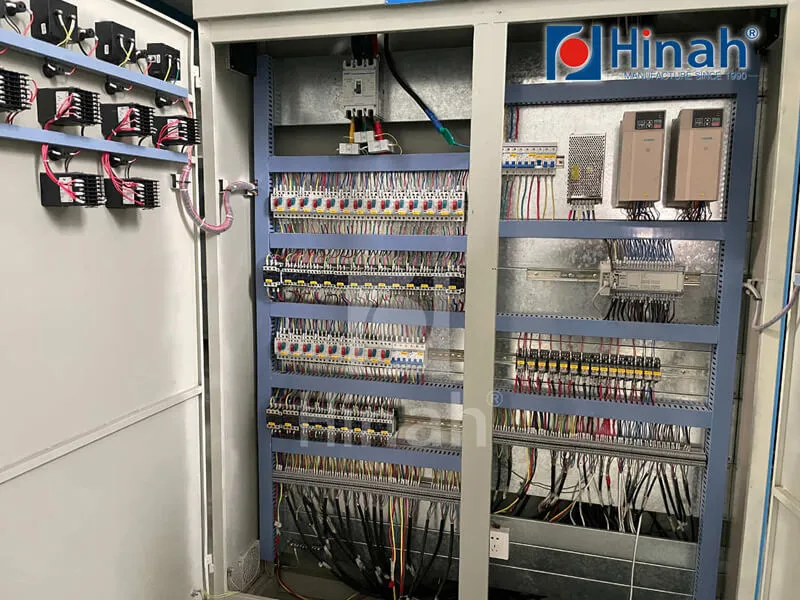
Centralized automation coordinates mechanical, thermal, and electrostatic variables across an automated paint line. Programmable Logic Controllers (PLCs) coupled with Human-Machine Interfaces (HMIs) supervise line conditions continuously, making micro-adjustments to fluidizing pressures, conveyor speeds, and zone temperatures.
Modern system control architectures incorporate several diagnostic and monitoring capabilities:
Integrating digital telemetry and Ethernet communication protocols allows plant engineers to review performance trends, track chemical consumption rates, and schedule preventive maintenance actions prior to component wear.
Operating a continuous high-volume finishing line requires understanding how physical variables influence finished film quality. Resolving defects requires targeted adjustments to surface preparation, electrostatics, or thermal processing.
Faraday cage effect occurs when strong electrostatic fields collect along the outer edges of recessed parts, preventing powder from reaching interior corners. Engineers counter this effect by reducing high-voltage settings, switching to Tribo application guns, or adjusting automated gun angles to shoot directly into geometric cavities.
Back-ionization appears as small cratering defects or surface roughness on thick film builds. Excess ungrounded electrical charge accumulates inside already-deposited powder layers, causing localized electrical discharges through incoming powder. Lowering application current (microamps) and verifying conveyor grounding pathways resolves this build-up pattern immediately.
Adhesion failure usually stems from underlying substrate contamination or incomplete chemical conversion during pretreatment. Inspecting spray nozzle alignment, titrating bath concentrations, and verifying oven peak-metal temperatures ensures robust mechanical bonding and high salt-spray resistance.
High-capacity finishing lines serve diverse manufacturing industries where surface protection and long-term durability are critical operational standards.
Heavy agricultural and construction equipment manufacturing requires thick-film corrosion protection capable of withstanding extreme environmental exposure. Systems supplied by HANNA integrate heavy-duty power-and-free conveyors capable of supporting multi-ton castings through aggressive multi-stage shot blasting, chemical wash, and extended thermal curing cycles.
Architectural aluminum extrusion processors rely on continuous vertical or horizontal lines to process long profiles rapidly. Precise gun positioning and high-velocity powder recovery allow these specialized systems to maintain uniform film thickness across intricate extruded cross-sections while operating at fast conveyor speeds.
Home appliance manufacturers utilize fast color-change systems to handle rapid changes in component batching. Highly automated powder booths allow seamless switching between gloss white, matte black, and metallic finishes with zero cross-contamination between batch cycles.
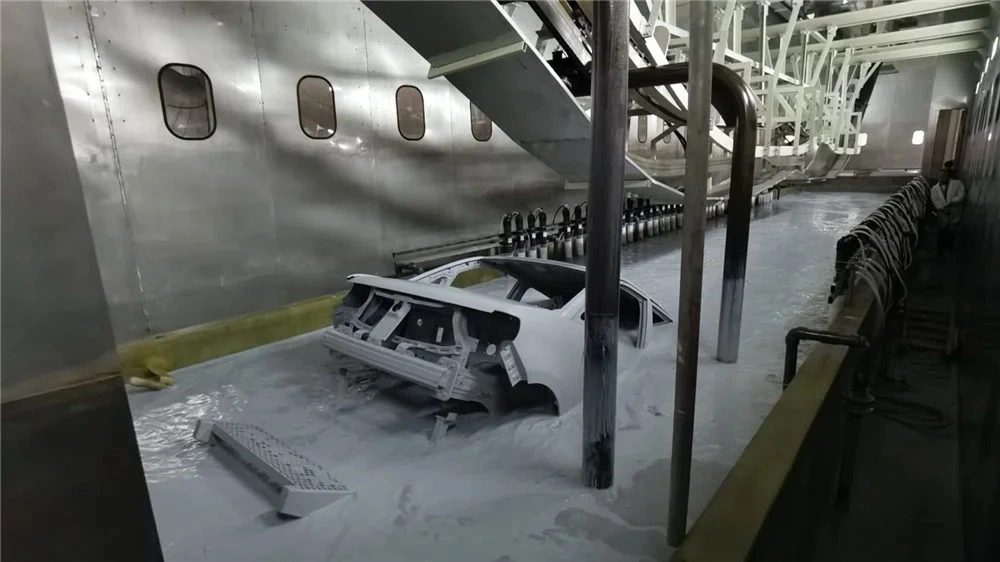
Selecting an appropriate system configuration requires complete analysis of part dimensions, maximum line weight, annual output volume, and available plant space. Engineers must calculate total thermal loads, air change volumes, and powder recovery rates to size equipment correctly.
Integrating a custom-engineered automated paint line guarantees repeatable finished quality, reduces raw material usage, and minimizes manual intervention. Modern turnkey installations deliver long-term mechanical reliability while maintaining compliance with stringent regional environmental and safety regulations.
Q1: What is the main structural difference between Corona and Tribo spray guns in automated coating lines?
A1: Corona spray guns utilize high-voltage electrodes to ionize air and transfer static charge to powder particles externally. Tribo guns rely on internal mechanical friction inside PTFE tubes to generate positive charges on powder particles. Corona systems offer rapid deposition rates on flat surfaces, whereas Tribo systems excel at penetrating deep recessed geometries and complex shapes without Faraday cage interference.
Q2: How does an automated spray booth perform rapid color changes without cross-contamination?
A2: Rapid color-change booths utilize non-conductive plastic walls, self-cleaning smooth floors, high-efficiency multi-cyclone recovery units, and automated dense-phase powder supply centers. During color transition, automated pulse-jet air systems clear internal feed lines while the cyclone diverts residual powder, allowing operator cleaning within a few minutes.
Q3: Why is final deionized (DI) water rinsing mandatory in multi-stage surface pretreatment?
A3: Tap water contains dissolved minerals such as chlorides, calcium, and silicates. If left on substrate surfaces prior to coating, these salts draw moisture through the cured powder film via osmosis, causing premature coating blister formation and corrosion failure. DI water rinses remove these residual salts completely.
Q4: How do control systems maintain uniform film thickness across varying conveyor speeds?
A4: Master PLCs track conveyor encoders in real time. As line speeds increase or decrease, the control system adjusts gun trigger timing, powder output volume, air flow ratios, and reciprocator travel speeds proportionally to ensure consistent film thickness build regardless of line velocity variations.
Q5: What mechanical measures prevent paint parts from swinging or falling during conveyancing inside curing ovens?
A5: Conveyor systems utilize custom-designed rigid hanging fixtures, stabilizer guide bars, and smooth variable frequency drive (VFD) motor acceleration curves. Proper rack design balances weight distribution, while floor-level guiding channels inside high-velocity air zones prevent part oscillation.
Designing a high-throughput finishing system demands precise chemical, mechanical, and electrical integration tailored to your specific product range. Technical specialists at HANNA provide comprehensive process analysis, part layout evaluations, and line capacity calculations for complete industrial installations.
Contact our application engineering team today to submit part CAD drawings, production volume target metrics, and plant facility blueprints for a custom automated paint line proposal designed to fulfill your exact operational standards.