High-volume surface finishing demands precise mechanical control, controlled powder kinematics, and rigorous thermal distribution. Integrating high-throughput commercial powder coating equipment into contemporary production plants requires an exact balance between fluid dynamic management, high-voltage electrostatic field control, and automated clean-down mechanics. As industrial manufacturing moves toward strict quality tolerances and lower process variability, surface coating infrastructure must perform continuously without structural or dynamic failures.
Industrial operations designed by HANNA focus on removing process variability through automated fluidization, precise powder delivery pumps, and fully enclosed recovery systems. Achieving consistent film thickness—typically measured between 60 to 80 microns across complex geometries—depends directly on how effectively the electrostatic charge is transferred and how uniformly heat is distributed during the curing phase. Evaluating these mechanical interactions reveals how high-capacity line design maintains operational continuity under heavy workloads.
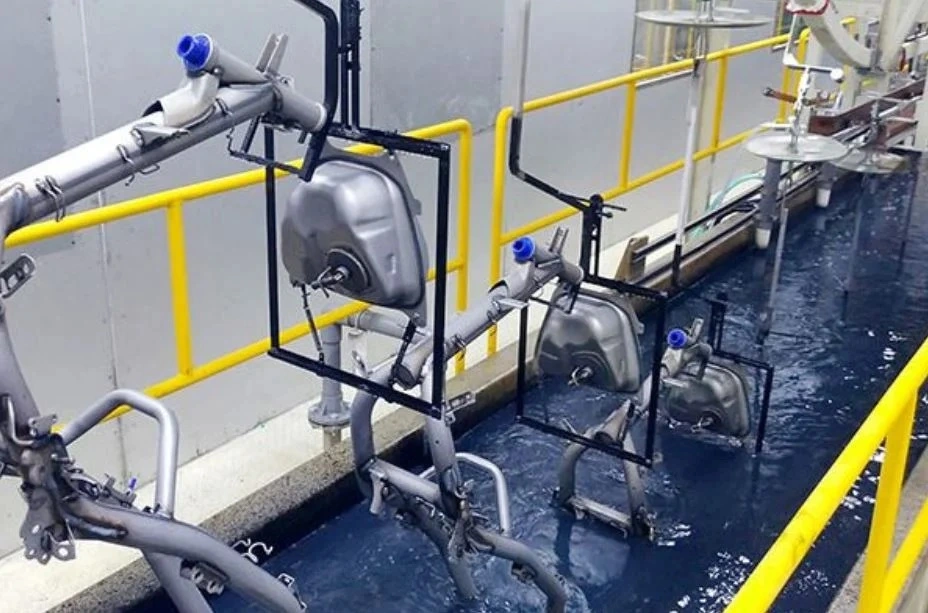
A fully integrated industrial coating installation functions as an interconnected system of distinct subsystems. Each phase, from substrate cleaning to final cross-linking in the thermal oven, must operate within tight parameters to prevent coating defects such as orange peel, pinholes, or uneven adhesion.
Powder application begins in the fluidization hopper, where compressed air passes through a porous plastic membrane at the base of the vessel. This process aerates the dry coating powder, transforming it from a packed solid state into a fluid-like suspension. Fluidization allows uniform suction by venturi-style injector pumps or high-density, low-velocity (HDLV) pumps.
HDLV technology offers consistent material output over long hose lengths without the severe venturi nozzle wear caused by high air velocities. Powder travels through antistatic hoses to the electrostatic spray guns, where a high-voltage cascade generates up to 100 kV at the gun tip. The resulting electrostatic field charges the powder particles via corona discharge as they exit the nozzle, creating an attraction toward the grounded workpiece.
The spray booth structure maintains a controlled containment area that keeps airborne particles enclosed while preventing external ambient dust from contaminating the wet powder layer. Booth construction generally utilizes non-conductive materials such as high-density polypropylene or engineered plastic composites. Non-conductive walls repel charged powder particles, encouraging them to fly toward the grounded part rather than accumulating on the booth walls.
Airflow velocity across the open face of the booth must be strictly calculated. If the containment velocity drops below 0.3 meters per second, airborne powder escapes into the surrounding factory atmosphere. Conversely, if face velocity exceeds 0.5 meters per second, the gentle electrostatic attraction between charged powder and the workpiece is disrupted, leading to low first-pass transfer efficiency.
Applying uniform coatings to intricate metal structures, internal corners, and recessed channels presents major physical challenges due to electrostatic shielding. When applying charged powder into tight recesses, the lines of force prefer the nearest grounded edges, creating an electrostatic shield that blocks powder from reaching deep corners. Modern commercial powder coating equipment uses advanced current-limiting algorithms to counter this phenomenon.
When the spray gun approaches a recessed area, automatic current-limiting circuits reduce the micro-amperage output while maintaining high kilovoltage. This prevents localized back-ionization—a phenomenon where excess ions build up on the powder layer, discharging through the unsintered coating and causing surface dimples or starburst defects. Modulating the current output permits electrostatic lines of force to enter deep recesses without triggering back-ionization.
Consistent coating coverage across varied product lines relies on automated gun motion control. Dual-axis reciprocators mounted on heavy-duty linear tracks move spray gun arrays vertically and horizontally relative to the line conveyor speed. Advanced lines incorporate infrared light curtains or 3D optical vision systems at the booth entrance to scan incoming parts.
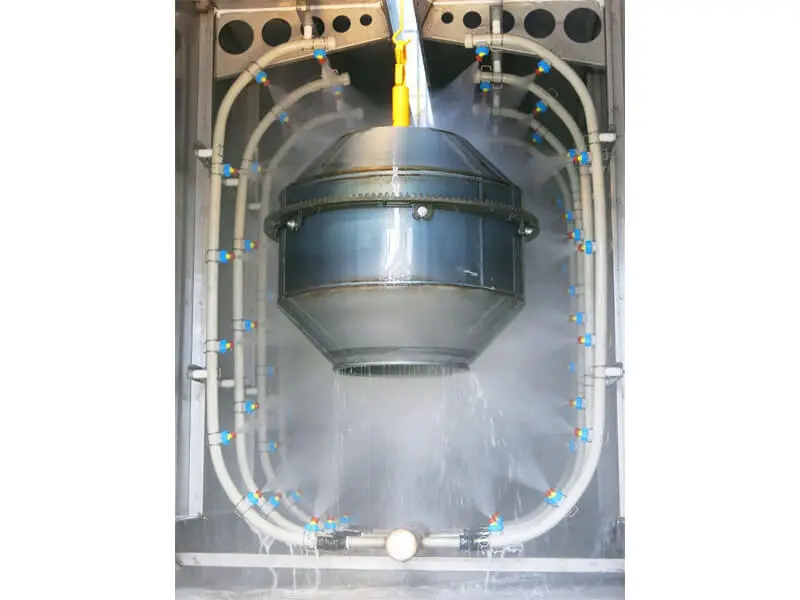
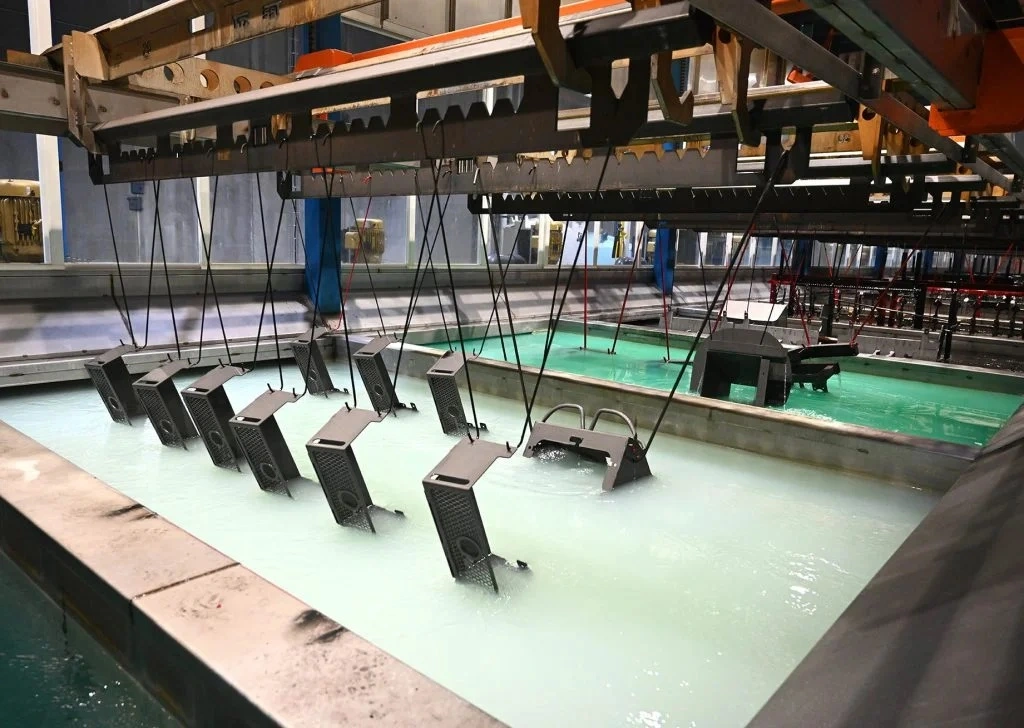
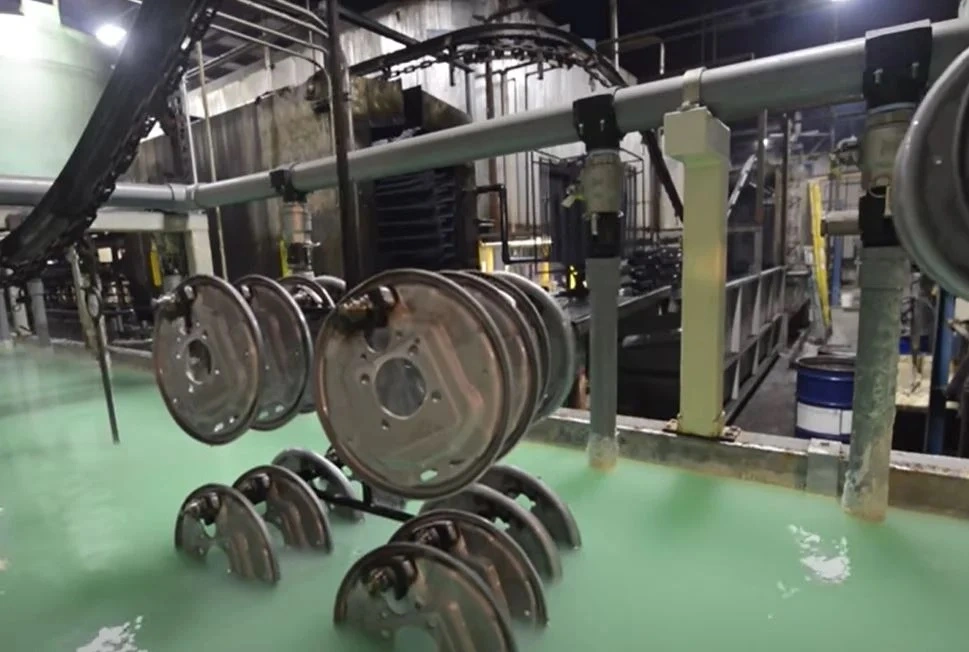
Coating adhesion depends directly on surface preparation quality. Metal substrates must be cleaned of mill oils, oxides, and surface soils before entering the coating booth. Modern spray washer tunnels utilize multi-stage chemical cleaning cycles engineered to handle specific alloys.
A typical high-volume pretreatment system uses a sequence of spray zones separated by drain stages to avoid chemical carryover:
Operating a high-capacity production line requires managing frequent color changes without causing cross-contamination. Powder recovery configurations split into two core designs: multi-cyclone recovery systems and direct cartridge filter units.
Multi-cyclone systems pull air and oversprayed powder out of the booth using high-capacity exhaust fans. The powder-laden air enters tangential cyclone separators where centrifugal force hurls larger powder particles against the cyclone walls, dropping them into a fluidizing collector at the base for immediate recycling back to the main feed hopper. Sub-micron fines pass through the top vortex into a secondary absolute HEPA filter house, ensuring clean exhaust air returns to the plant floor.
Systems built by HANNA integrate fast-clean recovery cyclones with automatic booth floor sweepers and self-purging powder supply lines. When switching colors, automated blow-down rings clear residual powder from the inside of the feed hoses and spray guns, allowing thorough color changeover in under fifteen minutes.
Once the electrostatically charged powder adheres to the substrate, parts travel via overhead conveyor into the curing oven. Curing requires heating the powder layer to its specific melt point—typically between 160°C and 200°C—and maintaining that temperature for a designated dwell period, usually 10 to 20 minutes depending on metal thickness.
Thermal processing relies on continuous forced-air convection to transfer heat uniformly to all substrate surfaces. Indirect gas-fired heat exchangers circulate hot air through directional ductwork, creating controlled air knives along the travel path of the parts.
| Oven Parameter | Convection Curing Method | Infrared (IR) Booster Method |
|---|---|---|
| Heat Transfer Mechanism | Air movement across substrate mass | Direct radiant electromagnetic energy absorption |
| Temperature Uniformity | High uniform distribution (±3°C throughout chamber) | Localized surface heating; geometry dependent |
| Typical Dwell Time | 15 to 25 minutes | 3 to 8 minutes (pre-gel phase) |
| Application Suitability | Complex, thick multi-component assemblies | Flat sheets, simple profiles, rapid surface gelation |
Proper air velocity within the curing chamber keeps the uncured powder from being blown off the parts before it gels. Air nozzles must deliver high air volume at low, controlled velocities. Maintaining tight air seal hoods at the entrance and exit openings of continuous elevated ovens prevents heat loss, preserving stable thermal profiles throughout the oven line.
Selecting high-performance commercial powder coating equipment requires careful matching of material handling systems with part weight, geometry, and required line speeds. Overhead conveyor networks dictate the flow and overall capacity of the complete surface finishing plant.
Monorail enclosed-track conveyors suit lightweight to medium-duty applications, supporting continuous chain movement with weight limits up to 50 kg per hanger point. For heavy weldments, structural steel fabrications, or casting components, Power-and-Free conveyor systems provide greater operational flexibility.
Power-and-Free systems feature two separate tracks mounted inside a single structural frame: an upper "power" track running a continuous drive chain, and a lower "free" track where load trolleys ride. Pushing dogs on the power chain engage the free trolley carriers. This mechanical separation allows individual part carriers to be stopped, switched, accumulated, or diverted into secondary buffer loops without stopping the main conveyor chain.
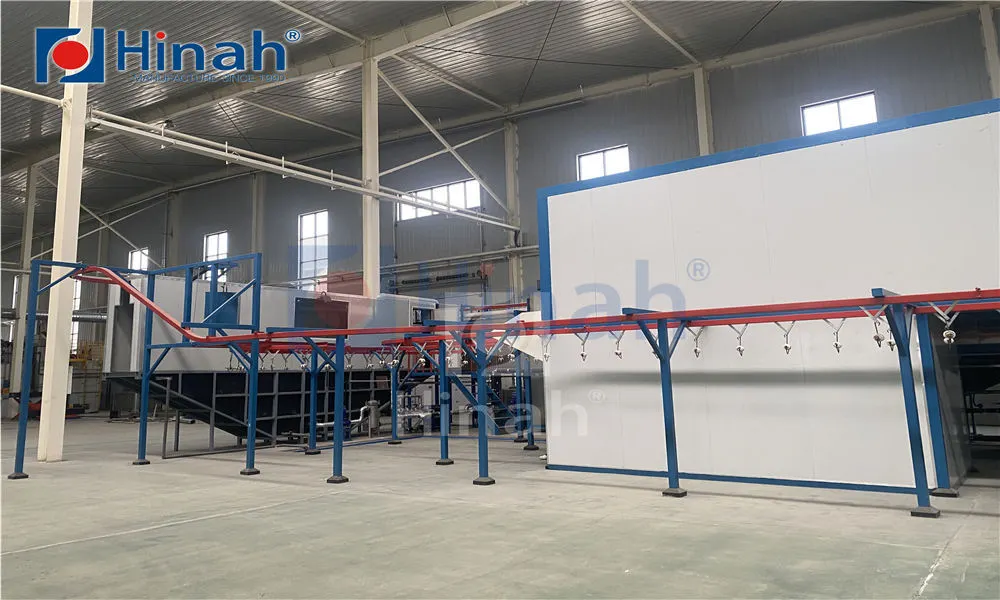
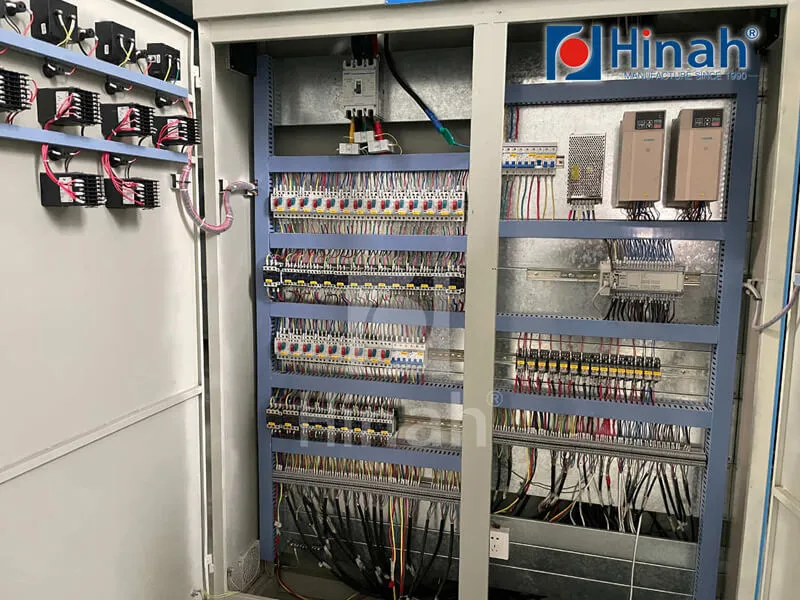
Modern industrial finishing installations connect application hardware, pretreatments, thermal curing systems, and material movement mechanisms into a unified control network. Centralized SCADA (Supervisory Control and Data Acquisition) platforms give engineering teams complete visibility over systemic line performance.
Sensory arrays along the conveyor track monitor ambient humidity, pretreatment wash pressures, chemical bath conductivity, fluidization air pressures, booth draft velocities, and oven zone temperatures. Deviations beyond pre-set thresholds trigger automated compensations or safe-shutdown routines, eliminating under-cured products or surface defects before parts exit the line.
Upgrading finishing infrastructure with high-efficiency commercial powder coating equipment enables plants to meet strict industrial coating specifications while maintaining high production throughput. Integrating robust mechanical components, stable fluidization systems, and precise electrostatic controls ensures consistent operational quality day after day.
Q1: What mechanical factors control transfer efficiency in automated powder spray booths?
A1: First-pass transfer efficiency depends primarily on electrostatic field strength, gun-to-part distance, powder air velocity, atomization pressure, and spray booth face velocity. Maintaining booth air velocities between 0.3 and 0.5 m/s prevents airflow from disrupting electrostatic attraction while keeping powder safely enclosed within the booth environment.
Q2: How do indirect gas-fired convection ovens differ from direct-fired designs during powder curing?
A2: Indirect gas-fired ovens route combustion gases through a high-efficiency heat exchanger, isolating combustion byproducts from the curing chamber air. Direct-fired ovens vent combustion gases directly into the curing environment, which can introduce trace contaminants that cause color shifts or surface haze in sensitive powder formulations.
Q3: Why is fluidization air preparation critical for reliable powder pumping?
A3: Fluidization air must be thoroughly dried and oil-free. Moisture or compressor oil in the fluidization air causes powder clumps, plugs venturi pumps, disrupts consistent powder feed, and introduces surface pinholes or micro-voids into the finished powder layer.
Q4: What advantage does zirconium pretreatment offer over traditional iron phosphate systems?
A4: Zirconium conversion coatings form an ultra-thin, dense protective surface layer that delivers superior corrosion resistance without generating hazardous sludge. Additionally, zirconium systems operate effectively at ambient wash temperatures, significantly reducing the heating energy needed in the pretreatment tunnel.
Q5: How does high-density, low-velocity (HDLV) technology improve coating thickness control?
A5: HDLV pumps use positive displacement peristaltic mechanisms instead of traditional venturi injectors. This delivers a dense powder-to-air ratio at lower air speeds, reducing pump wear, eliminating powder surging, and allowing consistent film thickness control within precise tolerances across long production runs.
Engineering teams planning line expansions or full system installations can contact HANNA to submit project specifications, request application assessments, or initiate a comprehensive technical Inquiry for custom commercial powder coating equipment configurations.