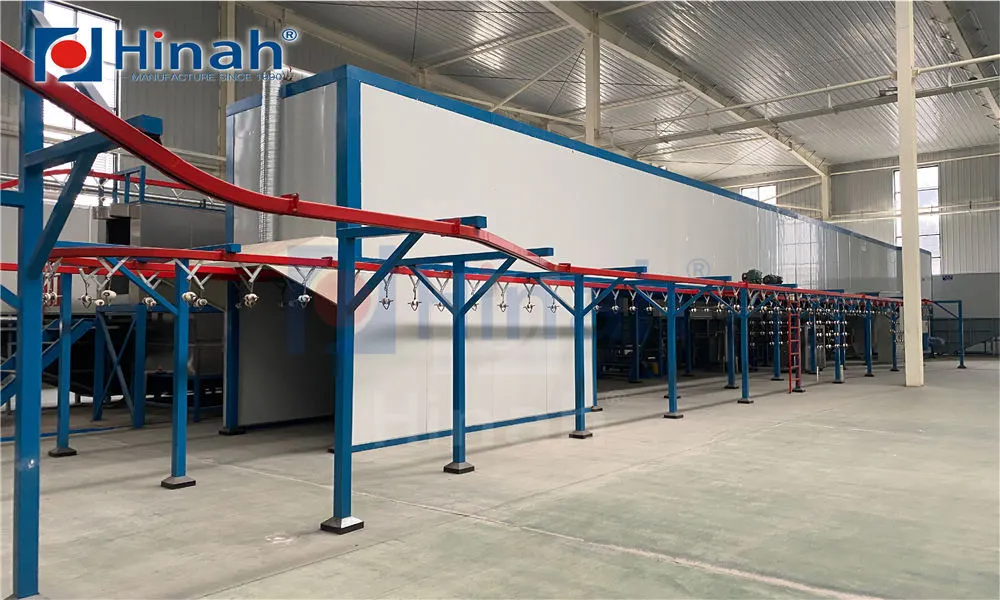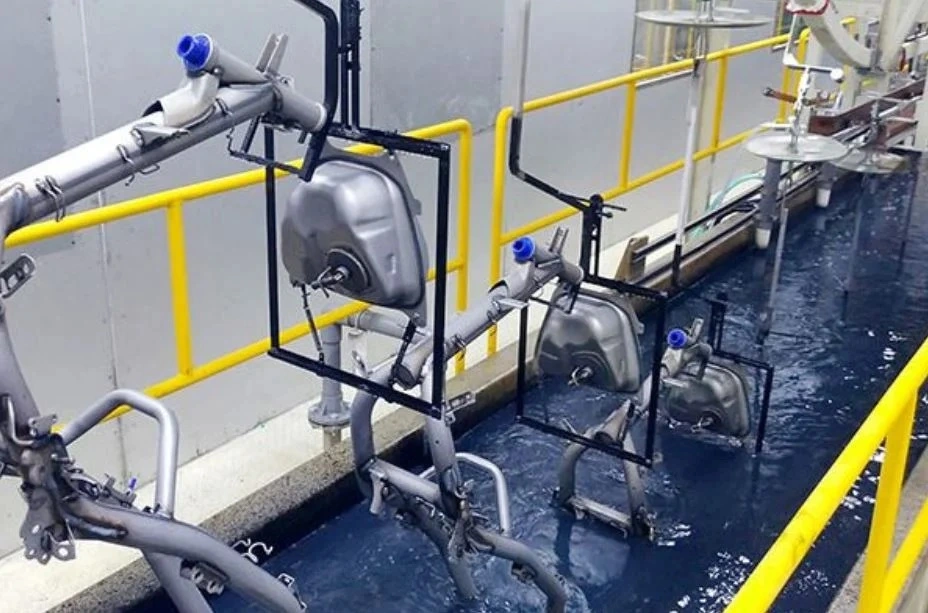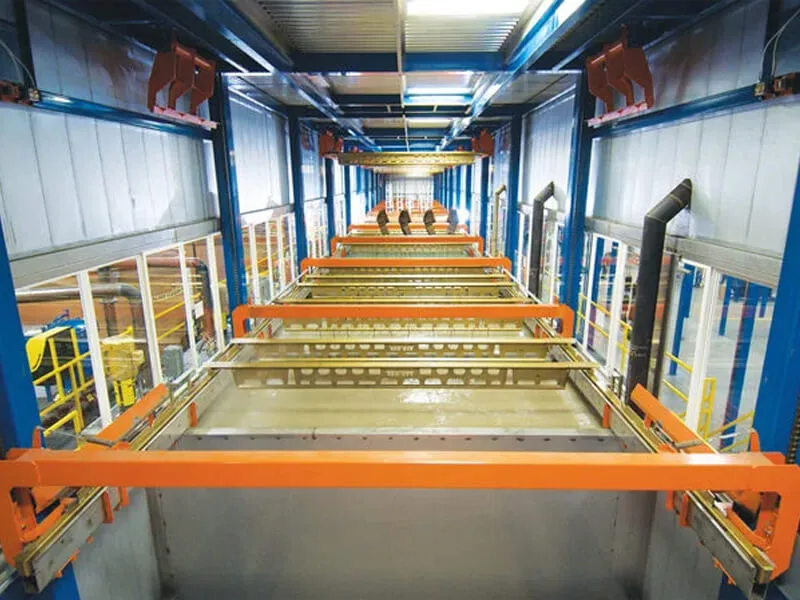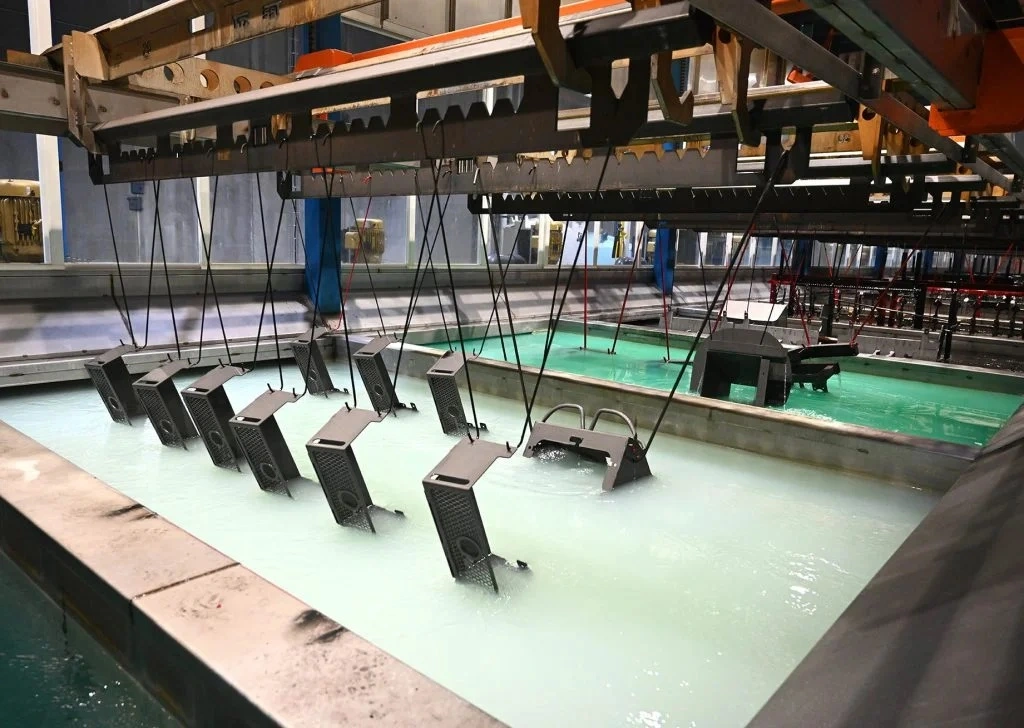

Acquiring a second-hand powder coating plant for sale can reduce capital expenditure by 40–60% compared to new equipment. However, without a structured engineering evaluation, buyers risk inheriting hidden defects—uneven film thickness, low transfer efficiency, or non-compliant emission control. This guide provides a component-by-component inspection protocol for any powder coating plant for sale, covering mechanical wear, control system obsolescence, and safety retrofits. We also outline when a used plant makes financial sense versus a new turnkey line.
HANNA has refurbished over 30 used powder coating lines across Europe and Asia. Below we share the diagnostic criteria that separate a viable powder coating plant for sale from a money pit.
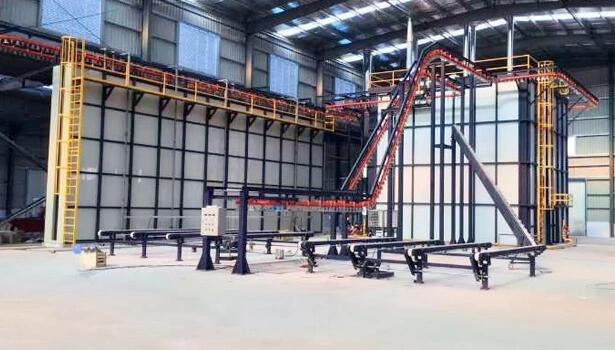
Plants become available for several reasons: facility closure, technology upgrade (e.g., from manual to automated), or capacity relocation. The most reliable powder coating plant for sale listings come from tier-1 automotive suppliers that have standardized on newer lines. Avoid plants from bankruptcies where maintenance records are missing. Key red flags:
More than three previous owners in five years.
Plant stored outdoors for over six months (corrosion on bearings, oven insulation moisture damage).
Missing electrical schematics and PLC passwords.
A well-maintained plant with 10–15 years of service can still deliver another decade of reliable operation if critical components are refurbished.
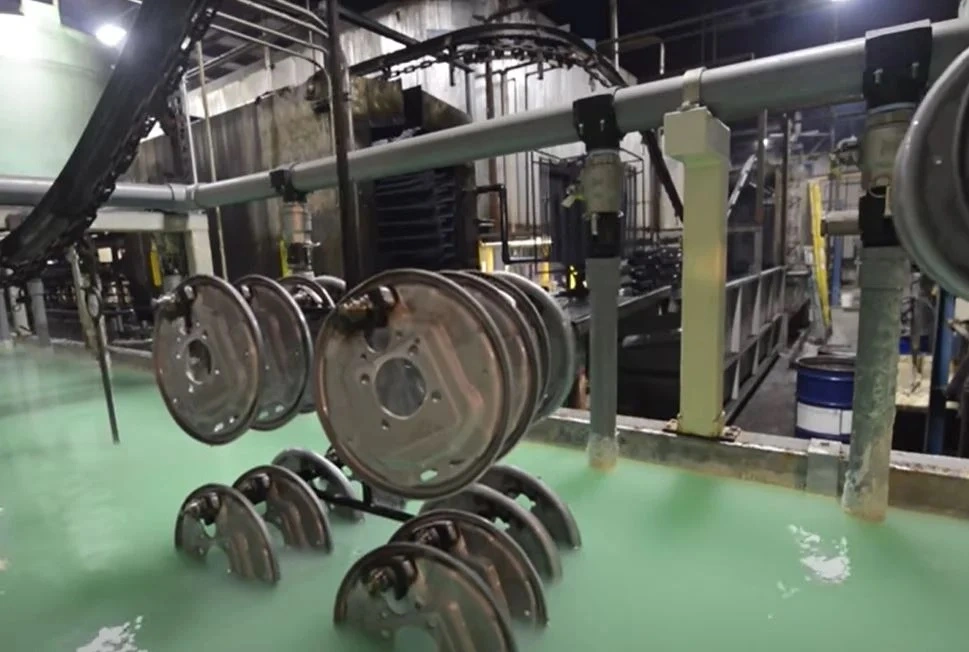
The conveyor represents 25–30% of a powder coating plant replacement cost. For any used powder coating plant for sale, inspect:
Chain elongation: Measure 20 pitches; elongation beyond 3% requires chain replacement (€8–15k for a 100m system).
Trolley wheel bearings: Rotate each wheel; seized bearings cause jerky motion, leading to uneven coating.
I-beam wear: Look for grooves deeper than 2 mm. Excessive wear affects horizontal alignment.
Drive motor and VFD: Check for abnormal noise, current draw, and heat. Older DC drives may lack parts; prefer AC motors with modern VFDs.
Run the conveyor empty for 30 minutes at normal speed (3–5 m/min). Listen for clicking or grinding. Measure speed variation with a tachometer: ±2% is acceptable, >±5% indicates worn gearbox or encoder issues.
Manual or automatic guns degrade over time due to high-voltage multiplier wear and nozzle abrasion. In a used powder coating plant for sale, request a test run with a standard powder. Evaluate:
Gun kV stability: Use a high-voltage probe. New guns deliver 80–100 kV with less than 5% ripple. Worn multipliers show 20–30% voltage drop under load.
Powder pattern symmetry: Spray onto a dark test panel. An uneven pattern indicates deflector wear or internal air jet blockages.
Booth wall coating: If powder sticks aggressively, the booth material (polypropylene or stainless) may have lost its static-dissipative properties. Replacement panels cost €2k–€6k.
Cartridge filters: Remove one filter and check for tears, blinding, or moisture damage. Filter set replacement is €3k–€8k.
HANNA often recommends budgeting 15–20% of the purchase price for gun and filter refurbishment on older plants.
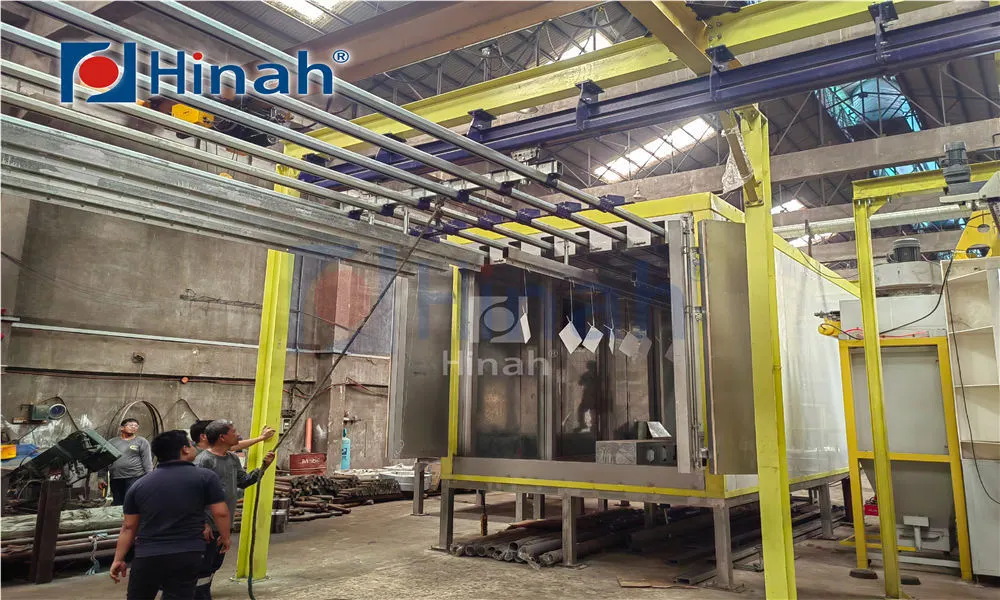
Ovens are costly to repair or replace. For any powder coating plant for sale, perform a temperature uniformity survey (TUS) as per AMS 2750 or similar. Procedure:
Place 9 thermocouples inside the oven (3 zones across width, 3 along length).
Run the oven at normal setpoint (180–200°C for standard polyester).
Record temperature after 30 minutes of stabilization. Maximum variation should not exceed ±6°C across the workspace.
If variation exceeds ±10°C, suspect failed circulation fans, blocked burner nozzles, or insulation gaps. Infrared thermography of oven walls can reveal heat loss (hot spots). Replacing burners or fans may cost €5k–€15k. Also inspect the oven tunnel entrance/exits: missing or damaged curtains cause cold air infiltration, increasing gas consumption by 20–30%.
A cyclone + cartridge filter combination is standard. Evaluate recovery performance by measuring powder loss to exhaust:
Use a sample probe downstream of the final filter. Collect particulate on a filter paper for 30 minutes. Weight gain should be less than 0.5 grams (equivalent to <5 mg/Nm³).
Check the rotary airlock valve at cyclone discharge. Leaking seals allow fines to bypass recovery, wasting powder.
Inspect the reclaim sieve. A torn mesh screen lets oversized particles contaminate the feed hopper, causing nozzle blockages.
A plant with poor recovery (visible powder plume at stack) will require immediate filter or cyclone replacement, often exceeding €10k.
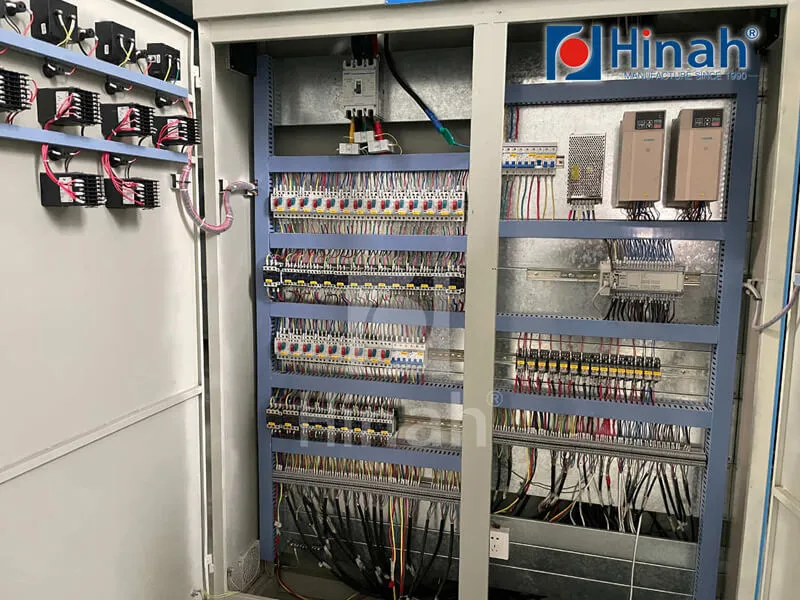
Many used powder coating plants for sale have obsolete PLCs (e.g., Siemens S5, Allen-Bradley PLC-5). Verify:
PLC model and software availability. If the programming software is no longer supported, you cannot modify parameters or troubleshoot.
HMI (touchscreen) functionality – replacement screens for older units can be expensive (€3k–€7k).
Emergency stop circuits and safety relays must be functional and comply with current local standards (ISO 13849).
Explosion protection: ATEX / NFPA compliance for dust. Check that explosion vent panels are intact and not painted over. Replacement panels are mandatory every 5 years anyway.
Powder coating plant sellers should provide electrical schematics and a list of all sensors. Without documentation, budget for a full control system retrofit (€25k–€50k).
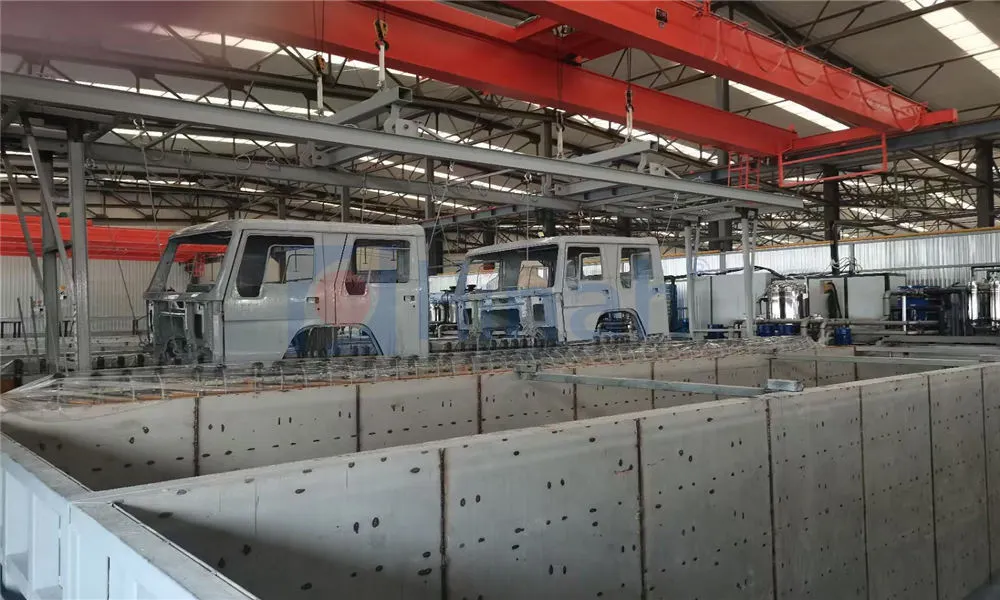
Calculate total cost of ownership (TCO) over 5 years. A used powder coating plant for sale priced at €120,000 might require €45,000 in refurbishment (conveyor chain, filters, two guns, oven fan). New comparable plant costs €280,000. The used route saves €115,000 upfront but may have 15% higher energy consumption and 5% lower uptime. Breakeven analysis:
If operating 2 shifts (4000 hours/year), energy cost difference (€0.12/kWh) amounts to €7,200/year extra for the used plant.
Downtime due to older components: estimate 3% vs 1% for new = 80 hours lost per year. At €150/hour lost profit, that's €12,000/year.
Total extra operating cost: €19,200/year. The initial saving of €115,000 is consumed after 6 years. For shorter ownership (3–4 years), used is better; for long-term, new may be cheaper.
Also factor in financing: used equipment often qualifies for shorter loan terms (3 years vs 7 years), affecting cash flow.
Not every component of a used powder coating plant for sale needs replacement. Use this matrix:
Keep as-is: Structural steel, oven panels (if no corrosion), booth frame, cyclone body, conveyor rails (if wear <1mm).
Refurbish: Drive motors (new bearings), burner nozzles (cleaning or replacement), air valves (rebuild kits).
Replace: All filters, gun nozzles/deflectors, conveyor chain if elongation >2%, HMI touchscreen if dead pixels, any safety relay not meeting PLc.
HANNA offers a pre-purchase inspection service that includes a detailed refurbishment quote. We have helped buyers negotiate 25–40% discounts based on identified defects.
A German automotive supplier found a 12-year-old powder coating plant for sale from a closing furniture factory. Asking price: €95,000. HANNA’s inspection revealed:
Conveyor chain elongation 2.8% (replace – €9k).
Two guns with weak kV (replace multiplier – €1.2k each).
Oven temperature variation ±14°C (replace one circulation fan – €4.5k).
PLC Siemens S7-300 with software available (good).
No explosion vents installed – required for NFPA (add 6 vents – €5k).
Total refurbishment €21k. Negotiated final price €70,000. Total investment €91,000. New equivalent plant would have been €260,000. After 18 months of operation, uptime is 96% and energy consumption is 12% higher than new but acceptable. Payback achieved in 14 months.
Q1: Where can I find a reliable powder coating plant for sale with
verifiable maintenance records?
A1: Reputable
sources include industry-specific auction houses (Bidspotter, GoIndustry
DoveBid), equipment dealers that specialize in finishing lines, and direct
listings from manufacturers upgrading their lines. Always request a full
maintenance log, including filter changes, bearing replacements, and oven
calibration reports. HANNA also lists
refurbished plants with a 12-month warranty.
Q2: What is the typical depreciation curve for a powder coating
plant, and how does that affect resale value?
A2: Powder coating equipment typically depreciates 20–25% in year one, then 10–12%
annually for years 2–5. After 8 years, the book value may be near zero, but a
well-maintained plant still has a market value of 15–25% of original cost. The
largest value drop occurs when control systems become obsolete (typically after
12–15 years).
Q3: Can I finance a used powder coating plant for
sale?
A3: Yes, many equipment financing companies
offer loans for used industrial equipment, typically with terms of 36–60 months
and interest rates 2–4% higher than new equipment. Some sellers offer in-house
financing. Expect to provide a down payment of 15–25%.
Q4: How do I verify that a used plant meets current environmental
emission standards (VOC, particulate)?
A4: Request
a recent stack test report (within last 24 months) conducted by a certified lab.
The report should show particulate concentration (mg/Nm³) and, if applicable,
VOC levels. If the seller cannot provide this, include a condition in the
purchase agreement that allows you to conduct a test at your expense before
final payment. Typical limits: EU IED ≤10 mg/m³ for dust, ≤20 mg/m³ for VOC as
total carbon.
Q5: What are the hidden costs of relocating a powder coating plant
for sale to my facility?
A5: Relocation costs often
surprise buyers. Budget for: dismantling and crating (€8k–€20k), transport
(€5k–€15k depending on distance), rigging and installation (€15k–€30k),
reconnection of electrical, compressed air, and gas (€10k–€25k), and
commissioning (€5k–€10k). Also factor in 2–4 weeks of production downtime. Total
relocation often equals 30–50% of the purchase price.
Purchasing a powder coating plant for sale is a high-stakes decision. HANNA provides independent technical due diligence, including on-site inspection, thermal uniformity testing, conveyor wear measurement, and PLC audit. We deliver a repair-or-replace recommendation with cost estimates, plus a residual life assessment for each major component.
Contact our used equipment division to schedule an inspection or to browse our current inventory of refurbished plants with warranty. Every plant we sell undergoes a 72-hour production test before shipment.
Inquiry form:
Email: sales@autocoatinglines.com
Web:
https://www.autocoatinglines.com/
Direct line for used
plants: Powder coating plant for sale – request a quote">Powder coating plant for sale – request a quote