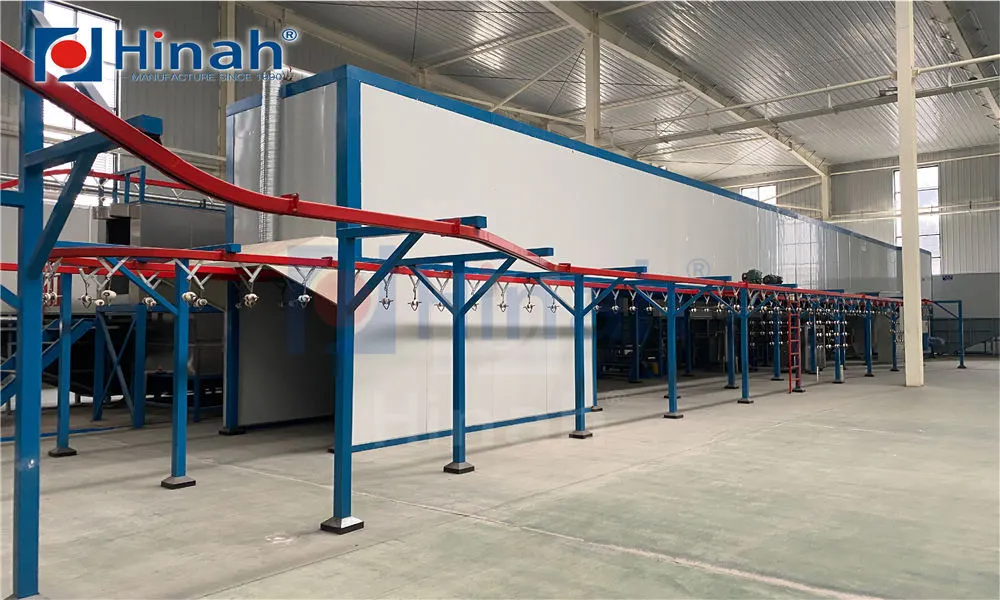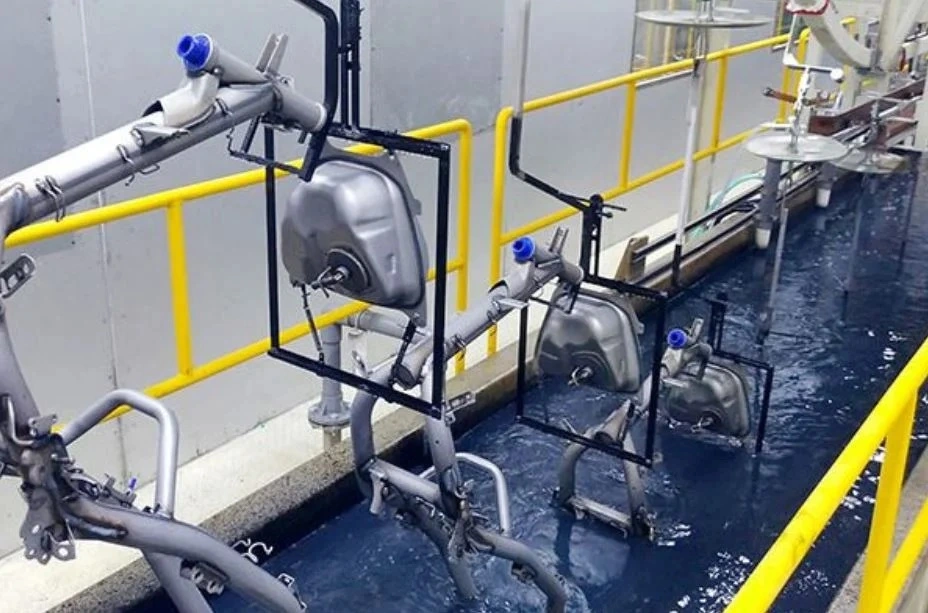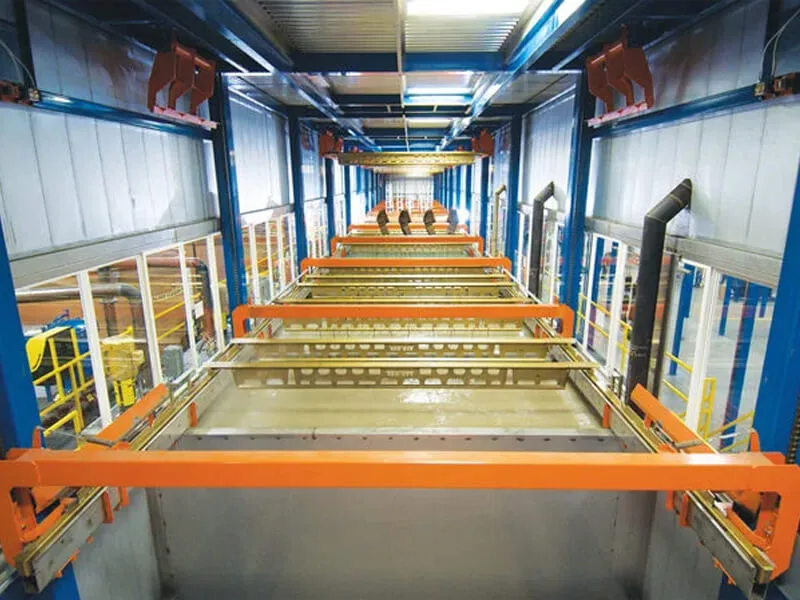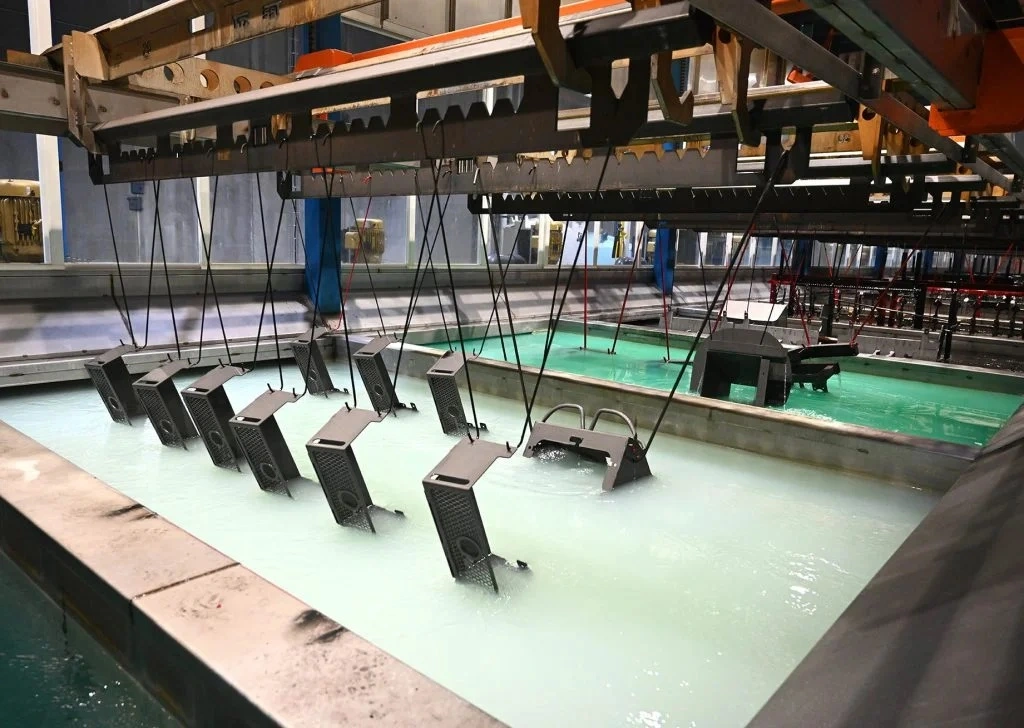

Selecting a powder coating oven manufacturer requires more than comparing price quotes. Ovens directly influence film hardness, adhesion, color consistency, and line productivity. A poorly designed oven causes under-cured powder (poor impact resistance), over-cured yellowing, or spotty gelation. This article examines the engineering specifications that separate competent powder coating oven manufacturers from assemblers of generic heating boxes. We focus on measurable parameters: temperature uniformity (ΔT), ramp-up rate, energy intensity (kWh/kg), and validation protocols.
HANNA has supplied curing ovens for over 80 powder coating plant installations globally. Below we share the technical checklist used in our own factory acceptance tests.
Any credible powder coating oven manufacturer offers both convection and infrared (IR) systems. Each has distinct advantages:
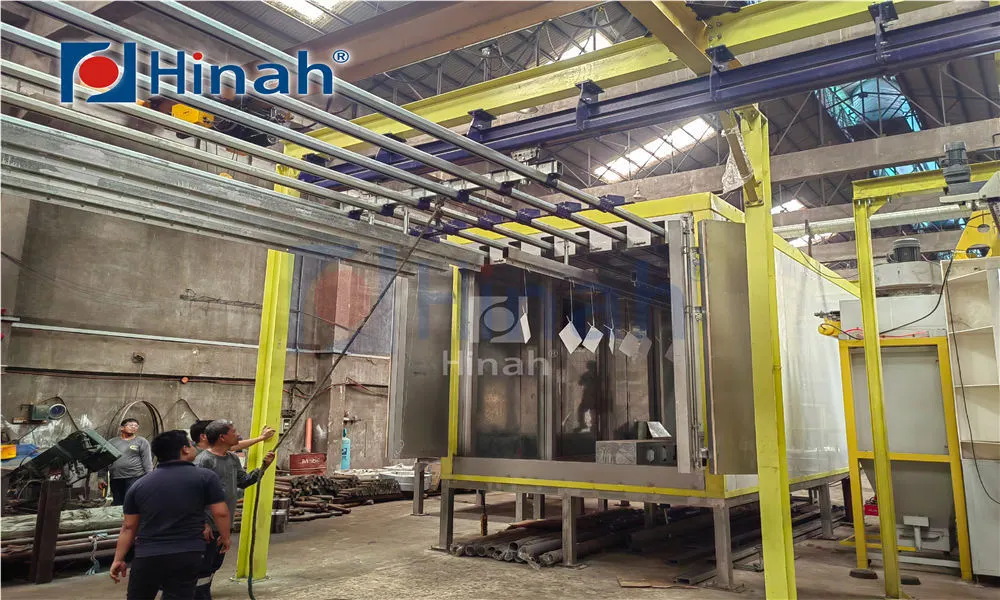
Gas-fired convection ovens: Best for heavy parts, complex geometries, and thick substrate. Uniform heating via recirculated air (10–20 air changes per minute). Typical temperature range 160–220°C. Uniformity: ±5°C achievable.
Infrared ovens (medium-wave or short-wave): Faster ramp-up (seconds vs minutes). Suitable for thin sheets, heat-sensitive substrates (MDF, plastics). But IR cannot cure shadowed areas. Hybrid designs (IR + convection) are common for high-speed lines.
Ask your powder coating oven manufacturer for a thermal simulation of your specific part. A generic oven may leave cold zones behind flanges or inside box sections.
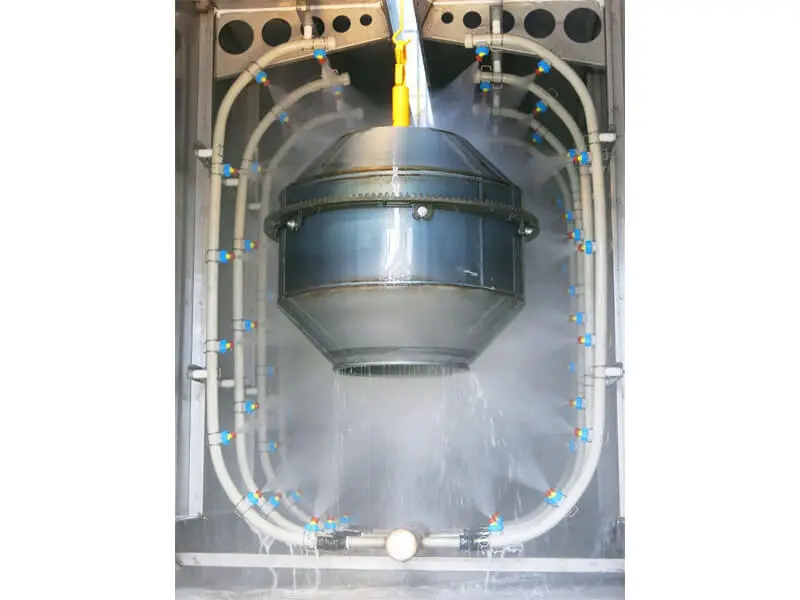
In convection ovens, air distribution determines curing consistency. Key design features to verify:
Side-mounted vs. roof-mounted air plenums: Roof-mounted with adjustable nozzles provides better cross-flow for tall parts. Side-mounted suits flat panels.
Air velocity at part surface: 1.5–3 m/s is typical. Too low causes stratification; too high cools the part surface (convective heat extraction).
Nozzle pattern density: At least one nozzle per 0.2 m² of oven floor area. Staggered arrangement prevents dead zones.
Balancing dampers: Manual or motorized dampers in each branch duct allow fine-tuning of air distribution. Without them, uniformity cannot be achieved.
Request a computational fluid dynamics (CFD) report from the powder coating oven manufacturer showing temperature and velocity contours. A competent supplier will provide this at no extra cost for projects above €50k.
Indirect gas-fired ovens (most common for powder coating) use a burner heating air through a stainless steel or aluminized steel heat exchanger. Direct-fired ovens (less common) inject combustion products into the oven – not recommended for powder due to moisture and CO₂ byproducts. Evaluation points:
Burner turndown ratio: Minimum 10:1 (e.g., 300–30 kW) to avoid frequent on/off cycling. Low turn-down causes temperature overshoot/undershoot.
Heat exchanger material: 409 stainless steel resists oxidation at 600°C. Aluminized steel degrades after 3–5 years.
Fresh air intake: Combustion air should be drawn from outside, not from the plant atmosphere (prevents powder dust ingestion).
A powder coating oven manufacturer that skips a modulating burner (using only on/off control) will deliver poor uniformity – avoid them.
Heat loss increases operating costs and creates hot exterior surfaces (safety hazard). Minimum insulation standards:
Mineral wool density: 128 kg/m³, thickness 100 mm for ovens up to 200°C, 150 mm for 250°C.
Panel joints: Cam-lock systems with silicone gaskets. Avoid continuous metal-to-metal contact (thermal bridge).
Exterior surface temperature: Should not exceed ambient +15°C at any point. Measure with an IR thermometer during FAT.
Some powder coating oven manufacturers use 50 mm insulation to reduce material cost – this adds 20–30% to gas bills over a year.
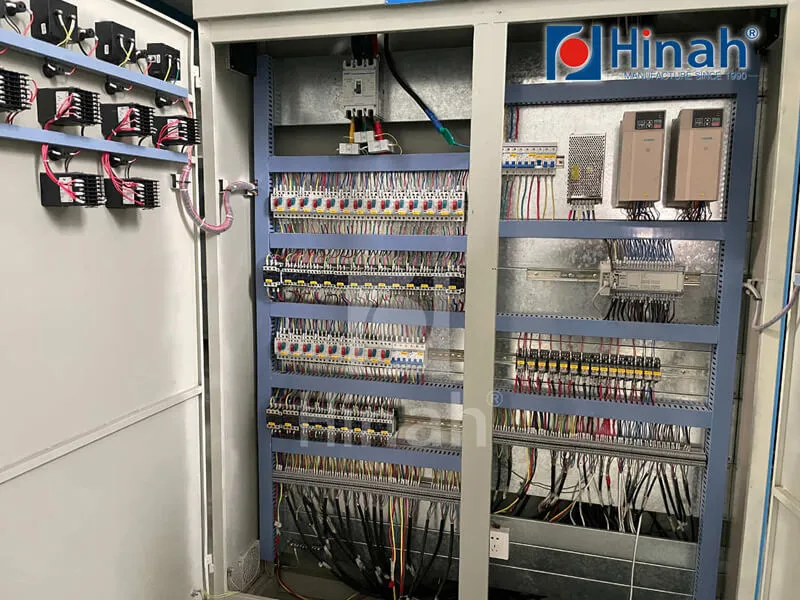
Modern ovens require PID controllers with auto-tuning. Minimum features:
Multi-zone control: At least three zones (entry, middle, exit) with independent temperature sensors.
Overtemperature protection: A separate high-limit thermostat with manual reset, wired to shut off the burner.
Data recording: A paperless recorder or SCADA interface that logs setpoint, actual temperature, and burner modulation for each shift. This is mandatory for ISO 9001 and customer audits.
Remote access: For troubleshooting, the ability to view oven parameters via web interface or VPN.
Ask the powder coating oven manufacturer for the brand of controller (Eurotherm, Watlow, Omron are preferred). Generic no-name controllers often lack documentation and spare parts.
Ovens typically consume 50–70% of a powder coating plant total energy. Efficiency upgrades that a good powder coating oven manufacturer should offer:
Exhaust heat recovery: A plate heat exchanger preheats fresh combustion air using hot oven exhaust. Recovers 10–15% of input energy.
Variable frequency drives (VFDs) on circulation fans: Reduce fan speed during idle periods (color change, breaks). Saves 30–50% fan energy.
Insulated conveyor slots: Sliding or brush seals at oven entry/exit reduce infiltration losses.
Economizer mode: When production stops, the oven automatically drops to a low standby temperature (80°C) and returns to setpoint within 10 minutes of restart.
HANNA incorporates all these features as standard on our curing ovens, achieving specific energy consumption below 0.8 kWh per kg of coated parts.
Before accepting an oven from any powder coating oven manufacturer, perform a TUS according to AMS 2750 or ISO 17554. Procedure:
Place 9 to 15 thermocouples in a representative load (or empty oven).
Run oven at setpoint for 1 hour.
Maximum temperature deviation from setpoint should not exceed ±6°C for general powder curing. For high-gloss or clear coats, ±3°C is required.
The SAT verifies the accuracy of the oven’s own thermocouples against a certified reference probe. Acceptable error: ±1.1°C. A reliable powder coating oven manufacturer will provide a TUS report as part of the commissioning package. If they refuse, find another supplier.
A Spanish automotive parts manufacturer operated a 20-year-old oven with temperature variation of ±18°C, causing 12% reject rate due to under-cure. They selected HANNA as their powder coating oven manufacturer for a retrofit. Changes made:
Replaced single large fan with three smaller VFD-controlled fans (redundancy).
Installed new nozzle plates with CFD-optimized pattern.
Added 100mm mineral wool insulation to walls and roof.
Upgraded controller to a 3-zone PID with data logging.
Results after retrofit: uniformity ±4°C, reject rate dropped to 1.5%, gas consumption reduced by 27%, payback achieved in 14 months.
Q1: What is the typical lead time for a custom powder coating oven from a manufacturer?
A1: For a standard convection oven (6–12 m length), lead time ranges 12–16 weeks after engineering approval. Custom designs with special insulation or multiple zones take 18–22 weeks. Ask your powder coating oven manufacturer for a detailed project schedule including design, fabrication, FAT, shipping, and installation.
Q2: How often should I calibrate oven temperature sensors?
A2: At least every 12 months. Use a certified thermocouple probe and a portable calibrator. For high-precision work (medical, aerospace), calibrate every 6 months. The powder coating oven manufacturer should provide calibration procedure documentation.
Q3: Can I use a powder coating oven for both curing and drying parts (e.g., after pre-treatment)?
A3: Not recommended. Drying (moisture removal) requires lower temperatures (80–120°C) and high airflow without cross-contamination risk. Curing ovens operate at 180–220°C and may have residual powder particles that could stick to wet parts. Use a separate drying oven or a combined multi-zone tunnel with a physical separation curtain.
Q4: What is the expected lifespan of a well-maintained powder coating oven?
A4: 20–25 years with regular maintenance. The most frequent replacements: circulation fan bearings (every 5–7 years), burner nozzles (every 4–6 years), and door seals (every 3–4 years). The insulation remains effective for 15+ years unless physically damaged. A reputable powder coating oven manufacturer will provide a recommended spare parts list with lead times.
Q5: How do I compare energy consumption between different oven manufacturers' quotes?
A5: Request a guaranteed maximum energy consumption in kWh per kilogram of parts (or per hour at setpoint). Ask for the calculation basis: wall U-value (W/m²·K), air change rate, and burner efficiency. A transparent powder coating oven manufacturer will provide these figures. For a typical 200°C oven, expect 0.7–1.2 kWh/kg. Lower than 0.6 may indicate poor airflow; higher than 1.5 suggests inadequate insulation.
Choosing a powder coating oven manufacturer should be based on demonstrated thermal performance, not just brochure promises. HANNA designs and builds curing ovens with documented uniformity, full data logging, and energy recovery. We provide a 24-month warranty on all thermal components and free remote tuning support for the first year.
Contact our engineering team with your part dimensions, production rate (parts/hour), and substrate material. We will return a thermal simulation, a TUS test plan, and a fixed-price proposal including installation and operator training.
Inquiry form:
Email: sales@autocoatinglines.com
Web: https://www.autocoatinglines.com/
Request a quote: Powder coating oven manufacturer – specification sheet">Powder coating oven manufacturer – specification sheet