
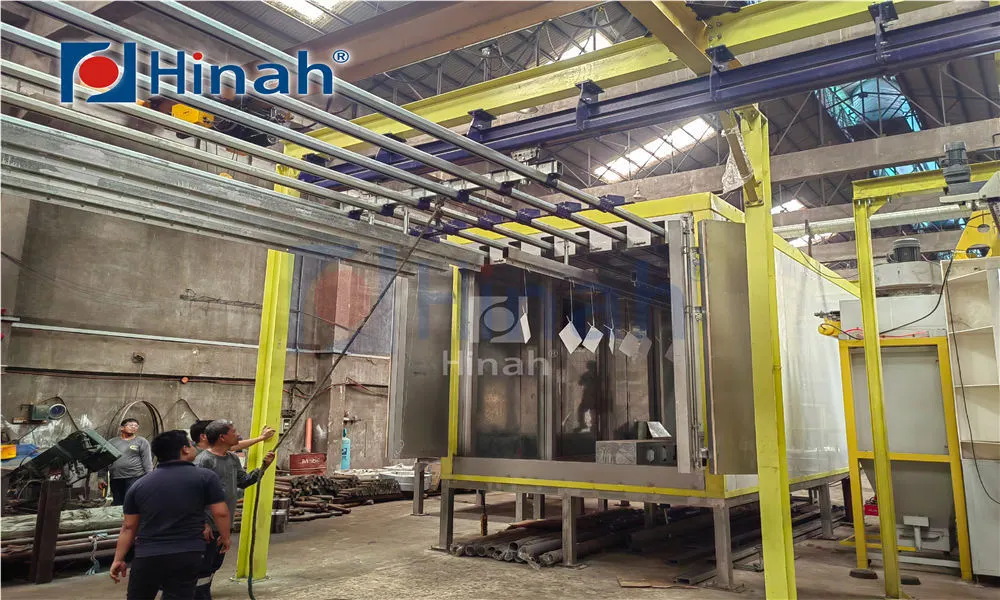
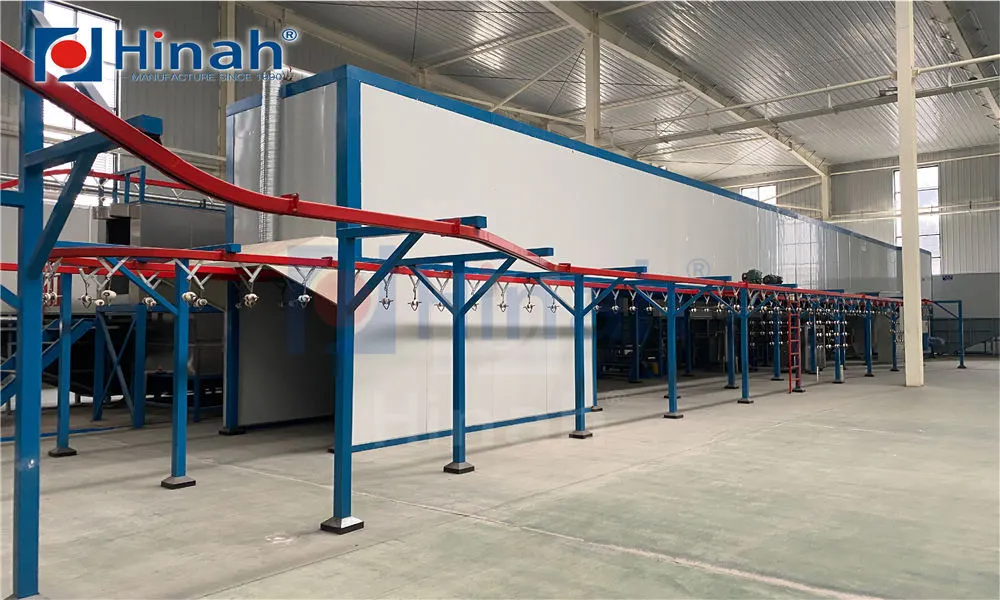
Industrial finishing operations that rely on powder application face a persistent challenge: containing the powder cloud while maintaining consistent coating quality across varying part geometries. Open spray booths, while simpler in concept, introduce variability through uncontrolled airflow, temperature fluctuations, and particulate contamination. Powder coating rooms address these limitations by providing a controlled environment where every variable—from air velocity to humidity—is managed to tight tolerances. This article examines the engineering principles behind these enclosures, the process parameters that determine finish quality, and the operational protocols that sustain performance over years of production.
Manufacturers transitioning from batch processing to continuous conveyorized finishing frequently discover that the spray enclosure itself becomes the single most influential factor in overall line performance. The powder coating room sits at the heart of the finishing line, interfacing directly with part presentation, powder application, and overspray recovery. Its design dictates transfer efficiency, film build uniformity, and the frequency of maintenance interventions. This analysis proceeds from enclosure fundamentals through environmental control, filtration architecture, and integration with material handling systems, providing a comprehensive framework for evaluating and operating these critical assets.
The physical structure of a powder coating room determines its ability to maintain consistent conditions while accommodating production throughput. Several interdependent factors must be balanced during the design phase.
The internal volume of the enclosure directly influences airflow patterns and powder cloud behavior. Rooms that are too large relative to part size waste conditioned air and allow powder to settle on surfaces before reaching the substrate. Conversely, undersized enclosures restrict part access and create turbulent eddies that disrupt spray patterns. Most industrial powder coating rooms employ a modular panel construction using 14-gauge steel or stainless steel for high-wear zones. Panel joints require sealed interlocking mechanisms to prevent powder egress and maintain negative pressure relative to the surrounding production area.
Floor design merits particular attention. Perforated floor panels with integral plenum chambers facilitate downward airflow, carrying overspray into the recovery system. Solid floor sections at entry and exit points provide stable footing for operators and accommodate conveyor track penetrations. The transition between perforated and solid flooring must be smooth to prevent part vibration or powder accumulation at seams.
Air movement within the enclosure serves two purposes: containing the powder cloud and delivering fresh powder to the part surface. Downflow systems, where air enters through ceiling diffusers and exits through floor grates, provide the most consistent velocity profile across the spray zone. Typical face velocities range between 60 and 100 feet per minute, sufficient to contain overspray without disturbing the electrostatic field between gun and part.
Crossflow designs, where air moves horizontally from one wall to the opposite recovery plenum, offer advantages for larger parts but introduce velocity gradients that can cause uneven powder deposition. The choice between downflow and crossflow architecture depends on part geometry, line speed, and the specific powder formulation being applied. Hybrid systems that combine both flow patterns are increasingly common in high-mix production environments.
Pressure differentials between the enclosure interior and the surrounding plant floor must be maintained within a narrow band. Excessive negative pressure draws unfiltered plant air into the room, introducing contaminants that compromise finish quality. Insufficient pressure allows powder to escape, creating housekeeping problems and reducing transfer efficiency. Differential pressure transmitters with digital displays enable operators to verify conditions at a glance.
Powder coating is fundamentally a surface phenomenon, and surface conditions are directly influenced by ambient temperature and moisture content. The enclosure must provide stable environmental conditions regardless of external weather or plant-wide HVAC fluctuations.
Powder formulations exhibit temperature-dependent flow characteristics. As temperature rises, the powder's glass transition temperature approaches, causing tackiness that can lead to agglomeration in the feed hopper or on the part surface. At lower temperatures, powder particles become brittle and resist proper fluidization, resulting in erratic spray patterns and reduced transfer efficiency.
Most powder coating rooms maintain interior temperatures between 18°C and 24°C, with control accuracy of ±1.5°C. This range accommodates the majority of epoxy, polyester, and hybrid powder systems while preventing condensation on cool parts entering from unconditioned storage areas. Temperature control systems typically consist of ducted air handling units with electric or hot-water heating coils and chilled-water cooling coils, modulated by a PID controller that responds to feedback from multiple thermocouples positioned throughout the enclosure.
Moisture content in the air directly affects powder resistivity and, consequently, electrostatic charging efficiency. High humidity levels (above 60% RH) cause powder particles to absorb water, reducing their ability to hold a charge and leading to poor wrap-around coverage on recessed features. Low humidity (below 30% RH) creates static buildup on non-grounded parts and equipment, resulting in dust attraction and potential spark hazards.
Optimal humidity ranges from 40% to 50% RH for most industrial applications. Desiccant dehumidifiers or chilled-water cooling coils with reheat capability provide the necessary moisture removal without overcooling the room air. Humidity sensors placed at multiple locations ensure uniform conditions throughout the spray zone, particularly important in larger enclosures where dead zones can develop near corners or conveyor penetrations.
Integrated monitoring systems that log temperature and humidity data over time provide valuable insight into process stability. Deviations from setpoint can be correlated with changes in film thickness, orange peel severity, or powder usage rates, enabling proactive adjustments before quality issues escalate.
Overspray—powder that does not adhere to the part—constitutes both a waste stream and a potential quality risk if allowed to recirculate improperly. The recovery system must separate reusable powder from contaminants and maintain air quality within the enclosure.
Cyclone separators exploit centrifugal force to remove coarse powder particles from the exhaust air stream. Air entering the cyclone tangentially spins at high velocity, throwing powder particles against the cone wall where they lose velocity and fall to the collection hopper. Cyclone efficiency depends on particle size distribution, with typical removal rates exceeding 95% for particles above 10 microns.
Recovered powder from the cyclone can be reintroduced into the feed system as reclaim material, provided it is screened to remove agglomerates and properly blended with virgin powder. The reclaim ratio—the proportion of recovered powder in the total feed—typically ranges from 30% to 70%, depending on part geometry and the specific powder formulation. Higher reclaim ratios reduce material costs but require more careful screening and blending to maintain consistent color and gloss.
After cyclone separation, the air stream still contains fine particles that must be removed before the air can be recirculated into the enclosure or exhausted to the atmosphere. Cartridge filters with pleated media provide high-efficiency removal of sub-micron powder particles. Filter cartridges are cleaned periodically using reverse-pulse compressed air bursts that dislodge accumulated powder, which falls to the recovery hopper.
Filter selection involves balancing collection efficiency against pressure drop. High-efficiency filters capture more fine particles but require more frequent pulsing and impose greater resistance on the air handling system. Most powder coating rooms use filter cartridges rated at 99.9% efficiency for particles down to 0.5 microns, with differential pressure gauges indicating when cleaning is required. Regular filter condition monitoring prevents performance degradation that can lead to poor air quality and reduced transfer efficiency.
Recovered powder from the secondary filtration stage is typically classified as waste due to the high proportion of fine particles that can cause application problems. Some systems include a sieving station that separates reusable coarse fractions from fine waste, but this practice requires careful quality control to avoid introducing oversized particles that create surface defects.
The powder coating room does not operate in isolation; it interfaces directly with the conveyor system that transports parts through the finishing line. This integration affects both the enclosure design and the operational protocols.
Conveyor penetrations through the enclosure walls must be sealed to prevent powder escape and maintain differential pressure. Flexible neoprene flaps or brush seals accommodate the moving conveyor chain while minimizing air leakage. The conveyor speed determines the dwell time within the spray zone, which in turn influences the number of guns required and the powder application rate. Faster line speeds demand higher powder throughput and more rapid gun traversal to achieve target film thickness.
Part orientation on the conveyor affects coverage uniformity and powder deposition efficiency. Parts with complex geometries or deep recesses require careful positioning to expose all surfaces to the spray pattern. Some systems incorporate part rotation or indexing mechanisms that present different faces to the guns as the part traverses the room. The integration of these mechanisms into the enclosure layout requires coordination between conveyor designers and room manufacturers.
Transition zones at the entry and exit of the powder coating room provide controlled access for parts while maintaining environmental integrity. Vestibule sections with independent airflow control prevent turbulent mixing between the room interior and the surrounding plant. Light curtains or proximity sensors at these transitions trigger gun activation and deactivation, reducing powder waste during gaps between parts.
HANNA offers engineering support for integrating powder coating rooms with existing conveyor lines, addressing the specific challenges of part geometry, line speed, and production throughput.
Even the most precisely engineered powder coating room will produce variable results without disciplined operational procedures. The interaction between spray parameters, powder properties, and environmental conditions requires systematic management.
Spray gun settings—voltage, current, and atomizing air pressure—must be matched to the specific powder formulation and part geometry. Higher voltage improves wrap-around coverage but increases the risk of Faraday cage effects in recessed areas. Lower voltage provides more directed deposition but may require additional guns or longer dwell times. Atomizing air pressure affects particle velocity and pattern width, with higher pressures producing finer atomization but increased overspray.
Gun positioning and traverse speed determine the film build profile across the part surface. Oscillating gun systems that move vertically or horizontally during application provide more uniform coverage than fixed guns, particularly for parts with varying cross-sections. The traverse speed must be synchronized with conveyor movement to ensure complete coverage without excessive overlap or missed areas.
Daily verification of powder feed rates, air pressures, and environmental conditions establishes a baseline for process monitoring. Operators should record key parameters at the start of each shift and compare them to established setpoints. Deviations outside control limits trigger investigation and corrective action before defective parts are produced.
Part surface preparation—cleaning, phosphating, or other pretreatment steps—has a direct influence on powder adhesion and film continuity. While the powder coating room itself does not perform pretreatment, its environmental conditions can affect the surface condition of parts entering the room. Parts that have been pretreated and stored in ambient conditions may absorb moisture or collect dust, reducing the effectiveness of the powder coating. Maintaining a clean, dry environment in the staging area adjacent to the room helps preserve part readiness.
HANNA provides training and documentation for establishing operational protocols that align with specific production requirements, ensuring that personnel understand the relationships between spray parameters and finished part quality.
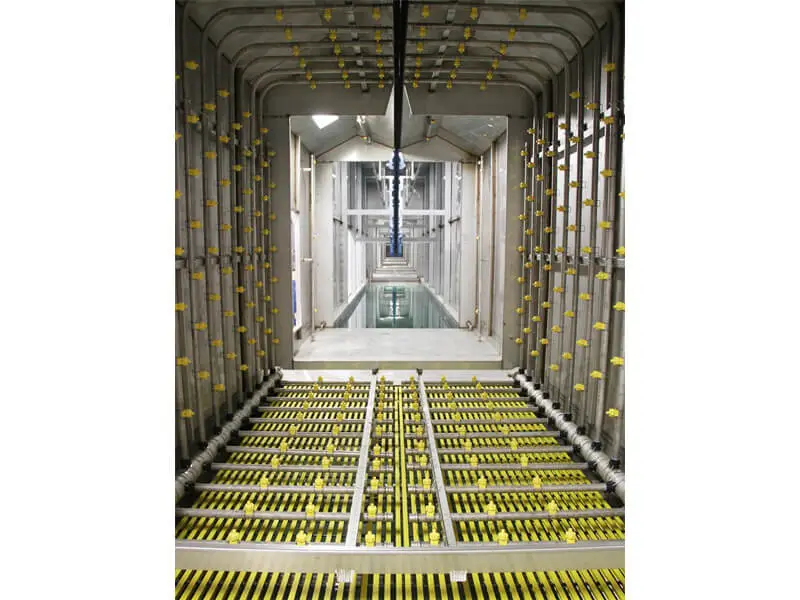
Powder coating rooms operate in demanding conditions: high particulate loads, variable temperatures, and continuous mechanical cycling. Maintenance procedures must address both the enclosure itself and the ancillary systems that support its operation.
Daily maintenance activities include:
Weekly maintenance extends to the air handling system, including belt tension checks on supply and exhaust fans, cleaning of cooling coil fins, and inspection of desiccant wheels or chilled-water valves. Humidity sensors require periodic calibration to maintain control accuracy, typically every six months using a handheld reference meter.
Monthly maintenance includes more thorough cleaning of the cyclone separator, inspection of the reverse-pulse cleaning system, and verification of air velocity at multiple points within the enclosure. Anemometer traverses across the spray zone reveal changes in airflow distribution that may indicate duct obstructions or fan performance degradation.
Performance verification protocols compare actual operating parameters to design specifications. Transfer efficiency—the ratio of powder deposited on parts to powder consumed—serves as the primary performance metric. Declining transfer efficiency often indicates issues with environmental control, gun settings, or powder fluidization. Film thickness measurements across representative parts provide a second verification point, with target thickness ranges specified by the powder manufacturer.
Filter replacement schedules depend on production volume and powder type. High-throughout lines may require cartridge replacement every six months, while lower-volume operations can extend intervals to 12 to 18 months. Replacement should occur before differential pressure reaches the manufacturer's maximum recommended value to prevent air quality degradation and increased energy consumption.
HANNA provides maintenance planning resources and spare parts support for powder coating rooms, helping production teams sustain consistent performance over the equipment lifecycle.
Q1: What distinguishes a powder coating room from a standard spray booth?
A1: Powder coating rooms incorporate comprehensive environmental controls—temperature, humidity, and airflow management—that exceed the capabilities of standard spray booths. While booths focus primarily on overspray containment, rooms provide precise conditioning of the entire spray environment, enabling consistent coating quality across varying production conditions. Rooms also feature more sophisticated filtration and powder recovery systems, with cyclone separators and high-efficiency cartridge filters that support reclaim operations.
Q2: How does airflow velocity affect powder transfer efficiency?
A2: Airflow velocity directly influences the trajectory of powder particles from the gun to the part surface. Velocities below 60 feet per minute allow overspray to linger in the spray zone, causing re-entrainment and potential contamination of previously coated areas. Velocities above 100 feet per minute deflect powder particles before they reach the substrate, reducing deposition efficiency and increasing powder consumption. The optimum velocity depends on powder particle size distribution and gun parameters, with most systems operating between 70 and 90 feet per minute.
Q3: Can powder recovered from the filtration system be reused?
A3: Powder recovered from cyclone separators can be reintroduced into the feed system as reclaim material, provided it passes through a screening process to remove agglomerates and is blended with virgin powder at appropriate ratios. Powder recovered from secondary cartridge filters typically contains a high proportion of fine particles that impair fluidization and application quality, making it unsuitable for reuse. The reclaim ratio—the proportion of recovered powder in the total feed—varies by formulation and application requirements, typically ranging from 30% to 70%.
Q4: What humidity level is optimal for powder coating applications?
A4: The optimal relative humidity range for most powder coating operations is 40% to 50% RH at the operating temperature. This range balances powder fluidization, electrostatic charging efficiency, and adhesion characteristics. Humidity below 30% RH creates static control problems and may cause dust attraction, while humidity above 60% RH reduces charging efficiency and can lead to uneven film build. Some specialty powder formulations have narrower humidity tolerances, requiring tighter environmental control within the room.
Q5: How often should filter cartridges be replaced in a powder coating room?
A5: Filter cartridge replacement intervals depend on production volume, powder type, and the efficiency of the upstream cyclone separation. High-volume operations with abrasive powder formulations may require replacement every 6 to 8 months, while lower-volume lines can extend intervals to 12 to 18 months. The primary replacement indicator is differential pressure across the filter bank—when pressure exceeds 2 inches of water column (or the manufacturer's specified limit) during normal operation, cleaning cycles become insufficient and replacement is required.
Q6: What design parameters most influence powder coating room performance?
A6: The most significant design parameters include enclosure volume relative to part size, airflow velocity and uniformity across the spray zone, filtration system capacity, temperature and humidity control accuracy, and integration with conveyorized material handling. Each parameter affects transfer efficiency, coating quality, and operational cost. Properly balanced design ensures consistent performance across varying part geometries and production throughput.
For inquiries regarding powder coating room design, integration with existing finishing lines, or performance optimization, contact the engineering team at HANNA for detailed consultation and project support.