
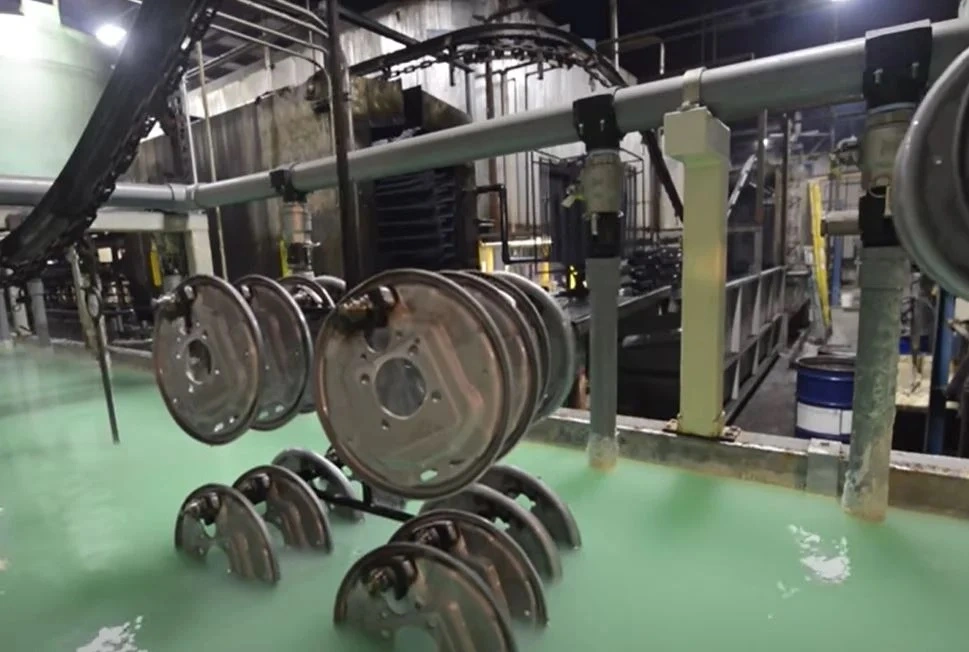
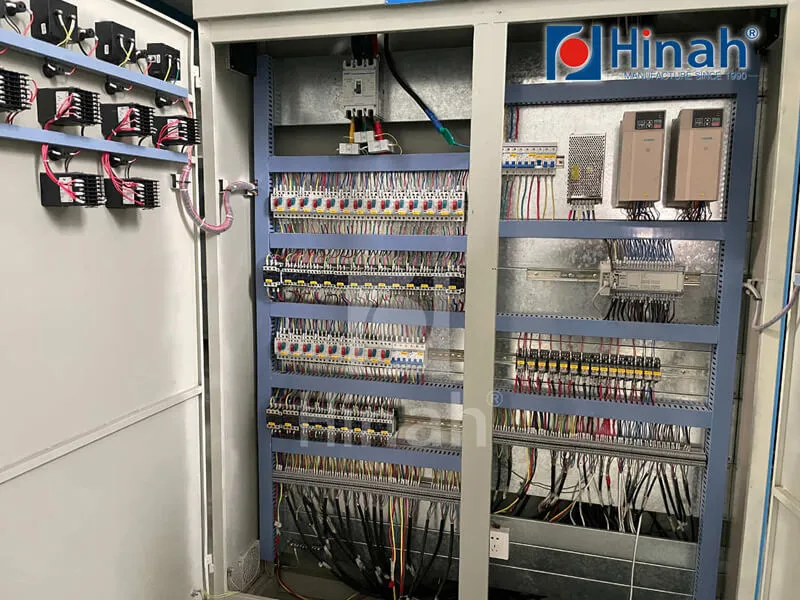

Selecting and integrating a powder coating machine and oven is not a commodity purchase—it is a core process engineering decision that directly impacts transfer efficiency, film uniformity, and line throughput. In industrial environments, even a 3% variation in curing temperature or an inconsistent powder cloud distribution leads to rework costs that erode margins. This guide provides an objective, data-driven analysis of the critical variables that separate a world-class powder coating line from a problematic one, drawing on standards from powder coating plant engineering and practical field audits.
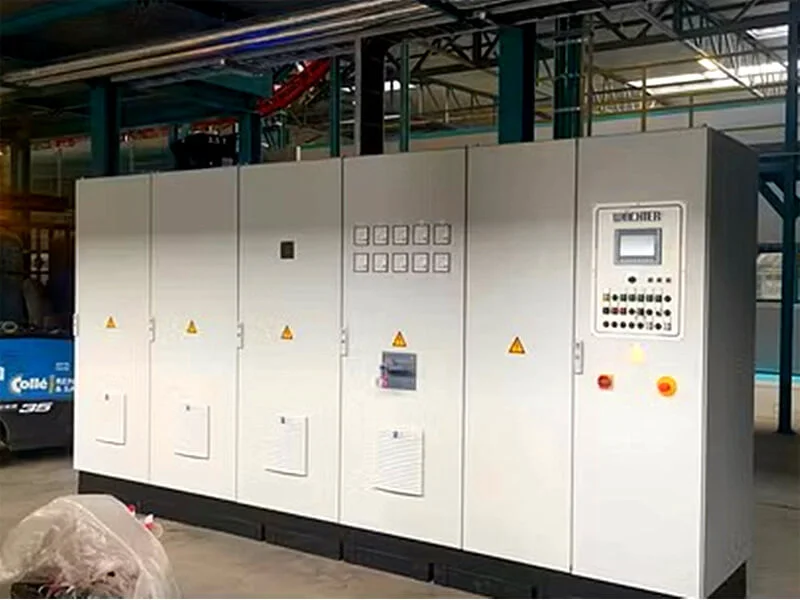
1. Electrostatic Spray Dynamics & Faraday Cage Mitigation
The core of any powder coating machine and oven system begins with the application zone. Modern electrostatic spray guns operate between 40–100 kV, but effective charging depends on workpiece geometry, grounding integrity, and powder resistivity. Recessed areas (Faraday cages) often receive insufficient coverage. To solve this, engineers use:
Variable voltage control (20–70 kV for complex parts vs. 70–100 kV for flat surfaces).
Multi-stage gun reciprocators with adjustable stroke speeds (0.5–1.2 m/s).
Powder flow rate modulation (150–300 g/min for standard guns).
Powder coating plant integrators like HANNA recommend conducting electrostatic field mapping before selecting gun positions, especially for mixed-product lines with varying cavity depths.
2. Curing Oven Heat Transfer Modes: Convection vs. Infrared (IR)
The powder coating machine and oven pairing defines final film crosslinking. Two primary oven technologies dominate industrial settings:
Convection ovens (gas or electric): Provide uniform heating for thick, dense loads but require longer dwell times (10–25 minutes at 180–200°C). Air velocity must exceed 1.5 m/s to avoid boundary layer saturation.
Medium-wave IR ovens: Achieve gelation in 30–90 seconds, ideal for high-speed lines or heat-sensitive substrates. However, shadow effects require precise emitter spacing (typically 150–300 mm).
Hybrid solutions (IR boost + convection hold) reduce total energy consumption by 15–22% compared to pure convection, a metric validated by powder coating plant case studies. Always verify oven temperature uniformity (±3°C max deviation) via nine-point profiling per ASTM D3451.
3. Powder Recovery & Cyclone Efficiency Metrics
Closed-loop recovery systems in a powder coating machine and oven line directly affect material usage. High-efficiency cyclones (cut point d50 < 10 µm) recover 95–98% of overspray, but pressure drop must stay below 1.5 kPa to prevent powder attrition. For frequent color changes, consider:
Cartridge filter modules with pulse-jet cleaning (filter area > 8 m² per 10,000 m³/h airflow).
Quick-release hoppers and sweep-air systems to reduce cross-contamination to below 0.1%.
HANNA engineers often specify twin-cyclone arrangements for high-output plants, achieving 99.2% recovery on 20–40 µm epoxy-polyester hybrid powders.
4. Conveyorized Systems and Curing Window Consistency
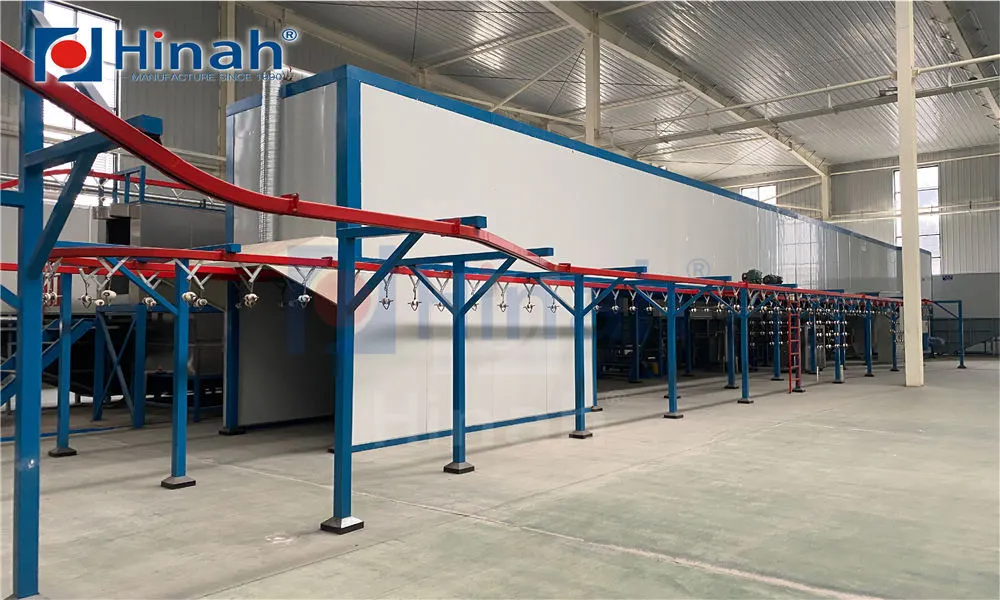
Monorail or power-and-free conveyors synchronize the entire powder coating machine and oven workflow. The critical parameter is line speed vs. oven length. A common formula used by powder coating plant designers is:
Oven dwell time (min) = Oven heated length (m) / Conveyor speed (m/min)
For a standard TGIC polyester powder requiring 10 minutes at 190°C metal temperature, a 30 m oven requires a line speed of 3 m/min. However, thermal mass of hangers and part geometry can shift required dwell by ±20%. Use data loggers with three thermocouples (top, middle, bottom of load) to establish true metal temperature curves.
5. Common Coating Defects: Root Cause Analysis
Even well-tuned powder coating machine and oven systems suffer defects. Below is an industry reference table:
Orange peel → High viscosity during flow; reduce powder feed air (0.5–1.2 bar) or increase oven temperature by 5°C.
Pinholes / outgassing → Moisture in substrate; preheat parts to 110°C before coating or extend outgassing zone in oven.
Poor adhesion / impact resistance → Undercured; check part temperature profile, increase dwell by 15%.
Back-ionization (volcano craters) → Excess charge; lower kV (use 40–60 kV) or increase gun-to-part distance to 200–300 mm.
Implement a statistical process control (SPC) program tracking film thickness (60–80 µm for interior, 80–120 µm for exterior) and gloss retention.
6. Energy Management Strategies for Powder Coating Ovens
Ovens consume 60–75% of total energy in a powder coating machine and oven line. Optimize via:
Exhaust air heat recovery (cross-flow plate exchangers capture 50–60% of waste heat).
Modulating burners with VFD-controlled fans (maintain λ=1.05–1.1 excess air).
High-density ceramic fiber insulation (reduce skin temperature to +5°C above ambient).
Retrofit projects by HANNA on legacy systems show payback periods under 18 months when upgrading to variable-frequency drives (VFDs) and zone-based PID controllers. Always integrate the oven control with the spray booth PLC to enable idle-mode energy reduction (e.g., 40% airflow during breaks).
7. Color Change Protocols and Quick-Change Features
High-mix low-volume (HMLV) operations require powder coating plant designs that minimize downtime. Modern powder coating machine and oven configurations include:
Modular cyclone booths with movable walls – changeover in under 10 minutes.
Acoustic cleaning of powder hoses (compressed air pulse at 6 bar).
Quick-release powder pumps (Venturi or dense-phase) reducing purge time by 60%.
Documented data: A dedicated color-change procedure (flushing, manual blow-off, booth wipe) should take 12–15 minutes for standard colors, and 25 minutes for metallic/effect powders. Track changeover frequency to justify investment in a second spray booth on a turntable.
8. Maintenance KPIs for Extended Equipment Life
Preventive maintenance ensures consistent output from your powder coating machine and oven assets. Recommended schedule:
Daily – Clean gun electrodes (check for powder caking), inspect conveyor chain lubrication.
Weekly – Measure oven temperature uniformity with a traverse thermocouple kit; check cyclone pressure drop.
Monthly – Replace powder filters (if differential pressure exceeds 800 Pa); verify grounding continuity (< 1 ohm).
Quarterly – Calibrate powder flow meters and electrostatic kV meters using a Faraday cup tester.
For multi-shift operations, HANNA provides remote condition monitoring via IoT sensors, alerting when bearing vibration exceeds 4.5 mm/s or when oven heat exchanger efficiency drops below 82%.
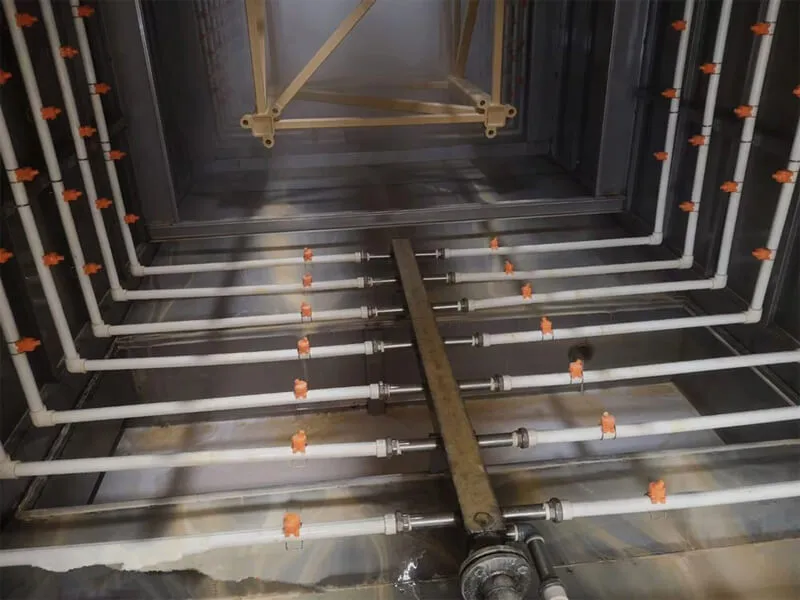
Integrating the Whole Line: From Pretreatment to Final Cure
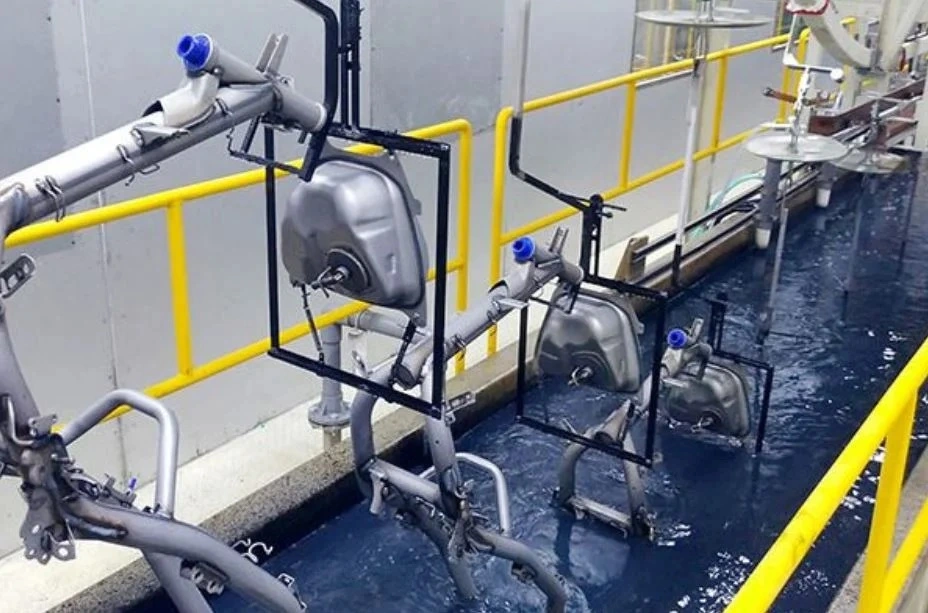
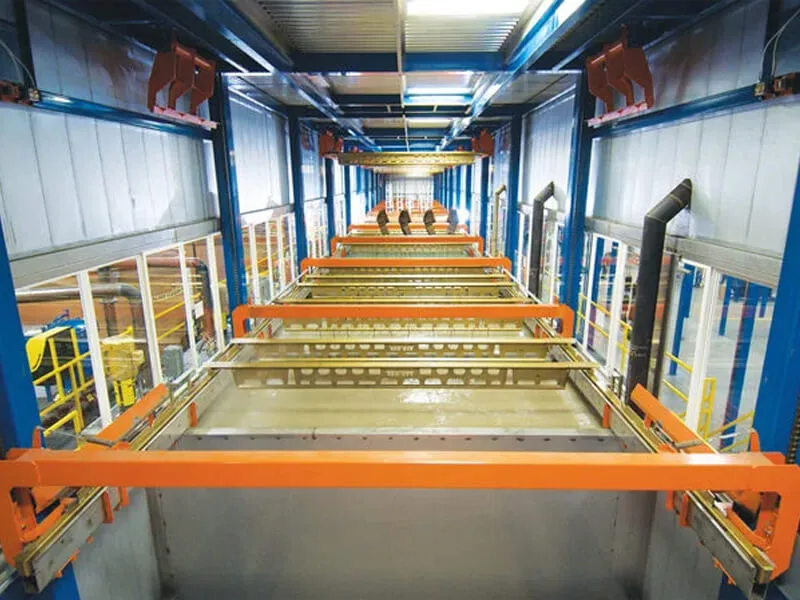
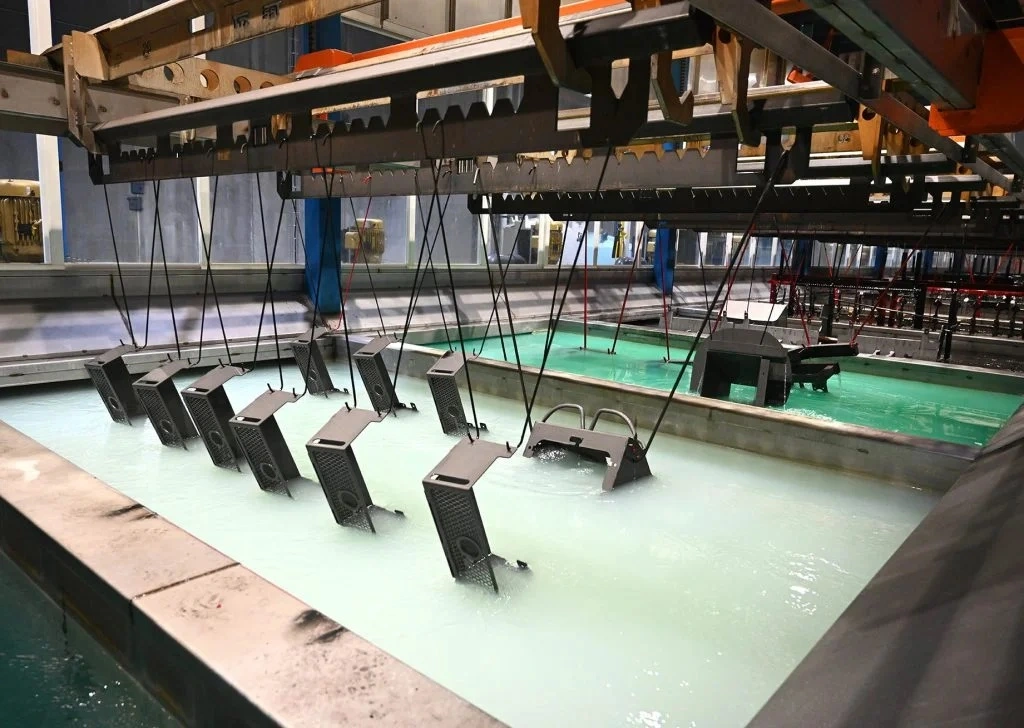
A truly optimized powder coating machine and oven workflow must include pretreatment (iron/zinc phosphate or nano-ceramic), which affects corrosion resistance and adhesion. Oven design must accommodate moisture flash-off zones (70–90°C for 5 minutes) before the cure zone. This prevents solvent popping in outgassing-prone substrates like cast aluminum. Modern lines use a three-stage oven: warm-up, gelation (120–150°C), and crosslinking (180–200°C), each with independent airflow control to avoid powder blow-off.
Selecting the Right Supplier for Your Production Targets
When evaluating bids, request documented data on transfer efficiency (minimum 70% for manual guns, 85% for automatic), oven temperature uniformity certificates (ISO 9001:2015 test protocol), and mean time between failures (MTBF) for conveyor drives. Reputable integrators provide digital twin simulations predicting part temperature curves before fabrication. HANNA offers such services, integrating powder coating plant designs with guaranteed first-pass yield ≥ 96%.
Frequently Asked Questions (FAQ)
Q1: How do I calculate the correct oven dwell time for a new powder
coating line?
A1: Measure the thermal mass of your heaviest part
(e.g., 50 mm steel plate). Place a data-logging thermocouple on the part surface
and run it through the oven at different speeds. The correct dwell time is when
the part reaches the powder manufacturer's specified metal temperature (e.g.,
190°C for 10 minutes) plus 10% safety margin. Avoid relying on air temperature
alone; use part temperature profiling.
Q2: What is the maximum acceptable distance between a powder coating
gun and a workpiece?
A2: For standard corona guns, the optimal
distance is 150–250 mm. Beyond 300 mm, transfer efficiency drops below 55% due
to electrostatic field attenuation. For tribo guns, distance can be 100–200 mm.
Always adjust based on part complexity – tighter for recessed areas, wider for
flat panels to avoid back-ionization.
Q3: Can I use the same curing oven for both powder coating and liquid
paint?
A3: Not recommended. Powder coating ovens require higher
airflow velocities (2–3 m/s) to prevent powder settling on oven walls, while
liquid paint ovens need lower velocities to avoid solvent-borne defects.
Cross-contamination and fire risks (combustible solvents vs. powder dust) also
prohibit shared use. Dedicated equipment is mandatory per NFPA 33 and NFPA
86.
Q4: Why does my powder coating sometimes show "ghosting" or pattern
marks after curing?
A4: Ghosting (shadow-like patterns) results from
uneven powder layer thickness caused by electrostatic interference or incorrect
gun trajectory. Check for: (a) worn gun electrodes, (b) irregular part grounding
(resistance > 1 MΩ), (c) excessive humidity in spray booth (>60% RH). Use
a Faraday cage test panel to isolate the root cause. Adjusting kV to 60–70 V
often resolves the issue.
Q5: How often should I replace the air seals and bearings in a powder
coating oven?
A5: For continuous operation (8,000 hours/year),
replace high-temperature bearing seals every 12 months or when you detect
audible friction. Air seals on oven doors should be inspected quarterly –
replace if hardness exceeds 70 Shore A or if visible cracks appear. Implement
vibration analysis on recirculation fan bearings; replace when velocity exceeds
7.1 mm/s RMS.
Request a Technical Consultation for Your Coating Line
Every production environment has unique constraints: available floor space, part geometry, curing chemistry, and throughput targets. Achieving consistent quality from your powder coating machine and oven requires a tailored approach based on process data, not generic specifications. HANNA provides on-site thermal audits, ROI calculations, and integration support for turnkey powder coating plant projects. Submit your part drawings, desired output (parts/hour), and powder types to receive a customized engineering proposal.
Get a fast quote or schedule a virtual plant review: Contact our engineering team → (Inquiry response within 24 hours).