
For surface finishing professionals, the powder coating oven and spray booth represent the two most critical assets in any coating line. Their design, thermal behavior, and airflow characteristics determine not only the final appearance and durability of the coating but also the overall productivity, energy consumption, and environmental compliance of the operation. With over two decades of hands-on experience in international powder coating systems, I have witnessed how subtle adjustments in booth aerodynamics or oven heat distribution can reduce rejection rates by double digits. This article dissects the technology behind these core modules, addresses real-world manufacturing pain points, and provides actionable engineering insights.
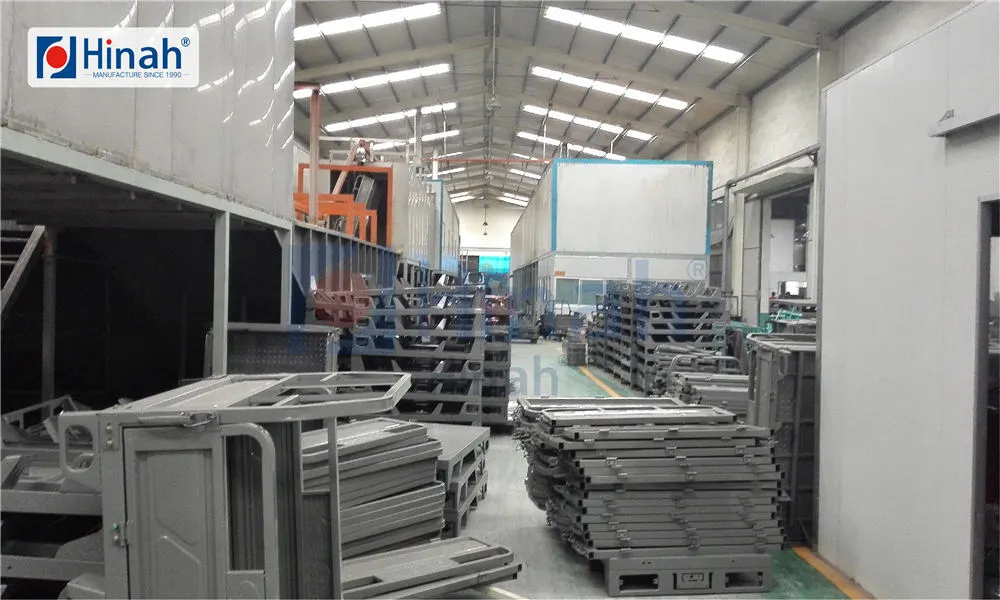
In a modern powder coating line, the powder coating oven and spray booth function as a tightly coupled system. The booth ensures optimal transfer efficiency and powder recovery, while the oven delivers the precise thermal profile required for cross-linking. Neglecting either component leads to defects: poor booth airflow causes Faraday cage issues and uneven film build; inadequate oven uniformity results in under-cure or yellowing. Engineers must specify both based on part geometry, throughput, and powder chemistry.
Industrial spray booths for powder are typically stainless steel constructed with smooth interior surfaces to minimize powder adhesion and facilitate color change. Key technical specifications include:
Airflow velocity: 0.30–0.60 m/s (down-draft or cross-draft configuration) to contain overspray without disturbing the charged cloud.
Cartridge filter efficiency ≥ 99.9% at 0.5 µm, often paired with pulse-jet back-pulsing for continuous powder recovery.
Explosion venting per NFPA 33/EN 12981 – mandatory safety integration.
Grounding continuity < 1 megaohm on conveyor hooks and booth components to prevent electrostatic discharge.
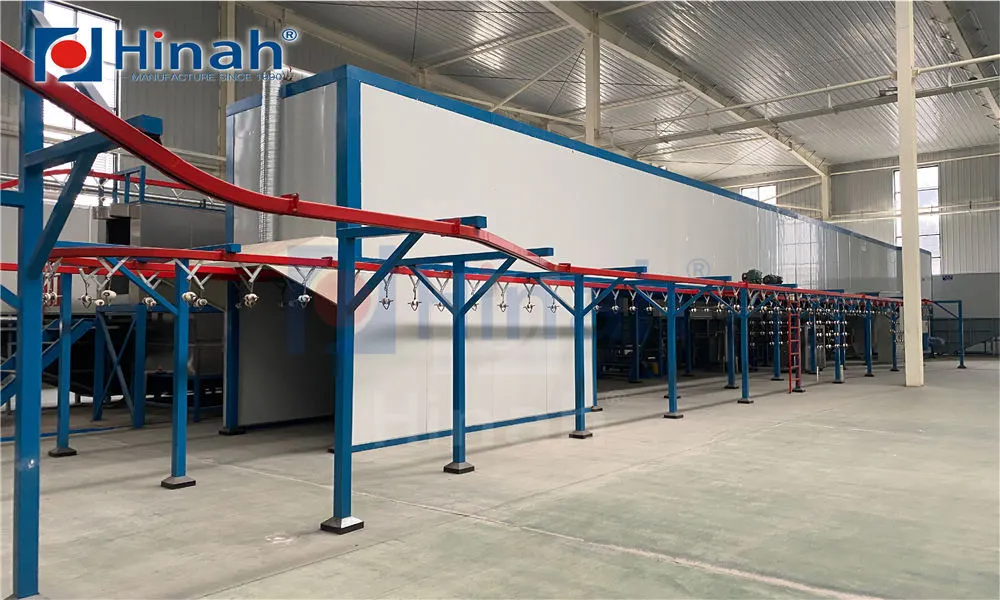
Modern booths from specialized manufacturers like HANNA integrate modular panels and quick-release filter cassettes, reducing color-change downtime from hours to under 20 minutes—a decisive factor for JIT production.
Powder curing ovens must maintain temperature uniformity of ±5°C (or better) throughout the cure zone. Three dominant technologies exist:
Convection ovens (gas/electric): Best for complex geometries and high mass parts. Air seals and high-velocity nozzles minimize stratification.
Infrared (IR) ovens: Rapid ramp-up, ideal for flat panels or heat-sensitive substrates. Wavelength matching with powder type (short/medium/long) is critical.
Combination (IR + convection): Used in high-speed lines where IR gelates the powder instantly, followed by convection hold.
The oven’s LEL (Lower Explosive Limit) monitoring system and fresh air exchange rate directly influence safety and VOC evolution. HANNA curing ovens feature CFD-optimized duct layouts that eliminate cold spots even in multi-zoned lines exceeding 25 meters.
Step-by-Step Process Diagram (Text Representation)
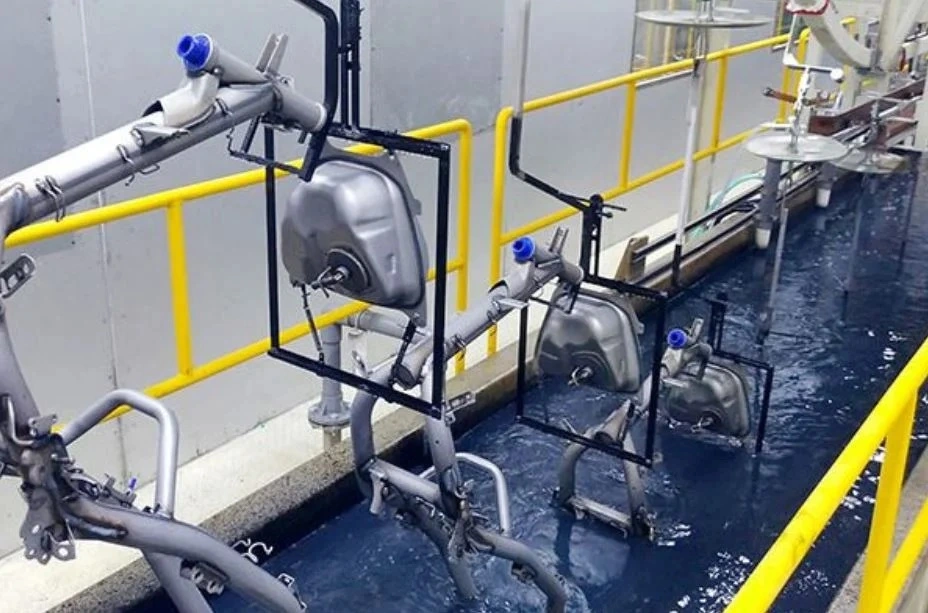
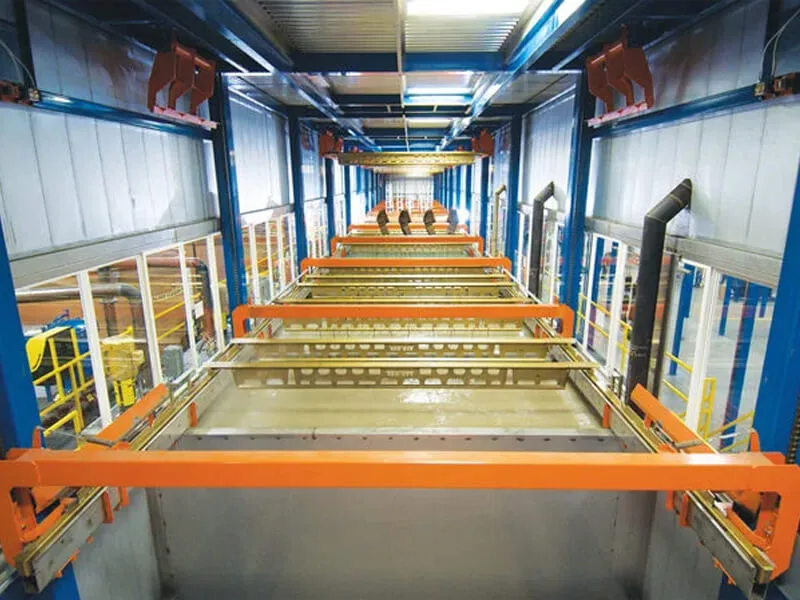
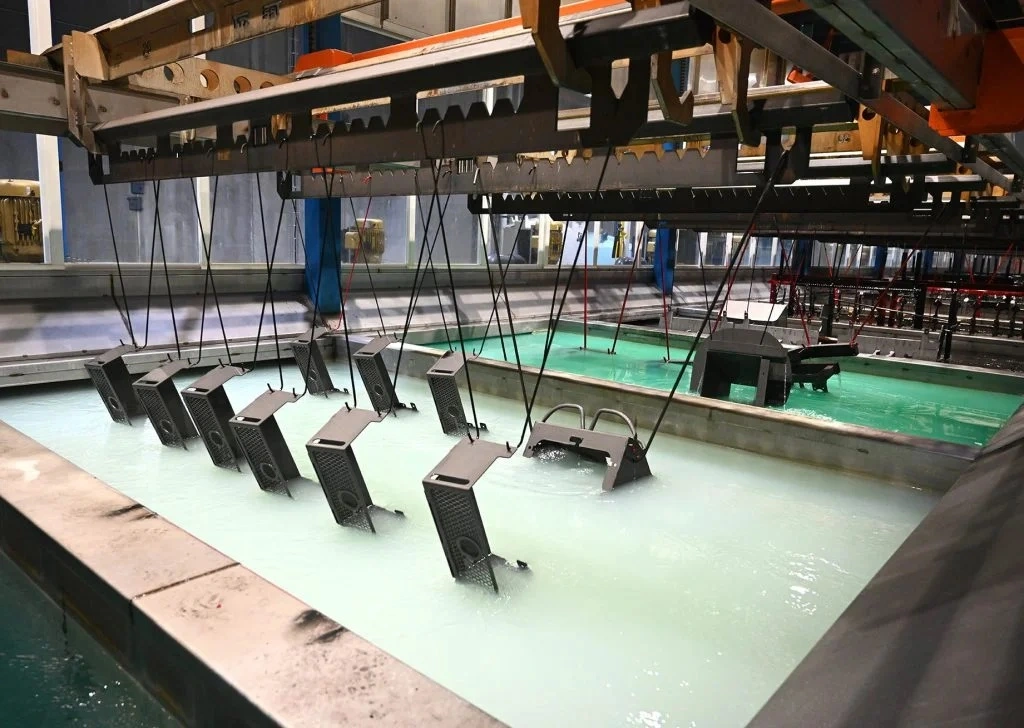
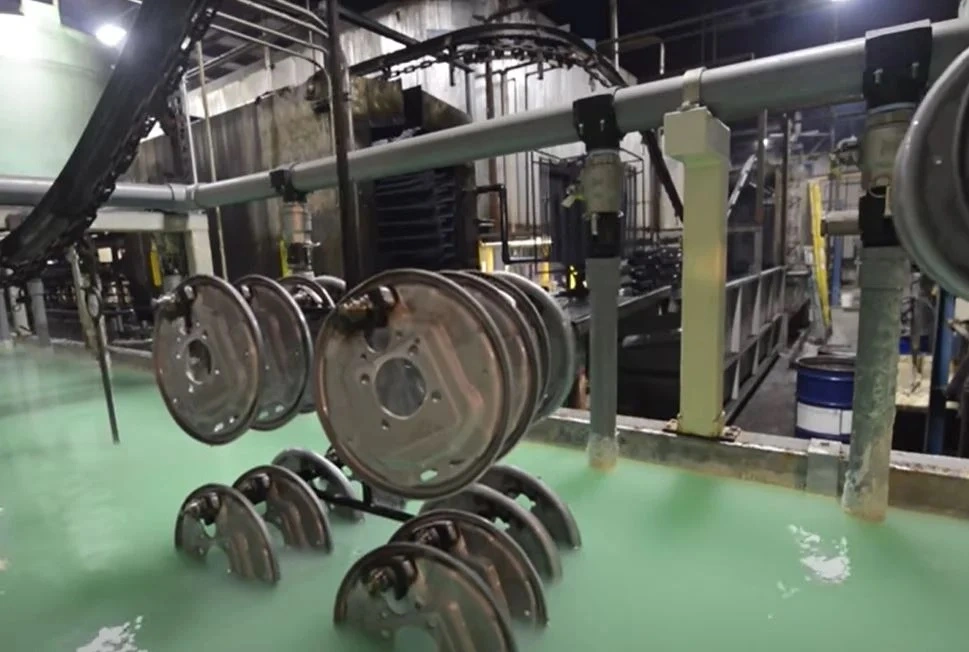
Pretreatment & Conveyor Loading: Parts are cleaned (alkaline/acid wash), phosphated or zirconium-coated, rinsed, and dried. Conveyor speed typically 1.5–5 m/min depending on line design.
Masking & Grounding: Sensitive areas masked; hooks cleaned to ensure electrical continuity < 1 ohm.
Powder Application in Spray Booth: Electrostatic corona or tribo guns deposit charged powder (40–100 kV). Overspray is drawn into the powder coating booth’s airflow, collected by cyclones/cartridges, and sieved for reuse. Transfer efficiency: 50–85% depending on part complexity.
Flash-off / Settling Zone: Optional short tunnel allows solvent vapors (if any) to exhaust before curing.
Curing in Powder Coating Oven: Parts enter the powder coating oven at set temperature (typically 160–220°C). Residence time: 10–30 minutes. Powder melts, flows, and cross-links.
Cooling & Inspection: Forced ambient cooling or natural convection. Film thickness measured (destructive/non-destructive). Adhesion, impact, and gloss tests performed.
Unloading & Packaging: Quality-approved parts are removed; hooks cleaned online or offline.
This closed-loop process, when optimized, yields first-pass transfer efficiency >85% and defect rates below 2%.
Powder contains no solvents; overspray is reclaimed and reused. This eliminates the need for expensive abatement systems (carbon filters, RTO) and ensures compliance with even the strictest EPA/EU regulations.
Cross-linked thermoset powders provide impact resistance >160 in·lb, pencil hardness up to 5H, and salt spray resistance >1,000 hours—far exceeding most liquid coatings.
With efficient powder coating spray booth recovery systems, overspray is recycled. Liquid overspray becomes hazardous waste; powder virtually eliminates waste disposal costs.
Powder can achieve 60–150 µm in a single pass without sagging, while liquids require multiple coats and flash-off times. This simplifies automation and boosts throughput.
No flammable solvents mean lower fire risk. Booth operators are exposed only to inert powder (with proper PPE). Cleanup is dry, reducing sludge and water treatment.
Recessed areas often resist powder deposition. Solution: tribo guns (charge by friction) or optimized booth air flow that directs charged particles into corners. HANNA spray booths incorporate adjustable air nozzles and patented anti-Faraday lance holders that improve penetration by 40% without manual touch-up.
Temperature variations >10°C across the oven lead to soft spots or discoloration. Using multi-zone convection control with PID loops and real-time data loggers is essential. Modern powder coating ovens from HANNA are equipped with air-rotation systems that maintain ±3°C even for dense part loads. Periodic thermal profiling with 12+ sensors is recommended to validate performance.
Traditional booths require hours for cleaning. The solution is a compact modular booth design with non-stick walls (PTFE or polished stainless) and quick-change filter cassettes. Some HANNA booths feature a rolling roof / retractable hood that allows one booth to serve two separate powder feed centers, cutting color change to <10 minutes.
Poor insulation and air leaks waste energy. Modern ovens use high-density rockwool insulation (100–150 mm, 100 kg/m³) and re-circulation rates up to 95%. Installing variable frequency drives on fans reduces consumption by 30%. Retrofitting older lines with HANNA’s energy-optimized oven packages often yields payback in under 18 months.
When specifying new equipment, always request a full-scale powder coating oven and spray booth simulation. Leading suppliers like HANNA provide CFD models showing particle trajectories and heat distribution before fabrication, ensuring the line matches your exact product mix.
Choosing the correct powder coating oven and spray booth involves a multi-parameter analysis:
Part envelope & throughput: Booth openings must accommodate largest part with 300 mm clearance. Oven tunnel width/h height based on conveyor layout.
Powder type & cure schedule: Hybrids (180°C×15 min) vs. pure epoxy (200°C×10 min) vs. low-bake (140°C). Oven must hit required metal temperature, not just air temperature.
Air management: For the booth, required air volume (m³/h) is calculated from face velocity × cross-section. For ovens, air changes per hour (typically 40–60) ensures uniform heating.
Automation level: From manual batch booths to fully robotic lines with PLC recipe management.
Utility footprint: Gas vs. electric, compressed air quality (ISO 8573-1 Class 1.4.1), and exhaust permits.
HANNA offers a configurator tool that outputs detailed technical specs including oven heat-up time, recovery efficiency, and LEL safety interlocks — essential for ROI calculation.
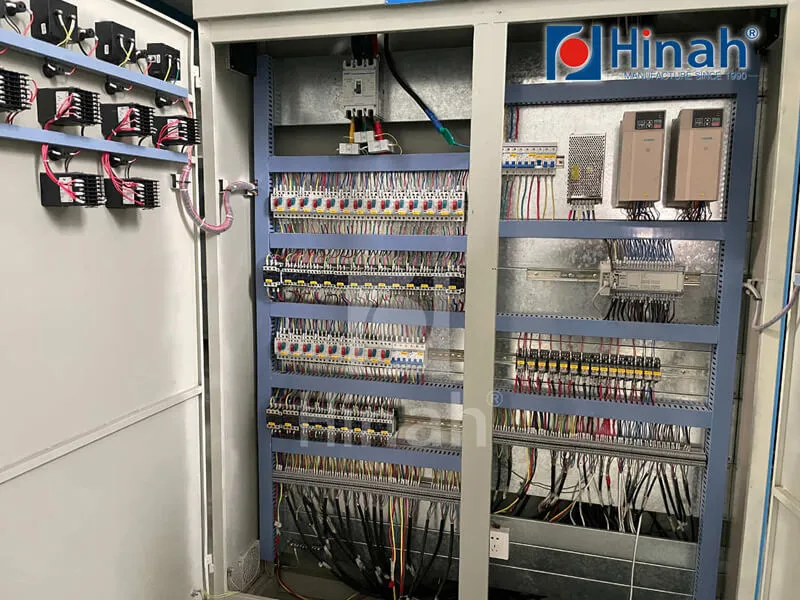
Modern lines use SCADA-integrated controllers that monitor booth differential pressure, oven temperature zones, and conveyor speed. Alerts for high ΔP (clogged filters) or temperature deviation are sent to maintenance teams. HANNA provides Industry 4.0-ready packages with remote diagnostics and OEE dashboards, reducing unplanned downtime by 27% in recent field studies.
Beyond the core equipment, auxiliary systems dictate overall efficiency. The cyclone + cartridge combination in a powder coating booth can separate and sieve powder for reuse; fines management (<10 µm removal) prevents orange peel defects. In the oven, chain lubrication with high-temperature graphite and self-cleaning hooks are critical to maintain ground path and avoid part contamination. Many engineers overlook the cooling tunnel: forced air cooling with HEPA filtration prevents dust attraction to hot, just-cured surfaces.
One often underestimated factor is the interaction between relative humidity in the spray booth and powder fluidity. Ideally, booth RH should be 40–55% to avoid agglomeration. HANNA booths can integrate conditioning air units that maintain stable dew point regardless of season.
Summary: The powder coating oven and spray booth are no longer just boxes—they are precision tools engineered for energy efficiency, safety, and coating perfection. By partnering with experienced suppliers like HANNA, manufacturers can achieve cure consistency, first-pass yield >98%, and minimal environmental impact. Whether you are upgrading an existing line or building a greenfield facility, investing in state-of-the-art booth and oven technology is the shortest path to world-class finishing.
For a detailed engineering consultation or to request a powder coating oven and spray booth performance simulation, visit HANNA’s website. Their team of application engineers provides tailored layouts, ROI calculations, and on-site commissioning support—trusted by over 500 finishing lines worldwide.