
For many finishing shops, the paint baking oven is where a coating transforms from a wet layer into a hardened, protective finish. This step, often called curing or stoving, is not just about drying—it’s a controlled chemical reaction. The performance of your paint baking oven directly determines the durability, appearance, and quality of your final product.
Choosing the wrong type or size can lead to defects, high energy costs, and production bottlenecks. This article breaks down the main types of paint baking ovens, their applications, and what you need to know to select the right system for your operation.
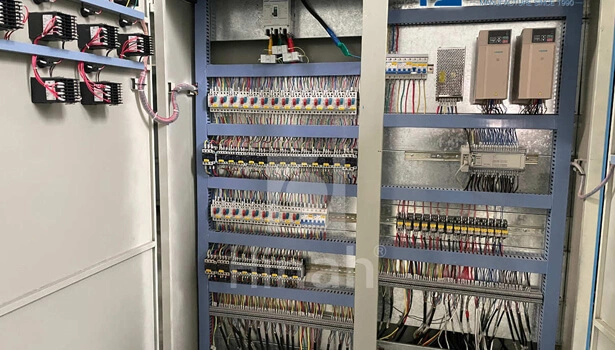
A paint baking oven applies precise, controlled heat to a coated part. This heat initiates the cross-linking of polymers within the paint. For liquid paints, this drives off solvents and cures the resin. For powder coatings, it melts and flows the powder particles, allowing them to fuse into a continuous film.
The key parameters are temperature uniformity, airflow, and time. Even a few degrees of variation can cause inconsistent cure, leading to soft spots, poor adhesion, or discoloration. The design of the paint baking oven must ensure every part of the load reaches the required temperature for the exact duration specified by the coating manufacturer.
The first major decision is between batch and conveyor (continuous) ovens. Your choice impacts workflow, flexibility, and cost.
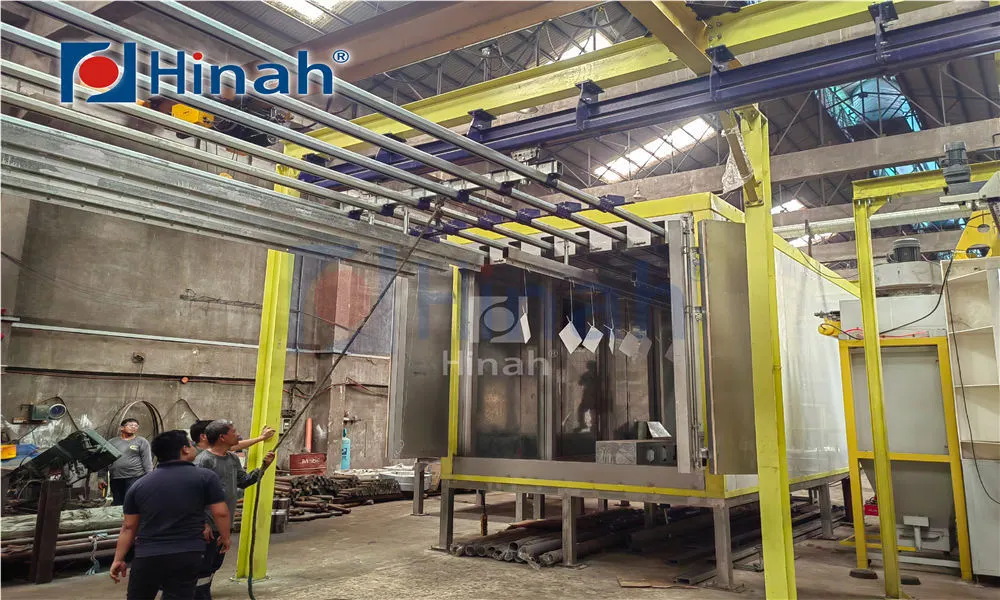
A batch paint baking oven operates like a commercial kitchen oven. Parts are loaded onto racks or carts, the oven door is closed, and a complete heat cycle runs. It’s ideal for low-to-medium volume, high-mix production, custom job shops, and large, bulky items. The main advantage is flexibility; you can cure different products with different schedules on different days. The downside is manual handling and potential for lower throughput.
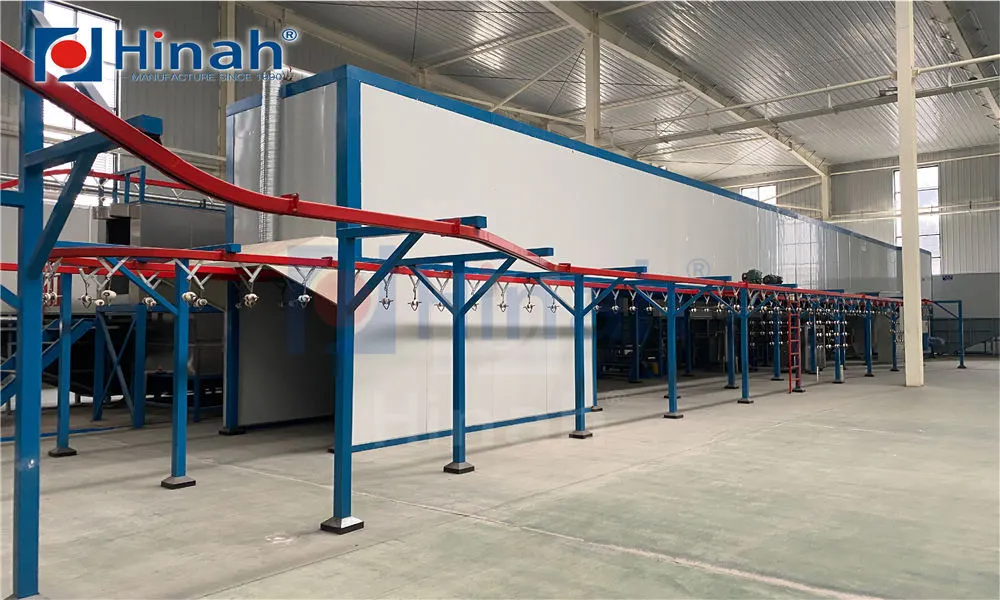
A conveyor paint baking oven is a tunnel through which parts travel on a continuous chain or belt. They are the standard for high-volume, uniform production lines, such as in automotive components or appliance manufacturing. They offer consistent throughput, reduced labor, and seamless integration with pretreatment and cooling zones. The trade-off is higher initial cost and less flexibility for product changeovers.
When comparing ovens, whether batch or conveyor, focus on these critical engineering specs.
Heat Source: The two primary options are electric and gas (natural or propane). Electric ovens use resistance heating elements. They offer clean, precise, and easily controllable heat, but operational costs can be higher depending on local electricity rates. Gas-fired ovens use burners and heat exchangers. They typically have lower fuel costs but require proper ventilation and combustion air systems.
Airflow and Circulation: This is arguably the most important factor for quality. A high-volume recirculation fan system ensures heated air is constantly moving around the parts. Properly designed ductwork and baffles create uniform temperature across the entire workspace. Stagnant air leads to hot and cold spots, the primary cause of cure defects.
Temperature Uniformity: Reputable manufacturers provide a performance specification, often stated as “±X°F” across the working volume. For a quality paint baking oven, ±10°F (±5.5°C) or better is a common benchmark. This is verified through empirical testing with multiple thermocouples.
Insulation: High-density, thick insulation (typically 4-6 inches of mineral wool) is essential. It improves thermal efficiency, reduces heat loss to the shop floor, maintains safer exterior temperatures, and lowers energy consumption. The door seal is a critical part of this insulation system.
The financial consideration has two main parts: the initial investment and the long-term operating cost.
The purchase price of a paint baking oven varies dramatically. A small electric batch oven might start around $15,000. A large, custom-designed gas-fired conveyor oven from a specialist like HANNA can easily exceed $150,000. Size, heating method, control complexity, and construction materials are the main price drivers.
Operational expenses are dominated by energy. An inefficient oven is a constant drain. Key factors are insulation quality, the efficiency of the heat source, and how well the oven manages exhaust (minimizing the loss of heated air). A well-designed oven heats up quickly and maintains temperature with minimal energy input.
Maintenance costs are the third factor. Consider the expected lifespan and cost of replacement parts like heating elements, burner components, fan motors, and bearings. Easy access for service reduces downtime and labor costs.
Your specific needs should guide the selection process. Start with a clear analysis of your production.
Part Size and Geometry: What are your largest and most complex parts? Odd shapes or dense racks require superior airflow design to ensure heat reaches all surfaces. Build a test load to determine the necessary interior dimensions.
Production Volume and Schedule: How many square feet do you coat per shift? Is your production steady or in unpredictable batches? High, steady volume leans toward conveyor systems. Variable, mixed batches often favor a batch paint baking oven.
Coating Specifications: Obtain the Technical Data Sheet (TDS) for every coating you use. Note the exact required metal temperature and cure time. Your oven must be capable of reliably meeting these parameters for your specific part loads.
Available Space and Utilities: Measure your floor space and ceiling height carefully. Ensure you have the adequate electrical service or gas supply line. Also, plan for necessary exhaust ducting and make-up air requirements.
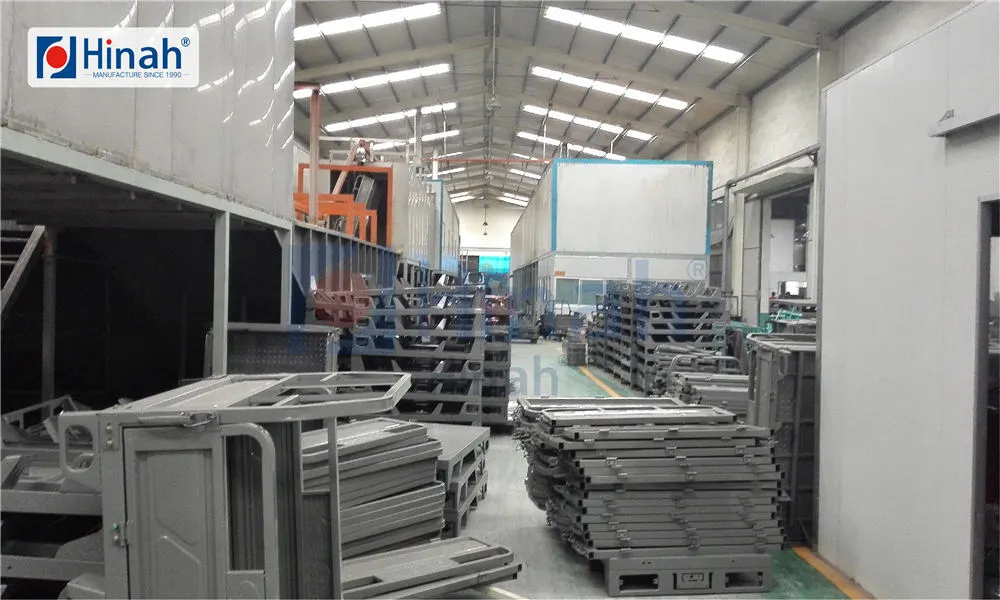
A paint baking oven is more than an insulated box with a heater. Its performance hinges on applied thermal engineering. This is where partnering with an experienced manufacturer pays dividends.
A company like HANNA, which specializes in finishing system ovens, brings focused expertise. They understand how to engineer airflow for curing, not just heating. Their ovens are built to withstand the thermal cycling and chemical environment of a paint shop, using durable materials and industrial-grade components.
They also provide valuable configuration guidance. HANNA can help you decide if a standard cabinet, a walk-in batch, or a conveyor tunnel is the most efficient solution for your workflow, avoiding costly over- or under-specification.
Modern ovens include features that protect both your product and your personnel.
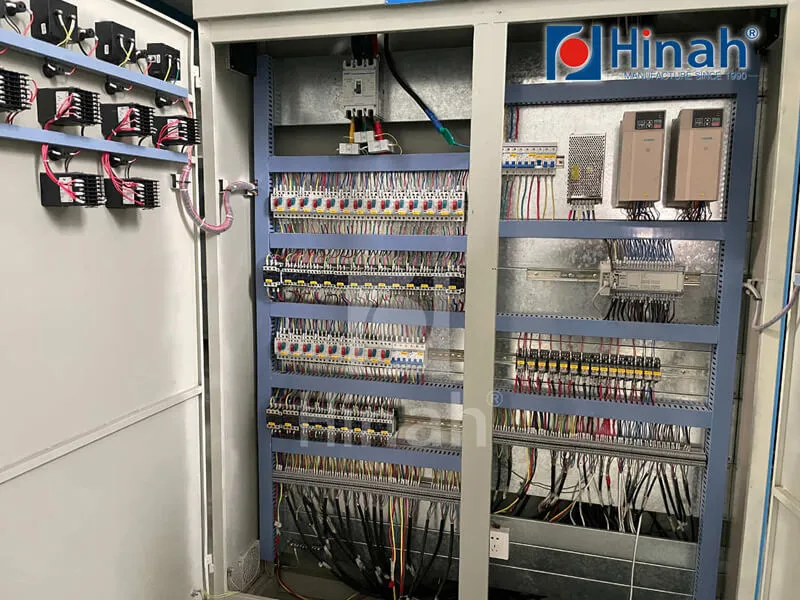
A digital programmable controller is standard. It should allow you to set precise temperature profiles and timers. Multi-recipe memory is a major productivity booster for shops running different coatings.
Safety systems are non-negotiable. These include a high-limit safety thermostat (independent of the main controller) to prevent runaway overheating, properly sized exhaust for solvent or powder off-gassing, and door safety interlocks. Compliance with standards like NFPA 86 is a key indicator of safe design.
Ease of use matters. Interior lighting, viewports, and well-placed controls improve operator efficiency and allow for visual process checks without interrupting the cycle.
In summary, selecting the right paint baking oven requires a balance of technical understanding, practical workflow analysis, and smart financial planning. By prioritizing temperature uniformity, energy efficiency, and partnering with an application-focused manufacturer, you invest in a system that ensures consistent quality and reliable performance for years to come.
Q1: What is the typical temperature range for a standard paint baking oven?
A1: Most industrial paint baking ovens operate in the range of 150°F to 450°F (65°C to 232°C). The exact temperature is dictated by the coating manufacturer’s specifications. Liquid paints often cure between 180°F and 300°F, while powder coatings typically require 350°F to 400°F. Always follow the Technical Data Sheet for your specific product.
Q2: How long does it take for a batch oven to reach curing temperature?
A2: Heat-up time depends on oven size, insulation, and heating power. A well-insulated 8’x10’x8’ electric batch oven might take 45-75 minutes to go from room temperature to 375°F. Gas ovens often heat slightly faster. Manufacturers like HANNA can provide estimated heat-up curves for their specific models.
Q3: Can I use the same oven for both liquid paint and powder coating?
A3: Technically, yes, if the oven’s temperature range and airflow are adequate for both processes. However, you must ensure proper ventilation for solvent vapors from liquid paints. A dedicated powder coating oven focuses on clean, dry heat and may not have the required explosion-proof ratings or exhaust rates for solvents. Consult with the oven manufacturer for a safe assessment.
Q4: What maintenance is required for a paint baking oven?
A4: Regular maintenance includes cleaning the interior of debris, inspecting and cleaning airflow ducts and fans, checking and calibrating temperature sensors and controllers annually, verifying the integrity of door seals, and inspecting heating elements or burners for wear. A monthly visual check and a comprehensive annual service are recommended.
Q5: What safety certifications or standards should I look for?
A5: The most important standard in North America is NFPA 86 (Standard for Ovens and Furnaces). Compliance ensures safety systems for fire prevention, ventilation, and controls are in place. Also, look for OSHA compliance (29 CFR 1910) regarding ventilation and electrical safety. Equipment should be UL listed or have equivalent certification for electrical components.