
If you're involved in manufacturing, automotive, or any industry where metal components are king, you've likely battled the relentless enemy of corrosion. You've probably also heard whispers about a powerful anti-corrosion technology called the ED coating process. But what exactly is it, and why is it considered a gold standard for protection? As someone who has spent over a decade in the surface finishing industry, I've witnessed firsthand how a properly implemented ED coating process can transform product longevity and performance. In this detailed guide, we'll walk through the seven essential steps of the ED coating process, demystifying its complexities and highlighting why it's a critical investment. We'll also explore how HANNA, a leader in coating technologies, provides innovative solutions, including custom ED coating process lines, to meet the demanding needs of the international powder spraying and surface treatment sectors. Let's dive in and uncover how this process can safeguard your metal assets.
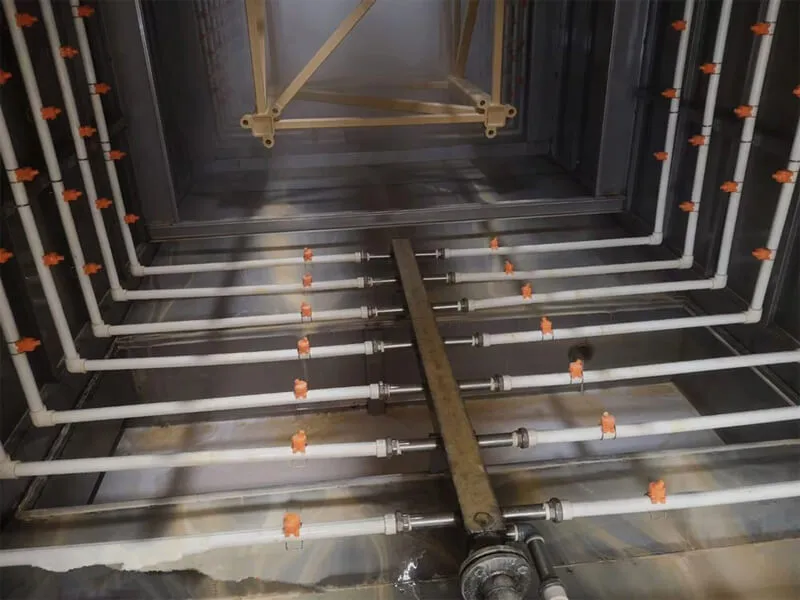
ED coating, or Electrodeposition coating, is an advanced immersion technique where a charged metal part is submerged in a water-based paint bath, and an electrical current is applied to deposit a uniform, protective film across the entire surface. Think of it as a highly sophisticated form of plating, but for organic coatings like primers. The "E" in ED coating process stands for electrodeposition, highlighting the core role of electricity in achieving an even, continuous layer that clings to every nook and cranny—even recessed areas spray methods can't reach.
The reason the ED coating process is a game-changer lies in its unparalleled coverage and corrosion resistance. I've seen automotive frames treated with a standard spray primer fail within years, while those undergoing the ED coating process remain rust-free for over a decade. This isn't just about aesthetics; it's about structural integrity. In industries from aerospace to appliance manufacturing, the ED coating process provides a foundational layer that dramatically enhances the durability of subsequent topcoats, including powder coatings. For businesses, this translates to reduced warranty claims, lower maintenance costs, and a stronger brand reputation for quality.
Understanding the sequential steps of the ED coating process is crucial for appreciating its effectiveness. It's a meticulously controlled journey that ensures optimal adhesion and protection.
Step 1: Pre-treatment Cleaning
This is the critical foundation. The metal substrate must be impeccably clean and free of oils, rust, or contaminants. The process typically involves a series of stages: degreasing, rinsing, surface activation (often using phosphates like zinc or iron phosphate), and final rinsing. Any skip here compromises the entire ED coating process. I recall a client who faced adhesion issues; the culprit was an inconsistent pre-treatment stage. Implementing a robust, automated pre-treatment system, like those integrated into HANNA's custom ED coating process lines, solved their problem entirely.
Step 2: DI Water Rinse
A deionized (DI) water rinse follows pre-treatment. This step is non-negotiable. It removes any residual chemicals or impurities using water that has had its ions removed, preventing contamination of the ED bath and ensuring a pristine surface for coating adhesion.
Step 3: Electrodeposition Bath Immersion
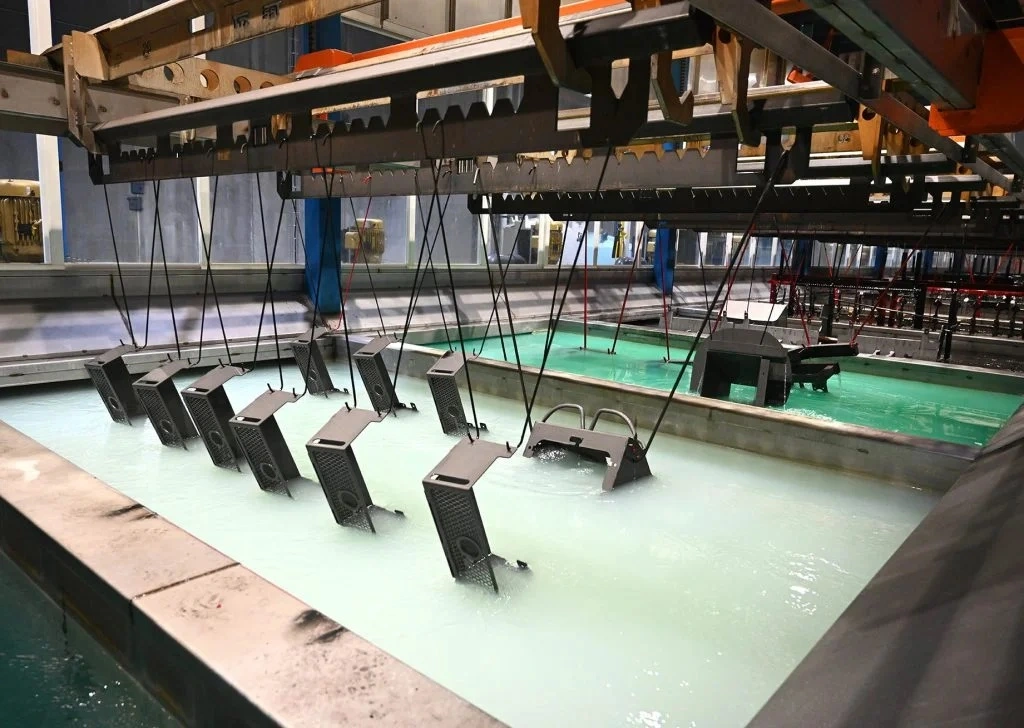
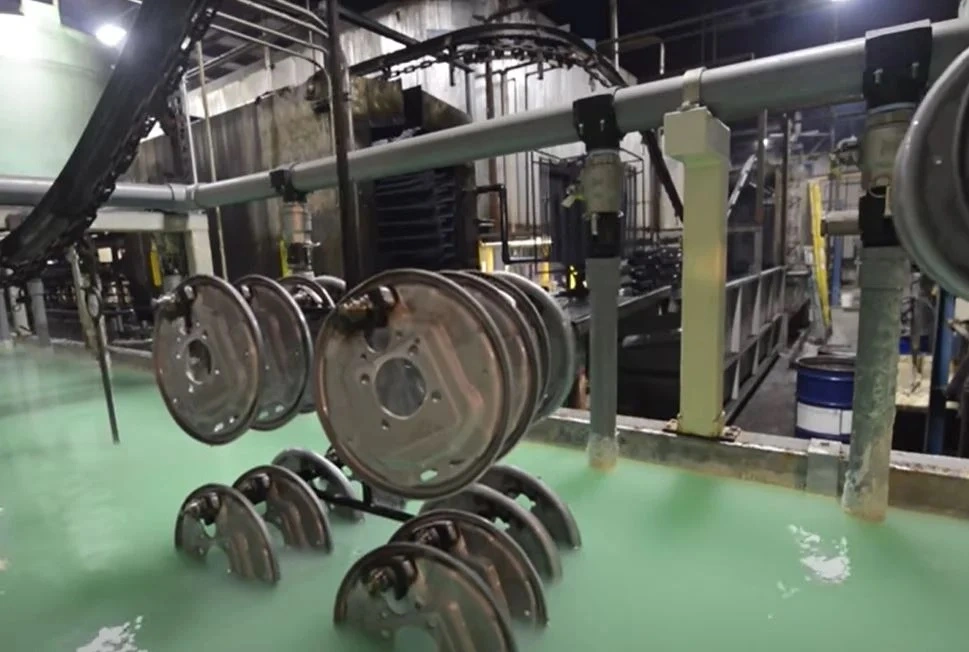
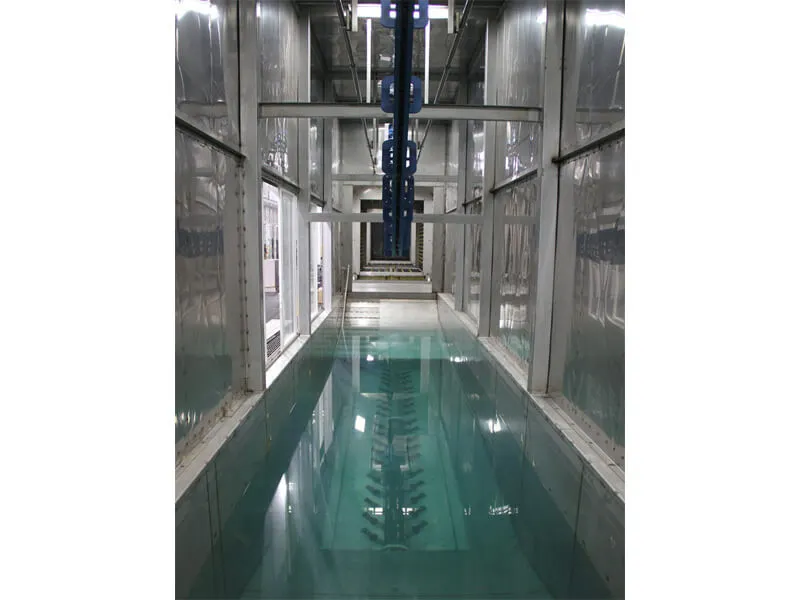
This is the heart of the ED coating process. The meticulously cleaned part is immersed in a tank containing the ED paint, which is a water-based emulsion of resins and pigments. The part acts as one electrode (anode or cathode, depending on the system), and counter-electrodes are placed in the tank. When voltage is applied, the charged paint particles migrate uniformly and deposit onto the part's surface, forming an initial continuous film.
Step 4: Post-Immersion Rinse
After emerging from the bath, the part undergoes a series of rinses, often using ultrafiltration permeate from the bath itself. This recovers excess paint that hasn't fully deposited, maximizing material efficiency and reducing waste. This closed-loop rinse is a hallmark of an efficient and economical ED coating process.
Step 5: Curing (Baking)
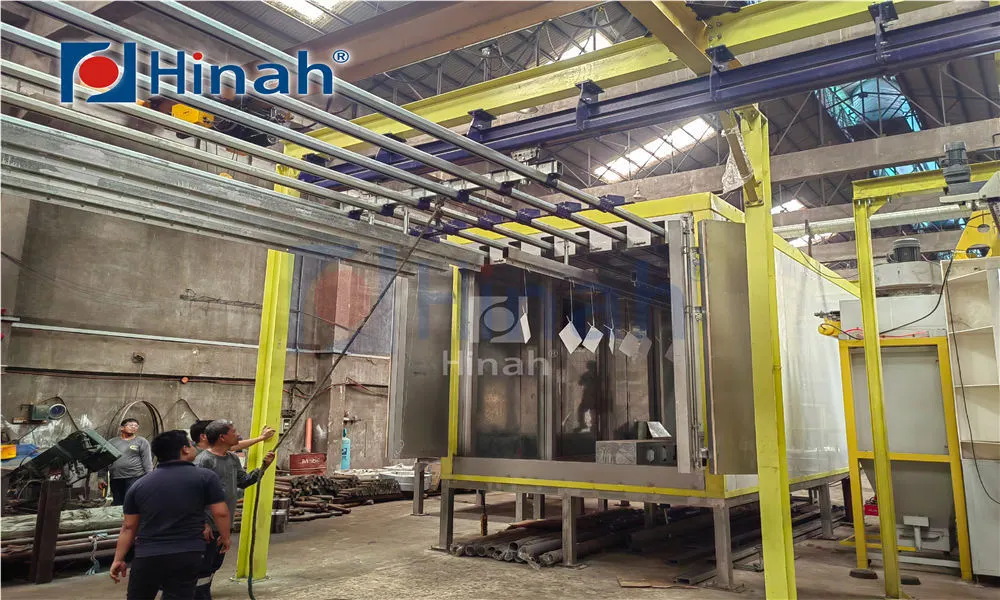
The rinsed part is then transferred to a high-temperature oven. This curing stage, typically between 160°C to 200°C, is where the magic of cross-linking happens. The applied film transforms from a wet, soft layer into a hard, durable, and insoluble coating. The integration of a reliable paint baking oven is vital here, and HANNA’s expertise in providing synchronized curing ovens ensures this step is perfectly tuned to the specific ED coating chemistry.
Step 6: Cooling and Inspection
After curing, the part is cooled in a controlled manner. It then undergoes a rigorous quality inspection. Technicians check for coating thickness, uniformity, and adhesion using standardized tests. A well-executed ED coating process will yield a perfectly uniform layer with no thin spots or voids.
Step 7: Final Finishing (Optional)
In many applications, the ED coat serves as an superior primer. The part may then move to a powder coating or paint booth for the application of a decorative and functional topcoat. The perfectly prepared surface from the ED coating process ensures this topcoat has exceptional adhesion and appearance.
Why should you invest in the ED coating process? The benefits are profound and measurable.
Unbeatable Corrosion Resistance: This is the primary reason for its use. The ED coating process creates a continuous, pinhole-free barrier that protects against salt spray, humidity, and chemicals far better than any spray-applied primer.
Exceptional Uniformity and Coverage: The electrophoretic nature of the process means the coating actively seeks out and covers every surface, including complex geometries, edges, and welds that are notoriously difficult to protect.
High Efficiency and Automation: The ED coating process is highly automatable, making it ideal for high-volume production lines. It offers excellent material utilization, with transfer efficiencies often exceeding 95%.
Environmental and Safety Benefits: Modern ED coatings are water-based, containing very low levels of volatile organic compounds (VOCs). This makes the process more environmentally friendly and safer for operators compared to solvent-based alternatives.
No two manufacturing facilities are identical. This is where the concept of a custom ED coating process becomes paramount. A custom line is engineered to fit specific production volumes, part sizes, and facility layouts. For instance, a company producing large structural beams will need a completely different system than one coating small, intricate fasteners.
HANNA specializes in designing and building these custom ED coating process solutions. I've worked with their engineers to retrofit a legacy line with a more compact, energy-efficient ED system that could handle a wider variety of part sizes without compromising on quality. A custom ED coating process line might include tailored pre-treatment sequences, specialized tank designs for unusual part shapes, or integrated robotic handling systems. By opting for a custom solution, you're not just installing equipment; you're optimizing your entire production workflow for maximum ROI.
In a competitive market, HANNA stands out by pushing the boundaries of what's possible in the ED coating process. Their systems are not just off-the-shelf products; they are integrated solutions. HANNA focuses on energy efficiency, incorporating heat recovery systems in their curing ovens and advanced filtration in the bath tanks to extend paint life.
Their commitment to R&D means they are at the forefront of developing low-cure ED coatings and processes that reduce energy consumption. Furthermore, HANNA provides comprehensive support, from initial soil analysis to determine the ideal pre-treatment to ongoing maintenance of the entire ED coating process line. This holistic approach ensures that your investment continues to perform at its peak for years, delivering consistent, high-quality results that meet the stringent demands of international powder spraying and coating standards.
The ED coating process is far more than a simple dipping step; it is a sophisticated, science-driven method that provides the ultimate foundation for corrosion protection. From the critical pre-treatment to the final cure, each stage is designed to build a resilient, uniform shield that prolongs the life of metal products. By understanding these steps and their benefits, you can make an informed decision about integrating this technology. For those looking to implement or upgrade their system, partnering with an expert like HANNA for a custom ED coating process line can be a transformative move, ensuring efficiency, quality, and a significant competitive advantage in your market.
Q1: What is the typical thickness achieved by the ED coating process?
A1: The ED coating process typically produces a very controlled and uniform film thickness ranging from 15 to 25 microns for cathodic epoxy primers. This consistency is one of its key advantages, as it prevents overly thick areas that can be brittle and thin areas that are vulnerable.
Q2: Can the ED coating process be used as a final finish?
A2: While it is possible, the ED coating is most commonly used as a primer. It is usually an opaque color (often black or grey) and is designed for superior corrosion protection and adhesion. A decorative powder coat or liquid topcoat is almost always applied over it for aesthetics and additional environmental resistance.
Q3: What types of metals are suitable for the ED coating process?
A3: The ED coating process is predominantly used on electrically conductive substrates, primarily steel, cast iron, and aluminum. It is the standard for automotive frames, chassis components, and many appliance housings due to its excellent performance on these materials.
Q4: How does a custom ED coating process line differ from a standard one?
A4: A standard line is a general-purpose design, while a custom ED coating process line is tailored to specific needs. This customization can include the tank size and shape for specific parts, the type of pre-treatment chemicals, the material handling system (e.g., overhead conveyor vs. power-and-free), and the integration with upstream/downstream processes like powder coating.
Q5: Is the ED coating process environmentally friendly?
A5: Yes, compared to many traditional solvent-based coating methods, the modern ED coating process is very environmentally friendly. The coatings are water-based with low VOC content, and the closed-loop rinse systems significantly reduce paint waste and water consumption, aligning with strict international environmental regulations.