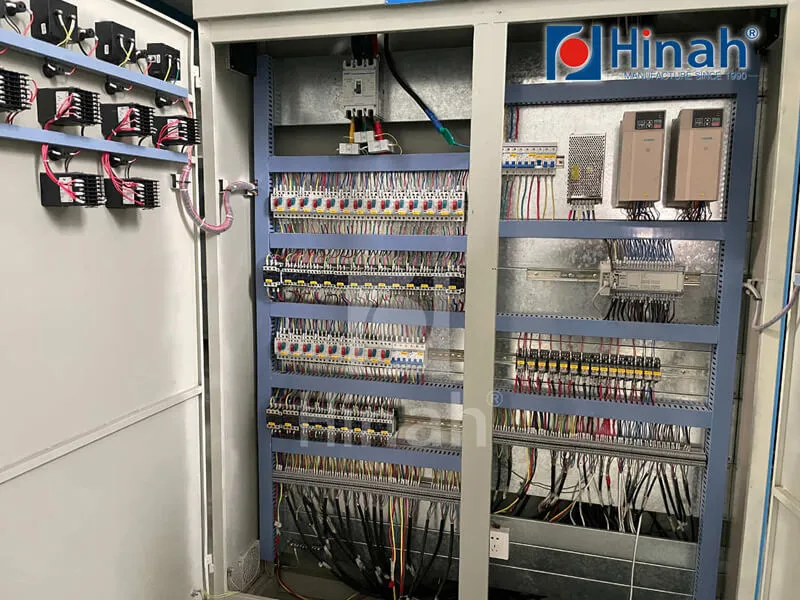

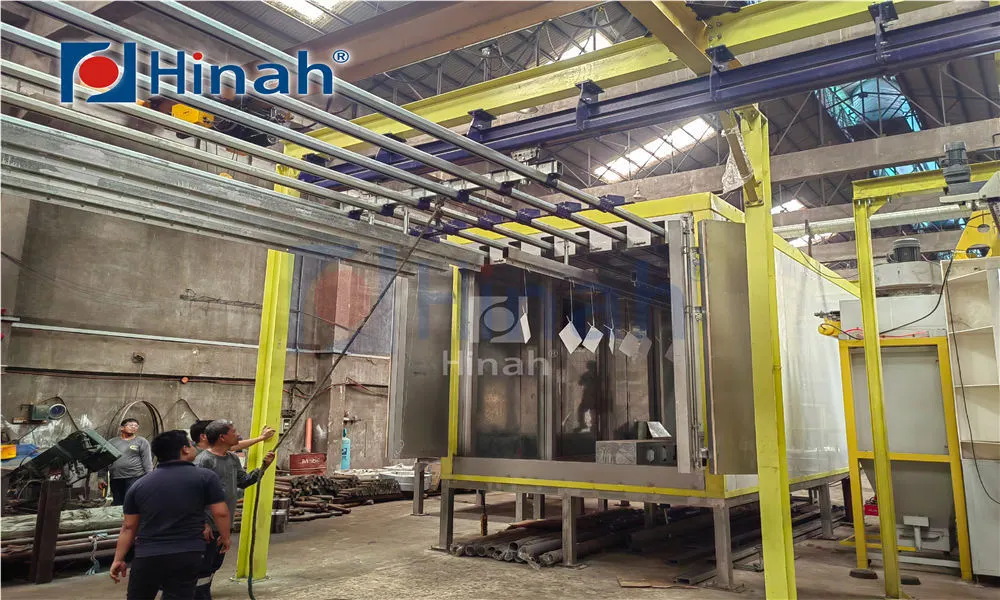
Searching for a reliable powder coating oven for sale is a significant step for any finishing operation. The curing oven is where your coated products gain their durability and finish. The market offers many options, from batch cabinets to automated conveyor systems. This guide helps you navigate the selection process to find equipment that matches your production needs and budget.
When you look for a powder coating oven for sale, you will encounter several standard designs. Each type serves different production volumes and workflows.
Batch ovens are versatile and common for job shops or low-volume production. Parts are loaded onto racks, cured as a single batch, and then unloaded.
Key features include:
Vertical or horizontal door designs.
Electric or gas heating options.
Internal circulation fans for even heat distribution.
Temperature ranges typically from 150°C to 250°C (300°F to 480°F).
They are often the most accessible type of powder coating oven for sale for new businesses.
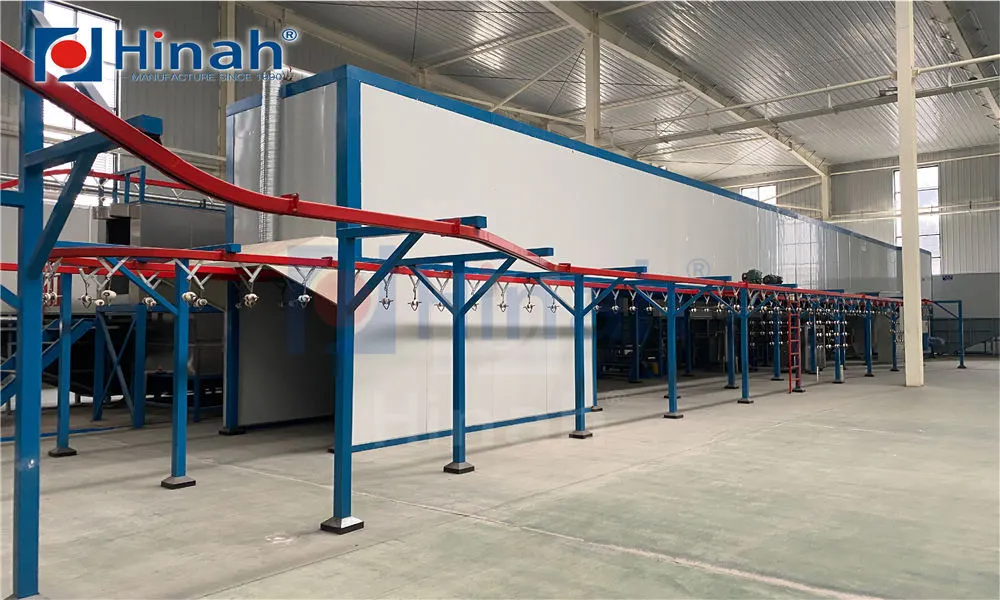
For medium to high-volume production, conveyor ovens are integrated into a continuous line. Parts move through on a conveyor system.
These systems are characterized by:
Overhead chain conveyor or belt conveyor designs.
Multiple heating zones for precise temperature profiling.
High thermal efficiency to handle constant throughput.
When you see a large-scale powder coating oven for sale, it is often a conveyorized model from suppliers like HANNA.
IR ovens use radiant energy for rapid curing. They are suitable for specific applications where speed and energy savings are priorities.
Their operation involves:
Quick heat-up times and immediate curing upon exposure.
Focus on part surface temperature rather than ambient air.
Compact footprint compared to convection ovens.
They represent a specialized segment of the powder coating oven for sale market.
Choosing the right powder coating oven for sale requires careful evaluation of your technical and operational requirements.
Your daily output and part characteristics dictate the oven size and type.
Ask these questions:
What are the maximum dimensions and weight of your parts?
What is your required cure schedule (temperature and time) for the powders you use?
Is your production continuous or in batches?
Do you expect production growth in the next few years?
This assessment prevents you from buying an oven that is too small or unnecessarily large.
The choice between electric, gas (natural or propane), and infrared heating affects cost and performance.
Electric ovens offer precise control and are easier to install where gas is unavailable. Gas ovens generally have lower operating costs in high-use scenarios. Consider the availability and cost of utilities in your facility when you evaluate a powder coating oven for sale.
Industrial ovens must be built to last and operate safely.
Inspect for:
Robust steel construction with adequate insulation.
Sealed motors and electrical components rated for high temperatures.
Safety interlocks on doors.
Over-temperature protection and alarm systems.
Quality manufacturers, such as HANNA, build these features into their ovens.
Potential buyers can explore several channels to find a suitable powder coating oven for sale.
Purchasing new equipment directly from a manufacturer offers significant advantages.
Customization to your exact specifications.
Full warranty coverage and technical support.
Access to the latest technology and efficiency standards.
Companies like HANNA provide comprehensive solutions and after-sales service.
Authorized dealers often sell and service ovens from multiple brands. They can provide valuable local support, installation services, and sometimes financing options.
For businesses with tight budgets, the used market can be a source for a powder coating oven for sale.
Considerations when buying used:
Verify the oven's condition and service history.
Check for obsolete control systems or unavailable spare parts.
Factor in potential refurbishment and re-installation costs.
While the initial price is lower, the risks are higher compared to buying new.
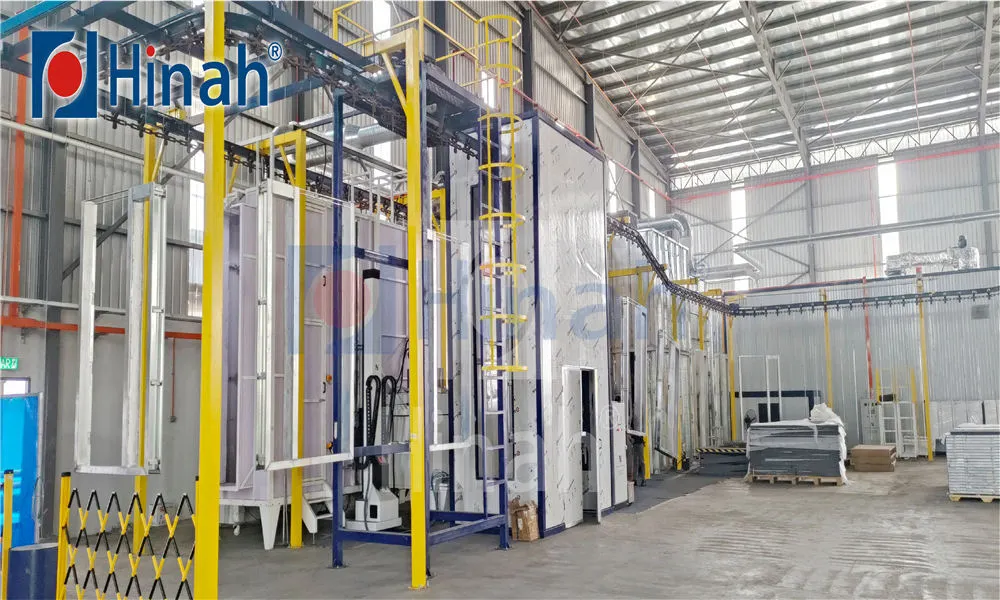
Before finalizing a purchase for a powder coating oven for sale, gather detailed information from the seller.
Request clear data on the oven's capabilities.
Can you provide a detailed temperature uniformity map of the workspace?
What is the heat recovery time after loading a batch of cold parts?
What are the exact energy consumption figures under load?
Is the control system programmable and does it support data logging?
Understand the full terms of the sale and ongoing support.
What is included in the quoted price (e.g., delivery, installation, commissioning)?
What is the warranty period and what does it cover?
What is the lead time for critical spare parts like heating elements?
Do you offer operational training for our staff?
Finding the right powder coating oven for sale is a process that balances technical needs, quality, and cost. Whether you choose a new batch oven from a trusted supplier like HANNA or explore the used market, thorough research is key. By understanding the types available, carefully assessing your requirements, and asking the right questions, you can secure a curing oven that will serve as a reliable cornerstone of your powder coating process for years to come.
Q1: What is the price range for a new industrial powder coating oven?
A1: Prices vary widely. A small batch oven can start from $8,000. A mid-size conveyor oven often ranges from $40,000 to $80,000. Large, custom automated systems can exceed $150,000. The specific powder coating oven for sale will have a price based on its size, features, and heating technology.
Q2: Should I buy a new or used powder coating oven?
A2: A new oven offers reliability, warranty, modern efficiency, and customization. A used powder coating oven for sale can save upfront cost but may come with hidden issues, higher energy use, and limited support. For core production, new is often recommended for long-term value.
Q3: What are the most important specifications to check?
A3: Focus on internal dimensions, maximum operating temperature, temperature uniformity (± variation), heating source and power, airflow design (CFM), and control system type. These specs directly impact whether the oven can cure your parts correctly and efficiently.
Q4: How long does it typically take to get a new oven delivered and installed?
A4: For standard models from stock, delivery might take a few weeks. For custom-built ovens, lead times from manufacturers like HANNA can range from 8 to 16 weeks. Installation and commissioning can add another 1-2 weeks, depending on complexity.
Q5: Can I upgrade my existing batch oven to a conveyor system later?
A5: It is usually not a simple upgrade. Batch and conveyor ovens are fundamentally different designs. Planning for future growth is best done by selecting a powder coating oven for sale that meets your projected needs or by choosing a modular system designed for expansion.
Q6: What kind of site preparation is needed for a new oven?
A6: Typical preparation includes a level, reinforced concrete floor capable of supporting the oven's weight, adequate clearance space around the unit, and the necessary utility connections (high-amperage electrical supply or gas line and exhaust venting). Your supplier should provide a detailed site requirement list.