To understand how an industrial curing system functions, one must examine the chemical transformation of thermoset powders. Unlike thermoplastic coatings, which simply melt and solidify when heated, thermosetting formulations undergo a permanent chemical cross-linking reaction. When exposed to heat, the solid powder particles melt, flow together, and form a continuous film. This is followed by a chemical reaction between resins and curing agents, such as epoxy, polyester, or polyurethane systems with block isocyanate or TGIC cross-linkers.
This chemical reaction requires a highly specific heat profile. The metal substrate must reach a predetermined temperature and maintain it for a set duration, often referred to as the dwell time. If the heat profile is incorrect, the cross-linking is incomplete, leading to reduced chemical resistance, poor mechanical properties, and inadequate adhesion. HANNA engineers thermal processing equipment to align with these specific resin requirements, ensuring consistent cross-linking across variable metal thicknesses and industrial profiles.
Glass Transition ($T_g$): The temperature range where the solid powder polymer softens and transitions into a highly viscous, rubbery state.
Melting and Flow: The stage where viscosity drops to its lowest point, allowing the particles to coalesce and form a smooth, continuous wet film.
Gelation: The point in the heating cycle where the chemical cross-linking begins to restrict molecular movement, turning the liquid film into a semi-solid gel.
Final Cure: The holding period where the chemical reaction is completed, establishing the final physical properties of the coating.
There are three primary heat transfer mechanisms utilized in industrial powder curing: convection, infrared radiation, and hybrid configurations. Each method presents distinct characteristics that suit different production requirements and part geometries.
This method utilizes circulating heated air to transfer energy to the coated parts. It is highly versatile because the moving air can reach recessed areas, complex geometries, and internal surfaces that are shielded from direct line-of-sight radiation. The uniformity of convection heating depends on the design of the air distribution system, including duct sizing, nozzle placement, and return air pathways. However, convection heating relies on heating the entire metal substrate to the target temperature, which can extend the overall cycle time for heavy-walled components.
IR heating relies on electromagnetic waves to directly heat the coating layer and the substrate surface. This method is rapid, reducing the heating cycle from minutes to seconds in some applications. It is particularly suitable for flat parts or simple geometries where line-of-sight access is unobstructed. However, it can lead to uneven heating on complex parts due to shadowing effects, where certain areas block the radiant heat from reaching recessed sections of the component.
Combining convection and IR can provide significant process advantages. In a typical hybrid system, a medium-wave infrared zone is positioned at the entry of the curing chamber. This zone rapidly heats the surface, melting and gelling the powder before it enters the main convection chamber. This sequence prevents the high-velocity air currents in the convection zone from blowing uncured powder off the parts, reducing defect rates and keeping the interior of the system cleaner.
To maximize thermal efficiency, an industrial heating chamber must minimize heat losses to the surrounding plant environment. This requires highly robust structural engineering and premium insulation materials.
Industrial ovens typically use tongue-and-groove insulated panels. The insulation material, usually high-density rockwool or mineral fiber, must be selected based on the operating temperature. A typical curing system operating at 180°C to 220°C requires at least 150mm of high-density insulation to maintain low outer-wall temperatures and ensure operational efficiency.
Thermal bridges occur where internal metal framing makes direct contact with the outer shell. Professional manufacturers design these panels with thermal breaks—structural gaps or non-conductive materials that interrupt the heat conduction path. This design feature prevents localized hot spots on the oven exterior and reduces energy consumption by retaining heat within the working chamber.
In direct-fired systems, combustion products enter the recirculating airstream. While highly efficient, this requires clean-burning fuels to avoid coating contamination. Indirect-fired systems utilize a heat exchanger to isolate combustion gases from the curing chamber. This is important for high-aesthetic coatings, such as white or clear polyesters, which can yellow when exposed to combustion byproducts like nitrous oxides.
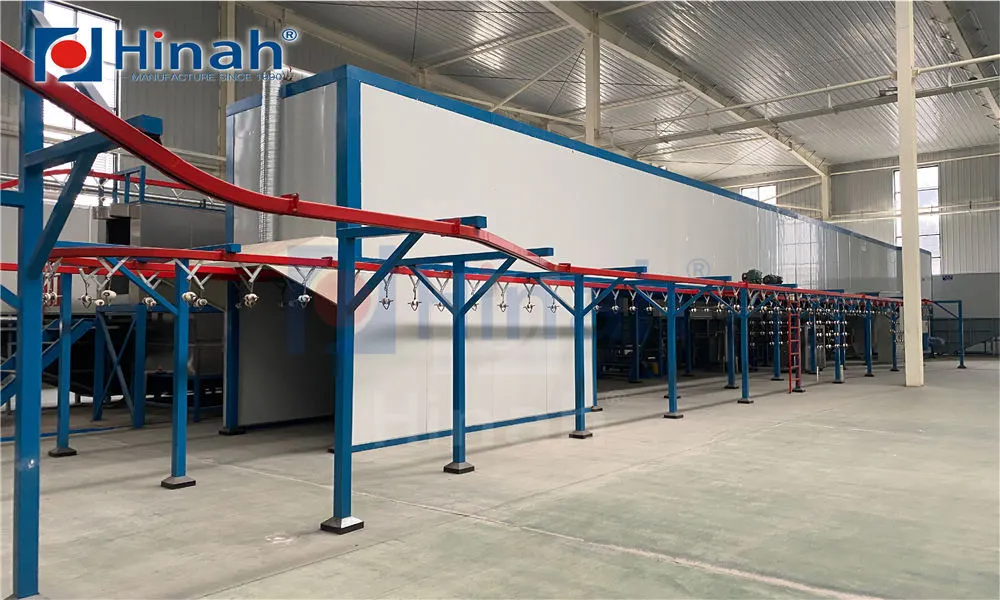
Continuous systems require openings for the overhead conveyor line. To prevent massive thermal losses at these entry and exit portals, manufacturers install high-durability silicone brush seals or dynamic air curtains. These air curtains project a high-velocity stream of air across the opening, creating an invisible thermal barrier that keeps the hot process air inside the heated zone.
The primary challenge in thermal processing is maintaining a uniform temperature profile across the entire work envelope, regardless of the part configuration.
Most industrial standards require a maximum temperature variance of ±5°C or ±3°C throughout the curing zone. Achieving this tolerance across a large batch containing parts of varying mass requires precise airflow control. If the variance is too wide, parts positioned in cooler zones will suffer from under-curing, while parts in hotter zones may over-cure, leading to inconsistent color, gloss, and physical properties across the production batch.
Air can be introduced from the bottom of the chamber and exhausted from the top, or distributed via side ducts. Bottom-up or side-to-side airflow schemes must be optimized to prevent temperature stratification (the tendency of hot air to rise, leaving lower areas cooler). Adjusting duct dampers allows operators to balance the air distribution to match the specific loading patterns of the conveyor.
Modern systems utilize modulating burners that continuously adjust fuel input based on real-time temperature feedback, rather than simple on/off cycling. This results in stable internal temperatures and prevents thermal shocks during part loading cycles. HANNA designs these systems to dynamically adapt to varying thermal loads, ensuring that heavy steel structures and thin sheet metal components reach their cure temperatures without over-heating or under-heating.
The volume of air moved per minute determines the rate of convective heat transfer. Recirculation fans must be sized to provide adequate air turnovers within the oven volume, ensuring that fresh, heated air is continually delivered to the substrate surfaces. High-performance fans with frequency-controlled drives allow operators to fine-tune the airflow rate to match different production scenarios.
Operating an industrial curing system presents several process-related challenges that can impact overall line efficiency and finish quality.
If the air velocity in the convection zone is too high before the powder has gelled, the dry powder can be dislodged from the parts. This leads to thin spots, exposed metal, and contamination of the oven floor. Solutions include designing a low-velocity entry zone or incorporating a medium-wave infrared pre-heating section to gel the powder prior to high-velocity convection exposure.
Airborne dust, fibers, and uncured powder residues can settle on the wet coating film, causing surface defects such as pinholes, craters, and rough spots. High-temperature filtration systems must be integrated into the recirculation loop to continuously capture airborne particulates. Regular maintenance of the oven interior and cleaning of the air ducts are also required to prevent build-up that can flake off onto the parts.
Proper exhaust rates are necessary to remove volatile organic compounds (VOCs) and moisture released during the curing process. However, excessive exhaust rates draw in cold shop air, increasing energy demands. Damper systems must be finely balanced to maintain positive or slightly negative pressure relative to the surrounding plant floor. A poorly balanced powder paint oven will spill hot air into the workspace or draw in dirty ambient air.
Different industries impose distinct requirements on the curing process, demanding tailored engineering configurations.
Extrusions used in building facades must meet strict international standards (such as Qualicoat or GSB). These standards mandate precise thermal profiling and record-keeping to guarantee long-term weatherability and UV resistance. Ovens in this sector must provide exceptional temperature uniformity across long vertical or horizontal profiles to prevent color shifts along the length of the extrusion.
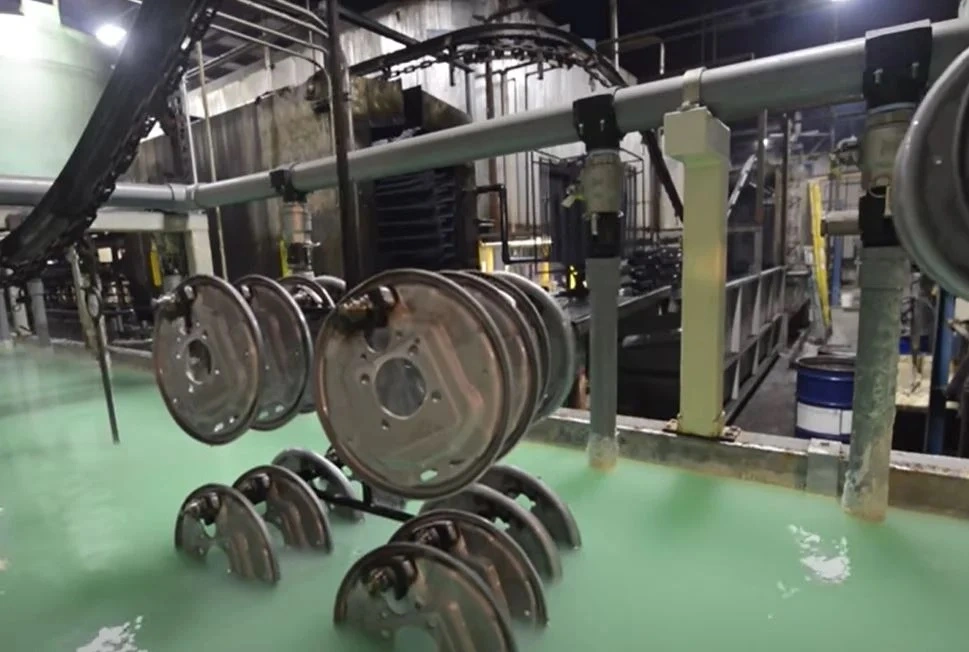
Under-car parts, wheels, and suspension components require highly durable coatings with excellent corrosion resistance. The curing process must ensure complete polymerization on thick-walled castings and multi-layer weldments. For these applications, multi-zone continuous ovens are often utilized to provide progressive heating rates that accommodate varying metal thicknesses on the same assembly.
Large agricultural and construction equipment parts represent huge thermal masses. The heating system must deliver high energy inputs to raise these massive steel components to curing temperature efficiently without extending cycle times excessively. High-capacity burner systems and heavy-duty conveyor rails are mandatory in these installations to handle the massive weight and thermal load.
For consumer appliances and electrical cabinets, cosmetic appearance and smooth surface finish are paramount. Ovens in these production lines must maintain exceptional filtration standards to eliminate any risk of cosmetic defects from airborne contamination. The air distribution must be gentle to prevent any disturbance of the fine, high-gloss powders often used in this sector.
Validating the curing cycle is a fundamental requirement for quality assurance and process control in modern finishing plants.
Plant operators utilize multi-channel data loggers equipped with thermal barriers to pass through the oven alongside the parts. Thermocouples are attached to various points on the part—representing both thin and thick sections—to record the actual metal temperature throughout the cycle. This data provides the exact "time at temperature" curve, proving whether the cure window was met.
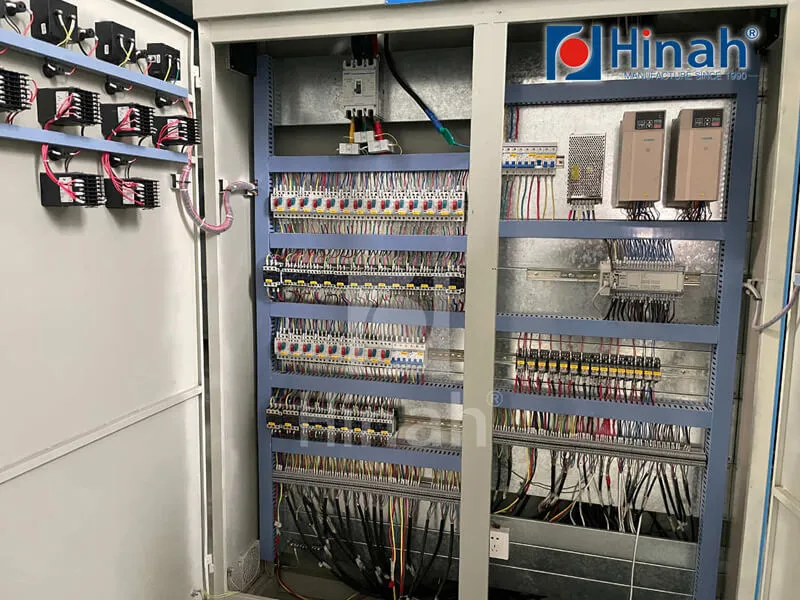
Modern industrial curing lines integrate PLC-based control panels with user-friendly touchscreens. These systems monitor burner status, exhaust airflow, zone temperatures, and conveyor speeds. HANNA systems provide advanced diagnostics and connectivity features, allowing operators to store multiple curing profiles for different part geometries and powder formulations, ensuring repeatable results across different shifts.
Optimizing an industrial coating line requires careful alignment between thermal capacity, airflow configuration, and conveyor speed. Selecting the appropriate heating configuration depends on your specific production volumes, part geometries, and spatial constraints. For detailed engineering consultations or custom equipment configurations tailored to your production requirements, please reach out to our engineering team to discuss your project specifications. We can assist in assessing your current production line parameters and configuring a custom-engineered powder paint oven to meet your exact quality standards.
Q1: What is the standard temperature range for a powder paint oven?
A1: Most thermoset powder coatings cure at temperatures between 160°C and 200°C (320°F to 400°F). However, some low-cure formulations can react at 130°C to 150°C, while high-performance or functional coatings might require up to 220°C. The heating system must be designed to consistently reach and regulate these temperatures across varying production loads.
Q2: How does convection heat compare to infrared heat for curing thermoset powders?
A2: Convection heat relies on circulating hot air, making it excellent for complex, three-dimensional parts with recessed areas because the air surrounds the entire surface. Infrared (IR) heat uses direct radiant energy to quickly heat line-of-sight surfaces, which is highly efficient for flat parts or simple profiles but less effective for areas shadowed from the radiant source.
Q3: What causes yellowing of white or light-colored powder coatings during curing?
A3: Yellowing is usually caused by over-curing (either excessive temperature or prolonged dwell time) or by exposure to combustion byproducts (specifically nitrous oxides) in direct-fired gas systems. Utilizing an indirect-fired heating system with a high-efficiency heat exchanger prevents these combustion gases from entering the curing chamber, preserving the color integrity of sensitive coatings.
Q4: How often should an oven thermal profile be verified?
A4: For standard industrial operations, thermal profiling with a traveling data logger should be performed at least monthly, or whenever there is a change in the powder chemistry, part geometry, or line speed. High-precision sectors, such as aerospace or automotive, may require weekly or even daily validation to comply with strict quality management systems.
Q5: Why is air velocity control important inside the curing chamber?
A5: Air velocity must be carefully balanced. If the velocity is too high, it can dislodge dry powder from the parts before it has a chance to melt and gel, causing surface defects and contaminating the chamber. Conversely, if the velocity is too low, heat transfer is inefficient, leading to poor temperature uniformity and longer heat-up times.