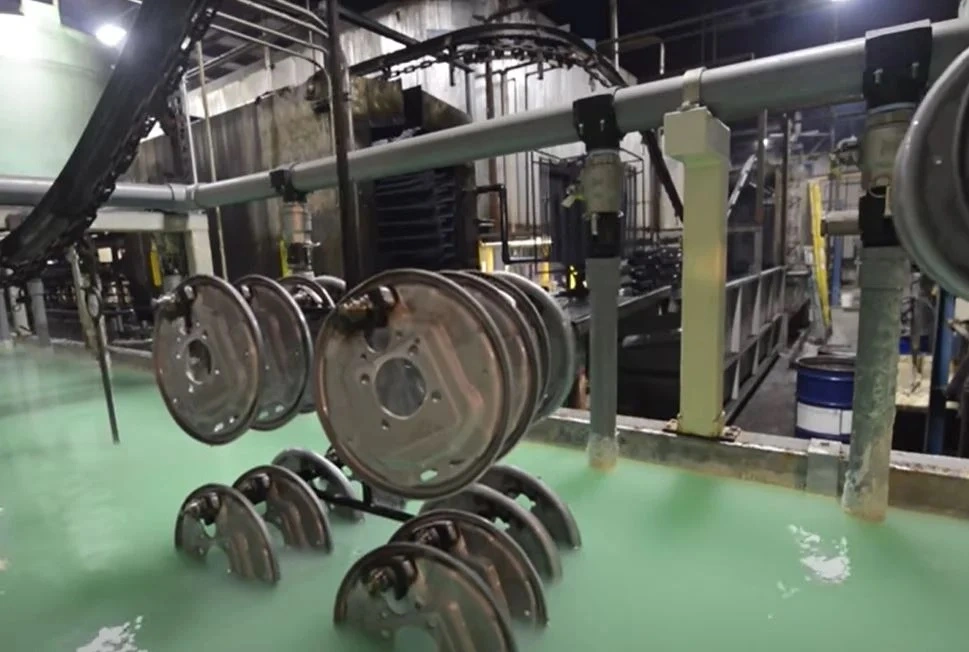
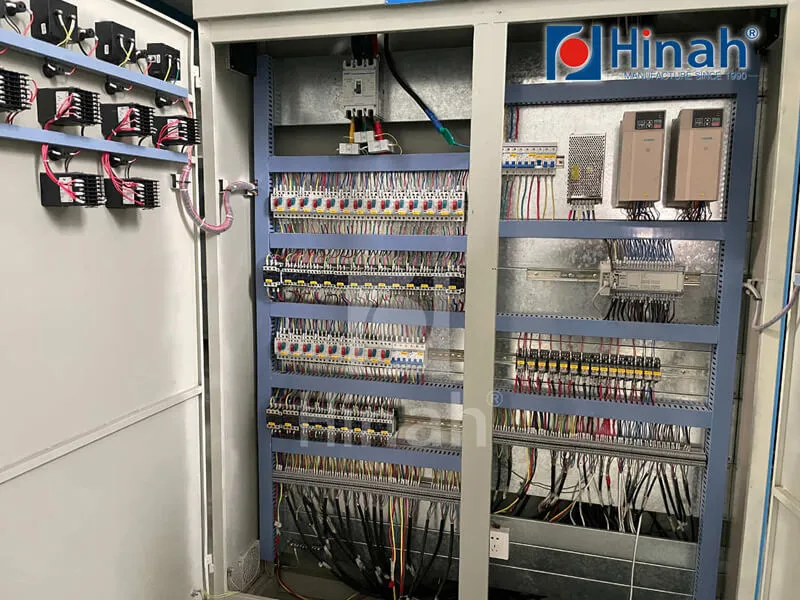
In modern finishing operations, the powder coating oven determines adhesion, mechanical resistance, and color consistency of thermoset coatings. Unlike convection ovens for liquid paint, a powder curing oven must sustain exact ramp rates, dwell windows, and cross-section uniformity to fully crosslink polyester, epoxy, or hybrid powders. This guide examines engineering parameters, thermal airflow strategies, and failure-mode prevention — written for production managers and facility engineers who specify or upgrade their curing line.
From single-lane batch ovens to high-density continuous conveyor systems, the thermal performance of a powder coating oven directly influences transfer efficiency, orange peel severity, and intercoat adhesion. HANNA provides tailored curing solutions that integrate with upstream spray booths and downstream cooling tunnels — eliminating common quality gaps such as under-cure brittleness or over-cure discoloration.
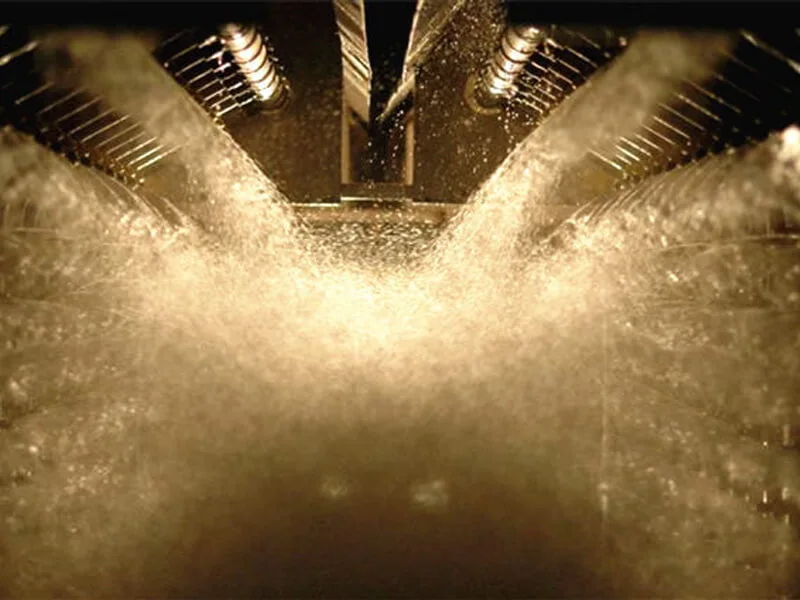
Powder coatings consist of resin, hardener, fillers, and additives. When the part enters the powder coating oven, thermal energy triggers two stages:
Gel phase (120–150°C): Powder particles melt, flow, and form a continuous film.
Crosslinking stage (180–200°C for most hybrids): Molecular chains react irreversibly, building chemical resistance and impact strength.
Maintaining the metal temperature within ±5°C of the specified cure window for the required dwell time (typically 10–20 minutes for heavy substrates) is the primary design challenge. LSI factors such as ramp rate, temperature uniformity, and air recirculation ratio dictate whether the coating reaches full mechanical specifications.
Selecting between a batch box oven and a continuous tunnel oven depends on part dimensions, production volume, and thermal inertia. Each architecture imposes different constraints on air seals, burner modulation, and zone separation.
Suitable for job shops, large fabrications, or mixed product sizes. A batch powder coating oven uses a single chamber with recirculating fans and exhaust dampers. Loading/unloading cycles cause heat loss; therefore, thick insulation (150–200mm mineral wool) and rapid recovery burners are mandatory. Temperature uniformity is achieved via opposing air nozzles and adjustable louvres.
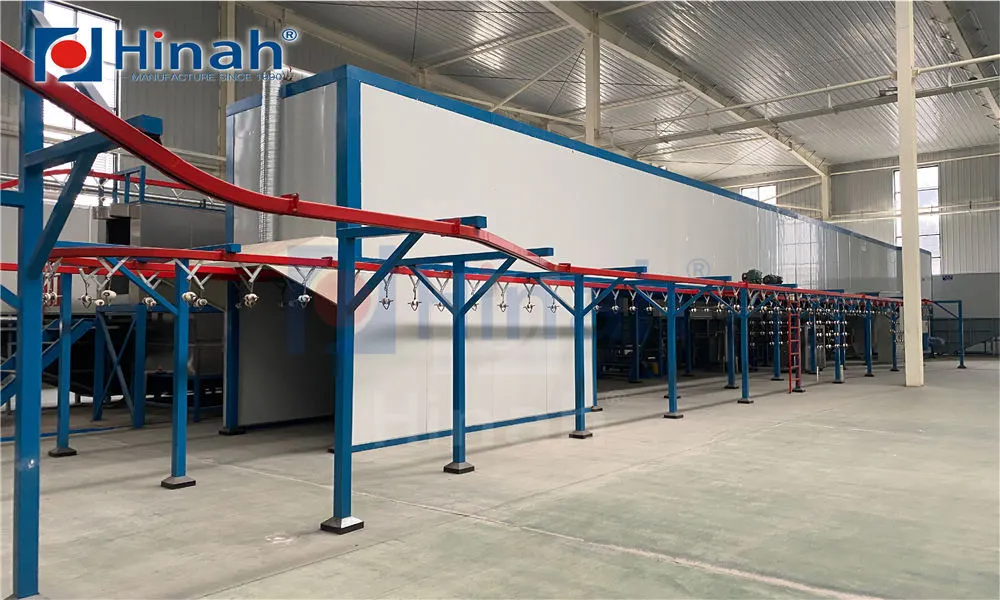
For high-volume automotive parts, aluminum extrusions, or appliance panels, a continuous powder coating oven integrates with overhead monorails or belt conveyors. Multiple heating zones (preheat, gel, final cure) enable progressive temperature profiling. For instance, thick castings can receive longer soak times while light-gauge sheets move faster — impossible with batch ovens. Air curtains at entry/exit reduce infiltration loss.
HANNA engineers calculate heat loss coefficients, airflow velocity maps, and conveyor speed-temp correlation for each continuous oven project, ensuring delta T across the load never exceeds ±3°C.
Industry standards (ISO 1461, ASTM D3451) define acceptance criteria for oven capability. Below are the measurable indices that separate mediocre equipment from high-yield assets:
Temperature uniformity (TUS): Maximum deviation across all thermocouple locations. Target ≤ ±5°F (±2.8°C) for automotive spec.
Ramp rate control: Ability to rise from ambient to 180°C within 8–12 minutes without overshooting. PID-controlled modulating burners or SCR electric heaters.
Airflow velocity uniformity: 1.5–3 m/s across part surfaces. Lower speeds cause stagnant boundary layers; higher speeds blow powder off before gelation.
Differential pressure (oven vs. shop): Slightly negative to prevent hot air leakage but not too low to pull in dust.
Insulation thermal drift: Outer skin temperature ≤ ambient +15°C for energy efficiency and workplace safety.
Each energy type influences heating response, humidity, and cleanliness. The table below outlines engineering trade-offs:
Most cost-effective for large continuous ovens. Combustion products (CO₂, H₂O) are isolated from the curing chamber via a stainless heat exchanger. Modulation ratio of 10:1 allows precise temperature control. Requires fresh air intake for combustion — ensure no powder dust enters the burner housing.
Circulates hot oil or diathermic fluid through finned coils. Lower temperature ripple but slower response. Preferred for explosive environments because no flame contacts chamber air.
Short-wave IR emitters rapidly raise thick section surfaces, while recirculated hot air equalizes temperature throughout the core. This hybrid design reduces total cure time by 25–30% for heavy parts. Electrical load must be balanced to avoid grid spikes.
For all configurations, HANNA integrates cross-interlocked safety trains (flame detectors, excess temperature limiters, airflow prove switches) meeting NFPA 86 and EN 1539 standards.
The uniformity of air distribution inside a powder coating oven defines color consistency across racks. Common strategies:
Opposed wall nozzles – create turbulent mixing that eliminates stratification.
Adjustable horizontal air bars – direct jets toward complex geometries (edges, recesses).
Variable frequency drive (VFD) fans – allow tuning air changes per minute based on load density.
To verify performance, experienced engineers perform 9-point or 15-point temperature mapping during empty and loaded conditions. Thermocouples should be attached to actual parts, not just air sensors, because metal temperature lags behind air temperature, particularly for aluminum (>3mm wall) or cast iron.
Different sectors impose unique requirements on the powder coating oven design. Below are three representative cases:
Requires very fast ramp (to avoid prolonged low-viscosity flow that causes drips) and forced cooling after cure to prevent property degradation. Oven zoning: preheat zone 100°C → cure zone 185°C for 12 min → equalization zone before quenching.
Long extrusions (up to 7 meters) demand horizontal airflow across the length. Sagging risk: if oven temperature rises too quickly, powder sags on thin walls. Multi-zone ramp control from 150°C to 190°C over 15 minutes solves this.
Thermal mass can be 500 kg per rack. Slow heat absorption means extended dwell. A recirculating oven with 300,000 kcal/h burner and high-velocity nozzles aimed directly at blind cavities is essential. Without sufficient air turnover, shadow areas remain under-cured, leading to early corrosion.
HANNA provides pre-commissioning simulation reports that predict soak time variations based on part thickness and material, eliminating guesswork from production planning.
Even well-specified powder coating ovens can develop performance gaps. Identify these root causes and corrective actions:
Pain point: Edge over-cure &
brittleness.
Solution: Reduce localized heating by
installing adjustable baffles or re-angling nozzles away from sharp edges.
Reduce setpoint by 5°C and extend dwell by 2 minutes — edge film integrity
improves.
Pain point: Center-to-edge color variation on large
panels.
Solution: Convert to split-zone control with
independent sensors for left/right lanes. Add circulation booster fans at
dead-air corners.
Pain point: High energy consumption due to excessive exhaust
rate.
Solution: Install variable-speed exhaust damper
actuated by PID on chamber pressure. Modern controls reduce exhaust from 6 to
2.5 air changes per hour while maintaining solvent flash-off.
Pain point: Powder backdraft into oven inlet during
loading.
Solution: Overpressure control — set slightly
positive (0.05” w.c.) in the vestibule relative to spray booth. Air curtain
velocity at 15 m/s prevents particle migration.
Regular preventive tasks extend oven life and sustain cure quality:
Quarterly thermocouple calibration: Replace any sensor with drift >1.5°C from reference probe.
Fan bearing lubrication and belt tension check – unbalanced fans cause air velocity fluctuations.
Heat exchanger inspection for cracking (gas ovens): Micro-cracks allow CO/NOx infiltration into curing chamber, potentially contaminating powder film.
Cleaning of recirculation ducts: Semi-cured powder buildup can ignite. Schedule shutdown cleaning every 2000 production hours.
Insulation integrity audit: Infrared thermal scan to detect degraded mineral wool sections — replace before structural overheating occurs.
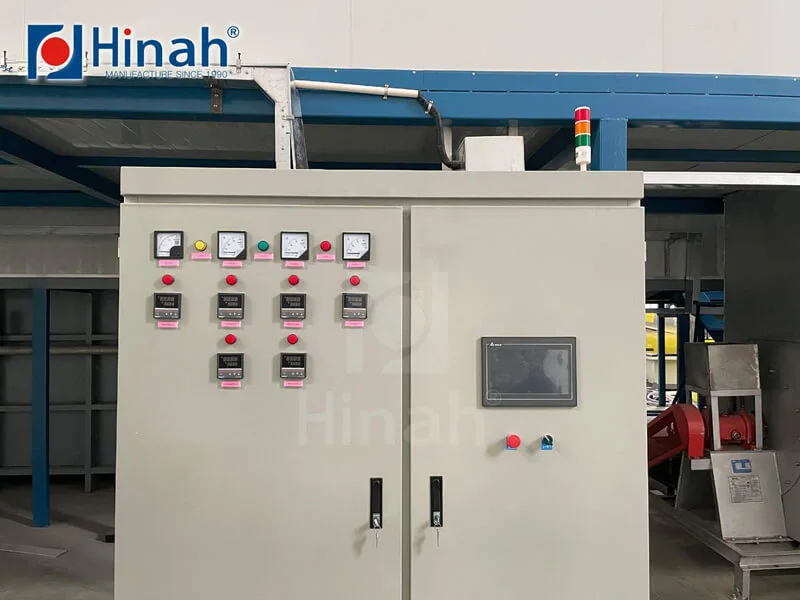
Modern powder coating systems synchronize reciprocating spray guns, part tracking, and oven throughput. A properly sized powder coating oven communicates with the conveyor controller to adjust speed based on real-time metal temperature (using IR pyrometers just before the gel zone). This closed-loop prevents scrapping batches during production ramp-ups. Also, cool-down tunnels after the oven should have independent filtered air to avoid attracting airborne contaminants to the still-soft coating.
For overseas installations, HANNA provides remote digital monitoring via PLC and HMI, enabling parameter changes without on-site engineers. Cure recipe management stores up to 100 profiles for different powder chemistries.
A1: For exterior automotive components (alloy wheels, bumpers, trim), the standard acceptable temperature uniformity is ±5°F (±2.8°C) measured across 12–15 thermocouple locations during loaded condition. Structural underbody parts with higher film thickness may allow ±8°F. Always run a TUS test per AMS 2750E or customer-specific criteria before final acceptance.
A2: Yes, but modifications are required. Existing ovens for wet paint often lack high air volume recirculation and have insufficient insulation (50–80mm only). For powder curing, insulation should be upgraded to 150mm mineral wool. Also install high-pressure nozzle arrays (to reach 2.5–3 m/s air velocity) and replace gas burners with modulating type capable of 180–220°C operation. Finally, add particulate filters on air intakes to prevent dust contamination.
A3: Three reliable methods: 1) MEK double-rub test (ASTM D5402) – less than 50 rubs without coating softening indicates under-cure. 2) Impact resistance (ASTM D2794) – sudden deformation should not crack film. 3) Crosshatch adhesion (ASTM D3359) – peeling after tape pull >5% means insufficient crosslinking. Always compare with a reference panel cured at supplier-recommended schedule.
A4: For most applications, 3 to 6 air changes per hour (ACH) balances contaminant removal and energy conservation. High ACH (8–10) may be needed if degassing from outgassing substrates (porous castings) produces visible bubbles. However, excessive ACH increases gas consumption by 15–20%. Use demand-controlled exhaust based on VOC sensor readings to minimize heat loss.
A5: Orange peel often results from either insufficient melt flow or excessive temperature spikes. First, verify oven’s ramp rate: too fast (>15°C/min) can prematurely set the resin before complete leveling. Lower the temperature by 5–8°C and increase dwell time. Second, check recirculating air velocity near the part – high turbulence (>4 m/s) disturbs flow. Install diffuser plates to drop velocity to 2 m/s during the gel stage. Also ensure powder particle size distribution is consistent (D90 < 45 μm).
A6: Minimum safety devices: 1) Combustion airflow proving switch (prevents gas release without purge). 2) UV flame scanner with 2-second response. 3) High-limit thermostat with manual reset set 30°C above max setpoint. 4) Gas pressure switches (high and low). 5) Exhaust fan interlock – oven cannot start heating unless exhaust is operational. Follow NFPA 86 Annex B for powder-coated oven sections.
Need a custom-engineered powder coating oven for your production line?
Share your part dimensions, target throughput, and powder chemistry. HANNA engineers deliver thermal simulations, turnkey installation, and commissioning support for batch or continuous ovens. Submit your inquiry to receive a detailed specification proposal within 48 hours.
Inquiry form – Click here to contact our curing systems team (or request a callback).
Reference your required oven width, clearance height, and desired uniformity class for faster response.