Scaling your powder coating operation means facing bigger challenges. Coating small parts is one thing, but when your projects involve truck frames, architectural panels, or industrial machinery, you need serious equipment. This is where the decision to invest in a large powder coating oven becomes central to your productivity and quality. Getting this piece wrong can lead to massive energy waste, inconsistent finishes, and a bottleneck in your entire line. This article breaks down the key practical considerations, from technology choices to cost management, to help you specify the right system for your heavy-duty needs.
What does "large" really mean in this industry? It's not just about physical size. A large powder coating oven is typically defined by its interior workspace, temperature uniformity across that space, and its designed throughput. We're often talking about walk-in or drive-in configurations large enough for palletized loads, long extrusions, or bulky fabricated metal assemblies. The core challenge shifts from simply heating a part to maintaining precise, even heat across a vast volume—a task that separates basic ovens from industrial workhorses.
The debate between convection and infrared heating intensifies with scale. For a large powder coating oven, forced-air convection is often the default choice. It circulates heated air to envelope parts of complex shapes and varying densities, ensuring thorough cure. However, moving vast volumes of air uniformly requires sophisticated engineering.
Infrared systems can be faster and more energy-efficient for certain applications, like flat panels. But in a large powder coating oven setting, shadows and uneven part geometry can lead to cold spots. Many high-end systems for large parts, like those from HANNA, employ hybrid or enhanced convection designs to optimize heat transfer and reduce cycle times on massive components.
The need for a large powder coating oven is driven by specific industries. Architectural and building suppliers use them for curtain walls, window frames, and heavy-gauge aluminum panels. The agricultural and construction equipment sector coats tractor chassis, plows, and structural frames. Manufacturers of industrial storage, commercial vehicles, and large-scale furniture also rely on them. Each industry has its own profile—long lengths, tall heights, or dense masses—that dictates the oven's internal dimensions and airflow pattern.
Choosing a large powder coating oven is a major capital decision. Follow this structured approach:
The purchase price of a large powder coating oven is just the start. Significant costs include site preparation (strengthening floors, installing utilities), installation, and insulation. Operational costs are dominated by energy consumption. A well-insulated, efficiently designed oven from a brand like HANNA uses advanced burner technology and heat retention strategies to lower daily operating expenses. Also factor in maintenance costs; easier access to components for service reduces downtime. Always analyze Total Cost of Ownership (TCO), not just initial investment.
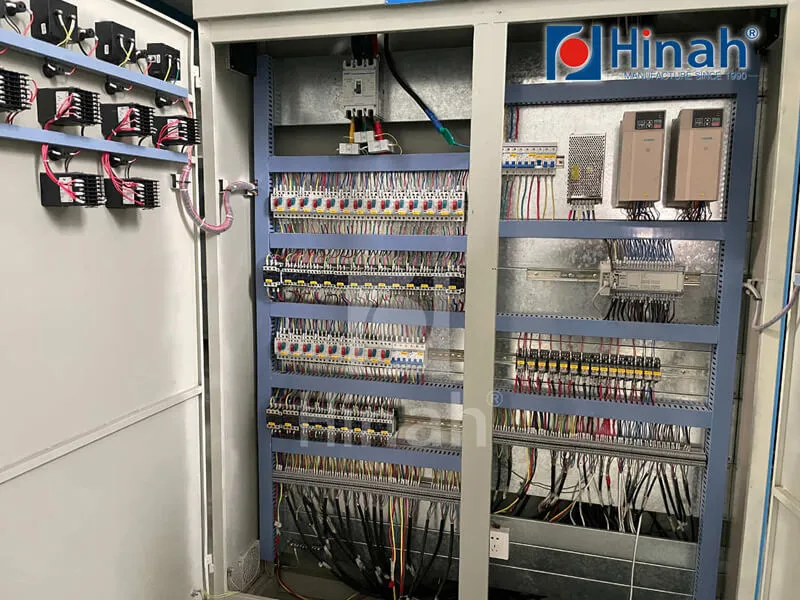
A commercial-grade large powder coating oven must have specific features. Superior insulation (minimum 6-inch walls) is non-negotiable for efficiency and exterior safety. Redundant safety systems—gas train valves, high-limit controllers, and ventilation monitors—are critical. A well-designed airflow system with strategically placed baffles and fans ensures uniformity. Durable construction with industrial-grade seals and hinges stands up to constant thermal cycling. These features are standard in HANNA ovens, built for 24/7 production environments.
Building a reliable large powder coating oven requires deep engineering expertise. Companies like HANNA don't just sell a box; they design a thermal system. Their process involves computational fluid dynamics (CFD) modeling to predict and optimize airflow before metal is cut. This ensures the heat distribution meets spec for your specific part profiles. Their focus on robust construction and industry-compliant safety controls minimizes long-term risk. Choosing an experienced partner translates to fewer production headaches, consistent quality, and dependable support.
A large powder coating oven is not a standalone island. It must integrate with your pretreatment, application, and material handling systems. Consider how parts will move in and out—will you use an overhead conveyor, floor conveyor, or batch carts? The oven's entrance design, heat seals, and exhaust must align with this flow. Poor integration creates inefficiency and heat loss. Planning the entire line as a cohesive system, often with guidance from the oven manufacturer, is crucial for smooth operation.
The energy appetite of a large powder coating oven is substantial. Modern designs tackle this with heat recovery systems that recycle exhaust heat to preheat incoming air. High-efficiency burners and improved burner turndown ratios match heat output to demand. Properly sized exhaust systems maintain air quality without wasting heated air. Investing in these technologies, as seen in HANNA's newer models, significantly reduces your carbon footprint and operational costs, making your facility more sustainable and competitive.
Proactive maintenance keeps your large powder coating oven running reliably. Daily checks might include verifying gas pressures and listening for unusual fan noises. Weekly tasks involve inspecting door seals and cleaning air intake filters. Monthly maintenance should check burner assemblies and calibrate temperature sensors. An annual comprehensive inspection by a qualified technician, potentially from your supplier like HANNA, is recommended to ensure safety systems and internal components are in top condition. Keeping a detailed log is invaluable.
In conclusion, specifying the right large powder coating oven is a complex but critical process that hinges on understanding your parts, your process, and your long-term goals. It's an investment that demands careful analysis of technology, total costs, and manufacturer capability. By focusing on performance uniformity, energy efficiency, and robust construction—hallmarks of providers like HANNA—you can secure a system that becomes a reliable, productive asset for your coating line for years to come.
Q1: How is the size of a large powder coating oven typically measured?
A1: Size is primarily defined by the internal workspace dimensions (Width x Height x Depth). For conveyor ovens, the length of the heated zone is also critical. Always specify dimensions with your part racks or fixtures in mind, allowing ample space for airflow around the parts.
Q2: What fuel types are most common for large industrial powder coating ovens?
A2: Natural gas is the most common and often most cost-effective fuel for a large powder coating oven due to its high energy density and rapid heating capability. Propane, oil, or electric resistance heating are alternatives, chosen based on local utility costs and availability.
Q3: Can a large powder coating oven be customized for unusual part shapes?
A3: Absolutely. Reputable manufacturers like HANNA specialize in custom engineering. This can include modifying internal dimensions, adjusting fan and baffle placement for specific airflow patterns, or creating unique door configurations to accommodate exceptionally shaped loads.
Q4: What is temperature uniformity, and why is it so important for large ovens?
A4: Temperature uniformity refers to the variance in temperature (e.g., ±10°F) across the entire workspace when the oven is at setpoint. In a large powder coating oven, poor uniformity means some parts are under-cured while others are over-cured, leading to adhesion failure, discoloration, or wasted energy.
Q5: How long does it typically take to install a large walk-in powder coating oven?
A5: Installation time varies widely. For a pre-fabricated, modular oven, on-site assembly and hookup might take 1-3 weeks after site prep is complete. This depends on complexity, utility connections, and integration requirements. Thorough site preparation beforehand is key to a smooth timeline.
Q6: What kind of facility upgrades might be needed before installing a large oven?
A6: Common upgrades include reinforcing the concrete floor to support the heavy load, ensuring adequate gas line size and pressure, installing sufficient electrical service for controls and motors, and constructing proper exhaust stack venting through the roof. A site survey with your supplier is essential.