Selecting the right powder coating plant supplier is one of the most critical decisions for manufacturers aiming to improve surface quality, increase throughput, and reduce environmental footprint. A modern powder coating line is not just a set of machines; it is an integrated system where pre-treatment, application, curing, and material handling must work in perfect harmony. Based on three decades of field experience, HANNA has engineered more than 200 complete lines worldwide, demonstrating how deep process knowledge translates into measurable production gains. This article provides a technical deep‑dive into what defines a state‑of‑the‑art plant and how a competent powder coating plant supplier can solve real‑world operational challenges.
A high‑performance plant consists of several interdependent stages. Every reputable powder coating plant supplier must master each of these domains to deliver a line that performs consistently.
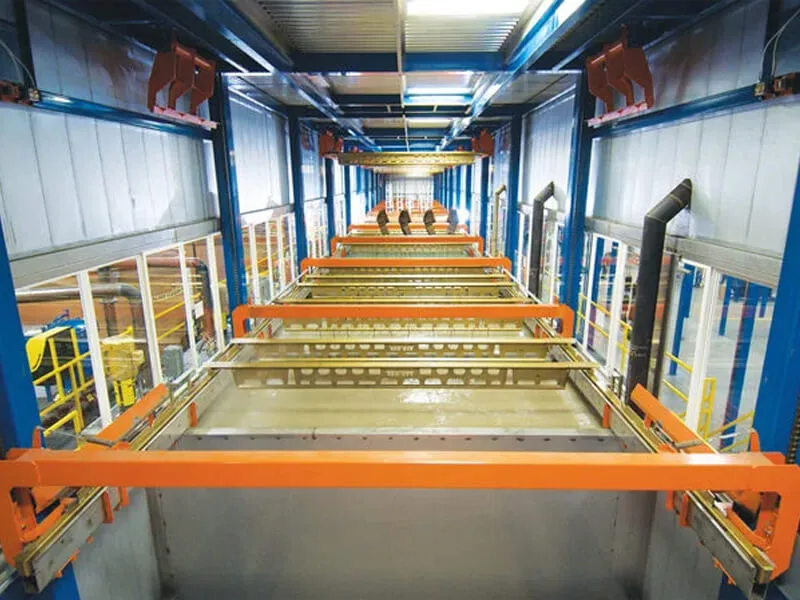
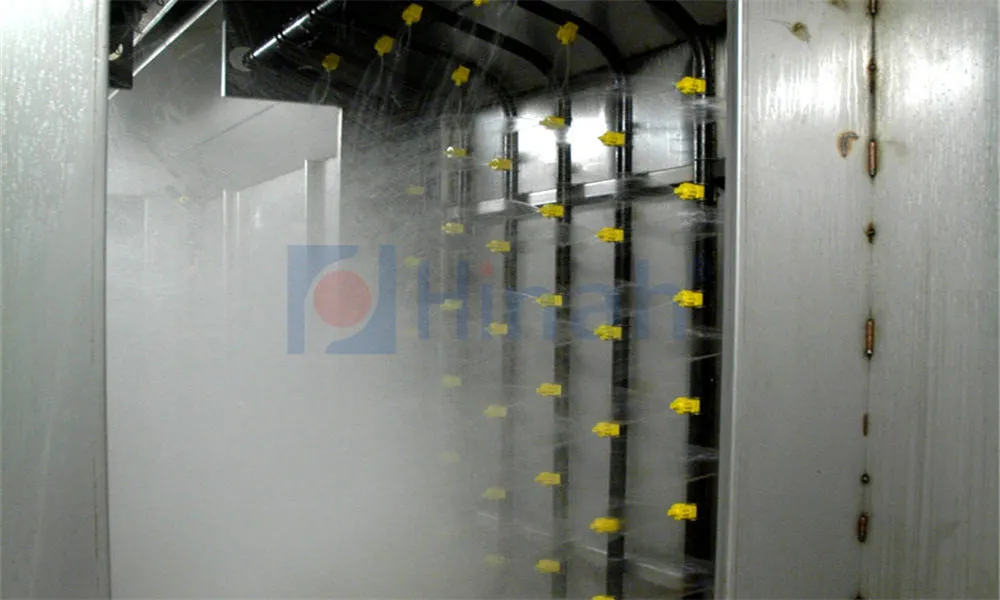
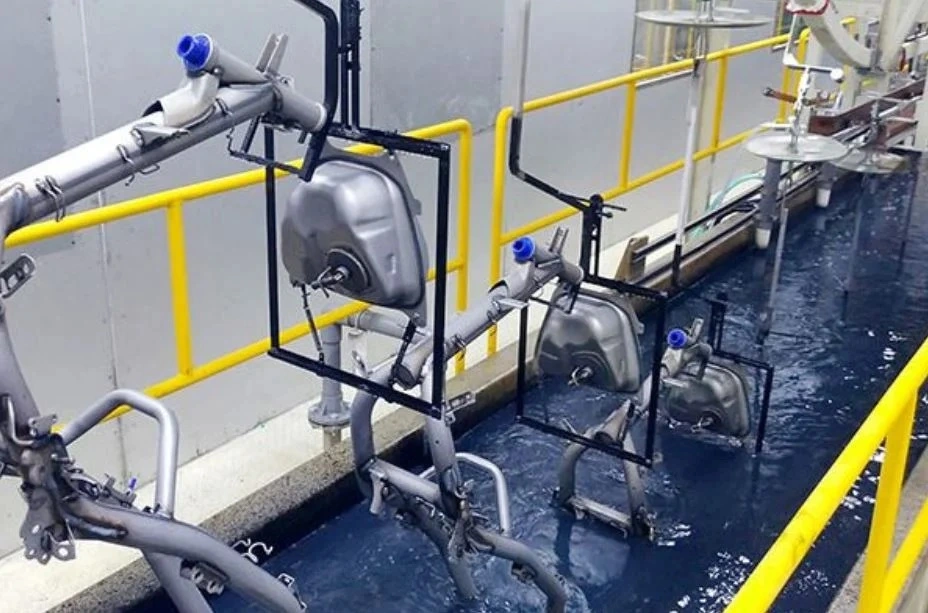
Surface preparation determines long‑term adhesion and corrosion resistance. Today’s lines use multi‑stage spray or immersion systems with nano‑ceramic (zirconium) or traditional iron/zinc phosphate processes. Energy consumption and waste treatment are optimised by counter‑flow rinsing and heat exchangers. A well‑designed pre‑treatment section from a supplier like HANNA reduces chemical usage by up to 30% while meeting automotive specification GMW 14829.
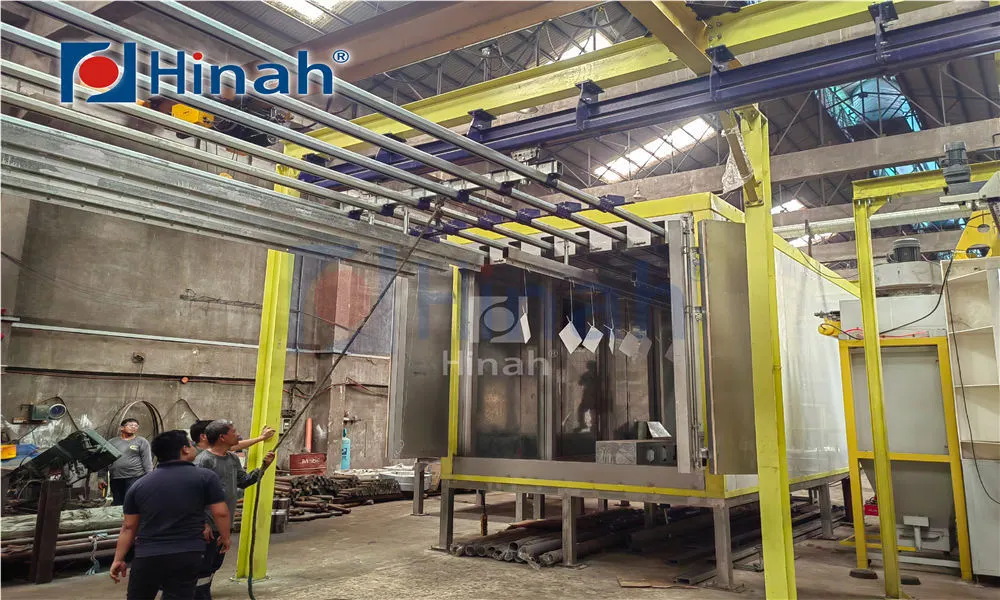
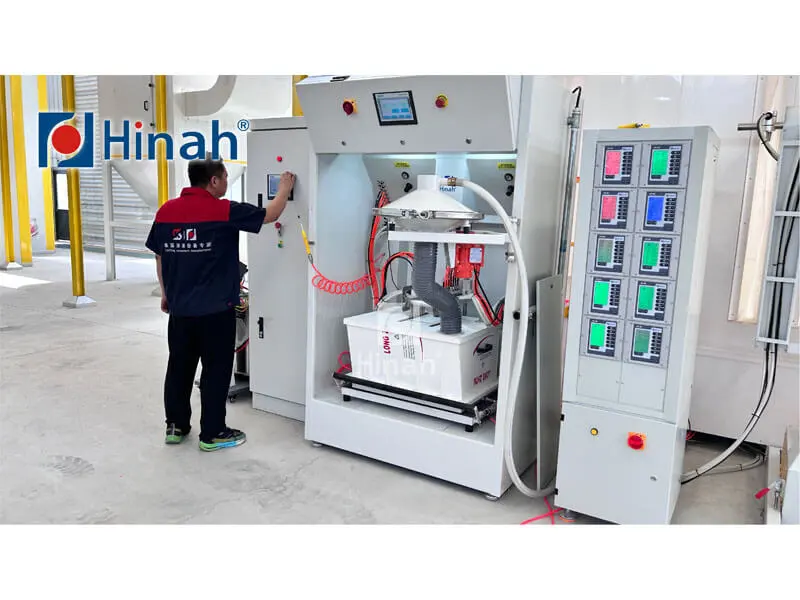
The heart of the line is the spray booth. Modern booths are constructed from anti‑adhesive materials (stainless steel or polypropylene) to minimise powder accumulation and facilitate rapid colour change. Cartridge‑filter or cyclone‑plus‑filter technology recovers over‑sprayed powder, pushing material efficiency to 98%. An intelligent **powder coating plant supplier** integrates closed‑loop fluidisation and sieving systems to maintain powder quality, directly reducing first‑pass reject rates.
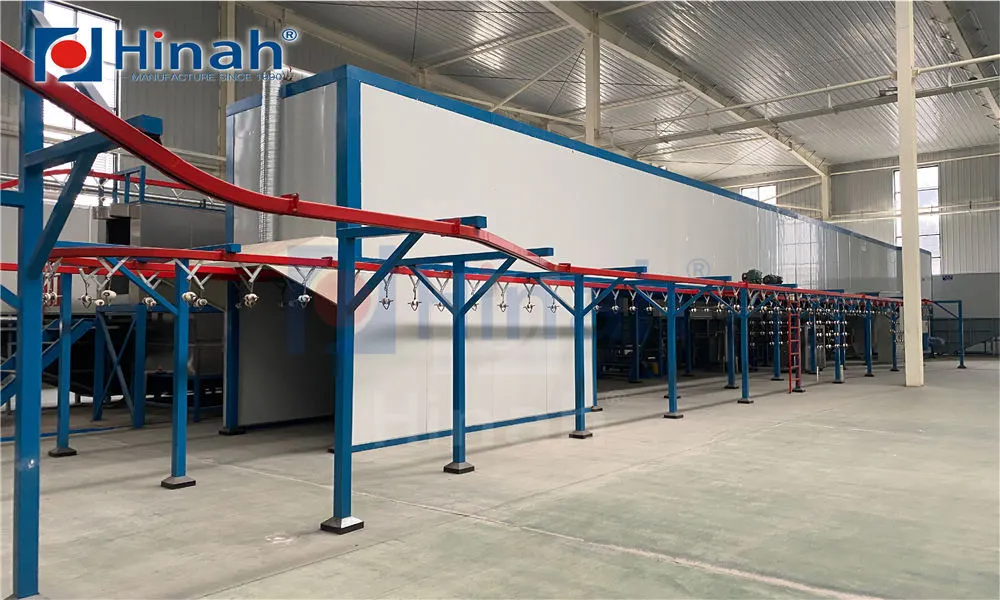
Curing ovens must maintain precise temperature uniformity (±3 °C) across complex part geometries. HANNA designs convection ovens with high‑velocity air nozzles, combined with infrared boost zones for rapid ramp‑up. This hybrid approach cuts curing time by 15‑20% compared to conventional ovens, directly lowering energy bills. For high‑volume producers, multi‑zone ovens with PLC‑controlled dampers ensure that every part receives the correct thermal profile.
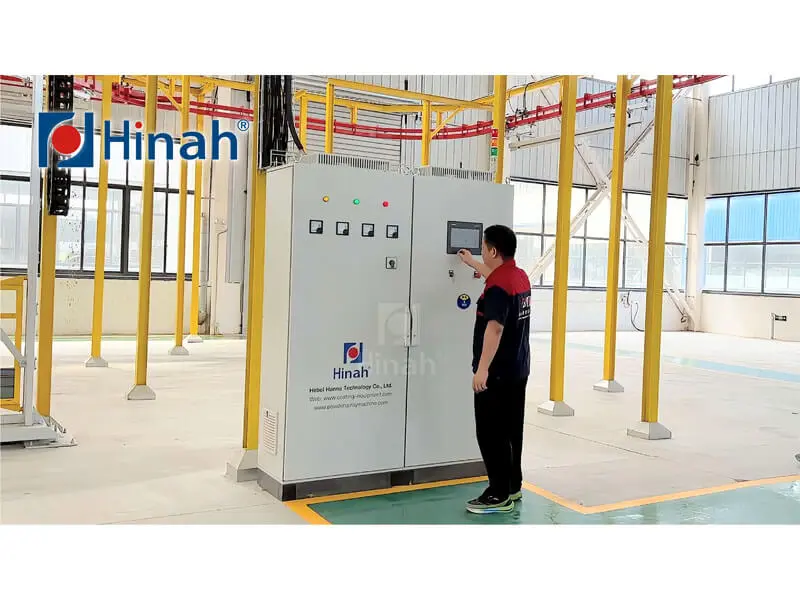
Power‑and‑free conveyors, overhead monorails, or pallet systems must be synchronised with the process. A modern line uses variable‑speed drives and position sensors to adjust dwell times automatically. As a complete powder coating plant supplier, we integrate conveyor controls with the line’s central SCADA, allowing real‑time tracking of every rack through pre‑treatment, application, and curing.
Different market segments impose distinct demands on a coating plant. A specialised supplier adapts the core technology accordingly.
Automotive components (wheels, chassis parts): need high‑film‑build capability, exceptional corrosion resistance (≥1000 h salt spray), and often multi‑layer coating. Lines include robotic gun movers and vision‑guided part recognition.
Architectural aluminium (facades, window profiles): require weather‑resistant coatings compliant with Qualicoat or AAMA 2604. Pre‑treatment must include chromium‑free options, and ovens are sized for long profiles (up to 8 m).
General industry (appliances, furniture): demand fast colour changes (often 5‑10 changes per shift) and high throughput. Booths with quick‑clean cyclone technology and automatic gun‑to‑part triggering are essential.
Only an experienced powder coating plant supplier can balance these often conflicting parameters without over‑engineering the line.
During the last decade, we have observed three recurring challenges in the field: excessive energy consumption, slow colour change, and inconsistent film thickness. Here is how a competent supplier addresses them.
Data from HANNA installations shows that curing ovens account for 60‑70% of total energy use. By applying high‑density insulation (200 mm rockwool) and frequency‑controlled burners, we have reduced natural gas consumption by 25% on a 5‑stage line. Heat recovery from oven exhaust pre‑heats the pre‑treatment tanks, further improving overall plant efficiency.
In contract coating shops, downtime for colour change is lost revenue. A well‑designed booth with self‑cleaning walls, a separate cyclone for each colour, and automated purge cycles can cut changeover time from 45 minutes to under 10 minutes. The supplier’s expertise in powder‑feed centre design and pneumatic conveying is crucial here.
Film thickness variation often stems from poor gun positioning or unstable powder flow. Modern lines incorporate closed‑loop gun control that adjusts voltage and powder output based on part proximity sensors. A reliable powder coating plant supplier will offer this as a standard feature, ensuring that even complex geometries receive uniform coverage.
HANNA has built its reputation on turnkey responsibility. Unlike suppliers that only provide individual machines, we engineer the complete process flow, from initial layout simulation to commissioning and operator training. Our team includes chemists who understand powder formulation, mechanical engineers specialised in material handling, and automation experts. This vertical integration guarantees that when you partner with HANNA, every component – washer, dryer, booth, oven, conveyor – is optimised as one system. Recent references include a fully automated line for a major European wheel manufacturer that achieved 15 % higher throughput than guaranteed. As a dedicated powder coating plant supplier, we also provide remote monitoring and predictive maintenance packages, reducing unplanned downtime by an average of 18 % across our installed base.
When evaluating proposals from a powder coating plant supplier, initial capital cost is only one part of the equation. A detailed TCO analysis should include:
Powder utilisation: high‑efficiency recovery can save 8‑12 % material cost annually.
Energy consumption: ovens with heat recovery and LED‑cured IR zones lower utility bills.
Maintenance intervals: robust washer nozzles, self‑cleaning filters, and easily accessible components reduce labour hours.
Reject rate: precise process control minimises rework – a 2 % reject reduction can add €50,000 yearly for a mid‑volume plant.
HANNA provides a transparent TCO calculator during the quotation phase, allowing clients to compare offers based on five‑year operational cost, not just purchase price.
The next generation of coating plants is digital and decarbonised. Smart sensors monitor powder layer thickness in real time and adjust parameters automatically. Data from every production run is stored in the cloud, enabling predictive quality analytics. Leading powder coating plant suppliers already offer interfaces for MES and ERP integration. Furthermore, environmental regulations are tightening worldwide. A future‑proof plant uses chromium‑free pre‑treatment, nearly zero VOC emissions, and energy‑efficient components that comply with ISO 50001. HANNA lines are designed for easy retrofit of heat pumps and solar thermal systems, ensuring that your investment remains compliant for the next 15‑20 years.
Selecting the right powder coating plant supplier directly impacts your competitiveness. It determines your product quality, operating costs, and ability to meet sustainability targets. By choosing a partner like HANNA, you gain access to decades of application experience, a modular engineering approach, and after‑sales support that keeps your line running at peak performance. Whether you are upgrading an existing line or building a greenfield facility, insist on a supplier that understands the chemistry, the mechanics, and the data behind modern powder coating.
Q1: What specific criteria should I use to evaluate a powder coating
plant supplier?
A1: Look beyond the brochure. Assess their
engineering depth: do they manufacture key components (booths, ovens) or just
resell? Ask for detailed references with similar part mix and throughput. Verify
their automation capabilities (PLC brand, SCADA integration) and request a clear
TCO projection. A competent supplier will openly share energy consumption data
from previous installations.
Q2: How long does it typically take to commission a complete powder
coating line?
A2: For a medium‑complexity line (pre‑treatment,
manual booth, curing oven, 300 m conveyor), the typical timeline from order to
sign‑off is 20‑26 weeks. This includes engineering, fabrication, on‑site
installation, and ramp‑up. Complex lines with robotic automation or multi‑colour
booths may require 32‑36 weeks. A reliable supplier will provide a detailed
project plan with milestones.
Q3: Can a single powder coating plant handle frequent colour changes
efficiently?
A3: Yes, if the plant is designed for quick changeover.
This requires a booth with non‑stick walls, a separate cyclone or cartridge
filters dedicated to each colour, and an automated purge system for the powder
feed hoses. Suppliers like HANNA offer “fast‑colour‑change”
packages that reduce downtime to less than 8 minutes between colours.
Q4: What environmental permits are typically required for a new
powder coating plant?
A4: Powder coating is inherently cleaner than
liquid painting, but permits still apply. You will need to comply with local air
emission standards for particulate matter (often < 5 mg/m³) and possibly
volatile organic compounds if any liquid cleaning agents are used. Wastewater
from pre‑treatment (if not closed‑loop) must meet discharge limits. A
knowledgeable supplier will help you design a system that meets EPA, EU, or
local regulations.
Q5: How does HANNA ensure the reliability of its powder coating
plants?
A5: HANNA follows a rigorous
quality protocol: all components are tested at our factory before shipment,
including a full electrical simulation. We use globally recognised brands
(Siemens, Allen‑Bradley, SEW drives, Nord pumps) to guarantee spare‑part
availability. After installation, we offer remote monitoring and annual
performance audits, and our service team is available 24/7 for critical
issues.