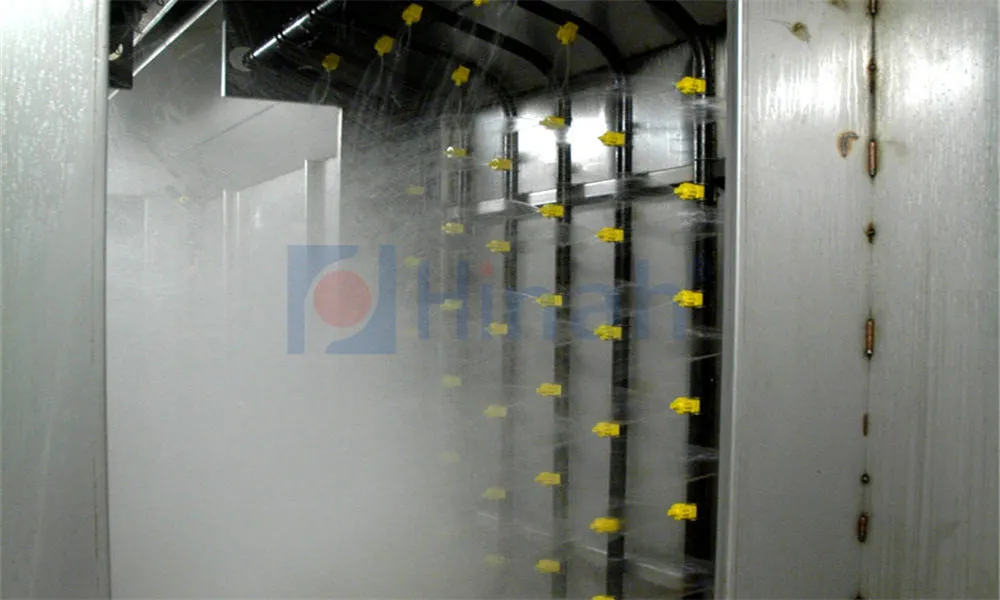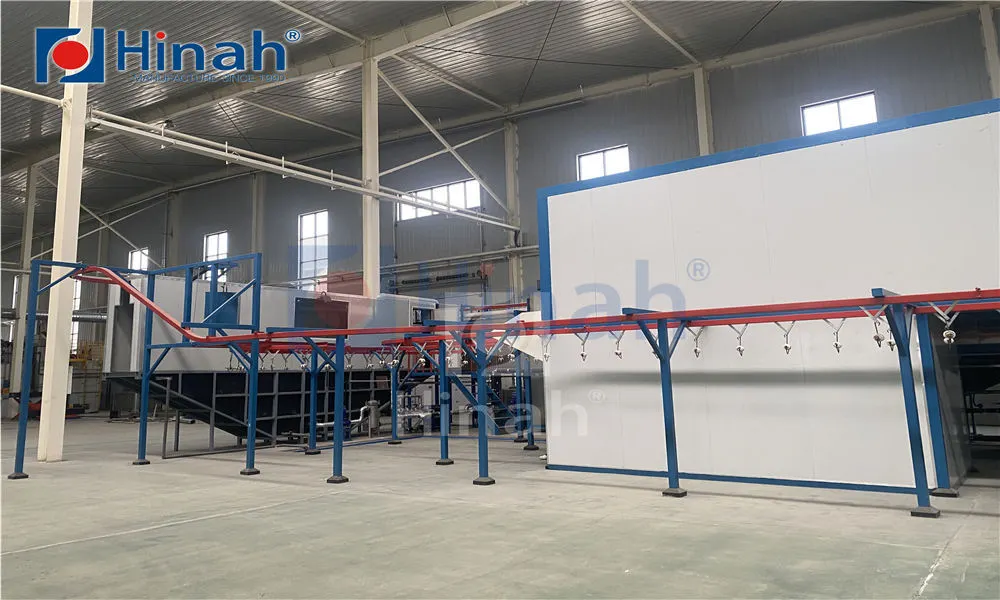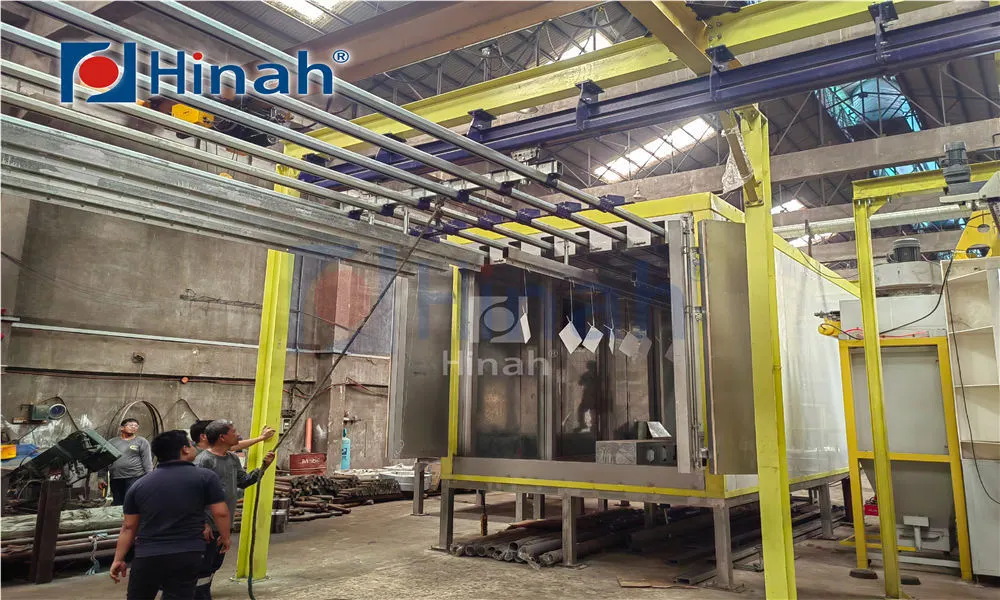

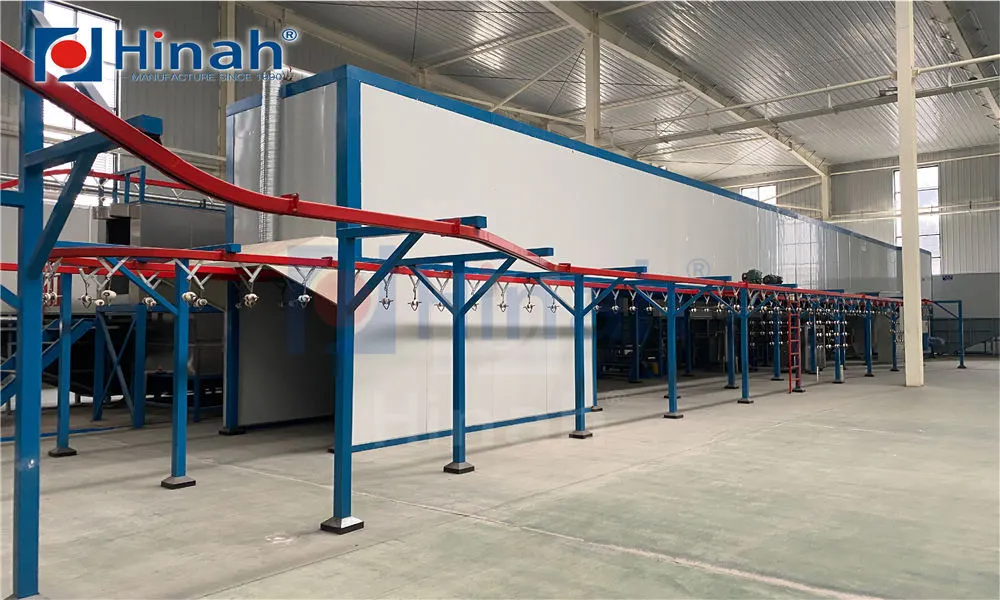
The powder booth is the operational heart of any powder coating line. Far more than a simple enclosure, a modern powder booth is a precision-engineered system designed to achieve three critical objectives: contain airborne particulate, maximize material recovery, and ensure operator safety. For job shops and high-volume manufacturers alike, the performance of the powder booth directly dictates transfer efficiency, color change speed, and overall profitability. This article provides a technical examination of powder booth engineering, comparing filtration methodologies, analyzing airflow dynamics, and addressing common operational pain points. We will explore how industry leaders like HANNA are advancing booth design to meet the demands of modern finishing.
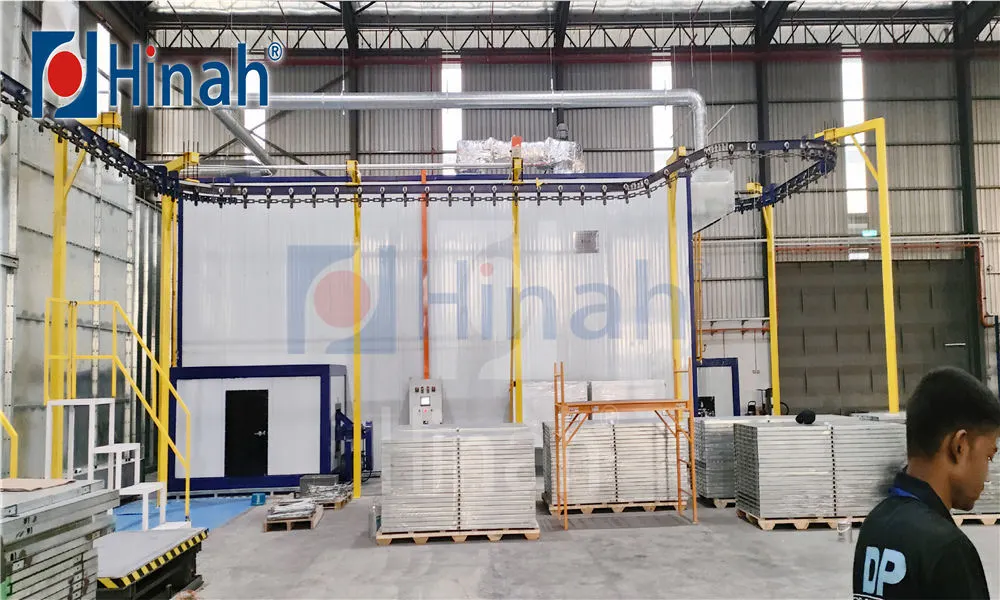
A powder booth must maintain a negative pressure environment relative to the surrounding factory. This is achieved by drawing air through the booth at a controlled velocity, typically 100 to 140 feet per minute (FPM) across all open operator areas. This face velocity is sufficient to contain powder particles within the booth without creating turbulence that disturbs the electrostatic application process. The booth structure itself is constructed from modular, groundable panels—often 14-gauge steel or conductive polypropylene—with smooth, radiused interior surfaces to minimize powder accumulation and facilitate cleaning. The choice of construction material impacts durability, cleanability, and static dissipation, all critical factors in long-term performance.
The configuration of the recovery system defines the operational capabilities of a powder booth. Each approach serves distinct production profiles.
Cyclone-equipped powder booths utilize centrifugal force to separate overspray powder from the airstream. The cyclone separator removes 90-95% of the powder, depositing it into a collection container for immediate reuse. The remaining air, carrying only fine particles, passes through a secondary cartridge filter before being recirculated or exhausted. The primary advantage is rapid color change capability. Because the cyclone collects powder in an unmixed state, operators can switch colors in 5-10 minutes by purging feed hoses and wiping interior surfaces. This makes cyclone powder booths the preferred choice for contract coaters and facilities running multiple colors per shift.
In a cartridge-style powder booth, all air passes through multiple filter elements. Overspray collects on the filter surface and is periodically removed by reverse-pulse cleaning, falling into a hopper for recovery or disposal. Cartridge systems offer lower initial investment and a smaller footprint. However, color change is more labor-intensive, often requiring filter replacement or extensive cleaning. Consequently, cartridge powder booths are typically specified for high-volume, low-color-mix applications such as automotive component finishing or agricultural equipment.
Innovation among powder booth engineers now focuses on reducing manual intervention and improving material economy.
Quick-Color-Change (QCC) Systems: Modern powder booths feature smooth, conductive plastic walls, automatic purge valves, and optimized airflow paths to minimize powder adhesion. HANNA integrates these elements to achieve sub-8-minute color changes even in demanding production environments.
High-Efficiency Cyclones: Advanced cyclone geometries achieve sharper particle separation, reducing the load on final filters and increasing the percentage of recoverable powder. This directly translates to material savings, often providing return on investment within 18-24 months.
Automated Gun Integration: Reciprocators with programmable positioning adjust gun stroke and angle based on part presence, optimizing coverage and minimizing overspray within the powder booth.
Smart Filtration Monitoring: Differential pressure sensors across filters provide real-time data on filter loading, triggering pulse cleaning cycles or maintenance alerts, ensuring consistent airflow and containment.
Even a well-designed powder booth can encounter operational hurdles. Below are frequent issues and engineering remedies:
Powder escaping the booth opening indicates inadequate face velocity or airflow disruption. Solution: Verify fan performance and check for blockages in ductwork or filters. Adjust dampers to balance airflow. Ensure that cross-drafts from HVAC or open doors are not interfering with booth capture velocity.
Excessive downtime between colors reduces productivity. Solution: Evaluate the booth interior for ledges or rough surfaces that trap powder. Upgrade to a booth with radiused corners and conductive walls. Implement a documented purge and cleaning procedure. HANNA offers training programs to optimize color change protocols.
Low first-pass transfer efficiency increases powder consumption and filter loading. Solution: Verify gun settings (voltage, current, powder flow) and ensure parts are properly grounded. Analyze airflow patterns; excessive turbulence can blow powder off the part. Consider upgrading to guns with better charging characteristics.
Filters that clog rapidly reduce airflow and increase maintenance. Solution: Ensure pulse cleaning systems are functioning correctly with adequate compressed air pressure (typically 90 PSI). Verify that the powder booth is not overloaded beyond its design CFM. For sticky or fine powders, consider specialized filter media with anti-static or oleophobic properties.
Safety is paramount due to the combustible nature of fine organic powders. A compliant powder booth must incorporate multiple engineered safeguards:
Explosion Venting: Booths must include explosion relief panels or flameless venting devices sized according to NFPA 68 calculations to direct pressure outward in the event of a deflagration.
Continuous Grounding: All booth components, workpieces, and application equipment must be electrically bonded and grounded to prevent electrostatic discharge that could ignite dust.
Fire Suppression: Integration with sprinkler systems or dedicated chemical suppression within the booth and dust collector is required by NFPA 33.
Electrical Area Classification: Components inside the powder booth and within 5 feet of openings must be rated for Class 2, Division 2 (or Zone 22) hazardous locations.
Reputable powder booth manufacturers provide documentation of third-party certifications and calculations for airflow and explosion venting.
Beyond the purchase price, sophisticated buyers assess the total cost of ownership of a powder booth. This includes energy consumption (fan motor horsepower), compressed air usage for pulse cleaning, filter replacement frequency, and labor costs associated with color change. A booth with a higher initial price but lower airflow resistance (requiring less fan energy) and durable, long-life filters can offer a lower TCO over a 10-year period. Leading powder booth manufacturers provide detailed operational cost analyses, helping customers justify the investment based on ROI from powder savings and reduced downtime.
When specifying a powder booth, consider these technical and operational factors:
Part Geometry and Mix: Large parts require wider openings and deeper booths. Complex shapes may benefit from manual touch-up stations within the booth.
Production Volume and Color Change Frequency: High-mix operations demand cyclone booths with QCC features. Low-mix, high-volume runs can utilize cartridge booths.
Available Floor Space and Height: Cyclone systems require additional headroom and footprint for the cyclone and return air ducting.
Regulatory Requirements: Local codes may dictate specific safety features, emission limits, or noise restrictions.
Partnering with an experienced integrator like HANNA ensures that the powder booth is not just a standalone component, but a seamlessly integrated element of a high-efficiency finishing line.
In conclusion, the powder booth is a sophisticated piece of process equipment whose design directly impacts finishing quality, material efficiency, and operator safety. By understanding the engineering trade-offs between cyclone and cartridge systems, prioritizing airflow management, and insisting on compliance with safety standards, manufacturers can select a booth that delivers consistent performance and rapid return on investment. Working with established powder booth manufacturers like HANNA provides access to proven designs and application expertise.
Q1: What is the optimal air velocity inside a powder
booth?
A1: For most applications, a face velocity of 100-120 feet
per minute (FPM) is recommended across all open operator areas. This is
sufficient to contain powder overspray without disturbing the electrostatic
application process. The required total airflow (CFM) is calculated by
multiplying the open face area by the target velocity.
Q2: How often should I replace the filters in my powder
booth?
A2: Replacement frequency depends on usage and powder type.
In a cartridge booth running daily, final filters may last 6-12 months with
proper pulse cleaning. Cyclone booth secondary filters can last 1-2 years
because the cyclone removes the bulk of the powder. Monitoring differential
pressure across filters is the most reliable indicator for replacement.
Q3: Can a single powder booth handle both small and large parts
effectively?
A3: Yes, with proper design. A booth with adequate
width and depth to accommodate the largest part, combined with adjustable gun
positioning and variable airflow, can handle mixed part sizes. Some facilities
use a larger booth with manual touch-up for large parts and automated guns for
smaller production.
Q4: What is the difference between corona and tribo charging, and
does it affect powder booth selection?
A4: Corona charging uses a
high-voltage electrode to ionize air and charge powder particles. Tribo charging
charges particles through friction. Both can be used in any standard powder
booth. However, tribo guns often require higher airflow for powder transport, so
the booth's pneumatic conveying system must support the required delivery
rates.
Q5: How do I calculate the required powder booth size for my
operation?
A5: Determine the maximum part dimensions and add
clearance for gun access and airflow—typically 12-18 inches on all sides.
Consider conveyor configuration and whether parts will rotate. Then, multiply by
the number of parts per batch and allow space between parts. Most powder booth
manufacturers offer CAD layout assistance to optimize sizing.
Q6: Are portable or batch powder booths effective for low-volume
production?
A6: Yes, portable cartridge booths are an excellent
entry point for low-volume or prototype work. They offer containment and
recovery in a compact, movable package. However, they are not designed for
high-throughput or rapid color change, which is where larger, fixed cyclone
systems excel.