
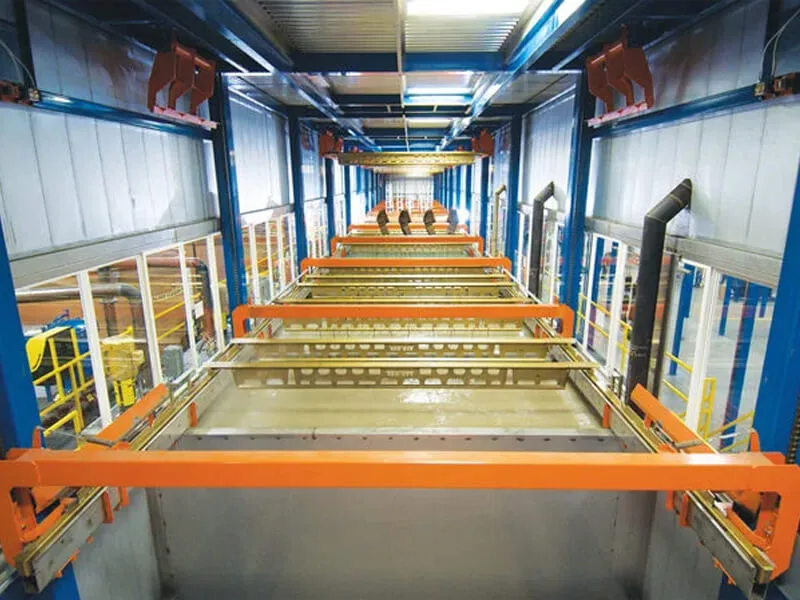
For job shops, maintenance facilities, and manufacturers with diverse part runs, the powder coating batch oven is the cornerstone of the finishing process. Unlike continuous conveyorized ovens designed for high-volume uniformity, a batch oven offers the flexibility to cure parts of varying sizes, geometries, and metallurgies in discrete cycles. However, achieving consistent cross-linking and film properties in a batch environment requires a deep understanding of heat transfer, air circulation, and process control. This article provides a technical examination of powder coating batch oven design, from burner technology to insulation effectiveness, and addresses common operational challenges. We will explore how industry leaders like HANNA engineer batch ovens that deliver repeatable results and energy efficiency.
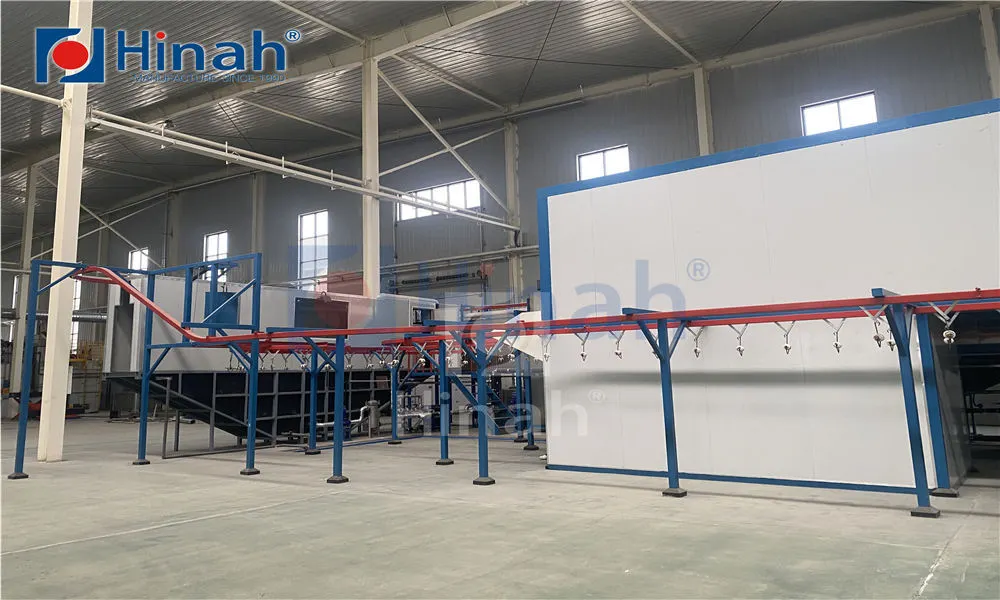
A powder coating batch oven is fundamentally a large, insulated enclosure designed to raise the temperature of coated parts to a specific set point (typically 160°C to 220°C) and hold that temperature for a specified dwell time (usually 10 to 20 minutes) to allow the powder to melt, flow, and chemically cross-link. The critical engineering elements include:
Insulation and Construction: Ovens are constructed from interlocking panels with high-density mineral wool or ceramic fiber insulation. Typical insulation thicknesses range from 4 to 6 inches, providing thermal efficiency and minimizing external surface temperatures for worker safety. Panel construction must be airtight to prevent heat loss and cold air infiltration.
Heating System: Options include natural gas, propane, electric, or indirect-fired burners. Gas-fired systems are common due to lower operational costs, but electric ovens offer precise temperature control and zero on-site emissions. Indirect-fired systems use a heat exchanger to isolate combustion gases from the oven atmosphere, essential when curing parts sensitive to contamination.
Air Circulation: Uniform temperature distribution (±5°C or better) is essential. This is achieved by high-volume recirculation fans (typically 1-2 HP per 1,000 CFM) that push air through plenums and ductwork, creating a turbulent "air curtain" across the workload. Horizontal or vertical airflow patterns are selected based on part geometry and loading configuration.
Control System: Modern batch ovens utilize PID (Proportional-Integral-Derivative) controllers with programmable set points, ramp rates, and soak times. Data logging capabilities allow for process validation and quality traceability, which is increasingly required for ISO and automotive certifications.
The choice of heating method significantly impacts cycle time and energy consumption. Reputable powder coating batch oven suppliers offer multiple configurations.
Convection heating, whether gas or electric, remains the industry standard. It relies on heated air to transfer energy to the part surface. Convection is effective for complex geometries and dense loads because heated air can penetrate gaps and recesses. However, convection ovens require time to bring the entire part mass to temperature, especially for thick metal sections. The ramp-up rate must be controlled to avoid overheating the coating surface before the substrate reaches cure temperature ("overbake" on the outside, "under-cure" at the core).
Infrared ovens use electromagnetic radiation to directly heat the part surface, offering much faster ramp-up times—often curing parts in 2-5 minutes compared to 15-20 minutes in a convection oven. IR is ideal for flat panels or simple geometries. However, "line-of-sight" limitations mean shaded areas may not cure properly. Some batch ovens incorporate a combination of IR boosters at the entrance followed by a convection soak zone to achieve both speed and uniformity.
These systems use high-velocity nozzles to direct heated air precisely at the part. This disrupts the boundary layer of cool air around the part, accelerating heat transfer. High-velocity ovens can reduce cure times by 20-30% compared to standard convection, but they require careful engineering to avoid air blasts that could disturb uncured powder.
The single most critical performance metric for any powder coating batch oven is temperature uniformity. Non-uniform heating leads to soft spots, poor adhesion, color variation, and gloss differences. To validate uniformity, operators perform a "temperature profiling" study using multiple thermocouples attached to a representative test part or fixture. The oven is brought to set point, and data is recorded over a full cycle.
Standards such as AMS 2750 or customer-specific specifications often require uniformity within ±5°C or ±10°F. Achieving this requires balancing airflow dampers, verifying heater output, and ensuring that parts are not overloaded or packed too tightly. HANNA designs their batch ovens with adjustable turning vanes and plenum configurations to allow fine-tuning of airflow patterns during commissioning.
Even a well-engineered powder coating batch oven can present hurdles. Below are frequent issues and engineering remedies:
If the oven takes too long to reach set point after loading, parts may experience "soft bake" conditions. Solution: Ensure the oven's BTU output is correctly sized for the maximum load mass. Adding a high-velocity air system can also reduce recovery time.
PID controllers that are poorly tuned can cause the temperature to spike above set point, leading to discoloration. Solution: Implement auto-tuning features or manually adjust PID parameters. Modern controllers from suppliers like HANNA include algorithms that minimize overshoot.
Air infiltration around door seals or poor circulation in corners creates areas of incomplete cure. Solution: Inspect and replace door gaskets regularly. Adjust ducting to direct more airflow to identified cold zones. Consider adding a small recirculation fan inside the oven to improve mixing.
Batch ovens can be energy-intensive. Solution: Verify insulation integrity. Consider variable frequency drives (VFDs) on recirculation fans to reduce motor speed during soak periods. Install programmable timers to shut down the oven during idle periods.
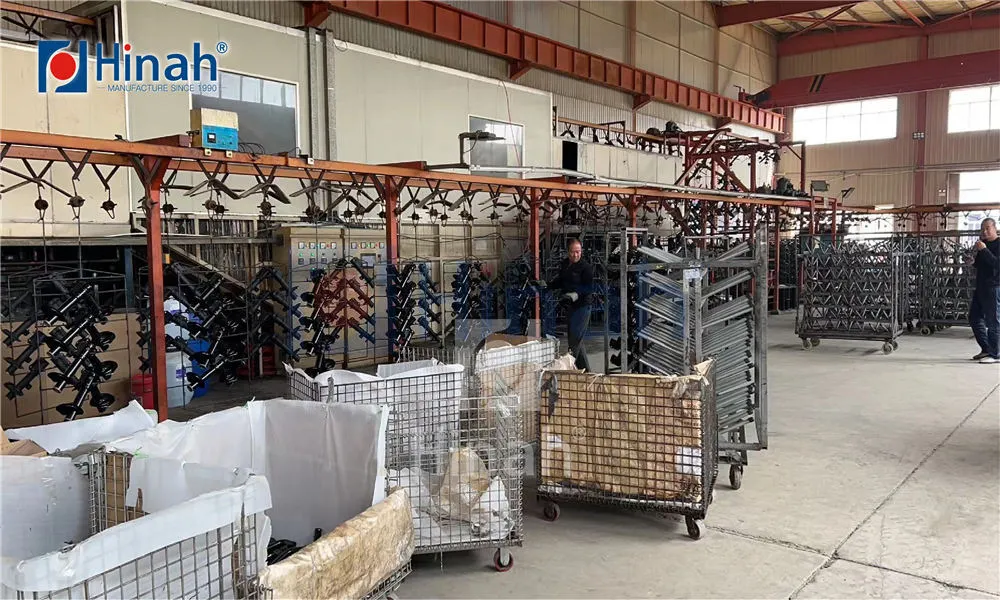
Selecting the correct physical size for a powder coating batch oven involves more than matching the largest part dimension. Key factors include:
Load Density: Dense loads require more energy and longer soak times. The oven must have sufficient air volume (CFM) to penetrate the load.
Fixture Weight: Racks, carts, and hooks absorb heat. Their mass must be factored into the total thermal load.
Throughput Requirements: How many batches per shift? This dictates whether a single oven or a two-oven system (pre-heat and cure) is needed.
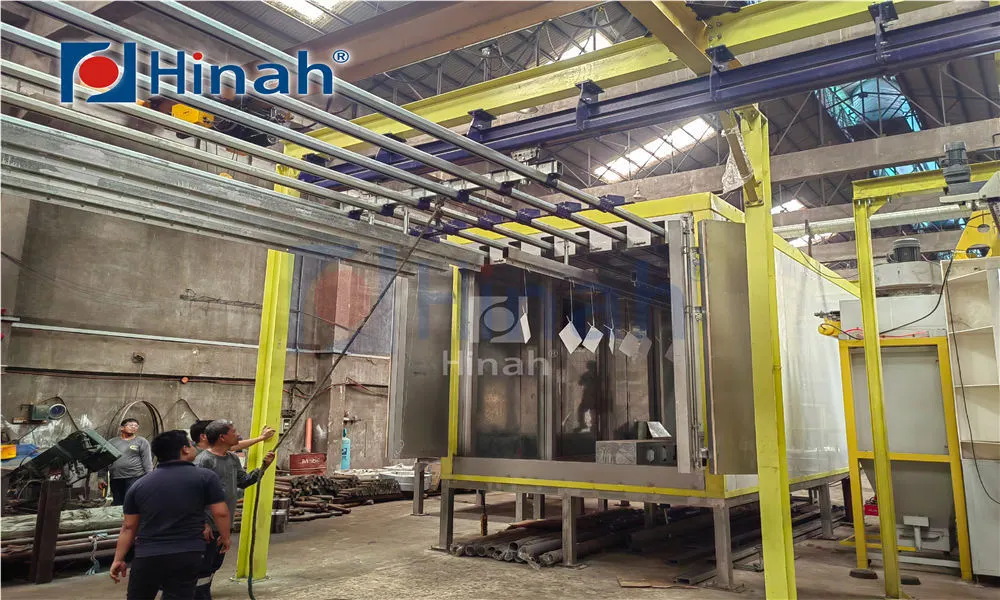
Configuration: Walk-in, bench-top, or top-loading (pit) ovens are available depending on part handling methods. Carts on tracks allow easy loading/unloading of heavy parts.
Batch ovens must incorporate robust safety features to protect personnel and facilities:
Overtemperature Protection: Independent high-limit controllers that shut down the burner if the temperature exceeds a safe threshold, preventing thermal runaway.
Airflow Switches: Prove that recirculation fans are operating before the burner can ignite, ensuring heat is distributed and preventing stratification.
Gas Train Safety: For gas-fired ovens, double-block and bleed valve trains with pressure switches and leak detection are mandatory to NFPA 86 standards.
Manual Reset Limits: Safety interlocks that require manual intervention after a fault, preventing automatic restart in unsafe conditions.
Leading powder coating batch oven manufacturers provide certification documentation and third-party testing to confirm compliance.
In conclusion, the powder coating batch oven remains an indispensable tool for flexible finishing operations. Success lies in matching the oven's thermal delivery and airflow characteristics to the specific production mix—considering part mass, geometry, and coating chemistry. By focusing on engineering fundamentals such as insulation value, circulation uniformity, and control precision, and by partnering with experienced suppliers like HANNA, manufacturers can achieve consistent, high-quality cures while controlling energy costs and maintaining process flexibility.
Q1: What is the typical temperature uniformity specification for a
powder coating batch oven?
A1: Most industrial applications require
a uniformity of ±5°C (±10°F) across the entire working volume after the oven has
stabilized. High-spec applications, such as aerospace or medical coatings, may
require ±3°C. This should be verified with a temperature profiling study using
multiple thermocouples.
Q2: How do I calculate the required oven size for my
parts?
A2: Determine the maximum part dimensions (height, width,
depth) and add clearance for air circulation—typically 6-12 inches on all sides.
Then, multiply by the number of parts per batch and allow space between parts.
Consider the size of the cart or rack. It is wise to have a powder
coating batch oven manufacturer review your part drawings and
loading plan.
Q3: What is the difference between a gas-fired and an electric batch
oven?
A3: Gas-fired ovens typically have lower operating costs where
natural gas is inexpensive, but they require complex gas train safety systems
and venting. Electric ovens have higher energy costs but offer simpler
installation, more precise temperature control, and zero combustion by-products,
making them suitable for cleanroom environments.
Q4: Can I retrofit my existing batch oven with a new control
system?
A4: Yes, upgrading controls is a common and cost-effective
way to improve performance. Modern PID controllers with data logging can replace
old analog timers and thermostats. However, ensure that the existing burner,
fans, and safety devices are compatible and functional. HANNA offers retrofit
packages for most oven brands.
Q5: Why is my powder coating dull or soft after curing, even though
the oven temperature was correct?
A5: This often indicates that the
part surface did not actually reach the required cure temperature for the full
duration. Heavy sections act as heat sinks. You likely need a longer soak time
or a pre-heat cycle to bring the entire part mass to temperature. A temperature
profile study will reveal the actual part temperature versus the air
temperature.
Q6: How often should I perform maintenance on my batch
oven?
A6: Quarterly inspections are recommended. Check door seals
for gaps, verify fan bearing lubrication, inspect burner flame quality (for gas
ovens), and confirm that all safety limit switches are functional. Annual
temperature profiling is advised to ensure uniformity has not degraded over
time.