In industrial powder coating, the Paint curing oven is the single most critical piece of equipment determining final coating adhesion, corrosion resistance, and aesthetic quality. Unlike simple drying chambers, a modern curing oven must deliver precise thermal energy to initiate cross-linking reactions within powder polymer chains—a process that demands both temperature accuracy and spatial uniformity. Any deviation beyond ±3°C across the oven profile can lead to under-cured soft films, orange peel, or embrittlement from over-curing. For high-volume coaters serving automotive, architectural, and appliance sectors, investing in a correctly engineered thermal system directly translates to first-pass yield improvements and energy cost reductions of 15–25%.
Drawing on decades of thermal process optimization across Asia and Europe, HANNA has developed a systematic approach to Paint curing oven design that bridges thermodynamics, conveyor dynamics, and Industry 4.0 monitoring. This article delivers an evidence-based exploration of heating mechanisms, airflow management, energy recovery, and defect elimination strategies—written for plant managers, process engineers, and procurement specialists.
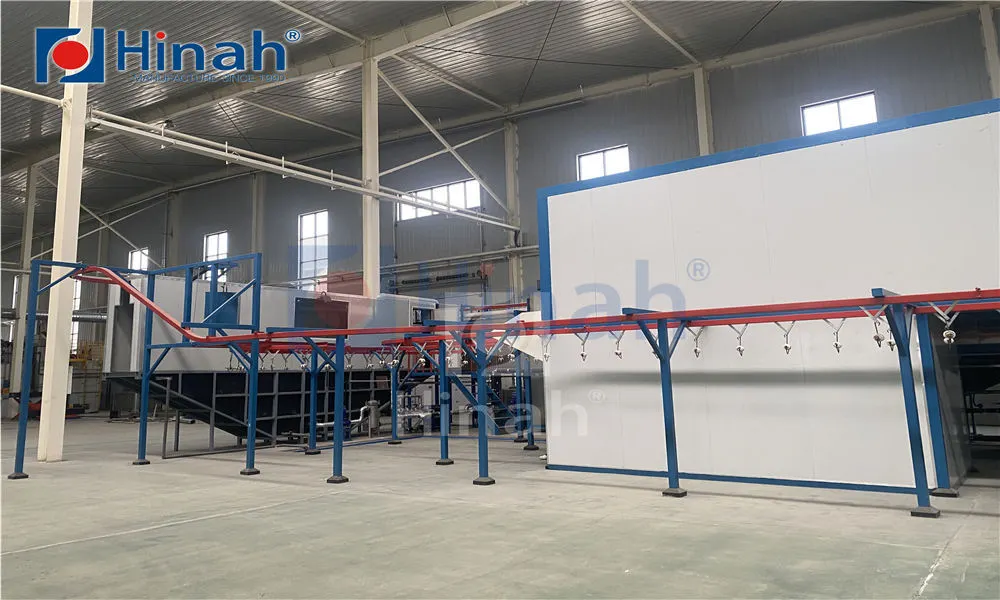
Understanding the physico-chemical reactions inside a Paint curing oven helps engineers specify correct dwell times and temperature ramps. Powder coatings consist of resins, hardeners, pigments, and flow modifiers. During cure, three sequential stages occur:
Melt & Flow (100–130°C): The powder particles soften, coalesce, and spread over the substrate surface.
Wetting & Chemical Cross-linking (140–190°C): Reactive groups (e.g., epoxy-polyester, polyurethane) form irreversible polymer networks. This thermosetting reaction provides mechanical strength and chemical resistance.
Leveling & Finish Development (peak metal temperature): Viscosity reaches optimal flow, producing uniform gloss and texture.
The peak metal temperature (PMT) must be maintained for a defined time—typically 5–12 minutes depending on powder formulation. Convection heating using recirculated hot air remains the most prevalent method because it delivers consistent heat transfer regardless of part geometry. However, direct gas-fired or infrared powder coating systems are increasingly integrated as boost zones to accelerate ramp-up on heavy thermal mass parts.
Designing a robust Paint curing oven requires balancing thermodynamics, mechanical construction, and control precision. Below are the non-negotiable parameters validated by HANNA’s engineering audits across 200+ installations.
Vertical downflow vs. horizontal crossflow: Vertical nozzle banks (slot jets) minimize temperature stratification and are preferred for complex parts.
Recirculation rate of 80–90%: High recirculation reduces fuel consumption while maintaining stable oven pressure. Supply air velocity between 2.5–4.5 m/s prevents powder blow-off.
Computational Fluid Dynamics (CFD) modeling pre-build to identify dead zones. Acceptable variance ≤ ±2°C across 90% of the working cross-section.
Mineral wool density ≥160 kg/m³ with 150–200 mm thickness, achieving external skin temperature < Ambient+15°C.
Thermal break sections at conveyor entries/exits using labyrinth seals or vestibules to prevent cold air infiltration—a primary cause of edge under-cure.
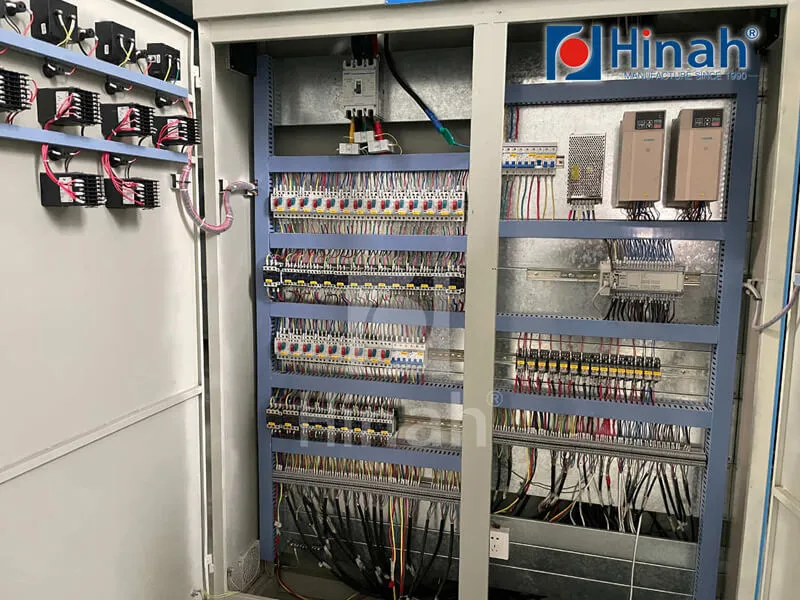
Independent PID controllers per zone (typically 3–6 zones for a 20m oven) with PT100 sensors placed inside air ducts, not directly in product path.
Continuous thermal profiling using traversing thermocouple systems or in-line IR temperature monitoring for real-time adjustment. This closed-loop approach reduces scrap caused by line speed fluctuations.
Energy consumption accounts for nearly 65% of a powder coating line’s operating budget. Advanced Paint curing oven designs integrate multiple recovery strategies without compromising thermal uniformity.
Heat Recovery from Exhaust Gases: Recuperative heat exchangers pre-heat fresh combustion air using stack gases (150–220°C), achieving 12–18% fuel reduction.
Variable Frequency Drives (VFDs) on Circulation Fans: Reduce fan speed during idle periods or light loading. For lines running 16h/day, VFDs cut electrical consumption by 30%.
Flue Gas Recirculation (FGR): Lowers NOx formation while improving temperature consistency. Particularly valuable for gas-fired ovens.
High-Efficiency Burners: Modulating burners with 15:1 turndown ratio maintain optimal excess O₂ (3–5%) and reduce natural gas usage by up to 8% compared to on/off systems.
Practical case: A agricultural machinery coater replaced their aging direct-fired oven with a Paint curing oven designed by HANNA featuring 200mm insulation, VFDs, and crossflow heat exchanger. Annual gas consumption dropped by 195,000 therm, and CO₂ emissions decreased by 42% while improving PMT consistency from ±7°C to ±2.5°C.
Even minor irregularities in the curing stage can ruin entire batches. Below table summarizes frequent defects, root causes, and corrective actions grounded in thermal process engineering.
Under-cure (poor adhesion, low gloss): Caused by insufficient PMT or shortened dwell time. Solution: install multi-point thermocouple track system; verify oven zoning; increase setpoint by 5–10°C or slow conveyor speed (while checking line balance).
Over-cure (brittle coating, discoloration): Excessive time at high temperature degrades polymer chains. Remedy: calibrate PID control loops; check for blocked airflow paths causing local hotspots; use modulated burner control instead of high/low firing.
Orange peel & poor flow: Normally due to too rapid initial heating (surface skinning before powder fully flows). Correct by adding an infrared pre-heating zone at lower intensity or adjusting recirculation air nozzles.
Edge pull-back (Faraday cage effect on cure): Sharp edges cure faster than flat surfaces, leading to coating retraction. Apply gradual heating ramps (3–5°C/s) using zoned profile control.
Preventive maintenance schedules—quarterly airflow velocity checks, biannual insulation integrity surveys, and annual thermocouple calibration—reduce unplanned downtime by 70% according to powder coating plant operational data from HANNA clients.
Modern paint curing ovens are no longer isolated thermal boxes; they form data nodes within smart manufacturing ecosystems. By equipping the curing line with edge computing gateways, the following capabilities become possible:
Predictive thermal mapping: Using historical temperature data and real-time conveyor load, models predict PMT for each unique part SKU and automatically adjust zone setpoints or line speed.
Energy performance dashboards: SCADA integration displays real-time kJ/kg of coated product, benchmarking against baseline to detect degradation of insulation or fan performance.
Remote troubleshooting: Cloud connectivity allows HANNA experts to analyze burner modulation, pressure differentials, and temperature traces from any location, reducing site visit costs by 60%.
Digital traceability: For aerospace or automotive Tiers, cure data (time-temperature profiles) is linked to each batch’s QR code, fulfilling zero-defect documentation requirements.
One European appliance manufacturer integrated their three ovens into a central MES using OPC UA; within six months, rework due to curing defects fell from 4.2% to 1.1% and energy per part dropped by 19%.
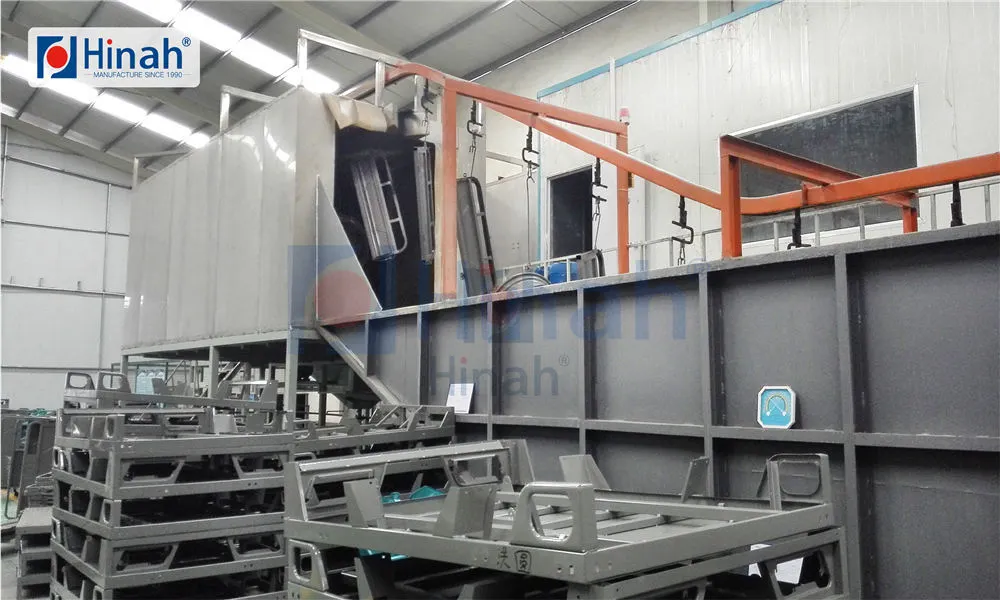
For B2B buyers evaluating suppliers, beyond initial capital cost, consider these performance indicators:
Thermal uniformity guarantee: Reputable suppliers should warrant ≤ ±3°C over 95% of the working envelope, validated by third-party thermal imaging.
Modular expandability: Can the oven be extended later by adding 3m modules? This future-proofs for production growth.
Standardized spare parts inventory: Ask for list of common wear parts (burner nozzles, thermocouples, fan bearings) and their lead times.
Integration track record with your coating chemistry: Different powder chemistries (epoxy, polyester, hybrid) require specific ramp rates. Request a cure simulation report for your actual powder.
Request a detailed energy model that predicts kWh per kilogram output based on your local climate (ambient make-up air temperature). Complete powder coating plant providers like HANNA offer turnkey integration, ensuring the curing oven works harmoniously with washer, dry-off oven, and conveyor controls—a critical advantage over isolated oven retrofits.
Q1: What is the typical temperature uniformity tolerance for an
industrial paint curing oven?
A1: For a well-designed convection
oven, the industry standard (ISO 12676) specifies ±5°C for general applications,
but premium systems achieve ±2.5°C. For high-gloss automotive or clear coats,
±2°C is required. HANNA provides ±2°C
guaranteed uniformity when using zoned control and CFD-optimized ducting.
Q2: Can I convert an existing gas-fired oven to electric infrared to
improve ramp-up?
A2: Yes, hybrid conversion is common. Install
short-wavelength infrared emitters in the first 2–3 meters of the oven entrance.
This raises heavy parts quickly without overshooting thin sections. However,
ensure electrical infrastructure supports 400–600 kW addition. Infrared-assisted curing
plants reduce overall oven length by 20–30%.
Q3: How often should thermal profiling be performed on a paint curing
oven?
A3: Full 20-point traversing temperature profiling must be
done quarterly for high-volume lines and biannually for low-mix operations.
Additionally, perform a spot-check whenever changing powder supplier or after
any maintenance that affects airflow (e.g., filter replacement, fan belt
change).
Q4: What are the signs that my curing oven insulation has
degraded?
A4: Elevated external surface temperature (above 45°C when
ambient is 25°C), increased energy consumption without change in production
volume, and water condensation inside the oven after shutdown. Infrared
thermography of outer panels will reveal cold spots caused by wet or settled
insulation.
Q5: How does line speed variation affect curing results, and can the
oven auto-compensate?
A5: Speed changes directly alter dwell time.
Advanced ovens with integrated PLC and conveyor feedback automatically scale
zone setpoints to maintain equivalent cure index. If your line experiences
frequent speed changes, specify a “mass flow compensation” algorithm – a feature
HANNA integrates as standard on Industry 4.0
ready systems.
Selecting or upgrading a Paint curing oven demands more than quoting comparisons—it requires deep thermal process knowledge. HANNA has delivered over 450 powder coating plants worldwide, each curing oven designed using empirical data, CFD simulation, and real-world commissioning experience. Whether you need a compact batch oven for job-shop flexibility or a 40m long continuous conveyorized system for high-output automotive lines, our engineers provide end-to-end support: from energy modeling and mechanical layout to commissioning and remote performance auditing.
Do not let inconsistent curing undermine your coating quality or profit margins. Contact our technical sales team today to request a free thermal process consultation, quotation, or virtual plant walkthrough.
Send your inquiry now: https://www.autocoatinglines.com/ – Our specialists typically respond within 6 business hours.