
Establishing a new powder coating facility is a significant project that requires careful planning and execution. A successful powder coating plant setup involves more than just buying equipment. It integrates process engineering, facility design, and operational planning to create an efficient, safe, and profitable finishing operation. This guide provides a structured approach, from initial concept to production start-up, highlighting the role of experienced partners like HANNA.
Before any equipment is ordered, a thorough pre-planning phase is essential. This stage defines the project's scope, goals, and constraints.
Key activities include:
Defining your target market and typical parts to be coated.
Setting clear capacity and output goals (e.g., square meters per hour).
Analyzing the types of substrates (metal, alloy) and required finish quality.
Establishing a preliminary budget for capital expenditure and operating costs.
This groundwork informs every subsequent decision in the powder coating plant setup.
A feasibility study examines the technical and economic viability of the project. It helps avoid costly mistakes.
The study should cover:
Local market demand and competition analysis.
Regulatory requirements for environmental permits and safety.
Availability of skilled labor or training needs.
Return on investment (ROI) projections.
The core setup process follows a logical sequence. Each step builds upon the previous one to ensure a coherent system.
Map out the entire coating process from raw part intake to finished goods. This determines the plant's logical flow.
A standard process flow includes:
Incoming Inspection & Racking
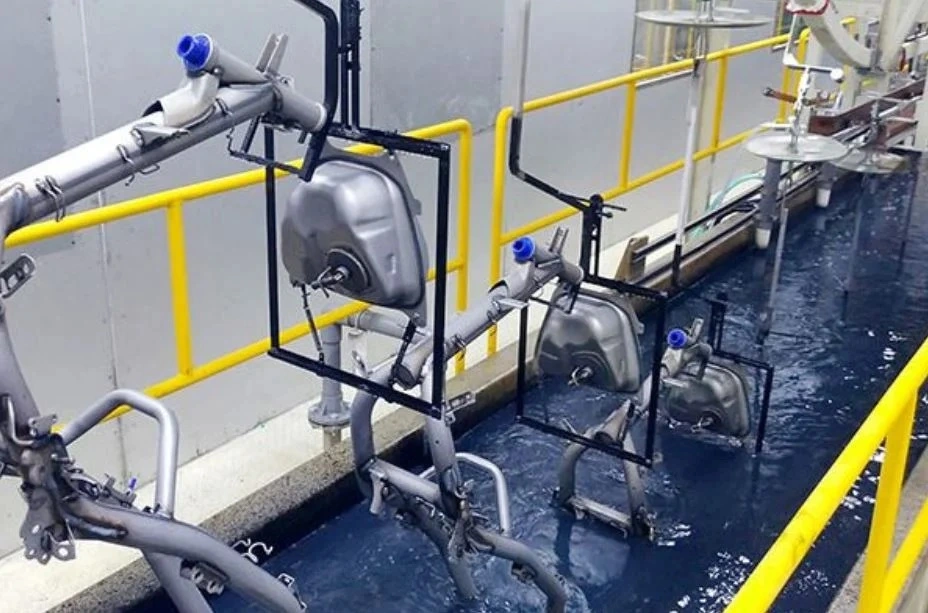
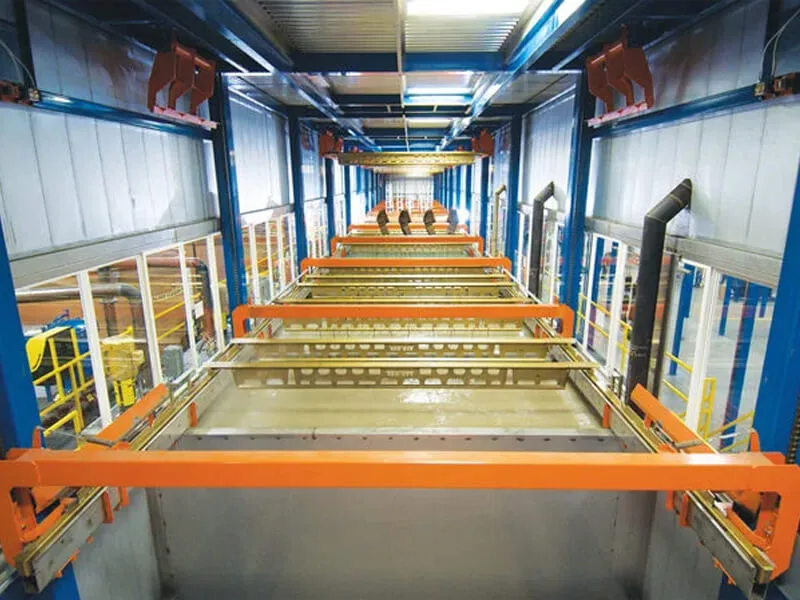
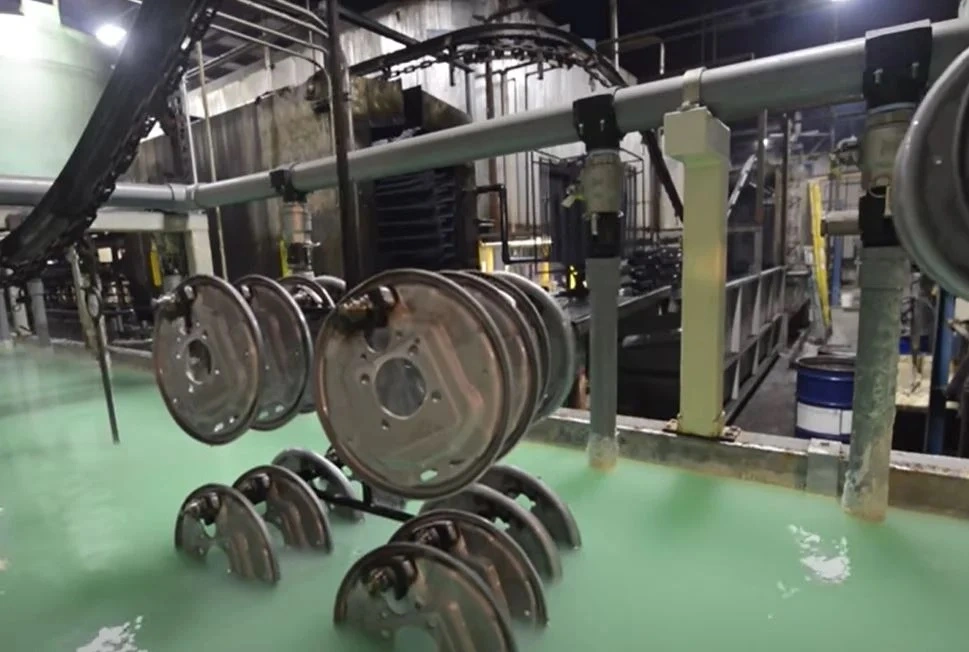
Pre-treatment (Cleaning, Rinsing, Phosphating)
Drying
Powder Application
Curing
Cooling & Unloading
Visualizing this flow is the first step in designing an efficient layout for your powder coating plant setup.
Choosing the right equipment is crucial for performance and longevity. Each component must match your production requirements.
Major equipment includes:
Pre-treatment System: Spray washer or immersion tanks, sized for your largest parts.
Powder Application Booth: With recovery system (cyclone or cartridge), guns (manual/automatic).
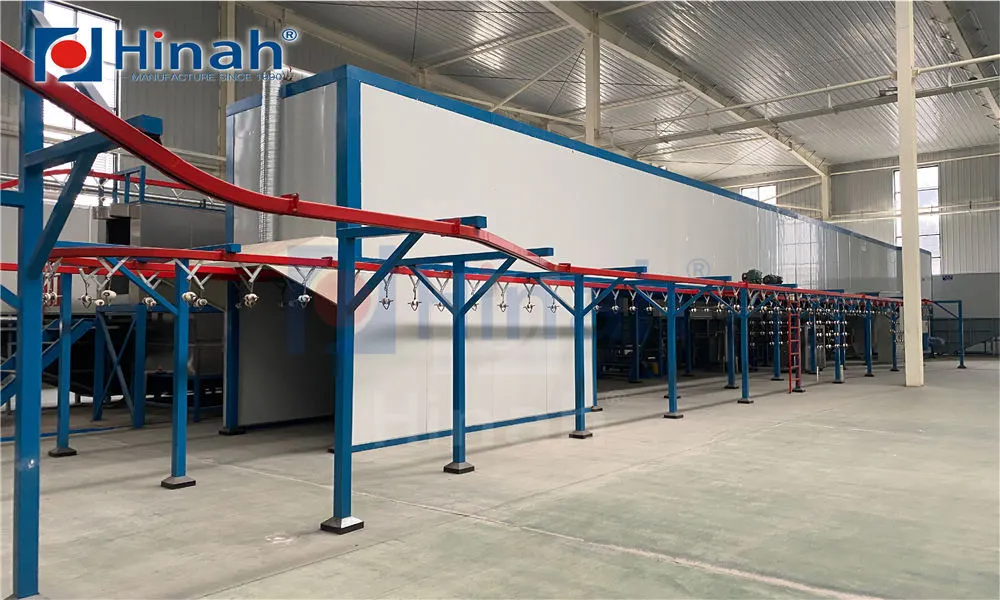
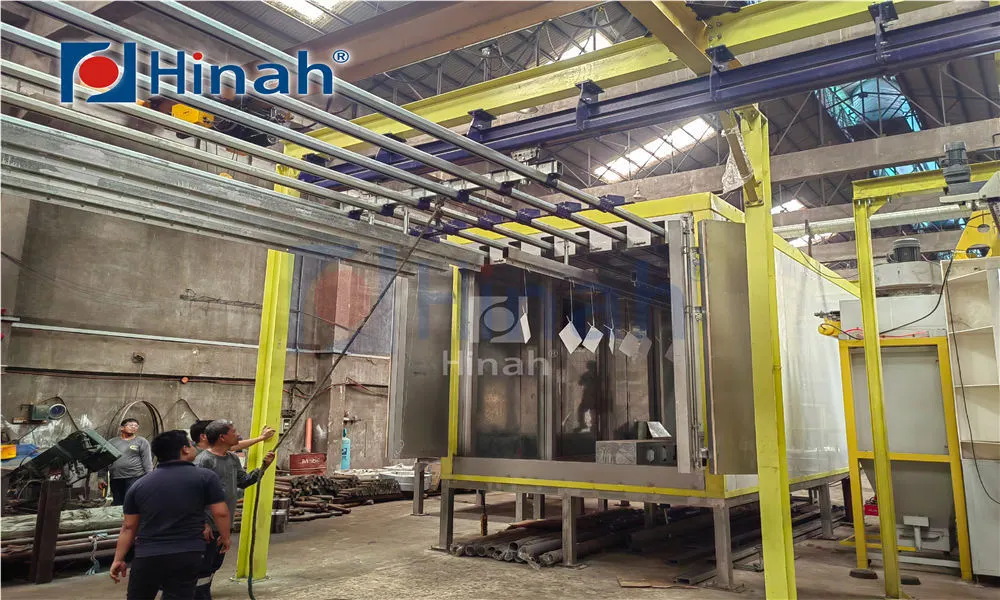
Curing Oven: Electric or gas-fired, convection or infrared, with precise temperature control.
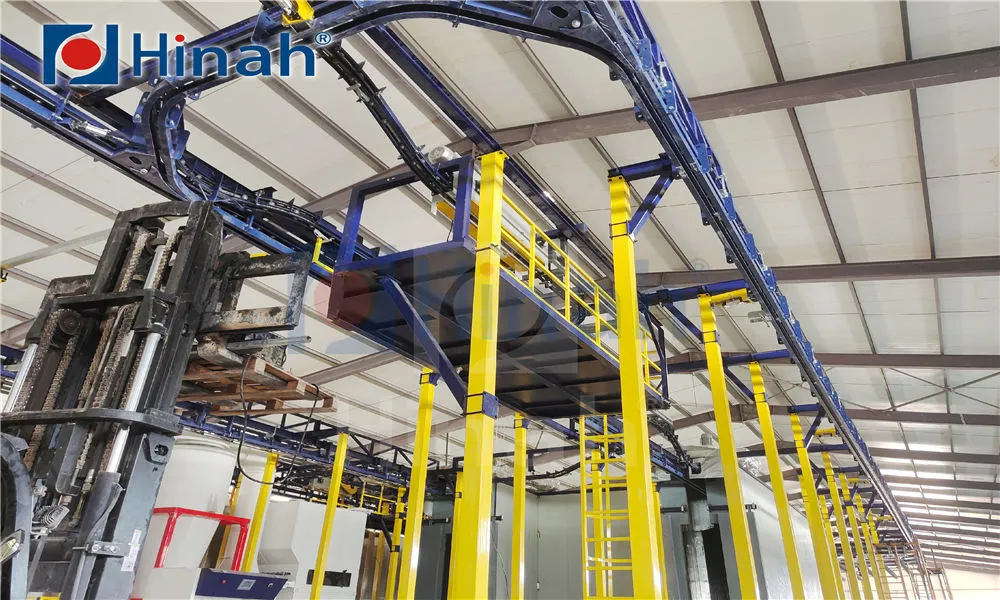
Conveyor System: Overhead chain, monorail, or floor conveyor to move parts through the line.
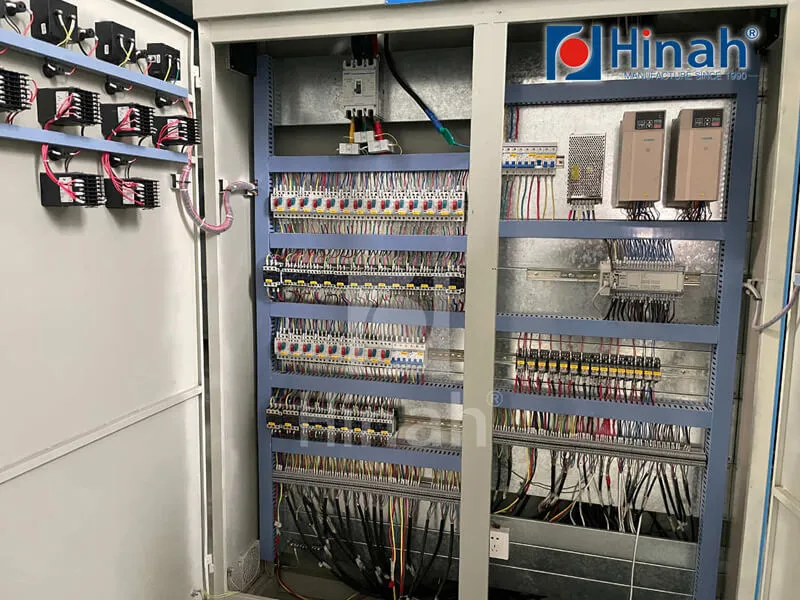
Control System: PLC-based controls for automation and monitoring.
Working with a trusted supplier like HANNA ensures you get integrated, compatible equipment.
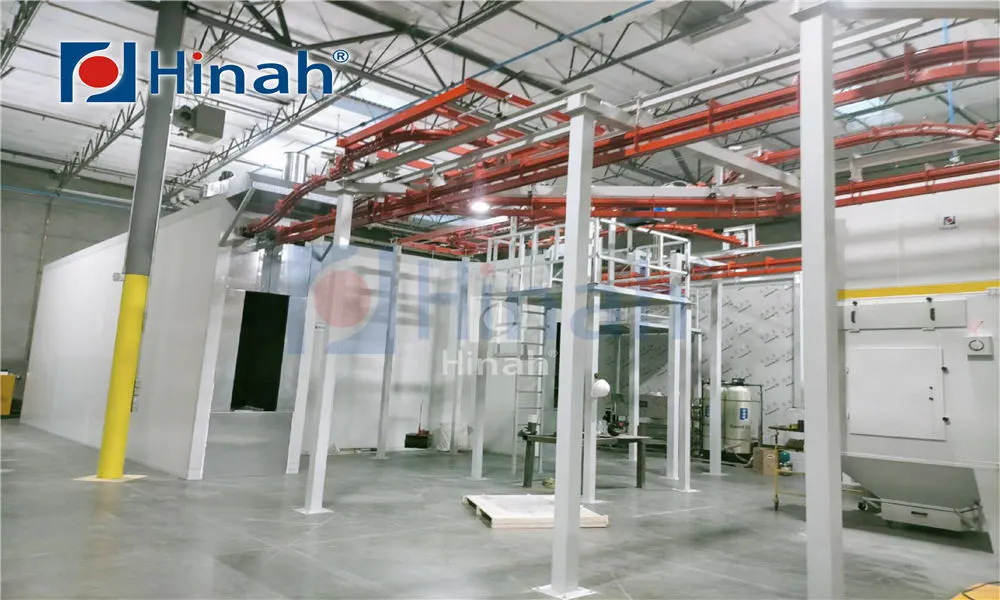
The physical plant layout must support the process flow efficiently. Space, utilities, and workflow are key considerations.
Layout planning involves:
Creating a detailed floor plan with accurate equipment footprints.
Ensuring adequate space for material handling, maintenance, and operator access.
Planning for utility drops (electricity, gas, compressed air, water, exhaust vents).
Designing proper ventilation and dust collection systems.
A poor layout creates bottlenecks and safety hazards, undermining the entire powder coating plant setup.
Beyond the core equipment, several other factors determine long-term success and compliance.
Powder coating is an environmentally friendly process, but the plant must still meet regulations.
Critical compliance areas are:
Wastewater treatment and discharge from the pre-treatment stage.
Air emissions and dust control from the powder booth.
Safe handling and storage of chemicals and powders.
Installation of proper fire suppression systems, especially for ovens.
Meeting all local electrical and building codes.
Operating costs are heavily influenced by energy consumption. An efficient setup reduces these costs significantly.
Efficiency features to consider:
High-efficiency burners and heating elements for ovens.
Excellent thermal insulation on ovens and dryers.
Heat recovery systems to capture waste heat from the curing oven.
Energy-efficient motors and pumps throughout the line.
Water recycling and filtration in the pre-treatment system.
Investing in efficiency during the initial powder coating plant setup pays back quickly.
Even automated lines require skilled personnel to operate, maintain, and manage quality.
Plan for:
Hiring or training line operators and technicians.
Establishing quality control procedures and training inspectors.
Creating standard operating procedures (SOPs) for each stage.
Ensuring maintenance staff are trained on the specific equipment installed.
A realistic budget covers all direct and indirect costs associated with the project.
This is the initial investment in physical assets and services.
Major CAPEX items include:
Coating line equipment (pre-treatment, booth, oven, conveyor).
Facility modifications or construction (concrete, steelwork, ventilation).
Utility connections and upgrades (high-power electrical, gas lines).
Professional fees for engineering, design, and installation supervision.
These are the ongoing costs of running the plant.
Primary OPEX factors are:
Energy (electricity, natural gas).
Powder coatings and pre-treatment chemicals.
Labor and management salaries.
Maintenance parts and consumables (filters, nozzles).
Waste disposal and compliance costs.
Accurate OPEX forecasting is vital for pricing your coating services competitively.
The final phase involves bringing the plant to life and verifying its performance.
Equipment should be installed by qualified technicians, often provided by the supplier.
This process includes:
Uncrating, positioning, and assembling major components.
Connecting all utilities (power, water, air, gas).
Installing ductwork, exhaust stacks, and safety systems.
Commissioning tests and adjusts each subsystem and the integrated whole.
Key steps are:
Running the conveyor empty to check alignment and speed.
Testing oven temperature profiles and burner sequences.
Calibrating spray guns and powder feed systems.
Verifying the performance of the powder recovery system.
Testing all safety interlocks and emergency stops.
Proper commissioning is critical for a smooth powder coating plant setup and reliable operation.
The final step is running production parts and training your team.
Activities include:
Running test batches of actual parts to fine-tune parameters.
Training operators on day-to-day running, color changes, and basic troubleshooting.
Handing over all documentation, including manuals, wiring diagrams, and SOPs.
A supplier like HANNA typically provides comprehensive on-site training and support during this phase.
A successful powder coating plant setup is a multifaceted project demanding attention to detail in planning, equipment selection, and implementation. By following a structured approach—from feasibility study to commissioning—you can establish an operation that is efficient, compliant, and capable of producing high-quality finishes. Partnering with an experienced equipment provider is invaluable, as they bring technical expertise and integrated solutions to the table. For a reliable and optimized powder coating plant setup, consider engaging with specialists like HANNA to guide your project from concept to production.
Q1: What is the minimum space required for a small-scale powder coating plant?
A1: For a basic batch operation with a cabinet spray booth and a separate curing oven, you might need a clean, well-ventilated area of approximately 150-200 square meters. A continuous line requires significantly more length, often needing 400+ square meters depending on conveyor layout and process stages.
Q2: How long does the entire setup process typically take, from planning to production?
A2: The timeline varies widely. For a turnkey project of moderate complexity, expect 6 to 12 months. This includes 1-2 months for planning/design, 3-5 months for equipment manufacturing, and 1-3 months for site preparation, installation, and commissioning. Larger custom lines take longer.
Q3: What are the most common mistakes to avoid during setup?
A3: Common mistakes include underestimating utility requirements (especially electrical power), poor facility layout creating workflow bottlenecks, selecting undersized equipment for future growth, and neglecting to budget for proper ventilation, waste management, and operator training.
Q4: Can I automate my plant later if I start with a manual setup?
A4: Yes, but it can be challenging and costly. It's easier to design for future automation from the start. This means installing a conveyor system robust enough for future automatic guns, leaving space for robotics, and ensuring control systems are scalable. Discuss future plans with your supplier early, like HANNA, during the initial powder coating plant setup.
Q5: What certifications should I look for in the equipment?
A5: Key certifications depend on your location. Look for electrical equipment certified to standards like CE (Europe) or UL/CSA (North America). Ovens should be built to comply with industrial furnace safety standards (e.g., NFPA 86). Equipment from reputable international suppliers typically meets these essential certifications.