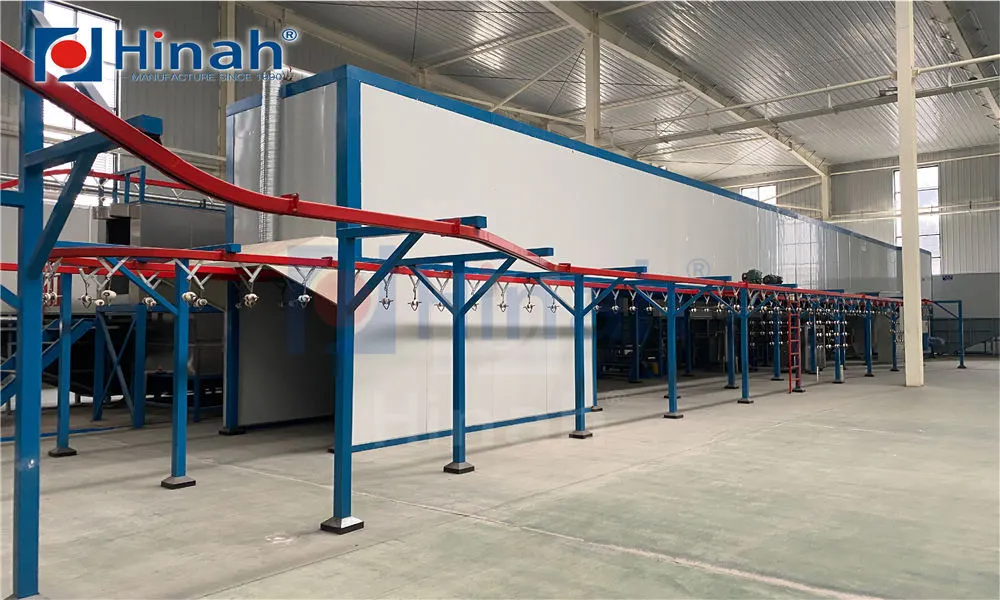
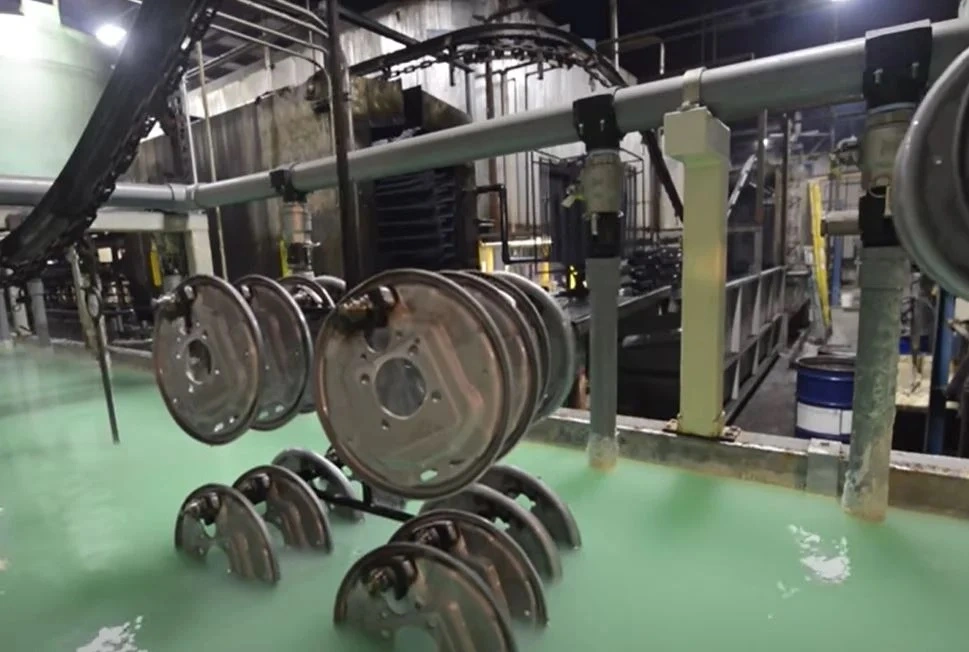
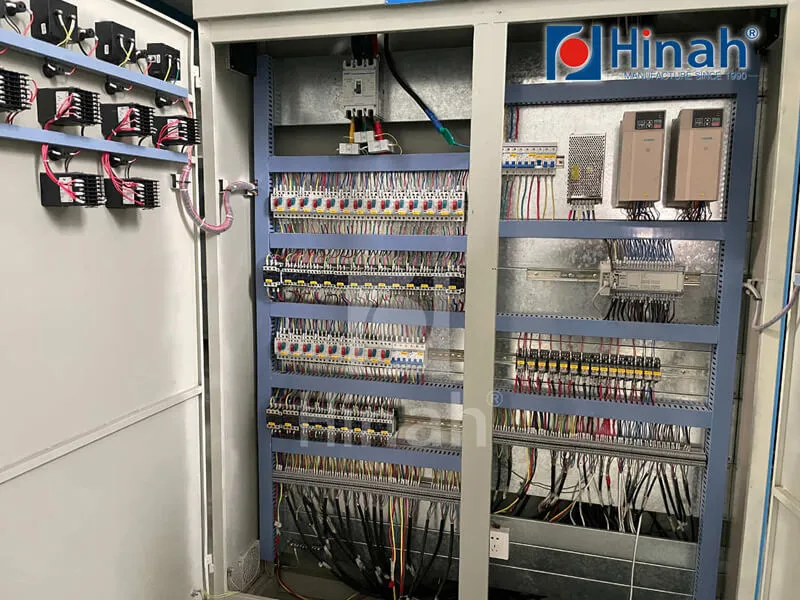
Selecting industrial paint drying ovens involves more than comparing maximum temperature ratings. Liquid paint drying requires controlled solvent evaporation, cross-linking for two-part systems, and uniform heat distribution to prevent defects like solvent popping, sags, or tacky surfaces. Based on audits of over 250 industrial finishing lines, this guide examines six engineering factors that determine drying efficiency, energy consumption, and first-pass yield. HANNA integrates these principles into modular paint drying ovens serving automotive, wood finishing, and heavy equipment sectors, achieving documented reductions in drying time by 22% on average.
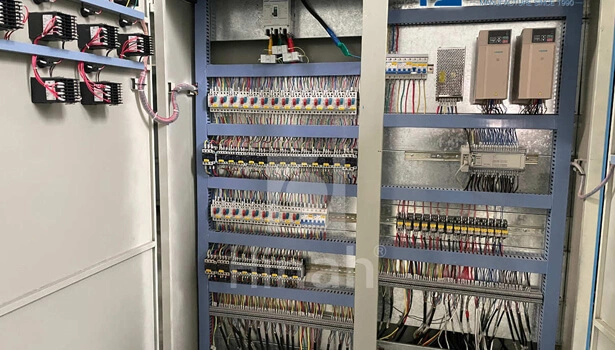
While powder curing relies on thermosetting cross-linking, paint drying ovens for solvent-based or waterborne paints must first evaporate solvents (40–80°C range) then, for two-component paints, promote chemical curing at higher temperatures (80–150°C). The key challenges:
Solvent flash-off: Too rapid heating causes solvent entrapment, leading to blisters or pinholes.
Waterborne paint drying: Requires controlled humidity and air velocity to avoid skinning over trapped moisture.
Airflow direction: Must sweep volatiles away from the part surface without disturbing the wet film.
A dedicated paint drying oven therefore includes programmable ramp-soak profiles, explosion-proof components for solvent vapor, and airflow management distinct from powder curing ovens. HANNA offers dual-mode ovens that handle both powder cure and liquid paint drying with switchable controls.
For solvent-based paints, the first zone of a paint drying oven must maintain 40–60°C for 5–10 minutes to allow solvent escape. A second zone then elevates to 80–150°C for cross-linking. Without staged heating, solvents vaporize too quickly, rupturing the film. Specify multi-zone PID controllers with independent burners. Data from automotive primer lines show that ramp rates above 8°C/min increase solvent popping defects by 300%. Ideal ramp: 3–5°C/min. HANNA's industrial drying ovens include programmable recipes for different paint chemistries (epoxy, polyurethane, acrylic).
Unlike powder ovens where high turbulence aids heat transfer, paint drying ovens require controlled airflow (0.5–1.5 m/s across the part) to avoid wet paint disturbance. Two common patterns:
Unidirectional vertical flow – Air moves from ceiling to floor, sweeping volatiles downward to exhaust vents. Best for flat parts.
Horizontal cross-flow – Air moves side-to-side; suitable for hanging parts with complex geometries.
Recirculation rates for paint ovens are typically 15–30 air changes per hour (lower than powder ovens). Excessive velocity (>2 m/s) causes paint ripples or "fat edges". Install adjustable louvers and anemometer ports for validation. Air distribution modeling using CFD prevents dead zones where solvent accumulates.
Solvent-based paints release flammable vapors. Industrial paint drying ovens must comply with NFPA 86 (ovens and furnaces) and local air quality rules. Mandatory features:
Explosion relief panels – 1 ft² per 100 ft³ of oven volume, hinged outward.
Purge timer – pre-ignition ventilation to remove flammable mixtures (minimum 4 air changes).
Flame monitoring – UV scanners that shut off gas within 4 seconds of flame loss.
Solvent vapor concentration monitoring – continuous LEL (lower explosive limit) sensors with alarms at 25% LEL.
For waterborne paints, explosion risk is minimal, but VOC emissions still require afterburners or carbon adsorbers in many jurisdictions. HANNA's HANNA ovens integrate catalytic oxidizers that destroy 98% of VOCs while recovering heat for the drying process.
Paint drying cycles often run continuously for 16 hours per day. Poor insulation directly raises gas bills. Specify mineral wool panels (100 mm thickness, density 128 kg/m³) with tongue-and-groove joints to eliminate thermal bridging. Measured skin temperature should be ambient +15°C maximum. Heat recovery systems – such as exhaust-to-fresh-air heat exchangers – reclaim 50–60% of waste heat. A case study: a furniture manufacturer replaced 50 mm insulated ovens with 100 mm panels and saved $18,000 annually in natural gas. Payback period: 14 months.
Waterborne paints constitute 35% of industrial coatings and growing. Their drying mechanism differs fundamentally: water must evaporate before film coalescence occurs. Optimal conditions: 20–25°C, 40–55% relative humidity. Too dry (<30% RH) causes surface skinning, trapping water underneath. Too humid (>65% RH) slows evaporation drastically. A paint drying oven for waterborne paints requires:
Dehumidification coil (refrigeration or desiccant) to remove moisture from recirculated air.
Humidistat linked to makeup air damper.
Lower temperature range (50–80°C) to avoid boiling water.
Without humidity control, waterborne paint lines experience "micro-blistering" – a defect that appears weeks after application. HANNA's climate-controlled drying ovens maintain ±5% RH accuracy.
Paint residue builds up on oven interior surfaces over time, creating fire hazards and reducing heat transfer. Design features that lower maintenance burden:
Smooth interior liners (no ledges or horizontal surfaces) – 2B finish stainless steel or PTFE coating.
Removable floor plates for cleaning access.
External fan bearings with cooling fins – allows lubrication without entering oven.
Quick-release thermocouple ports.
Recommended cleaning frequency: every 500 operating hours for solvent-based paints; every 1000 hours for waterborne. Use non-flammable, low-VOC solvents. Paint drying ovens with self-cleaning cycles (pyrolysis at 400°C) are available but add 30% to initial cost.
Real-world issues encountered with paint drying ovens and engineering fixes:
Pain point: Solvent popping on high-build primers – Solution: Extend flash-off zone to 10 minutes at 50°C, reduce initial heat ramp to 2°C/min. Add infrared preheat to gently warm substrate before convection.
Pain point: Tacky finish after full cycle – Solution: Check actual part temperature (not oven setpoint). Install through-wall thermocouples. For two-component paints, verify mix ratio and catalyst age.
Pain point: High gas consumption during idle periods – Solution: Install automated standby mode that lowers setpoint to 60°C (maintains minimal heat) and reduces fan speed to 30%. Saves 40% energy during breaks.
Pain point: Uneven drying on racked parts – Solution: Rotate part orientation or add recirculation nozzles at multiple heights. Use CFD to identify shadow zones.
HANNA provides on-site thermal mapping and airflow velocity surveys to diagnose and rectify these issues.
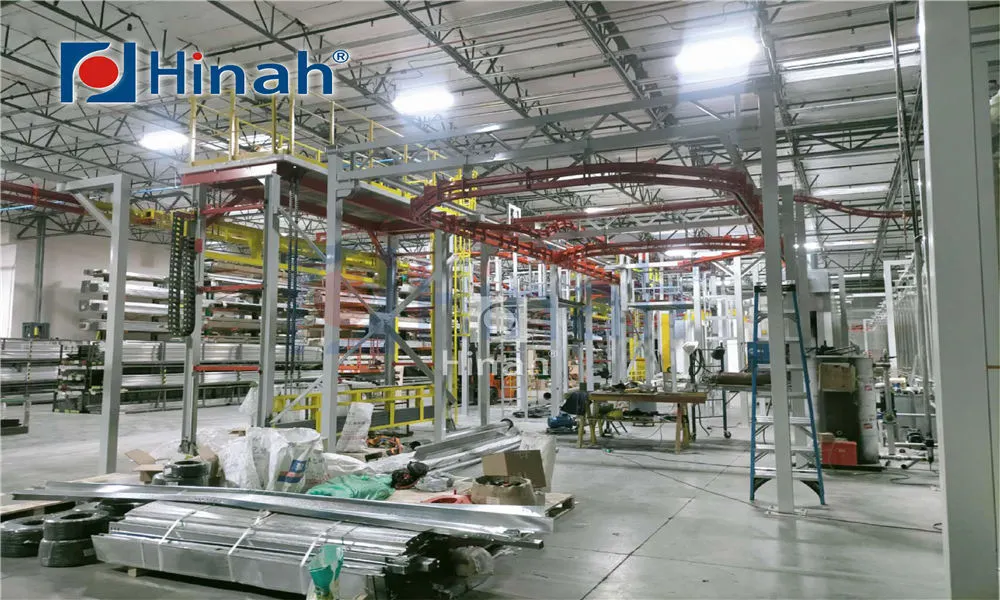
Automotive refinish and OEM: Paint drying ovens for car bodies require 20–30 m length, 3-zone heating (flash, bake, hold), and integrated exhaust afterburners to meet EPA standards. Cycle time: 30–45 minutes.
Wood finishing: Low-temperature ovens (40–70°C) to avoid wood cracking. UV-cured clearcoats are replacing thermal drying, but waterborne stains still need convection ovens with humidity control.
Heavy equipment (tractors, construction): Large-batch ovens with overhead doors and floor-mounted tracks. Parts can weigh 5 tons; uniform heating requires high-velocity nozzles directed at lower sections to counteract thermal stratification.
For each application, custom oven configurations are available from HANNA, including walk-in designs for oversized components.
Q1: What is the difference between a paint drying oven and a powder
curing oven?
A1: Paint drying ovens operate at lower temperatures
(40–150°C) and require controlled airflow to avoid disturbing wet paint. They
must manage solvent evaporation and often include explosion-proof features.
Powder curing ovens run at 180–200°C, use high turbulence for heat transfer, and
do not have solvent explosion risks. Some HANNA ovens can switch between modes
with different control parameters.
Q2: How do I calculate the required oven length for a continuous
paint drying line?
A2: Length = conveyor speed (m/min) × total
drying time (min). Drying time is determined by part thickness and paint
chemistry. Example: 2 m/min conveyor, 20 minute drying cycle = 40 m oven. Add
10% for entrance/exit zones. Use thermocouple profiling to validate actual part
temperature vs. oven air temperature.
Q3: Can I use the same oven for both solvent-based and waterborne
paints?
A3: Yes, but with precautions. Solvent-based requires
explosion relief and LEL monitoring; waterborne needs humidity control. A hybrid
oven must include both systems and a control panel that enforces the correct
safety interlocks per mode. HANNA offers dual-certified paint
drying ovens with switchable ventilation and humidity modules.
Q4: What is the typical energy consumption per square foot of part
surface in a paint drying oven?
A4: For a well-insulated gas-fired
oven: 80–120 BTU per square foot per hour of operation. Electric ovens consume
25–35 Wh per square foot. Actual values depend on part density and conveyor
loading. Request an energy audit from HANNA to benchmark your line.
Q5: How often should I replace filters and seals in a paint drying
oven?
A5: Supply air filters (MERV 8–13): replace every 3 months or
when pressure drop exceeds 250 Pa. Door seals (silicone rubber): inspect
quarterly; replace every 2–3 years if hardening or cracking. Exhaust duct seals:
check annually. Keep a log of replacements to predict maintenance cycles.
Q6: What safety certifications should I look for when purchasing a
paint drying oven?
A6: Look for NFPA 86 (ovens and furnaces), UL 499
(electric heating appliances), FM Approval for gas trains, and CE mark for
European markets. For solvent lines, ATEX or Class I, Division 2 rating is
required. HANNA ovens carry third-party certification from Intertek or TÜV.
Q7: How do I reduce solvent emissions from my paint drying oven
without buying an afterburner?
A7: First, optimize airflow – reduce
total exhaust volume to the minimum required for LEL control (typically 25% of
recirculated air). Second, install a concentrator wheel (zeolite rotor) that
adsorbs VOCs and desorbs them into a small sidestream for thermal oxidation.
This cuts natural gas use by 70% compared to a full-flow afterburner. Emission
control retrofits are available from HANNA.
Selecting the right paint drying ovens requires balancing paint chemistry, part geometry, production volume, and emission regulations. HANNA provides free process consultations, thermal modeling, and turnkey installation. Send your paint specifications (solvent type, dry film thickness, required cycle time) and part drawings to receive a detailed proposal with layout, energy estimates, and compliance documentation. All inquiries receive a response within 48 hours.
Request your inquiry now → Visit https://www.autocoatinglines.com/ or emailneil@autocoatinglines.com. Include your daily output target, available floor space, and existing utility connections (gas/electric).