

In industrial finishing operations, the performance of paint drying ovens directly dictates throughput, energy expenditure, and the long-term durability of the coated surface. While often viewed as a simple "hot box" by those outside the industry, the engineering behind a high-performance curing system involves a complex interplay of psychrometrics, computational fluid dynamics (CFD), and metallurgical considerations. Suboptimal temperature uniformity or incorrect airflow velocity can result in solvent popping, orange peel texture, or incomplete cross-linking in powder coatings — defects that necessitate costly rework and erode profit margins.
This analysis dissects the technical architecture of modern paint drying ovens, moving beyond basic temperature setpoints to examine the nuances of delta T control, exhaust vapor management, and the integration of Industry 4.0 monitoring protocols. For manufacturing engineers and plant managers overseeing high-volume coating lines, understanding these variables is paramount to achieving a Class A finish while meeting stringent environmental compliance targets.
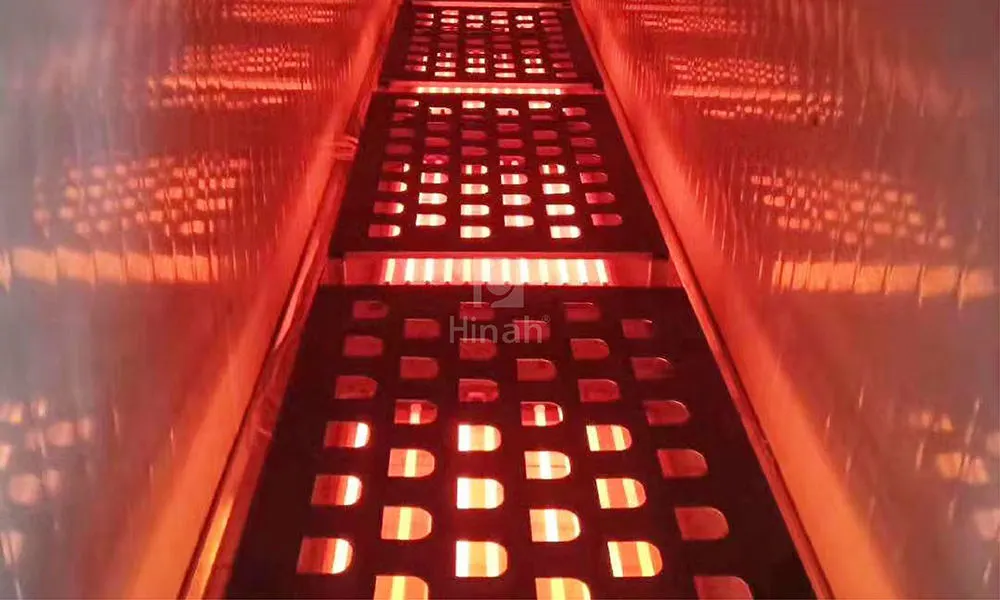
1. The Thermodynamic Profile: Convection vs. Infrared Hybridization in Paint Drying Ovens
The primary mechanism in most paint drying ovens remains forced convection. However, the efficiency of heat transfer is not merely a function of air temperature but of the heat transfer coefficient. Traditional convection ovens rely on the boundary layer disruption at the substrate surface. Insufficient air velocity (measured in feet per minute or meters per second) creates a laminar insulating barrier of cooler air directly against the paint film, slowing the evaporation of solvents or the melt-phase of powder.
Increasingly, advanced systems incorporate short-wave or medium-wave infrared (IR) emitters in the bring-up zone. This hybridization addresses a common bottleneck: the heat-up rate of high-thermal-mass steel components. By pre-gelling the powder or flashing off waterborne solvents rapidly with IR radiation before the part enters the main convection hold zone, line speed can be accelerated by up to 22-30% without expanding the physical footprint of the powder coating plant infrastructure. HANNA has observed in field applications that strategic IR boost zones reduce overall energy consumption per square foot of coated surface by minimizing heat loss from the oven shell during extended dwell times.
2. Airflow Uniformity and The ±5°F Mandate
Perhaps no metric is more critical — or more frequently violated in aging equipment — than temperature uniformity across the workload. Industry standards for high-specification paint drying ovens (as outlined in AMS 2750 for aerospace or CQI-12 for automotive coating) typically mandate a survey variation of no more than ±5°F to ±10°F across the effective work zone.
Achieving this requires meticulous plenum design. The following elements define a superior airflow strategy:
Supply Duct Geometry: Tapered or stepped supply ducts that compensate for static pressure loss to ensure even nozzle discharge velocity across the entire length of the oven.
Return Air Placement: Strategic floor-level or sidewall returns that create a cross-flow or combination flow pattern, preventing hot air stratification at the ceiling that leads to "cold feet" on parts.
Part-Specific Nozzle Tuning: Adjustable air nozzles or oscillating louvers to direct high-velocity impingement air into recessed cavities of complex weldments, preventing uncured powder in shadow areas.
Without this level of airflow engineering, operators may attempt to compensate for cold spots by raising the setpoint, which overheats the rest of the component, causing discoloration and embrittlement of the organic coating.
3. Curing Kinetics and Exhaust VOC Management
The drying phase of liquid coatings is distinct from the cross-linking cure of powder. In liquid paint drying ovens, the initial "flash-off" zone is a high-risk area for defects. The oven must maintain a precise balance of fresh air intake to keep the Lower Explosive Limit (LEL) of solvent vapors safely below 25% — a mandate enforced by NFPA 86 standards.
Modern ovens utilize Variable Frequency Drives (VFDs) on exhaust fans linked to real-time LEL sensors. As the solvent load from the entering parts increases, the exhaust rate automatically ramps up to evacuate volatiles without pulling excess heated air out of the building. This dynamic balancing act prevents the dreaded "solvent pop"—microscopic bubbles bursting through the film surface as trapped solvents boil during the high-heat hold phase. Furthermore, integrated thermal oxidizers or regenerative thermal oxidizers (RTOs) are becoming standard downstream equipment to abate these VOCs before atmospheric release, ensuring the powder coating plant operation aligns with EPA NESHAP regulations.
4. Energy Recovery Systems: The Hidden Profit Center
Industrial paint drying ovens are significant consumers of natural gas or electricity. With rising utility costs and carbon accounting pressures (Scope 1 and Scope 2 emissions), the design of the oven shell and heat recovery system has a direct impact on operational expenditure (OPEX).
Key energy mitigation strategies include:
Air Seals and Vestibules: High-velocity air curtain knives at entrance and exit openings to prevent thermal spillage, which can account for up to 15% of total heat loss.
Insulation Density: The use of 4-inch to 6-inch thick, high-density mineral wool board (minimum 8 lb/ft³ density) to minimize skin temperature rise and conductive losses.
Waste Heat Recovery: Routing hot exhaust air (typically 350°F - 450°F) through an air-to-air heat exchanger to preheat incoming fresh makeup air or to provide building heat during winter months. This can yield a 10-20% reduction in burner firing rates.
HANNA engineering assessments frequently identify that retrofitting older ovens with advanced burner management systems and modulating gas trains delivers a payback period of under 18 months purely on fuel savings.
5. Material Handling Integration: Conveyor Design Within the Oven Envelope
The interface between the paint drying ovens and the material handling system (I-beam monorail, enclosed track, or power and free conveyor) is a source of significant maintenance headaches if not designed correctly.
Consider the following engineering challenges:
Chain Lubrication Degradation: Standard conveyor lubricants carbonize at curing temperatures (often 375°F - 450°F), creating abrasive grit that accelerates chain wear and drips onto finished parts. Solutions include high-temperature synthetic lubricants or inverted power-and-free systems where the chain runs outside the heated zone.
Thermal Expansion of Rails: The oven structure and the internal rail must accommodate linear expansion. Failure to install proper slip joints results in rail buckling, causing carriers to bind or derail mid-cure, resulting in catastrophic scrap events.
Heat Sink Effect of Carriers: The mass of the conveyor trolley and hook absorbs heat, slowing the cure of the part hanging from it. Curing recipes must account for the thermal lag of the fixture.
6. Advanced Control Logic and Data Acquisition
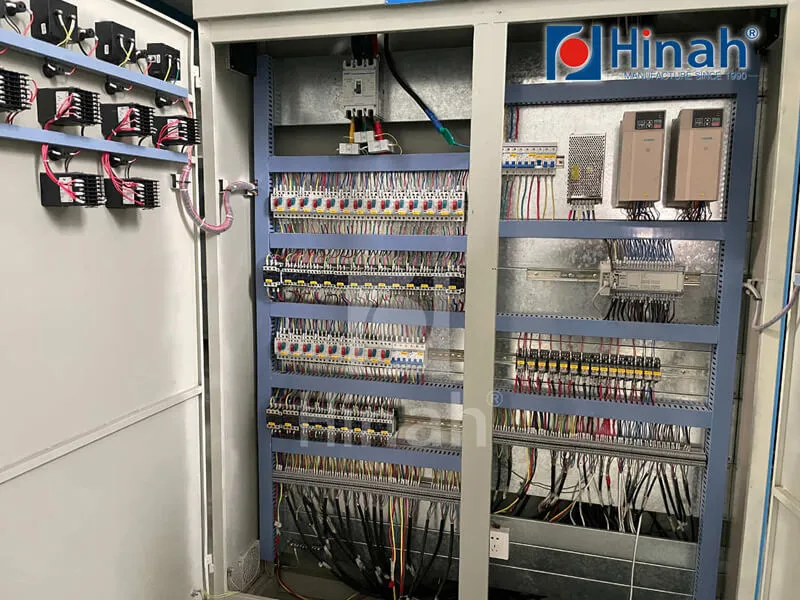
Legacy paint drying ovens operated on simple on/off thermostats, leading to wide temperature swings and wasted energy. Contemporary systems rely on PID loop control with auto-tuning capabilities to maintain a rock-steady process variable within 1°F of setpoint.
Beyond temperature, the integration of IIoT (Industrial Internet of Things) sensors provides a window into oven health. Predictive maintenance is enabled by monitoring:
Burner Flame Signal Strength: A degrading signal indicates dirty electrodes or UV scanner fouling before a lockout occurs.
Exhaust Duct Static Pressure: A rising static pressure trend signals filter loading or ductwork fouling with condensed resinous deposits.
Part Temperature Profiling: Using data loggers with thermocouples attached to the part surface (not just air probes) to validate that the substrate actually reached the required Peak Metal Temperature (PMT) for the specified dwell time.
This data is essential for compliance with OEM paint warranties and quality standards like IATF 16949. A powder coating plant manager cannot defend a warranty claim with "the oven dial said 400°F" if the data logger shows the part only achieved 340°F for 3 minutes.
7. Maintenance Accessibility and Shell Longevity
The operational lifespan of paint drying ovens in a heavy industrial environment should exceed 20 years. Premature failure is almost always traced to corrosion under insulation (CUI) or lack of access for cleaning.
Design considerations for durability include:
Interior Panel Material: While aluminized steel is cost-effective for dry heat, environments with acidic off-gassing (common in some primer chemistries) require Type 304 or 316 stainless steel interior liners to prevent red rust contamination on white goods.
Floor Design: The oven floor is a collection point for dirt and overspray tracking. Pit-mounted ovens allow for easier clean-out, while flush-floor designs require robust, sealed expansion joints to prevent water ingress during wash-downs.
Burner Box Placement: Side-mounted burner boxes with easy-access panel doors prevent technicians from having to climb onto the hot roof for service, reducing safety risks and downtime.
HANNA emphasizes that proactive maintenance scheduling, including bi-annual thermal imaging surveys of the oven envelope, prevents small air leaks from becoming major sources of heat loss and process instability.
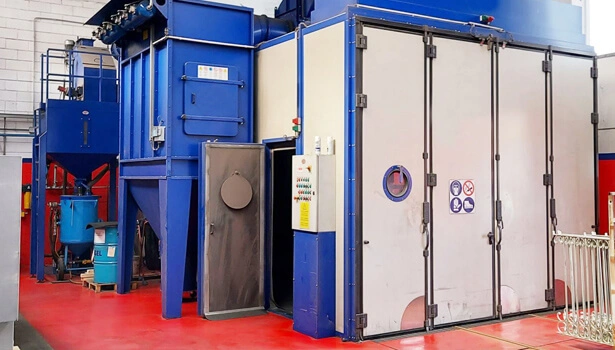
Optimizing Thermal Processing for Bottom-Line Impact
The selection and maintenance of industrial paint drying ovens is a multidisciplinary engineering challenge. It requires a thorough understanding of heat transfer physics, material science of the coating being applied, and the regulatory framework governing emissions and safety. For fabricators and finishers seeking to reduce cycle times, lower reject rates, and decrease natural gas consumption per unit produced, a forensic examination of the curing oven's performance is the most direct path to improvement.
Whether you are commissioning a new fully automated powder coating plant or troubleshooting a legacy convection oven with chronic quality issues, the focus must remain on the data: airflow validation, PMT verification, and energy balance. By moving beyond anecdotal adjustments and embracing precision thermal management, operations can achieve consistent, durable finishes that withstand the rigors of real-world service environments.
Frequently Asked Questions: Paint Drying Ovens
Q1: What is the difference between drying and curing in paint drying ovens?
A1: Drying primarily refers to the physical evaporation of solvents or water from liquid coatings (evaporation phase), whereas curing involves a chemical reaction — either oxidation for alkyds or cross-linking for thermoset powders. Paint drying ovens must manage both phases; often a lower-temperature flash-off zone precedes a high-temperature cure zone to prevent surface defects.
Q2: How often should I perform a temperature uniformity survey on my oven?
A2: Industry best practice (referencing CQI-12) recommends a full thermal profile survey with a calibrated data logger and trailing thermocouples at least annually, or whenever there is a major modification to the oven ductwork, burner, or conveyor speed. More frequent quarterly checks are advised for safety-critical parts (aerospace, automotive structural components).
Q3: Why is my powder coating turning yellow or brown in the paint drying ovens?
A3: This is typically overbake yellowing. It occurs when the coating is exposed to temperatures exceeding its thermal stability limit (usually above 425°F for standard polyester powders) or when the dwell time at correct temperature is grossly exceeded. Check for hot spots in the oven near burner discharge vents or verify that parts are not stopping under high heat due to conveyor line stoppages.
Q4: Can I use the same oven for both liquid paint and powder coating?
A4: While technically possible in a batch operation, it is highly discouraged in continuous production. Liquid paint paint drying ovens generate flammable solvent vapors requiring explosion-proof electrical classification (Class I, Div 1) and high exhaust rates. Powder ovens have lower exhaust requirements. Cross-contamination of oven interiors with solvent residue or loose powder can create fire hazards and surface defects.
Q5: What is the typical payback period for upgrading to a high-efficiency burner system?
A5: For continuous ovens operating two shifts, replacing atmospheric burners with high-turndown, modulating gas burners combined with a VFD-driven exhaust fan often yields a 12 to 24 month ROI. Payback accelerates with rising natural gas prices and the availability of utility rebates for industrial energy efficiency projects. HANNA provides energy audit services to calculate exact site-specific savings.
Optimize Your Thermal Process
Achieving consistent finish quality while managing energy costs requires precise control over your curing parameters. If your current oven is exhibiting temperature drift, cold spots, or excessive fuel usage, our engineering team is available for technical consultation.
Request a detailed equipment analysis or inquire about our oven modernization services.