
When procurement teams begin the budgeting process for a new finishing line, the question of powder coating plant price invariably surfaces as the primary concern. However, approaching this figure as a singular, monolithic number is a fundamental misstep. The capital expenditure required for a turnkey powder coating plant is a composite of discrete engineering decisions—each carrying its own cost implication and long-term operational consequence. A line configured to coat 10-foot structural steel beams bears little financial resemblance to a high-velocity system designed for 50,000 aluminum extrusions per shift.
This analysis deconstructs the powder coating plant price into its constituent technical and commercial drivers. The objective is to provide manufacturing executives and plant engineers with a framework for evaluating quotations not by their bottom line alone, but by their alignment with production throughput, finish specification requirements, and long-term Total Cost of Ownership (TCO). From pretreatment washer stages to the curing oven's thermal capacity, every subsystem influences both the initial investment and the subsequent operating margin.
1. Pretreatment System Configuration and Metallurgical Preparation
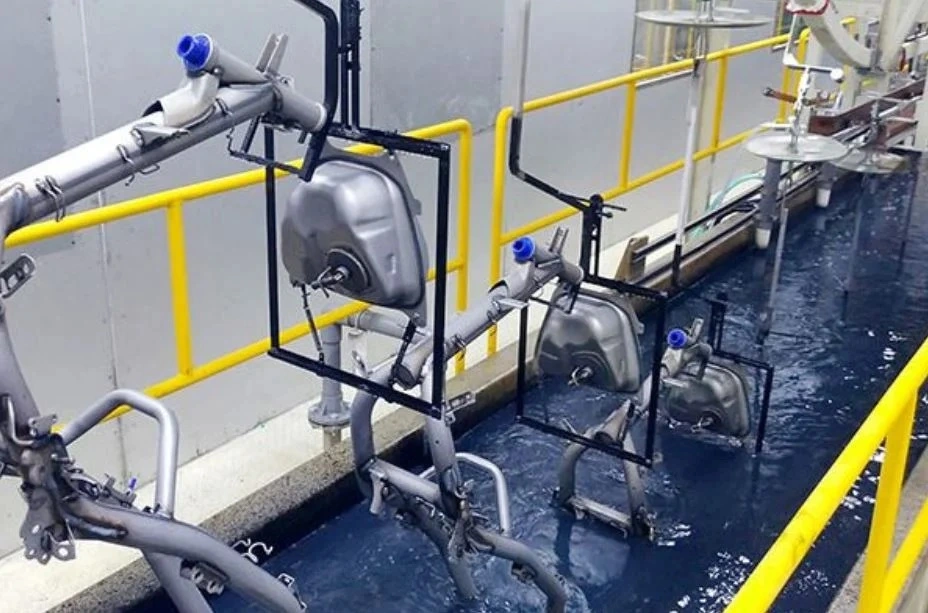
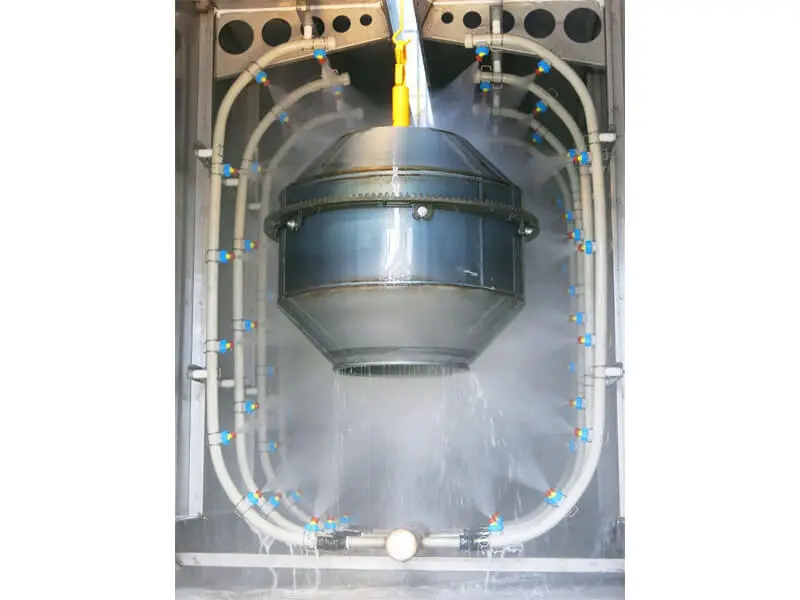
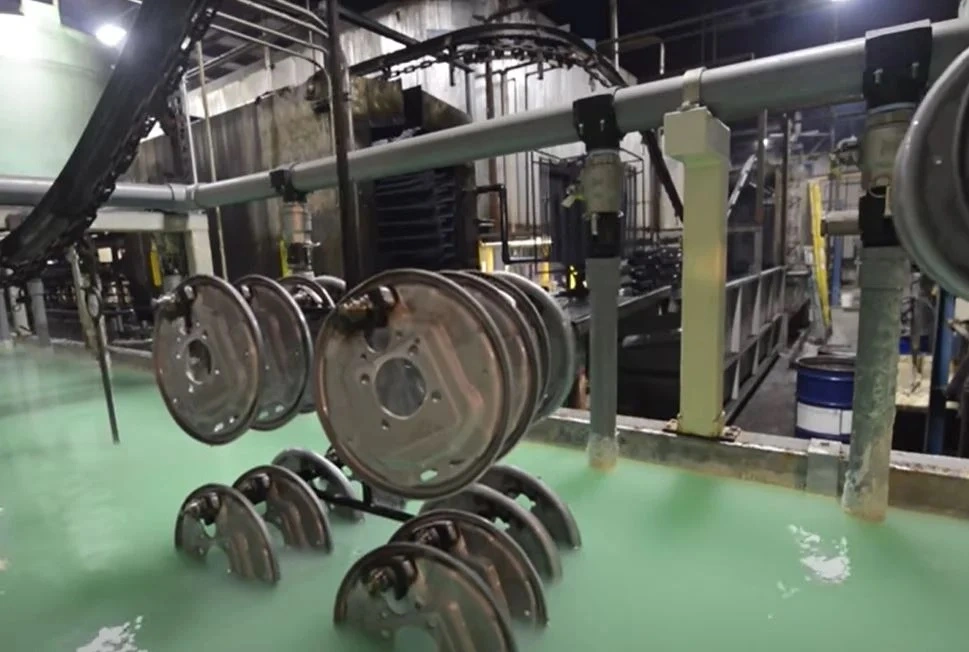
The front end of any powder coating plant—the pretreatment washer—is where adhesion is won or lost. The powder coating plant price escalates sharply based on the number of stages and the material of construction.
Three-Stage Wash (Clean/Rinse/Phosphate): Suitable for indoor applications or mild environmental exposure. This is the entry-level configuration, typically fabricated from mild steel or 304 stainless steel for the rinse section. It represents the lowest cost segment of the pretreatment spectrum.
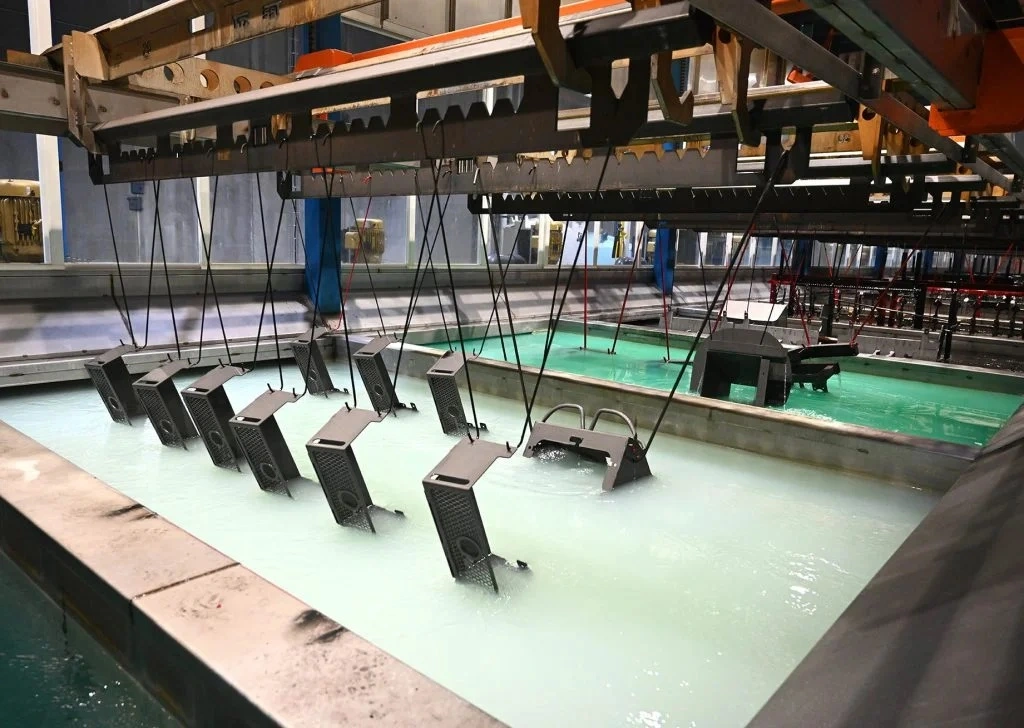
Five-to-Seven Stage Zinc Phosphate or Zirconium Conversion: Mandated for automotive components, agricultural equipment, and any substrate subjected to ASTM B117 salt spray testing (500+ hours). The inclusion of a dedicated surface conditioner stage and a seal rinse (chrome-free sealer) adds significant capital. Furthermore, these stages require stainless steel tank construction (316L) and chemical dosing automation, which can increase pretreatment subsystem cost by 35-50% compared to a basic iron phosphate setup.
Dry-Off Oven Integration: After washing, water must be evacuated from recesses. The inclusion of a dedicated dry-off oven (separate from the cure oven) adds to the thermal equipment budget but prevents "blow-out" defects in the final cure cycle.
2. Powder Booth Technology: Cartridge Recovery vs. Cyclone Systems
The application and recovery architecture of the spray booth is a primary driver of both powder coating plant price and long-term material efficiency. The decision tree here is dictated by color change frequency and particle size sensitivity.
Cartridge Collector Booths: These utilize pleated filter media to separate powder from the airstream. They offer lower initial capital outlay. However, they are suited for operations running single colors for extended durations. The powder coating plant price for this configuration is lower, but the labor cost for manual cleaning during color swaps must be factored into operating expenditure.
Cyclone Recovery Booths (Venturi Scrubbers): These systems use centrifugal force to separate reclaim powder before final filtration. The construction includes stainless steel cyclone bodies, rotary sieves, and fluidized bed hoppers. While the equipment cost is 25-40% higher than a simple cartridge module, the "Fast Color Change" capability (under 10-15 minutes for a trained crew) justifies the premium for job coaters processing multiple RAL colors daily. HANNA recommends a thorough analysis of color change logs before committing to a booth architecture, as over-specifying a cyclone system for a single-color line represents unnecessary capital deployment.
3. Curing Oven Thermal Capacity and Envelope Size
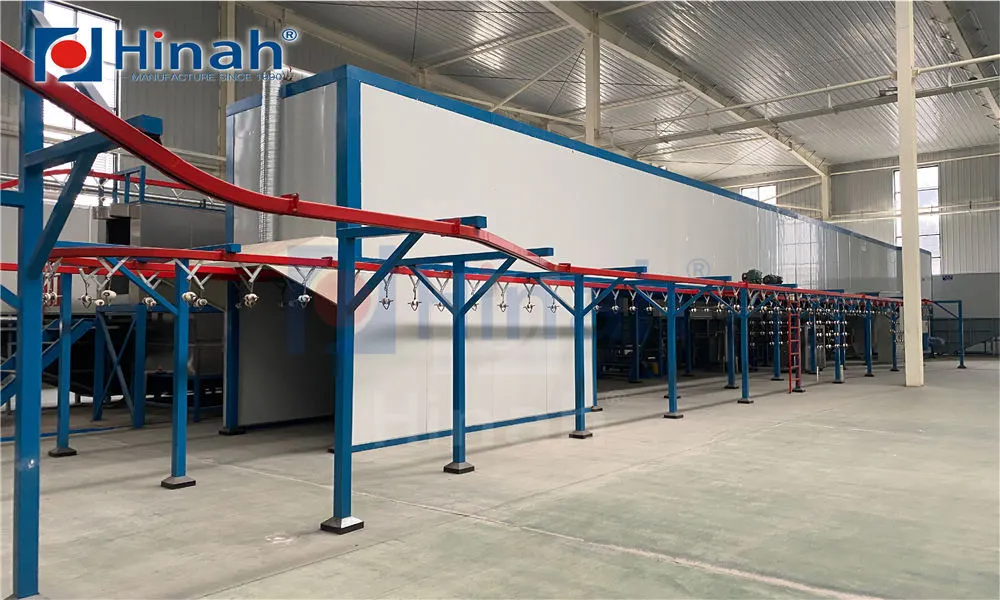
The curing oven is the largest consumer of plant floor space and energy. Consequently, it exerts substantial influence on the total powder coating plant price. Cost drivers within the oven package include:
Enclosure Insulation Grade: Standard ovens use 3-inch thick, 6 lb/ft³ density mineral wool. High-efficiency designs employ 5-inch thick, 8 lb/ft³ board with foil-facing vapor barriers to reduce skin loss. The cost difference is material but offsets by lower BTU/hr burner firing rates.
Burner Type and Turn-Down Ratio: On/off atmospheric burners are inexpensive but cause temperature spikes. Modulating gas trains with 10:1 turndown ratios and forced-draft blowers add approximately $10,000-$20,000 to the oven package but provide the temperature stability (±5°F uniformity) required for architectural powder finishes.
Exhaust Air Abatement: In regions with stringent air quality regulations, the inclusion of a Regenerative Thermal Oxidizer (RTO) or a simple fume incinerator to handle volatile organic condensation products from the oven exhaust can add six-figure increments to the project total.
4. Conveyor System: Power and Free vs. Overhead Monorail
The method by which parts traverse the powder coating plant has a direct, non-linear impact on investment. A continuous I-beam monorail conveyor with a single drive unit is the most cost-effective solution for simple, high-volume parts that do not require accumulation or varying dwell times.
However, for operations requiring different processing speeds in the washer versus the oven, or for lines where downtime must be isolated to one section without stopping the entire process, a Power and Free Conveyor system is necessary. The powder coating plant price differential here can be 2x to 3x that of a simple monorail due to the complex track switches, lift sections, and multi-drive control logic. HANNA engineers often identify that overspending on conveyor complexity where simpler accumulation solutions (like manual load/unload spurs) would suffice is a common area for cost optimization.
5. Automation Level: Reciprocators vs. Six-Axis Robotics
Labor scarcity continues to push manufacturers toward automated application. The cost spectrum ranges from manual touch-up stations to fully autonomous robotic workcells.
Gun Movers / Reciprocators: Two-axis vertical stroke mechanisms. They offer consistent gun speed at a moderate price point. Integration costs include safety light curtains and mounting structure.
Powder Coating Robots: Six-axis articulated arms provide the kinematic flexibility to coat recessed areas. A single robot cell, including the arm, controller, safety fencing, and programming interface, will increase the powder coating plant price by a significant margin over fixed automation. The return justification must be predicated on material savings from improved First Pass Transfer Efficiency (FPTE) and reduction in rework labor.
6. Environmental Compliance and Waste Management Infrastructure
Regulatory compliance is a non-negotiable component of the total installed cost. While often categorized as "soft costs," these elements are hard construction items that directly affect the powder coating plant price.
Wastewater Treatment: The pretreatment washer generates sludge containing phosphates or heavy metals (zinc). The installation of a flocculation clarifier and filter press to dewater sludge is a mandatory, and often underestimated, capital expense.
Explosion Venting and Suppression: Per NFPA 33 and 68 standards, powder booths require explosion relief panels vented to the exterior of the building or a chemical suppression system. Retrofitting this to an existing building envelope can add structural steel costs.
Spray Booth Enclosure Rating: Construction of the booth room to meet required fire separation (1-hour or 2-hour fire-rated walls) from adjacent manufacturing areas.
7. Geographic and Logistical Cost Variables
Beyond the equipment bill of materials, the installed powder coating plant price is sensitive to site-specific conditions. Freight costs for large oven modules, crane rental for setting equipment, and local prevailing wage rates for millwrights and electricians can swing the final project budget by 15-20%.
Additionally, site preparation is frequently excluded from equipment vendor quotes. Concrete pit excavation for floor-mounted conveyor drives, trenching for ductwork, and utility drops (natural gas pipe sizing and electrical switchgear) are owner-supplied costs that must be layered onto the equipment purchase price to arrive at a true "turnkey ready" figure.
8. Understanding Total Cost of Ownership vs. Capital Price
Focusing strictly on the initial powder coating plant price can lead to poor long-term financial outcomes. A lower-priced oven with inferior insulation will incur higher natural gas costs for the entire 20-year lifespan of the facility. A lower-priced cartridge booth requiring 4 hours of downtime for color changes will erode profit on short-run work.
Progressive manufacturers evaluate bids using a Net Present Value (NPV) model that incorporates:
Projected Energy Consumption per Square Foot Coated.
Maintenance Labor and Consumable Parts (Filters, Hoses, Nozzles).
Estimated Powder Utilization Rate (Transfer Efficiency).
Selecting a powder coating plant configuration based on a rigorous analysis of these eight variables ensures that the capital deployed aligns precisely with the strategic and operational demands of the finishing department.
Frequently Asked Questions: Powder Coating Plant Price and Investment
Q1: What is a realistic budget range for a small to medium powder coating line?
A1: For a batch operation (non-continuous) capable of handling typical job shop parts, budgets often begin around $100,000-$250,000 USD for a basic wash/oven/booth combination. A fully automated, high-volume continuous line with multi-stage pretreatment and robotic application typically requires a capital investment exceeding $800,000 USD and can extend into several million. The powder coating plant price is entirely contingent on the throughput requirement in square feet per hour.
Q2: What hidden costs are most frequently overlooked when budgeting for a powder coating plant?
A2: Owners frequently underestimate the cost of plant air supply upgrades (large screw compressors and desiccant dryers are needed for clean powder fluidization), wastewater discharge permits, and crane rental for setting oven roof sections. Additionally, the cost of fire suppression system tie-in to the building alarm panel is often a post-installation surprise.
Q3: How does the choice between a batch booth and a conveyorized line affect the powder coating plant price?
A3: A batch booth (box oven and standalone spray enclosure) is the lowest entry cost, as it requires no material handling integration. A conveyorized line increases cost due to the structural steel required for the track, variable frequency drives, and the extended footprint of the continuous tunnel washer and oven. However, conveyorized lines deliver vastly higher labor productivity per unit coated.
Q4: Does HANNA provide financing or lease options for equipment?
A4: Equipment financing is typically arranged through third-party industrial lenders or banking partners. HANNA can facilitate introductions to financial institutions familiar with capital equipment lending for the finishing industry and can structure quotations to align with leasing requirements, separating soft costs (installation) from hard equipment for depreciation purposes.
Q5: How can I reduce the powder coating plant price without sacrificing quality?
A5: Value engineering strategies include: 1) Designing the oven for future expansion but installing only current necessary length with blank panels. 2) Using manual spray stations initially while reserving floor space and control drops for future automation integration. 3) Standardizing on modular booth designs that avoid custom sheet metal fabrication. The key is to avoid reducing specification on safety or environmental compliance equipment.
Request a Detailed Capital Expenditure Projection
Establishing a realistic budget for your finishing operation requires a detailed review of part profiles, projected volumes, and local site conditions. Rather than relying on generic industry averages, obtain a line configuration analysis tailored to your manufacturing objectives.
Submit your project parameters for a preliminary cost estimate and facility layout review.