
When integrating a finishing line, the choice of paint drying ovens is a critical decision that directly impacts throughput, energy consumption, and final product quality. These ovens do more than just dry paint; they facilitate the chemical cross-linking necessary for creating a durable, high-performance coating. Selecting the wrong type or a poorly designed oven can lead to bottlenecks, inconsistent curing, and excessive operating costs. This article breaks down the technology behind modern paint drying ovens, helping you make an informed choice for your application.
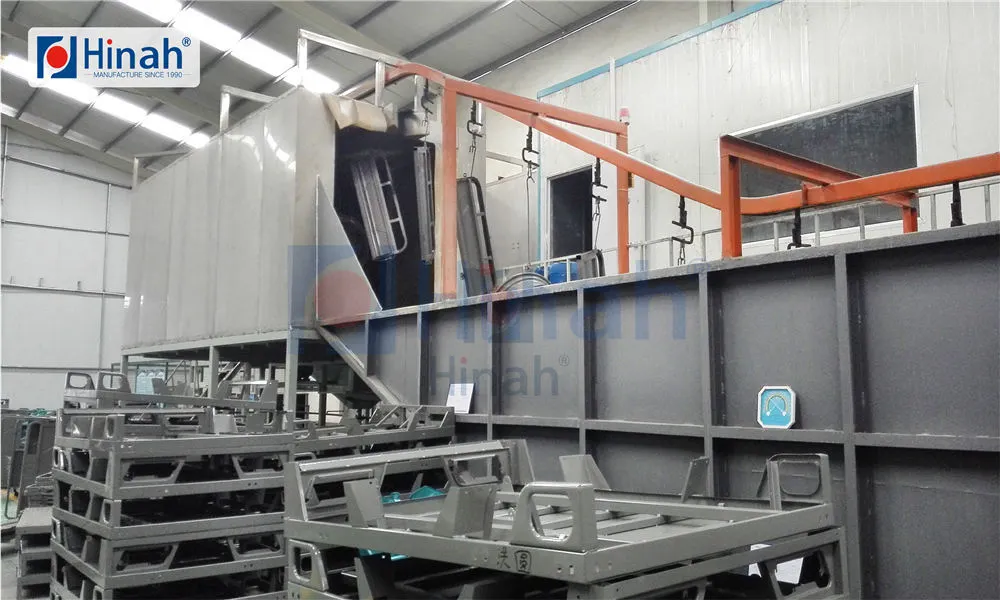
It's important to distinguish between drying and curing. Drying is simply the evaporation of solvents or water. Curing is a chemical reaction where the coating's resins form permanent molecular bonds.
Most industrial paint drying ovens are technically curing ovens. They provide controlled heat to trigger this polymerization. Proper curing is non-negotiable for achieving hardness, adhesion, and corrosion resistance.
The process is defined by time and temperature. Every coating has a specific thermal profile. The oven must ensure every part, from edge to center mass, meets this profile consistently.
Different technologies suit different applications. The main types are convection, infrared (IR), and combination ovens.
Convection Ovens
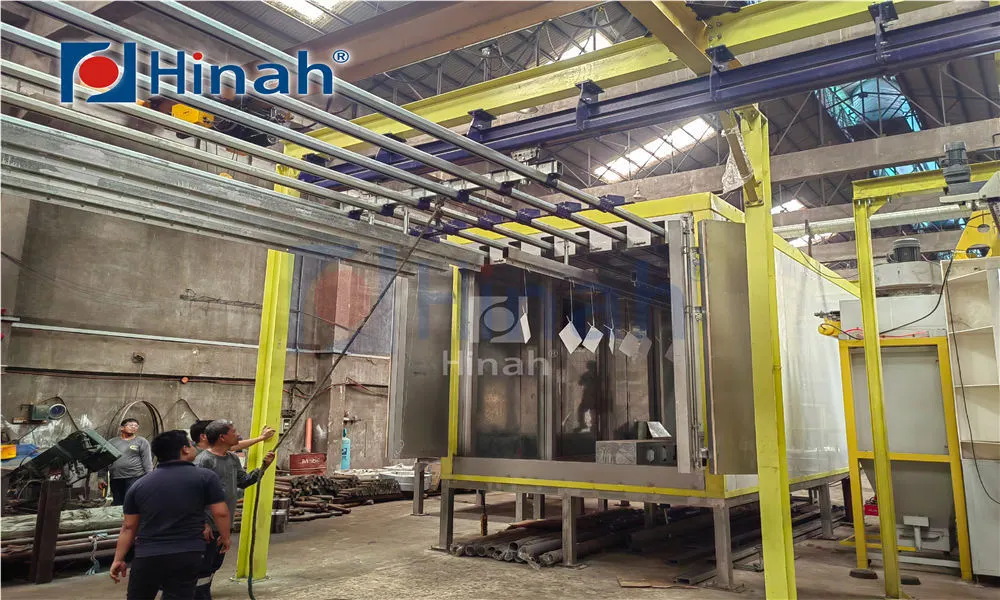
These are the most common type of paint drying ovens. Heated air is circulated around the parts using fans and ductwork. This provides even, all-around heat.
They are highly versatile, effectively curing complex shapes with deep recesses or varying thicknesses. The consistent air flow helps maintain uniform temperature throughout the oven chamber.
Their main drawback is slower heat-up times compared to other methods. They also generally consume more energy, as the entire mass of air in the enclosure must be heated.
Infrared (IR) Ovens
IR paint drying ovens use electromagnetic radiation to transfer heat directly to the part and the coating. Think of it like the sun warming your skin.
They offer extremely fast ramp-up and cure times, often measured in minutes instead of tens of minutes. This makes them ideal for high-speed lines or low-mass parts like sheet metal.
Their limitation is line-of-sight heating. Shadows and complex geometries can lead to uneven curing. They are less effective on parts with mixed material thicknesses.
Combination and Specialized Ovens
Many modern lines use a hybrid approach. A common setup is an IR section for rapid heat-up, followed by a convection section for soak time and temperature equalization.
For very large or temperature-sensitive substrates, low-temperature cure paint drying ovens are available. These use advanced airflow design and precise control to cure coatings at lower peak metal temperatures.
Choosing the right oven extends beyond the heating technology. Several engineering factors determine success.
Fuel Source and Heating Method
Ovens can be direct-fired (burners in the airstream) or indirect-fired (heat exchangers). Direct-fired systems are more energy-efficient but are not suitable for all coatings due to potential combustion byproducts. Indirect-fired offers cleaner air but with lower thermal efficiency.
Common fuel sources include natural gas, electricity, and oil. Natural gas is typically the most cost-effective for large-scale operations.
Airflow and Circulation Design
Uniform airflow is the hallmark of a well-designed convection oven. Stagnant air pockets create cold spots, leading to under-cure. Strategic placement of supply ducts, exhaust inlets, and high-volume fans is crucial.
Insulation and Sealing
Proper insulation minimizes heat loss to the environment, reducing energy costs. High-quality door seals and vestibules at entry/exit points are essential to maintain temperature stability and safety.
Control Systems and Monitoring
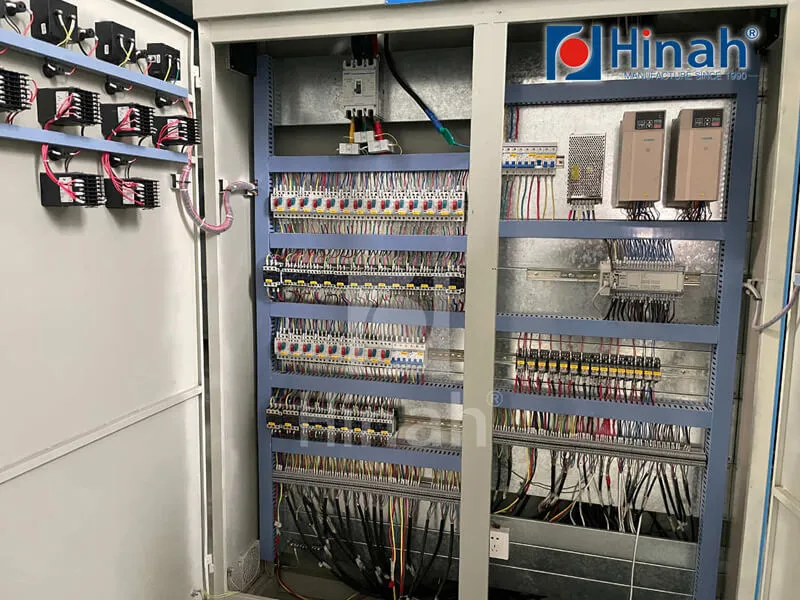
Modern paint drying ovens feature sophisticated PLC controls. They monitor and adjust temperatures in multiple zones. Data logging capabilities are invaluable for quality control, providing a record that every batch was cured to specification.
The oven must work in harmony with the rest of your process. Its size and location are dictated by line speed and part dimensions.
Line Speed and Dwell Time
The oven length is calculated by multiplying the conveyor speed by the required dwell time. A miscalculation here is a common mistake. If the oven is too short, parts exit under-cured. HANNA engineers perform precise thermal profiling during the design phase to avoid this.
Part Hanging and Loading
The oven layout must accommodate the part's profile on the conveyor. Adequate clearance between parts ensures proper airflow. Heavy parts or those with significant thermal mass may require zoning to manage heat input.
Safety and Compliance
Paint drying ovens present fire and fume hazards. Safety systems like overtemperature limits, airflow monitors, and automatic shutdowns are mandatory. Ovens must be built to comply with local codes and standards, such as NFPA 86.
At HANNA, we view an oven not as a standalone box, but as the thermal engine of your finishing line. Our paint drying ovens are engineered for reliability and efficiency from the ground up.
We focus on balanced airflow. Our proprietary fan and duct designs ensure temperature uniformity, typically within ±5°C across the workspace. This eliminates quality variations part-to-part.
Energy efficiency is built in. We use high-density insulation, recuperative heating where possible, and smart control logic that adapts to production loads. This directly lowers your operating expenses.
Perhaps most importantly, HANNA provides integrated support. We don't just sell an oven; we help you define the correct cure profile, integrate it with your conveyor, and commission it to guarantee performance. Our team ensures your paint drying ovens become a consistent, dependable part of your production process.
Ultimately, investing in properly engineered paint drying ovens is investing in product quality and line productivity. By understanding the technologies and partnering with an experienced supplier, you secure a cornerstone of your finishing operation that delivers value for years.
Q1: What is the main difference between a drying oven and a curing oven for paint?
A1: The terms are often used interchangeably, but technically, a drying oven removes solvents through evaporation, typically at lower temperatures. A curing oven applies higher heat to trigger a chemical reaction (cross-linking) in the coating, creating the final hardened film. Most industrial paint drying ovens are designed for curing thermosetting powders and liquid paints.
Q2: How do I determine the correct temperature and time for my paint in the oven?
A2: Always refer to the technical data sheet (TDS) from your coating supplier. It specifies the required metal temperature and time at that temperature. This is your target. A supplier like HANNA will then perform oven profiling using thermocouples attached to test parts to ensure your specific oven and part geometry achieve this target profile.
Q3: Can I use one paint drying oven for multiple different coating types or colors?
A3: Yes, but with planning. The oven must be capable of reaching and controlling the temperature range required by all coatings. The main challenge is cross-contamination when curing different products sequentially. Proper oven exhaust and maintaining slight positive pressure can help. For powders, a dedicated cure oven per color is sometimes used in high-volume scenarios to eliminate any risk of color contamination.
Q4: What are the most common maintenance tasks for a convection paint drying oven?
A4: Regular maintenance includes: inspecting and cleaning fan blades and motors, checking and calibrating temperature sensors, verifying burner operation and safety systems (monthly), inspecting door seals and insulation for damage, and ensuring all air intake and exhaust paths are clear of obstruction. A scheduled maintenance plan from HANNA can prevent unexpected downtime.
Q5: Is an infrared oven more energy-efficient than a convection oven?
A5: Infrared ovens can be more thermally efficient for the right application because they heat the part directly, not the air. They have faster start-up and cure times, saving energy during idle periods. However, for complex parts, a convection oven's uniform heating may be more effective overall. The true efficiency depends on your part mix, line speed, and utilization. HANNA can perform an energy analysis for both options during the design phase.