
The decision to invest in a new finishing line represents a significant capital allocation that will influence operational productivity for the next 15 to 20 years. The selection of a qualified powder coating plant manufacturer is therefore not a procurement exercise to be resolved by comparing line-item pricing alone. It demands a forensic examination of engineering competency, fabrication quality standards, and the vendor's ability to deliver a system that performs within defined thermal and aerodynamic parameters from the first day of production.
Industrial buyers frequently encounter a fragmented marketplace where equipment fabricators offer seemingly similar configurations—pretreatment tunnels, dry-off sections, powder booths, and curing ovens. Yet, the operational variance between a line designed by an experienced powder coating plant manufacturer with in-house process engineering staff and one assembled by a general sheet metal shop is substantial. This analysis provides a structured, technical framework for differentiating vendors and identifying a partner capable of delivering a powder coating plant that meets specified throughput, finish quality, and energy consumption targets.
1. In-House Thermal and Mechanical Engineering Depth
A primary differentiator among suppliers is the presence—or absence—of credentialed engineering personnel. A reputable powder coating plant manufacturer employs mechanical engineers who understand heat transfer calculations beyond simple BTU/hr sizing. They should be capable of performing Computational Fluid Dynamics (CFD) modeling on the curing oven plenum to validate airflow uniformity prior to fabrication.
Questions to pose during vendor evaluation include:
Load Calculation Methodology: Does the manufacturer calculate heat load based on part mass (steel specific heat of 0.12 BTU/lb-°F), conveyor chain weight, and hourly throughput, or do they rely on a simplistic "watts per cubic foot" rule-of-thumb that often leads to under-sizing for dense loads?
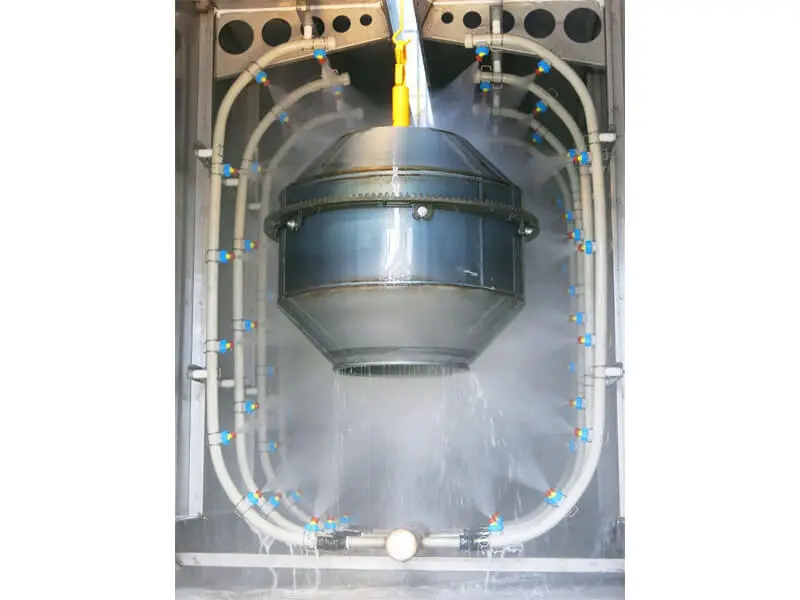
Exhaust Air Balancing: Can the engineering team provide a psychrometric analysis of the dry-off oven exhaust to ensure adequate moisture removal without wasting conditioned plant air? This directly impacts coating adhesion by preventing residual moisture from flashing to steam beneath the powder film during cure.
Structural Seismic Analysis: For installations in seismically active zones, a qualified powder coating plant manufacturer provides stamped calculations for oven panel connections and support steel.
HANNA distinguishes its approach through a design phase that includes a formal Process and Instrumentation Diagram (P&ID) review with the client's facilities team, ensuring that gas train configurations, exhaust duct routings, and control logic are fully defined before steel is ordered.
2. Fabrication Tolerances and Enclosure Integrity
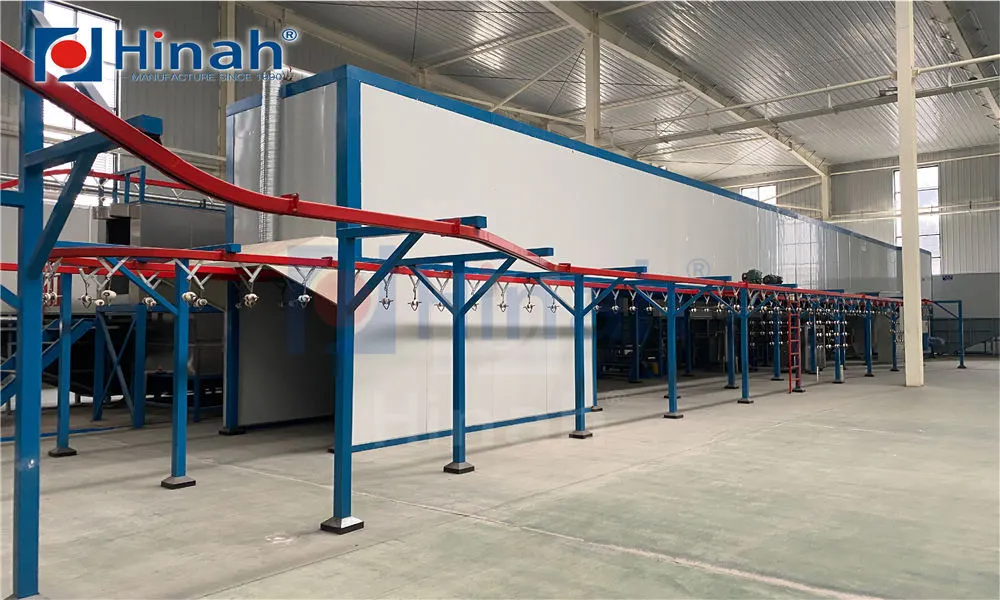
The long-term performance of a powder coating plant is directly correlated to the quality of its physical enclosure. Gaps in panel joints, warped oven doors, and improperly sealed roof penetrations allow conditioned air to escape and ambient dirt to infiltrate the finish environment.
In evaluating a potential powder coating plant manufacturer, inspect the following fabrication hallmarks:
Panel Construction: The use of structural steel channel framing (minimum 14-gauge) with continuous welded seams, rather than light-gauge stud framing more common in HVAC ductwork. The interior skin should be fabricated from aluminized steel (Type 1) or, for corrosive off-gassing applications, 304 stainless steel with a No. 4 brushed finish to prevent powder accumulation.
Tongue-and-Groove Joints: Modular oven panels should feature a double-seal tongue-and-groove profile with a thermal break to prevent a direct conductive path from the hot interior to the exterior skin. This minimizes condensation on the oven exterior during winter months and reduces BTU loss.
Floor Sealing: In pit-mounted conveyor applications, the manufacturer must provide a robust trench cover system that prevents wash solution and powder fines from falling into the return pit, a common source of corrosion and chain contamination.
3. Control System Architecture and Integration Capabilities
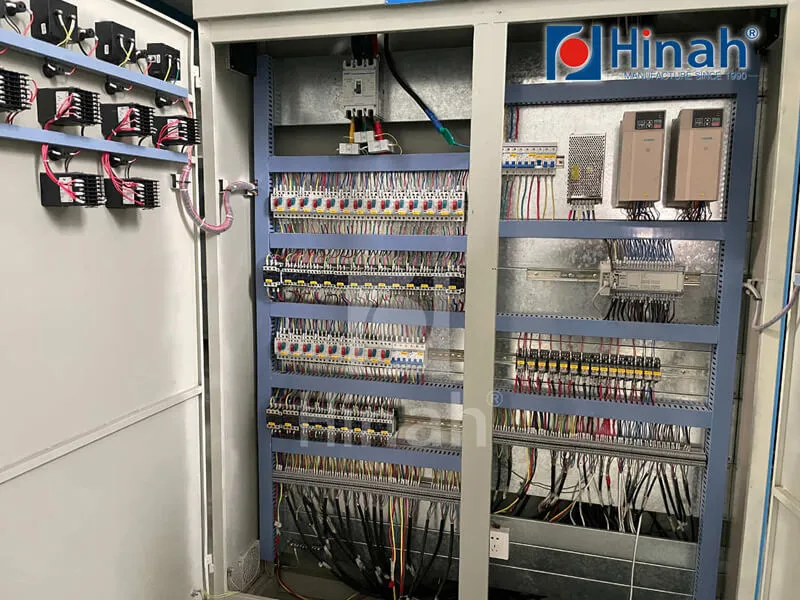
The control panel is the operational brain of the finishing line. The sophistication of the control platform offered by a powder coating plant manufacturer determines how precisely the process can be managed and how effectively data can be leveraged for continuous improvement.
Differentiating technical features include:
PLC Platform: The use of industrial-grade Programmable Logic Controllers (e.g., Allen-Bradley ControlLogix or Siemens S7-1500) versus proprietary micro-controllers. An open-architecture PLC facilitates future modifications and integration with plant-wide Supervisory Control and Data Acquisition (SCADA) systems.
Temperature Control Precision: The implementation of PID loop auto-tuning for oven burner modulation. This prevents the "sawtooth" temperature oscillation that stresses the coating's thermal stability and wastes fuel. The manufacturer should provide a documented temperature uniformity survey (AMS 2750 or CQI-12 format) as part of the commissioning package.
Remote Access Diagnostics: A secure VPN gateway configured by the manufacturer's engineering staff enables remote troubleshooting of alarms and parameter adjustments, reducing the need for on-site service visits and minimizing production downtime.
4. Conveyor Design and Integration Expertise
While many vendors focus solely on the oven and booth, the material handling system is the circulatory network of the plant. A knowledgeable powder coating plant manufacturer takes ownership of the interface between the conveyor and the processing enclosures. Failure to account for thermal expansion of the I-beam rail inside the oven, for example, results in rail buckling and carrier derailment—a catastrophic production stoppage.
Areas requiring technical scrutiny:
Thermal Expansion Joints: The inclusion of slip joints in the oven rail to accommodate linear expansion (calculated as inches of growth per 100 feet at 450°F operating temperature).
Lubrication Compatibility: Specification of high-temperature, non-carbonizing lubricants for trolley wheels and chain pins that will not drip onto Class A surfaces.
Chain Cleanliness: The design of the return track housing to prevent paint overspray or washer chemical carryover from fouling the chain links.
5. Compliance with NFPA and Industrial Fire Safety Codes
Powder coating operations are governed by stringent fire protection standards, primarily NFPA 33 (Spray Application Using Flammable or Combustible Materials) and NFPA 86 (Ovens and Furnaces). A reputable powder coating plant manufacturer designs equipment to meet these codes as a baseline, not as an optional upgrade.
Key compliance features to verify include:
Explosion Venting: Powder booths must be equipped with explosion relief panels sized according to the booth volume and the Kst value of the powder (typically dust class St1). The vent duct must terminate in a safe outdoor location.
Safety Interlocks: Proven purge cycles for oven burners that execute a minimum of four air changes of the combustion chamber volume before ignition is permitted. Exhaust fan proof-of-flow switches that prevent burner operation if ventilation fails.
LEL Monitoring: Continuous Lower Explosive Limit monitoring in the oven exhaust stack with automatic forced exhaust increase and burner shutdown upon exceeding 25% LEL.
HANNA maintains a library of standard compliance documentation to expedite permitting and insurance underwriting for new powder coating plant installations.
6. Aftermarket Support and Spare Parts Availability
The relationship with a powder coating plant manufacturer extends well beyond the commissioning punch list. Over a 15-year lifespan, the oven will require replacement of burner flame safeguard controls, conveyor chain, and filter media. The ability of the manufacturer to supply these components—and provide technical field service—directly impacts long-term reliability.
Evaluate the vendor's support infrastructure:
Parts Inventory: Does the manufacturer stock critical, long-lead items such as high-temperature recirculation fan shaft bearings and burner ignition transformers in a domestic warehouse?
Field Service Technicians: Are service personnel direct employees of the manufacturer with specialized training in combustion safety and control logic, or are they third-party contractors?
Preventive Maintenance Contracts: Availability of scheduled thermal imaging surveys to identify hot spots developing in oven wall insulation before they become safety hazards or energy drains.
7. Project Management and Installation Supervision
The technical merit of the equipment can be undermined by poor site coordination. A full-service powder coating plant manufacturer provides a dedicated project manager who oversees the submittal of utility connection drawings, coordinates crane lifts, and manages the installation contractor's adherence to the project schedule.
A structured installation approach includes:
Pre-Construction Meeting: A formal review of the site layout, utility stub-out locations, and safety protocols.
Factory Acceptance Testing (FAT): Where feasible, a pre-shipment power-on test of control panels and fan assemblies to verify I/O point functionality before the equipment leaves the fabrication shop.
Site Acceptance Testing (SAT): A documented performance run demonstrating the system's ability to achieve specified part temperature within the required cycle time, signed by both the manufacturer's supervisor and the end-user's engineer.
Selecting a powder coating plant manufacturer with the engineering depth and manufacturing discipline to deliver on these seven criteria ensures that the installed system will operate as a productive asset rather than a source of chronic process variation and maintenance burden.
Frequently Asked Questions: Powder Coating Plant Manufacturer Selection
Q1: How can I verify the engineering capability of a powder coating plant manufacturer?
A1: Request a sample Heat Load Calculation and Air Balance Report from a previous project. A competent powder coating plant manufacturer will provide these documents with identifiable data redacted. Additionally, inquire if the firm employs a Professional Engineer (P.E.) on staff or retains one for structural and thermal system review.
Q2: What certifications should a manufacturer hold?
A2: While ISO 9001:2015 registration is a baseline indicator of quality management systems, specific certifications relevant to finishing include compliance with NFPA 86 (Ovens), NFPA 33 (Spray Booths), and welding certifications (AWS D1.1). For suppliers to aerospace or defense sectors, familiarity with AMS 2750 pyrometry standards is necessary.
Q3: Should I select a local manufacturer to reduce freight costs on a powder coating plant?
A3: Freight is a valid logistical consideration, but it should not override technical competency. The majority of a powder coating plant value resides in the engineering design and control system integration. Many international manufacturers, including HANNA, maintain strategic partnerships with local installation contractors to manage on-site assembly efficiently, mitigating the distance disadvantage through superior process knowledge.
Q4: What is a reasonable lead time for a turnkey powder coating line?
A4: Standard lead times for a custom-engineered continuous line range from 20 to 28 weeks from approval of engineering drawings to shipment. This accounts for long-lead electrical components (control panels, VFDs), burner procurement, and panel fabrication. Expedited schedules may be possible but often incur premium charges for overtime fabrication labor and air freight on critical components.
Q5: Does the manufacturer provide operator training and documentation?
A5: A comprehensive package from a powder coating plant manufacturer includes Operation and Maintenance (O&M) Manuals with parts breakdowns and ladder logic schematics for the PLC. On-site training for operators should cover start-up/shutdown sequences, color change protocols, and basic troubleshooting of alarm conditions.
Discuss Your Finishing Line Requirements
The selection of a manufacturing partner is a decision that shapes the productivity and cost structure of your finishing operation for decades. If you are evaluating proposals or initiating a capital project for a new facility, our engineering team is available to provide technical consultation regarding line layout, process specification, and equipment configuration.
Submit your project details for a confidential review and preliminary technical assessment.