When evaluating a new curing system, the powder coating oven cost extends far beyond the purchase price. Industrial buyers must account for energy consumption, maintenance, production throughput, and compliance with safety standards. A seemingly economical oven can become a financial burden if it lacks proper insulation, inefficient burners, or inadequate airflow. This analysis dissects the variables that influence both upfront and long-term expenses, providing a framework for calculating true return on investment. HANNA designs curing ovens that balance initial affordability with decades of reliable, low-cost operation.
The powder coating oven cost is determined by a combination of physical, thermal, and control specifications. Below are the primary variables that vendors use to quote a system.
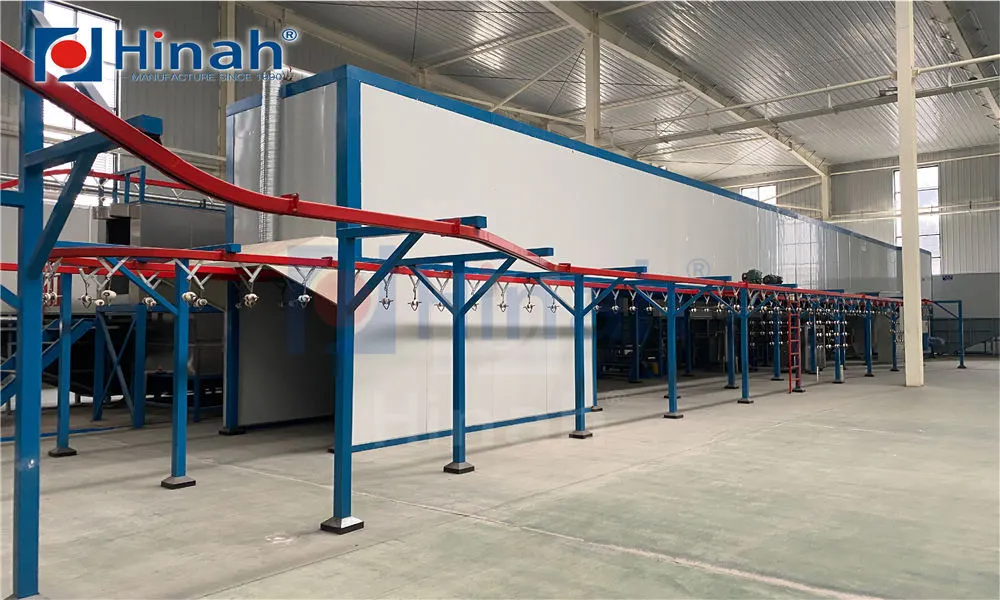
Oven size is the most obvious cost driver. A small batch oven (4'x4'x6') suitable for prototype work may start around $15,000–$25,000, while a walk-in batch oven (6'x6'x10') ranges from $35,000 to $60,000. Continuous conveyor ovens, which can be 40 to 100 feet long, often exceed $150,000. However, size alone is not the full story:
Heated length vs. overall length: The zone that must maintain cure temperature directly impacts heater sizing and insulation costs.
Part density: Higher mass loads require more BTU output, influencing burner selection and ductwork.
Energy type significantly affects both initial powder coating oven cost and ongoing utility bills.
Gas-fired ovens: Typically the most economical to operate in regions with natural gas availability. Burner systems add complexity but lower fuel costs by 30–50% compared to electric resistance.
Electric ovens: Lower upfront equipment cost (no gas train, flue, or complex controls) but higher kWh rates make them suitable only for small batch or specialty applications.
Infrared (IR) boosters: Often added to convection ovens to rapidly bring parts to temperature. IR modules cost $5,000–$15,000 per zone but can increase line speed without extending oven length.
Meeting cure specifications (e.g., 10 minutes at 400°F ±5°F) requires precision engineering. Ovens with:
High-velocity air knives and adjustable louvers ensure even heat distribution but increase fabrication costs.
Multiple zone control with independent PID loops adds to instrumentation expense but guarantees consistent quality for complex parts.
Basic ovens use electromechanical thermostats; modern systems integrate PLCs with recipe management, data logging, and remote monitoring. While a PLC adds $5,000–$10,000 to the powder coating oven cost, it reduces scrap and provides traceability required by automotive and aerospace customers.
Often overlooked, installation can add 20–30% to the project total. Factors include:
Concrete pad reinforcement for heavy ovens.
Gas line sizing and permits.
Electrical panel upgrades.
Exhaust venting and make-up air systems.
Based on industry data and HANNA project history, here are estimated price bands for different oven configurations (2024 USD):
| Oven Type | Typical Capacity | Estimated Cost Range |
|---|---|---|
| Batch Lab Oven | 3'x3'x3' | $8,000 – $15,000 |
| Walk-In Batch Oven | 6'x6'x10' | $35,000 – $65,000 |
| Truck-In Batch Oven | 10'x10'x20' | $80,000 – $150,000 |
| Convection Conveyor Oven | 30–60 ft heated length | $120,000 – $300,000+ |
| IR/Convection Hybrid | Variable | $100,000 – $250,000 |
Note: These figures include basic controls and burner systems but exclude installation, ductwork, and site prep.
An energy-efficient oven can save tens of thousands of dollars over its lifespan. When comparing powder coating oven cost quotes, request estimated annual fuel consumption. Key metrics include:
Convection ovens: Typical consumption is 1,000–2,000 BTU per square foot of oven wall per hour at operating temperature.
Gas usage: A 6'x6'x10' batch oven running 2,000 hours/year may consume 3,000–5,000 therms, costing $3,000–$6,000 annually at $1/therm.
Electric ovens: 50–100 kW connected load, with operating costs 2–3x higher than gas for the same heat output.
Low-quality burners, fans, and insulation lead to frequent repairs. Factor in:
Recirculation fan bearing replacements (every 2–3 years).
Burner nozzle cleaning and flame sensor replacement (annual).
Insulation degradation over 10+ years, increasing heat loss.
Ovens from reputable suppliers like HANNA use industrial-grade components that extend service intervals and reduce unplanned downtime.
Advanced features increase initial powder coating oven cost but pay back rapidly through energy savings and quality improvements.
6-inch thick mineral wool (R-24) vs. 4-inch (R-16) reduces skin temperature and heat loss by 30%. For a 500 sq ft oven, this can save $1,500–$2,500 per year in natural gas.
Recirculation fans often run at constant speed. VFDs modulate airflow based on oven load, cutting fan electricity use by 40–60% and reducing heat loss during idle periods.
Exhaust air can preheat combustion air or make-up air. While adding $8,000–$15,000 to upfront cost, recovery efficiencies of 15–20% are common.
Automatically lower oven temperature during nights/weekends. A simple timer can save 10–15% on annual fuel bills.
Consider a job shop replacing a 20-year-old gas batch oven with a new HANNA high-efficiency model. Old oven: 60% combustion efficiency, poor insulation. New oven: 82% efficient, 6" insulation, VFDs.
Annual gas consumption (old): 8,000 therms @ $1.00 = $8,000.
Annual gas consumption (new): 4,500 therms = $4,500.
Annual savings: $3,500.
Increased production uptime: 5% less scrap and faster heat-up adds $5,000 value.
Total annual benefit: $8,500.
Incremental cost of new oven (vs. base model): $25,000.
Payback period: ~3 years.
Over a 15-year service life, net savings exceed $100,000.
Q1: What is the typical price range for a new industrial powder coating oven?
A1: Batch ovens range from $15,000 for small units to $150,000 for large truck-in models. Continuous conveyor ovens typically start at $120,000 and can exceed $300,000 depending on length and features. Installation adds 20–30% to these figures.
Q2: How much does it cost to operate a powder coating oven per hour?
A2: Operating cost depends on energy source and efficiency. A gas-fired batch oven (1 MMBTU/hr input) at full fire consumes about 10 therms/hour. At $1/therm, that's $10/hour. With VFDs and setback controls, average consumption may drop to 5–7 therms/hour over a shift.
Q3: Are electric or gas ovens more cost-effective?
A3: In most regions with natural gas availability, gas ovens have significantly lower operating costs (often half that of electric). However, electric ovens have lower upfront cost and may be preferred in facilities without gas access or where precise temperature control is critical for thin films.
Q4: How can I reduce the total cost of ownership for my curing oven?
A4: Invest in high-density insulation, VFDs on recirculation fans, and programmable temperature setbacks. Regular maintenance (cleaning burners, checking door seals) also prevents efficiency loss. HANNA ovens are engineered with these features to minimize lifetime costs.
Q5: What is the payback period for upgrading to a high-efficiency oven?
A5: Payback typically ranges from 2 to 5 years, depending on usage hours and local energy prices. For a shop operating 2,000+ hours annually, savings can recoup the investment quickly. Our example above shows a 3-year payback.
Q6: Does HANNA provide custom oven sizes, and how does that affect cost?
A6: Yes, HANNA offers fully custom ovens tailored to your part dimensions and throughput. Customization adds 10–20% to the base cost but ensures optimal energy efficiency and production flow. Contact us for a detailed quote based on your specific requirements.
Q7: What are the hidden costs when buying a powder coating oven?
A7: Beyond the equipment, consider: site preparation (concrete, electrical upgrades), permits, gas line installation, exhaust ductwork, and commissioning. Budget an additional 25% of the oven price for these items.