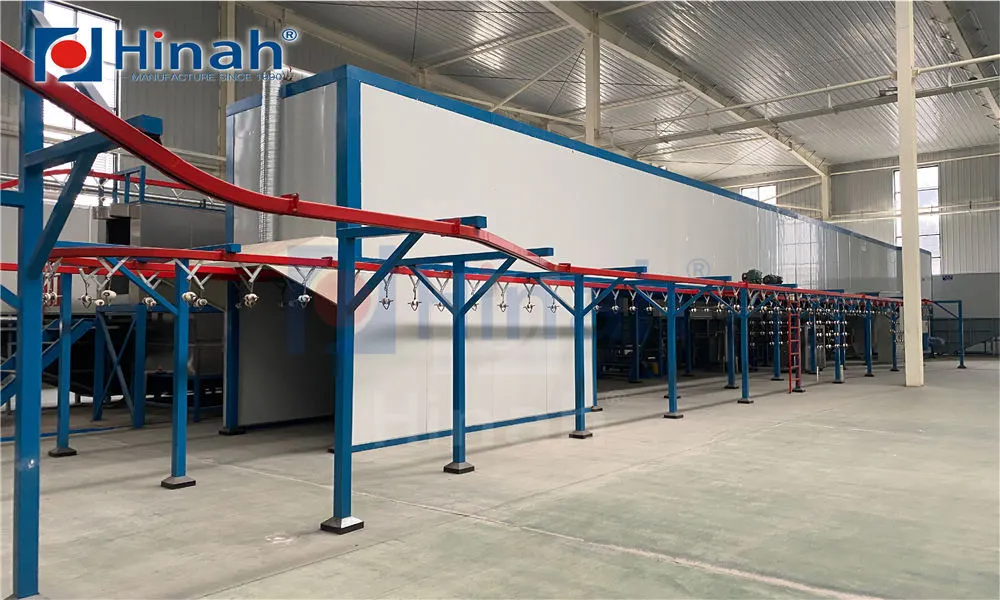


Investing in a powder coating line for sale requires more than comparing price quotes. Many used or turnkey systems look adequate on paper but fail to deliver consistent first-pass yield, energy efficiency, or color-change flexibility. This guide outlines ten quantifiable parameters that experienced buyers evaluate before committing capital. These criteria are based on field audits of dozens of powder coating plant installations and process data from high-mix, high-volume operations.
1. Throughput Capacity & Conveyor Speed Range
Every powder coating line for sale should specify its maximum linear speed (m/min) and part hanging density. Request a parts-per-hour matrix for your heaviest and lightest components. Key calculations:
Conveyor pitch (distance between hangers) – typically 300–600 mm. Smaller pitch increases throughput but risks part collision.
Oven dwell time – must match powder cure schedule (e.g., 10 min at 190°C metal temperature). Line speed = oven heated length / required dwell time.
Chain pull rating – for monorail systems, ensure capacity ≥ 2x maximum load to avoid stretch and indexing errors.
HANNA engineers recommend asking for a thermal simulation report showing part temperature curves at maximum and minimum conveyor speeds.
2. Oven Thermal Uniformity & Zone Control
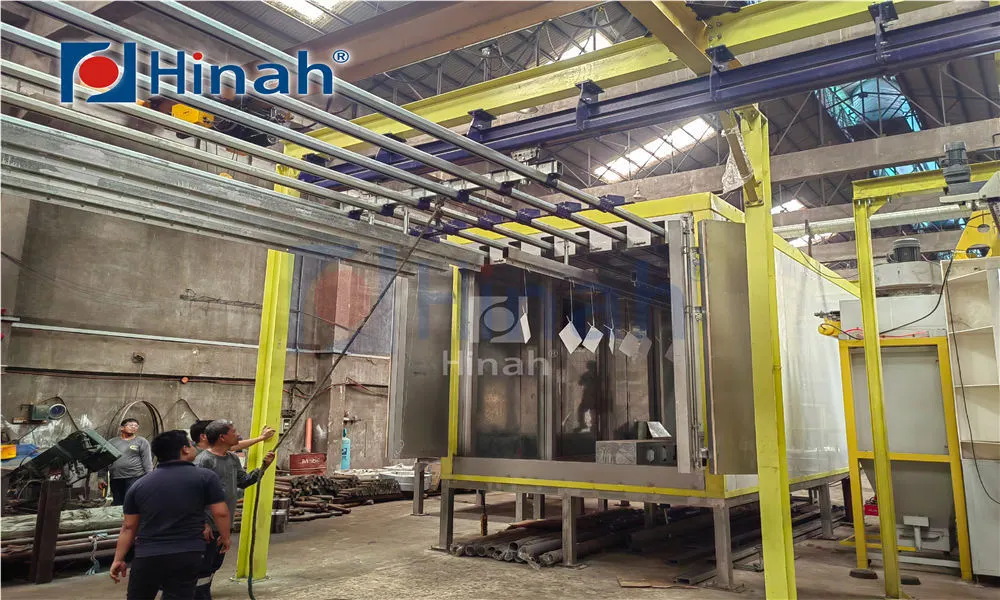
A poorly designed curing oven is the top reason for rejects. When inspecting a powder coating line for sale, demand documented temperature uniformity tests per ASTM D3451. Acceptable tolerance: ±3°C across the load zone. Features that indicate quality:
Multi-zone PID controllers – at least three independent zones (warm-up, gelation, crosslinking).
Recirculation fans with VFDs – maintain 1.5–2.5 m/s air velocity over parts.
Data logging capability – record part temperature profiles for each shift.
For gas-fired ovens, check burner modulation range (20–100% is optimal). Infrared (IR) ovens should have individually addressable emitters to adjust for part geometry.
3. Electrostatic Spray Booth Efficiency & Recovery Type
The spray booth defines material utilization and changeover speed. Two common configurations for a powder coating plant:
Cartridge filter booths – 99%+ recovery, best for single colors or low-changeover lines. Require pulse-jet cleaning with ≤ 6 bar air.
Cyclone + after-filter booths – lower pressure drop but higher powder loss (2–5%). Ideal for reclaiming coarse powders.
Ask for the booth’s transfer efficiency at standard conditions (70–85% for automatic guns, 55–65% for manual). Also verify that the booth meets NFPA 33 explosion venting requirements – vent area must be at least 0.05 m² per m³ of booth volume.
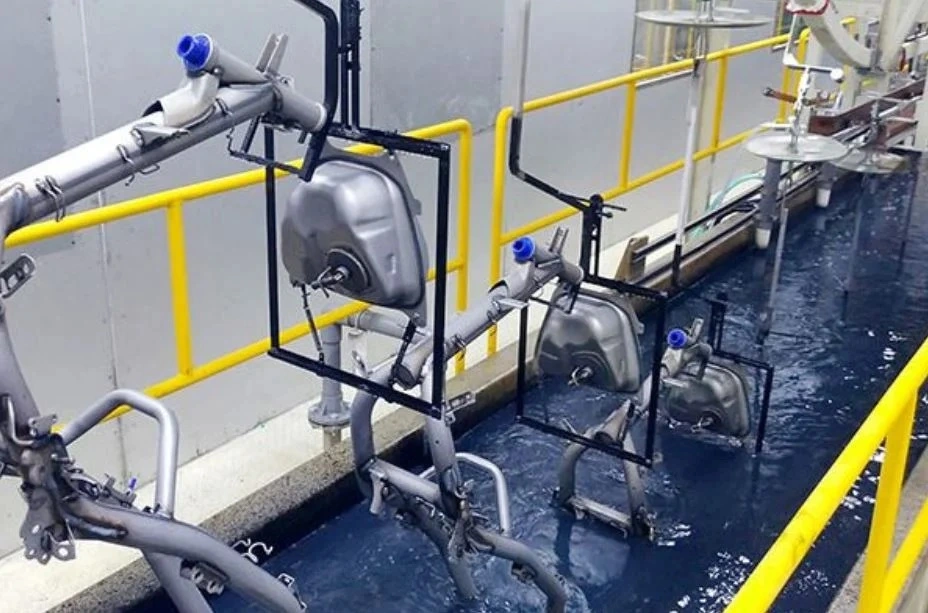
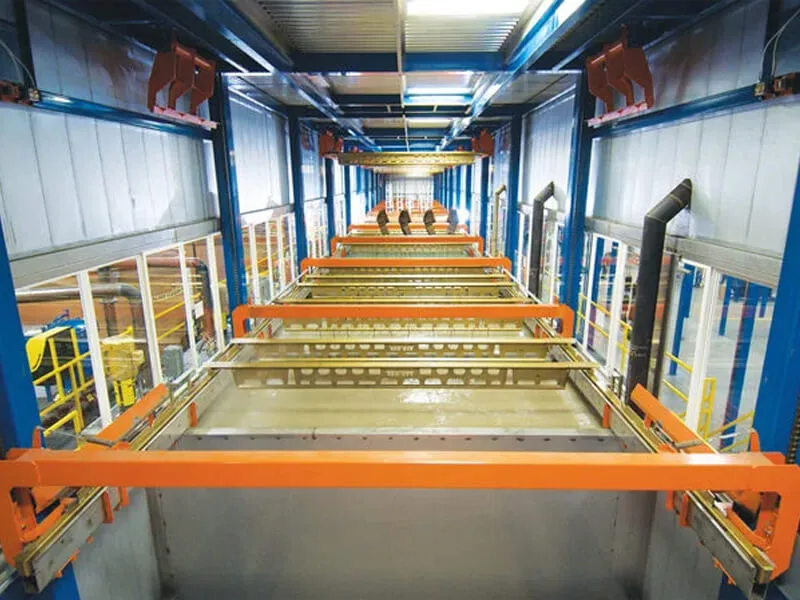
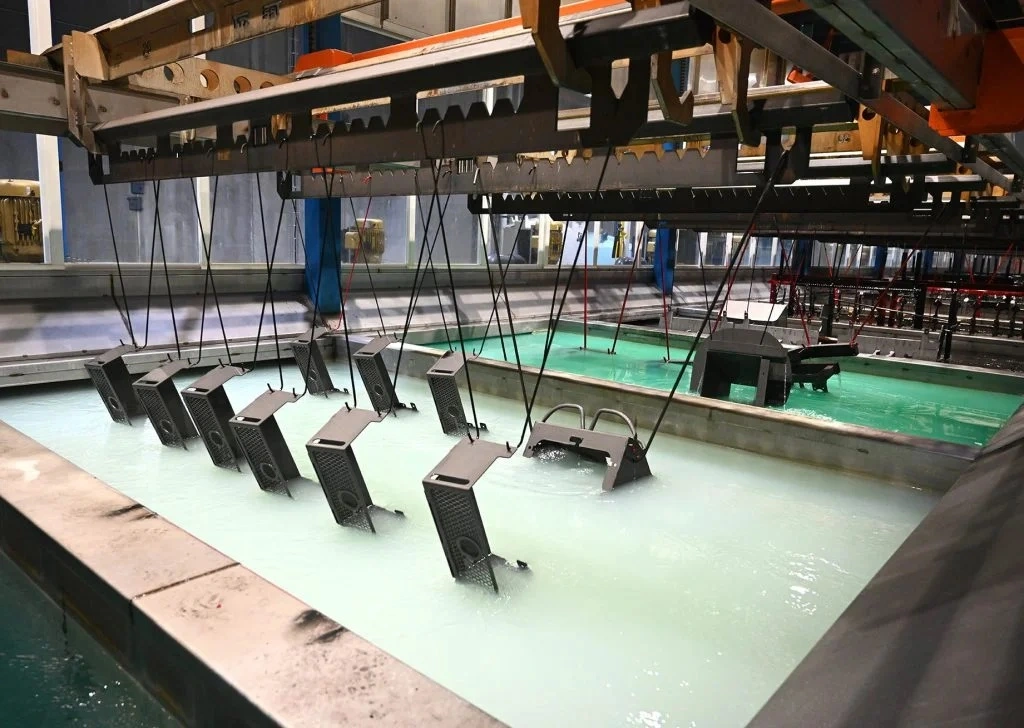
4. Pretreatment System Condition & Chemical Compatibility
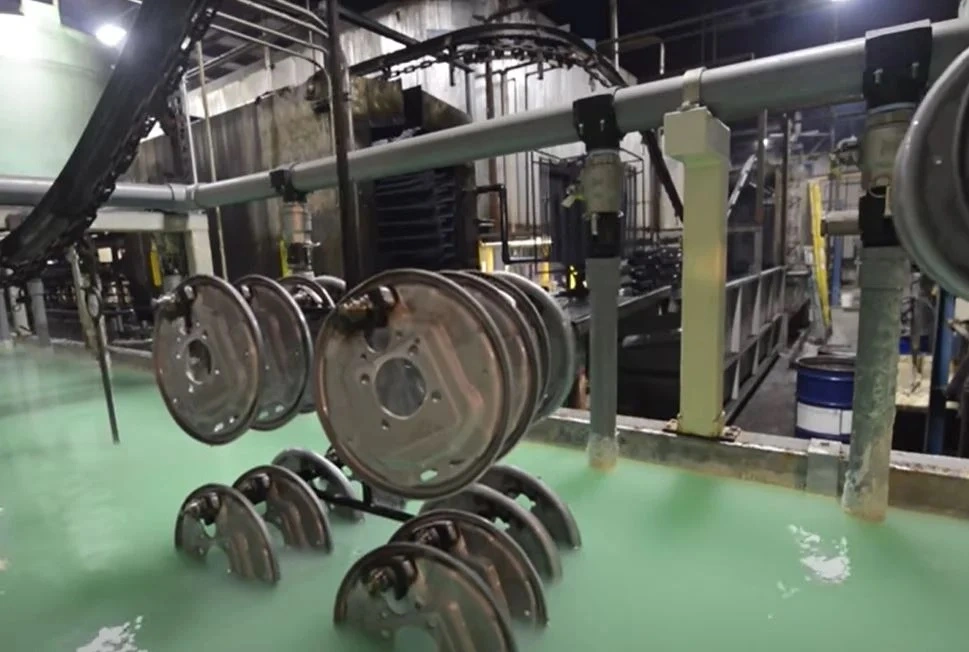
Many buyers overlook the pretreatment zone when browsing a powder coating line for sale. Yet poor cleaning causes adhesion failures. Inspect:
Spray nozzle condition – clogged or worn nozzles reduce coverage. Ask for nozzle orifice wear report.
Tank heating systems – immersion heaters or heat exchangers should maintain 50–60°C for iron phosphate, 40–45°C for nano-ceramic.
Water quality – reverse osmosis (RO) rinse stages must show conductivity < 30 µS/cm to avoid salt deposits.
Request a chemical supplier’s inspection report from the last 12 months. If the line uses an older zinc phosphate process, verify that sludge removal system (drag-out or filtration) is functional.
5. Color Change Flexibility & Quick-Change Features
For high-mix low-volume (HMLV) shops, color change time is a decisive factor. When evaluating a powder coating line for sale, test the changeover process. Industry benchmarks:
Standard colors (black, white, RAL shades) – ≤ 15 minutes for cartridge booths with sweep-air.
Metallic / effect powders – ≤ 35 minutes, including full cyclone purge and hopper swap.
Quick-release powder pumps and hoses – look for push-to-connect fittings and color-coded hose sets.
Ask if the line includes an acoustic cleaning system (air horns at 6–8 bar) to dislodge residue from hopper walls. This alone can reduce changeover time by 40%.
6. Energy Consumption & Heat Recovery Systems
Operating costs often exceed the initial purchase price within two years. Request utility records for the powder coating plant from the seller. Key metrics:
kWh per ton of coated parts – typical range: 150–300 kWh/ton for convection ovens, 80–150 kWh/ton for IR/convection hybrids.
Exhaust heat recovery – cross-flow plate exchangers should recover 50–60% of oven stack heat.
Variable frequency drives (VFDs) on all fans and conveyor drives – reduces idle energy by 30–50%.
HANNA offers an energy audit template that calculates payback period for retrofitting insulation or burner controls.
7. Automation Level & PLC Integration
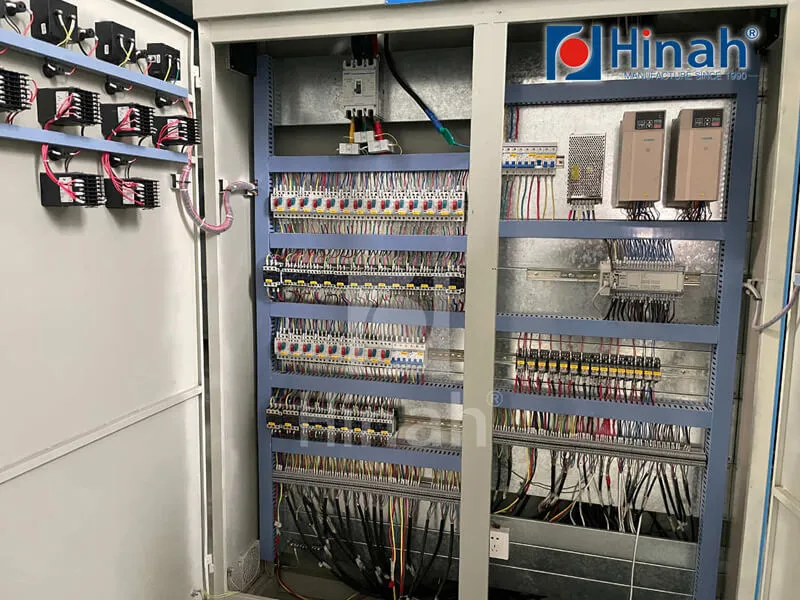
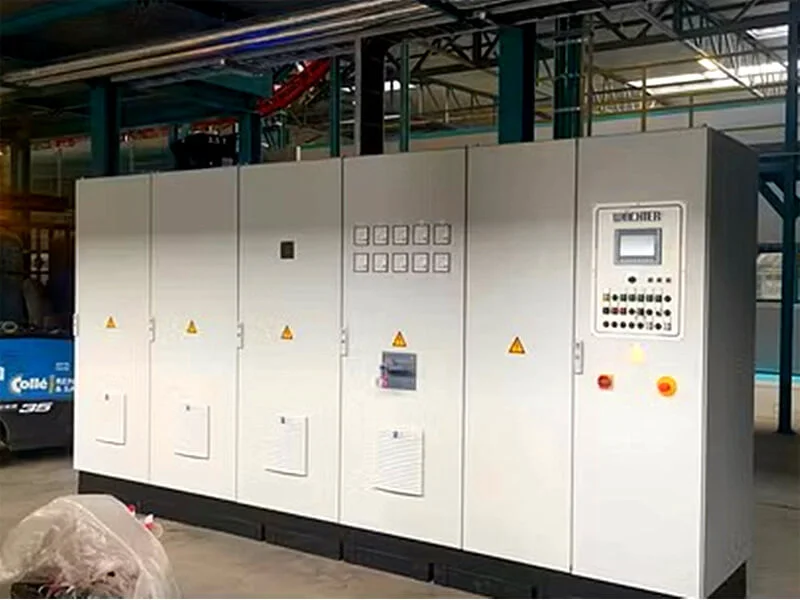
Modern lines use programmable logic controllers (PLC) to synchronize conveyor, booth, oven, and pretreatment. When inspecting a powder coating line for sale, verify:
Recipe management – store at least 50 color/cure profiles with one-button recall.
Remote monitoring capability – OPC UA or Modbus TCP for connection to SCADA.
Alarm history & diagnostics – log last 1,000 events with timestamps.
Avoid proprietary PLC models that are obsolete (e.g., Siemens S5, Allen‑Bradley PLC‑5). Replacement parts for these can cost 3–5x more than modern equivalents.
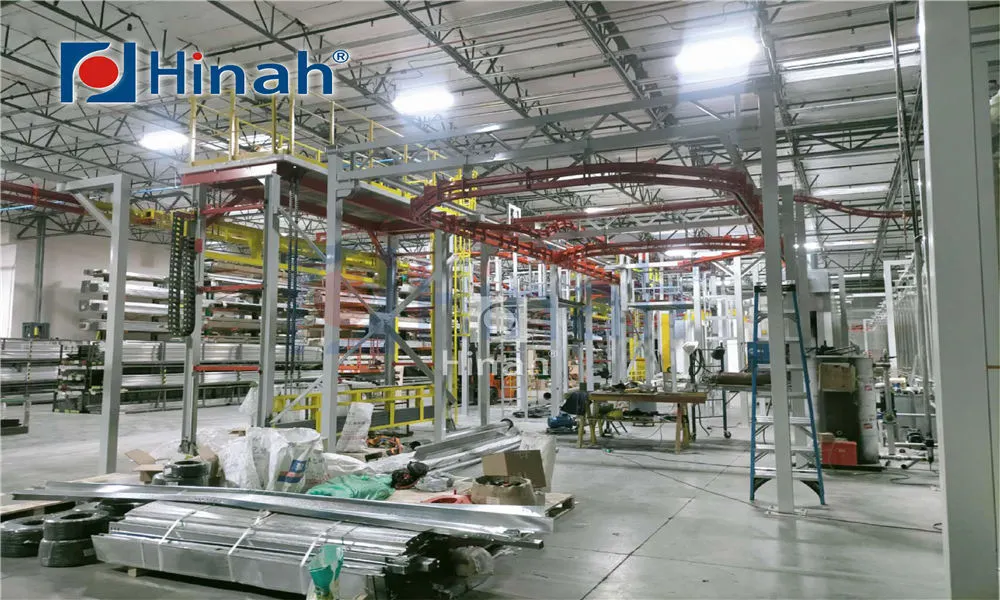
8. Structural Condition & Wear Parts Inventory
Physical inspection is mandatory. Look for:
Oven insulation – check for sagging panels or rusted outer skins. Measure external surface temperature: should be ≤ +5°C above ambient.
Conveyor chain wear – measure chain elongation; replace if > 3% over original length.
Booth filter cartridges – inspect for holes or caking. Request remaining service hours estimate.
Burner heat exchangers – cracks or soot indicate incomplete combustion and risk of CO leakage.
Ask the seller for a list of spare parts included (belts, bearings, thermocouples, nozzle tips). A well-maintained line comes with documented maintenance logs.
9. Compliance Certificates & Emission Controls
Regulatory non-compliance can shut down a powder coating plant after purchase. Request copies of:
NFPA 33 or EN 12981 certification – for explosion protection.
Local emission permits – VOC (volatile organic compound) limits, if the line includes liquid pretreatment chemicals.
Stack test results – particulate emissions should be below 10 mg/Nm³ for cartridge booths.
If the line lacks a baghouse or secondary filter for oven exhaust, you may need to add one to meet air quality rules. Factor that into your budget.
10. Supplier Support & Warranty Transfer
When purchasing a used or reconditioned powder coating line for sale, understand what support transfers. Critical questions:
Does the original manufacturer (OEM) still offer technical support and spare parts?
Is there a warranty on reconditioned components (e.g., 12 months on motors, 6 months on burners)?
Will the seller provide onsite commissioning and operator training? (Days of training should be specified in the contract.)
HANNA provides third-party condition assessments for buyers considering any line, verifying each of the ten criteria above and delivering a risk score.
Case Study: Avoiding a $200,000 Mistake
A furniture manufacturer found a powder coating line for sale at 40% below new price. Our HANNA inspection revealed: oven temperature variation of ±12°C (failed uniformity), missing explosion vents, and a conveyor chain elongation of 5.2%. Retrofit costs would have exceeded $200,000. The buyer instead invested in a refurbished line with certified thermal profiling and full NFPA compliance, achieving 98% first-pass yield within three months.
Frequently Asked Questions (FAQ)
Q1: What is the typical payback period for a new powder coating line
compared to a used one?
A1: A new line with energy-efficient
components (VFDs, IR oven, heat recovery) typically pays back in 18–30 months
via reduced utility and rework costs. A used line may have a lower upfront price
but often requires $50,000–$150,000 in retrofits, extending payback to 36–48
months. Always request 12 months of utility bills and reject rate data before
deciding.
Q2: How do I calculate the required oven length for my production
target?
A2: Use the formula: Oven length (m) = Conveyor speed
(m/min) × Required dwell time (min). For example, if you need 10 minutes at
190°C and plan 4 m/min line speed, the oven must be 40 m heated length. Add 2–3
m for entrance and exit vestibules to prevent heat loss. Many sellers of a powder coating
line for sale can provide a thermal simulation to verify this.
Q3: What are the most common hidden defects in used powder coating
lines?
A3: Top five: (1) worn conveyor bearings causing jams, (2)
crystallized powder inside booth hoppers (reduces recovery), (3) cracked oven
burner refractory, (4) corroded pretreatment spray nozzles, (5) failed
thermocouples giving false oven readings. A professional inspection using
borescope and thermal imaging is strongly recommended before purchase.
Q4: Can a powder coating line be modified to handle both metal and
MDF (wood) substrates?
A4: Yes, but requires significant changes.
MDF needs lower curing temperatures (130–150°C) and longer dwell to avoid
outgassing. You would need a dual-temperature oven with separate zones, plus a
different conveyor hanger system. Most standard lines are not designed for this
hybrid operation. Consult with an integrator like HANNA to assess
feasibility.
Q5: What documentation should the seller provide for a used powder
coating line?
A5: Minimum required: (a) Original OEM manuals and
electrical schematics, (b) Last 3 years of maintenance logs, (c) Temperature
uniformity test reports (if available), (d) Spare parts list with part numbers,
(e) NFPA compliance certificates. If any of these are missing, assume additional
engineering costs to reverse-engineer the system.
Request a Line Assessment or Quote
Whether you are considering a new or used powder coating line for sale, a data-driven evaluation prevents costly surprises. HANNA provides remote and onsite assessments covering all ten criteria above, plus a detailed ROI model. Send your part drawings, target output, and powder type to receive a customized recommendation, including line layout, energy estimates, and commissioning support.
Submit an inquiry to our engineering team → Click here for a fast response (within 24 hours)