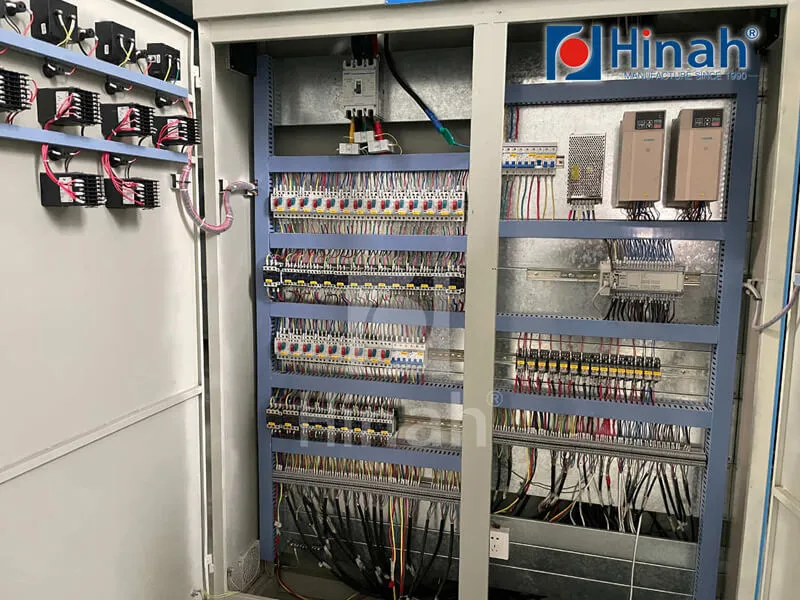

In modern finishing lines, the automatic paint robot has evolved from a novelty to a cornerstone of high-quality, high-throughput production. These intelligent systems combine articulated robotics with advanced fluid delivery, vision sensing, and adaptive software to apply coatings with repeatable perfection—far exceeding human capabilities. Yet, selecting and integrating the right automatic paint robot requires a deep understanding of kinematics, atomization technology, and process control. This article provides a comprehensive, data-driven look at robotic painting, addressing common pain points and offering actionable solutions for finishing engineers and plant managers.
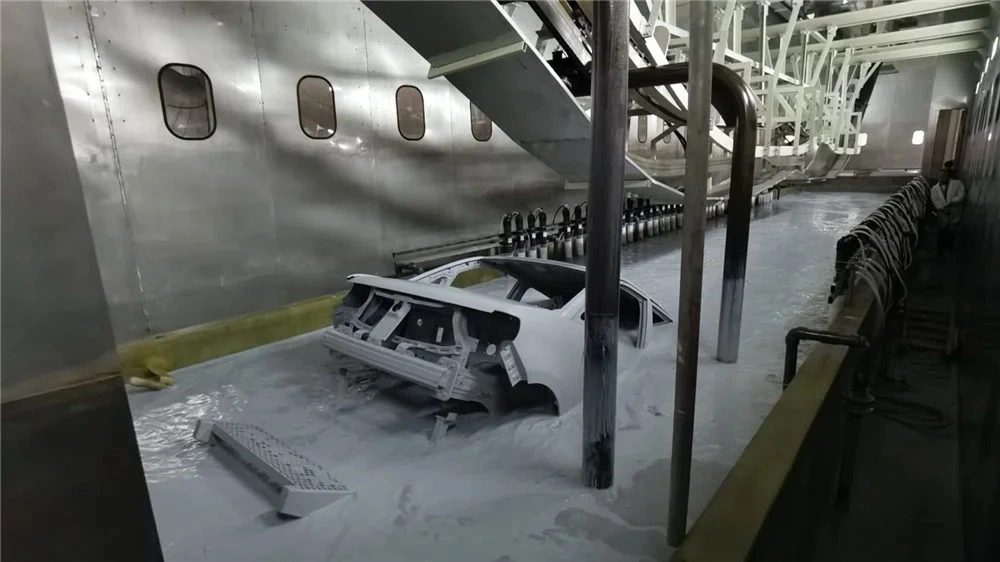
An automatic paint robot is a programmable multi-axis manipulator equipped with painting-specific tools and software. Unlike manual spraying, these robots execute precise paths, control fluid delivery in real time, and adapt to part variations. They are typically deployed in spray booths or cells, integrated with conveyors, and networked with plant control systems. The core components include a robotic arm (6 or 7 axes), a paint applicator (air spray, airless, electrostatic bell, or powder gun), a vision system for part recognition, and an offline programming (OLP) suite that simulates and optimizes trajectories.
Modern paint robots use lightweight, explosion-proof designs with high repeatability (±0.1 mm or better). Wrist articulation is critical for accessing complex cavities. For example, automotive interior painting often requires 7-axis robots to navigate tight angles without colliding with fixtures.
Air spray: Fine atomization, high transfer efficiency with HVLP; ideal for decorative finishes.
Airless/air-assisted airless: Higher fluid output for heavy coatings like anti-corrosion layers.
Electrostatic bells: Achieve transfer efficiencies above 85% by charging paint particles; essential for automotive clear coats.
Powder coating guns: Used with corona or tribo charging for automatic paint robot cells handling powder.
3D vision or laser scanners identify part geometry and location on the conveyor. This data feeds into the robot controller, enabling dynamic path adjustment—critical for mixed-model lines. Some systems use “through-the-arm” cabling to prevent snagging.
Offline programming software (e.g., RobotStudio, RoboDK) allows engineers to simulate paths, calculate cycle times, and validate coverage. Advanced algorithms optimize gun orientation to maintain constant standoff distance and angle, reducing film thickness variation. Real-time control systems adjust fluid flow and atomization pressure based on part speed and geometry.
When evaluating an automatic paint robot, several quantifiable metrics define success:
Transfer Efficiency (TE): Modern robotic cells achieve 70–90% TE (vs. 30–50% manual), drastically reducing paint consumption and VOC emissions.
Film Thickness Uniformity: Robotic application maintains ±5–10% variation across complex surfaces, ensuring compliance with corrosion specs.
Cycle Time: Robots can match line speeds up to 10 m/min, with multi-robot synchronisation for high-volume parts.
Defect Rate: Automated systems typically reduce rework from >5% to <1%, thanks to consistent gun triggering and motion.
Mean Time Between Failures (MTBF): Industrial paint robots often exceed 50,000 hours of reliable operation.
Manual spraying suffers from operator fatigue and skill variation. Solution: Robots execute the same program every cycle, eliminating drift. Vision-guided systems adjust for part placement errors, ensuring complete coverage without overspray.
Finding experienced painters is increasingly difficult. Solution: One operator can oversee multiple robotic cells after minimal training. HANNA offers intuitive teach pendants and offline programming to simplify robot deployment.
Overspray from manual guns wastes paint and increases abatement costs. Solution: High TE of robotic applicators reduces paint usage by 30–50% and cuts VOC emissions proportionally. Robotic cells also enable precise application of waterborne coatings, meeting strict EPA regulations.
Frequent changeovers kill productivity. Solution: Modern automatic paint robot systems store hundreds of part programs and automatically swap applicators or adjust parameters. Quick-color-change booths integrated with robots allow batch sizes as small as one.
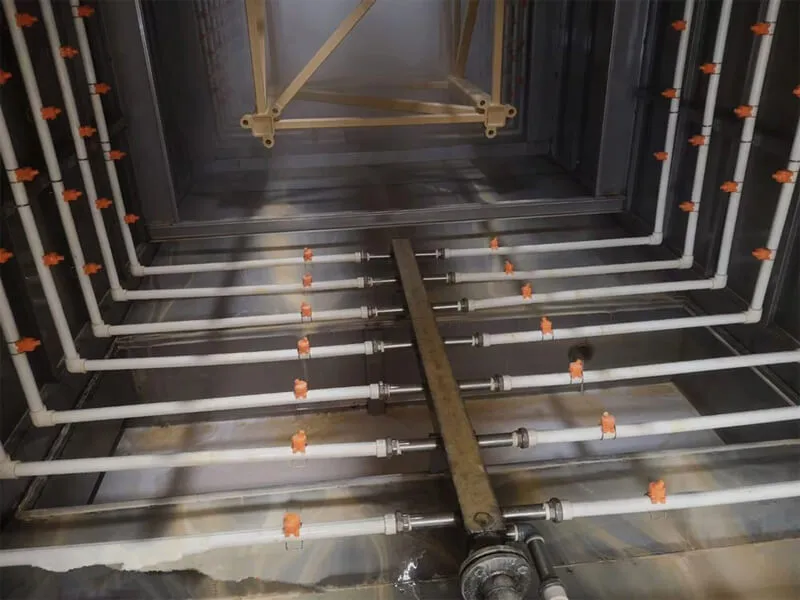
Automatic paint robots excel across diverse industries:
Automotive: Car bodies, wheels, bumpers—robots apply primer, basecoat, and clearcoat with flawless finish.
Aerospace: Large components like wing skins require robots with extended reach and anti-static capabilities for sensitive substrates.
General Industrial: Agricultural equipment, construction machinery—robots apply heavy-duty coatings in harsh environments.
Wood & Plastics: Robots handle delicate substrates with low-pressure application, ideal for furniture and consumer goods.
Marine & Protective Coatings: Automated blasting and painting of ship sections using robots increases throughput and worker safety.
Integrating an automatic paint robot into an existing line requires expertise in conveyor synchronization, booth design, and safety. HANNA provides turnkey robotic painting cells that include:
Robotic arms from leading brands (Fanuc, ABB, Kuka) with explosion-proof certification.
Custom end-of-arm tooling (EOAT) including multiple gun types and quick-change systems.
Integration with conveyor tracking (encoder feedback) for moving line applications.
Safety interlocks, light curtains, and zone control compliant with ISO 10218.
Training and offline programming support to minimize downtime during installation.
HANNA’s engineers use digital twin simulation to validate robot paths and cycle times before any hardware is installed, ensuring first-pass success.
The next generation of automatic paint robots leverages artificial intelligence and cloud connectivity. AI algorithms analyze film thickness data and adjust parameters in real time to maintain optimal quality. Digital twins allow remote monitoring and predictive maintenance—sensors on robot joints and pumps alert staff before failures occur. Moreover, collaborative robots (cobots) are beginning to appear in manual touch-up stations, blending human dexterity with robotic consistency. As finishing lines become fully connected, the automatic paint robot will serve as a data node, feeding production metrics into plant-wide MES systems.
Q1: What is the typical ROI for an automatic paint
robot?
A1: Payback periods range from 12 to 24 months depending on
volume. Key savings come from reduced paint consumption (30–50%), lower rework,
and labor reduction (one operator can manage 2–4 robots). A detailed cost
analysis should include energy, maintenance, and increased throughput.
Q2: Can robots handle complex geometries with Faraday cage
effects?
A2: Yes, modern robots use electrostatic bells with
variable voltage and air shaping to penetrate recesses. For powder coating,
tribo guns or corona guns with external charging can be programmed to address
Faraday areas. Offline simulation helps optimize gun angles for difficult
parts.
Q3: How difficult is programming an automatic paint
robot?
A3: With modern offline programming (OLP) software, creating
paths for new parts is straightforward. Operators import CAD models, define
coating zones, and simulate. Teach pendants allow touch-up adjustments. HANNA
provides training to bring in-house teams up to speed quickly.
Q4: What safety requirements are needed for robotic paint
cells?
A4: Cells must meet explosion-proof ratings (Class I,
Division 1 or 2) for flammable atmospheres. Robots should be purged or sealed.
Safety standards (ISO 10218, ANSI/RIA R15.06) require interlocks, emergency
stops, and risk assessments. Proper ventilation and fire suppression are also
mandatory.
Q5: How do I retrofit an existing line with automatic paint
robots?
A5: Retrofitting involves assessing booth space, conveyor
integration, and controls. HANNA offers modular robotic cells that can be
inserted into existing lines with minimal disruption. The key is to synchronize
robot motion with the existing conveyor encoder and update the PLC for seamless
operation.
Q6: What maintenance is required for an automatic paint
robot?
A6: Daily: clean applicators, check fluid lines. Weekly:
inspect cables and connectors, lubricate axes per manufacturer schedule.
Quarterly: calibrate fluid delivery, verify vision system alignment. Predictive
maintenance using vibration and current monitoring can prevent unplanned
stops.
Investing in an automatic paint robot is a strategic move toward higher quality, sustainability, and competitiveness. By understanding the underlying technologies—from kinematics to Industry 4.0—finishing professionals can make informed decisions that maximize their return. Partnering with experienced integrators like HANNA ensures that your robotic painting solution is engineered for long-term performance and adaptability to future coating challenges.