
For manufacturers across industries, from automotive to furniture and beyond, achieving a superior and durable finish is a non-negotiable competitive advantage. This quality is not born from a single machine but from a seamlessly integrated system: the powder coating production line. A well-designed and optimized powder coating production line is the backbone of efficient, consistent, and profitable finishing operations. This guide breaks down the five critical stages that define a world-class system, highlighting how each segment contributes to final product excellence and operational ROI. Investing in a cohesive line, rather than disparate components, is the key to unlocking peak performance, and partners like HANNA specialize in delivering these integrated, turnkey solutions.
Understanding the full journey of a part through the line is essential for identifying bottlenecks, improving quality, and reducing costs. From the moment a part enters the system to when it exits with a flawless coat, every step is interconnected. Let’s explore the core stages that make up a complete powder coating production line.
The success of any powder coating application is determined long before the powder touches the part. Pre-treatment is the critical, often underappreciated, first act.
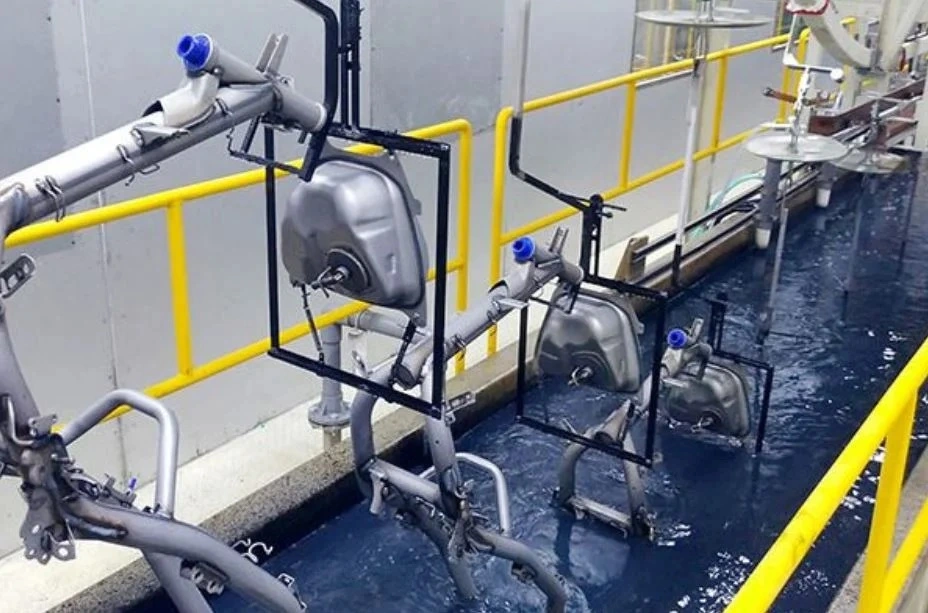
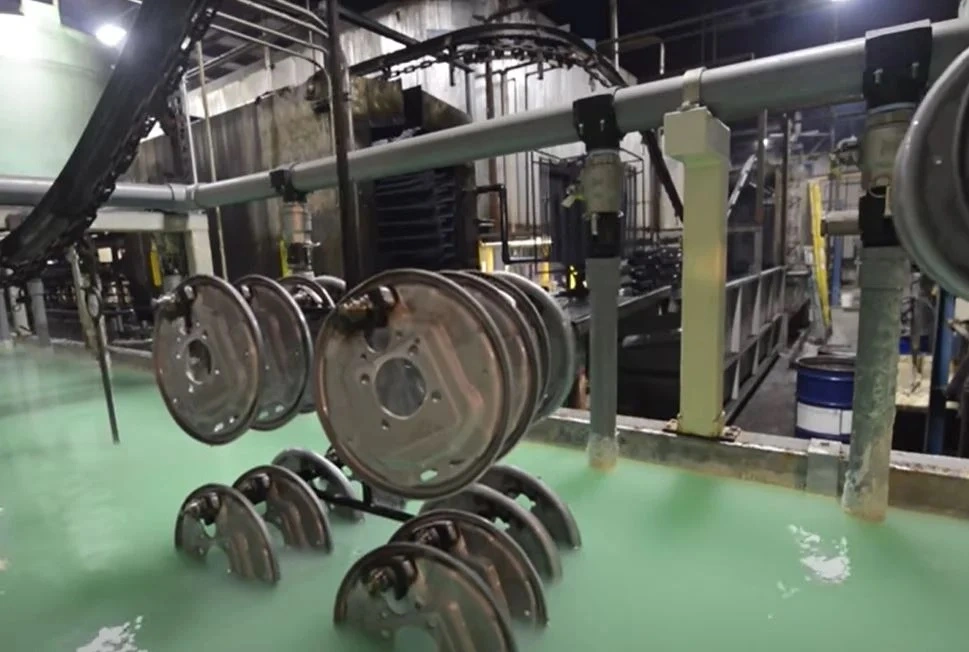
Its purpose is to remove all contaminants—oils, rust, dirt, mill scale—and create a chemically clean, reactive surface. This ensures maximum adhesion and corrosion resistance.
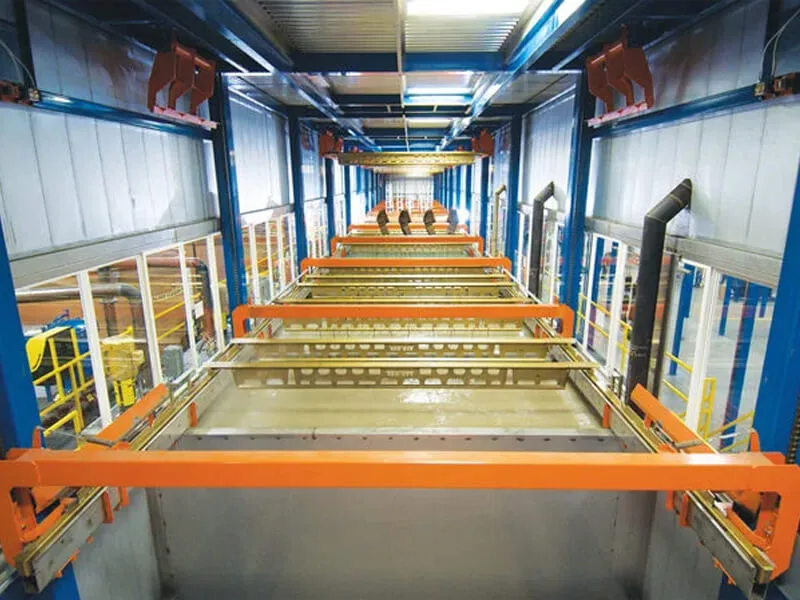
A typical multi-stage spray or immersion system includes cleaning, rinsing, conversion coating (like iron or zinc phosphate for steel, or chromium-free alternatives for aluminum), and final rinsing with deionized water.
Water quality and chemical management here are paramount. Any residue will cause catastrophic adhesion failure later. HANNA engineers emphasize that a robust, well-controlled pre-treatment stage is the single best investment for long-term coating durability.
After pre-treatment, parts must be completely dry before entering the spray booth. Even microscopic moisture will disrupt powder application and cure.
This stage typically involves a blow-off station to remove pooled water, followed by a dedicated drying oven. The oven uses lower temperatures (often 180-220°F) to evaporate all remaining moisture.
Efficient drying prevents water spotting and ensures the electrically grounded part is ready for optimal powder attraction during electrostatic application.
Skipping or undersizing this stage is a common mistake that leads directly to quality issues in the heart of the powder coating production line.
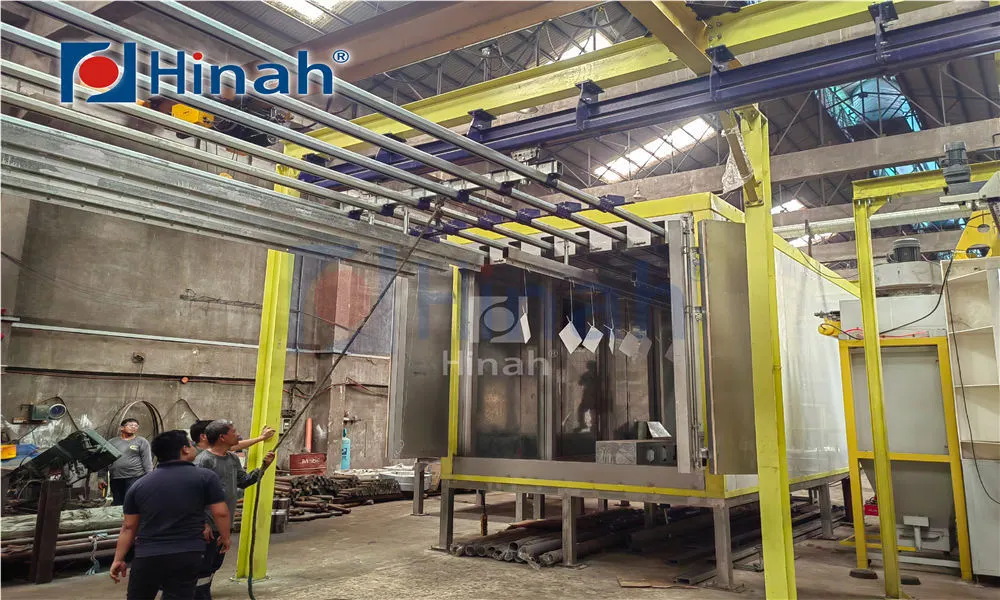
This is the most visible core of the powder coating production line. It consists of two integrated subsystems: the spray booth and the powder recovery system.
The Spray Booth: Engineers design booths to contain overspray and provide a clean, well-lit environment for operators or automated guns. Proper airflow (downdraft or crossdraft) is crucial for containing powder and directing it toward the recovery system.
Application Technology: Modern lines use advanced electrostatic guns, either manual, automatic, or a combination. Key technologies include triboelectric (friction-based charging) and corona (high-voltage electrode) charging. High-transfer efficiency guns, often part of HANNA's recommended setups, minimize waste.
Powder Recovery: This system is what makes powder coating environmentally superior and cost-effective. It typically uses cartridge filters or cyclone separators to capture over 98% of overspray powder.
The recovered powder is then sieved and reintroduced into the feed hopper in a closed-loop system, ensuring material utilization rates often exceed 95%.
Here, the applied powder coating is transformed into its final, cross-linked polymer form. The curing oven is the workhorse of this stage.
Parts must reach the substrate temperature and dwell time specified by the powder manufacturer. This is not the oven air temperature, but the actual metal temperature of the part.
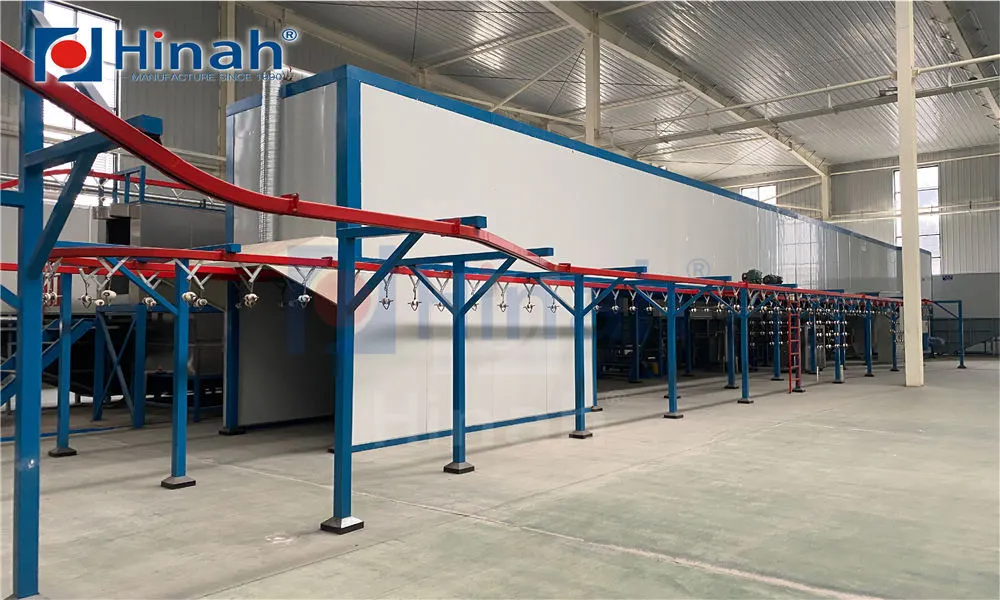
Uniform heat distribution is critical. Convection ovens with precisely engineered airflow patterns are standard in a high-quality powder coating production line. Infrared (IR) boosters can be added for rapid heating of simple geometries.
Proper curing ensures all specified physical properties—adhesion, hardness, flexibility, and chemical resistance—are fully developed. An under-cured or over-cured coating is a product failure.
The final stage is about handling the finished product and ensuring consistency. After exiting the cure oven, parts are extremely hot.
A dedicated cooling zone, often using ambient or forced air, brings parts down to a safe handling temperature. This prevents thermal distortion and allows for immediate packaging or assembly.
This is also the point for final quality control inspection. Checks for film thickness (using a DFT gauge), adhesion (cross-hatch test), gloss, and visual defects are performed.
Data from this stage should feed back into the earlier stages for continuous process improvement, closing the loop on the entire powder coating production line.
While not a "coating" stage, the conveyor system is the literal backbone that ties every stage together. It dictates the line's layout, capacity, and flexibility.
Common types include overhead monorail (for varied part sizes), enclosed track (cleaner operation), and belt conveyors for smaller items.
The conveyor speed is the master timer for the entire process, determining dwell times in pre-treatment, drying, and curing. A synchronized, reliable conveyor from a specialist like HANNA is essential for uptime.
A high-performance powder coating production line is a symphony of integrated processes. Weakness in any single stage—from inadequate pre-treatment to an uneven cure oven—compromises the entire output. The true value lies not just in the individual components, but in their seamless integration, precise control, and reliable operation. By viewing your line as a single, optimized entity and partnering with experts who understand this holistic approach, such as HANNA, you invest in unmatched finish quality, remarkable material efficiency, and a stronger bottom line. A well-engineered powder coating production line is the most strategic asset in your manufacturing arsenal.
Q1: How do we calculate the required length and speed for our new powder coating production line?
A1: The calculation starts with your desired output (parts per hour), the part dimensions, and the required dwell times in each stage (especially cure). Multiply the cure dwell time (in minutes) by your desired conveyor speed (in feet per minute) to determine the minimum oven length. A comprehensive feasibility study with a supplier like HANNA is crucial to model the entire line accurately.
Q2: Can we upgrade our existing liquid paint line to a powder coating production line?
A2: Often, yes, but it requires significant changes. The booth and application equipment are completely different, and you will absolutely need to add a powder cure oven, as baking temperatures for powder are typically higher. The pre-treatment may be reusable. A site audit by an engineering team is the first step to determine feasibility.
Q3: What is more important: automated guns or manual guns in the spray booth?
A3: It depends on volume and part consistency. For high-volume, uniform parts (like brackets), automatic guns provide unbeatable consistency and lower labor cost. For low-volume, high-mix, or complex-geometry parts, skilled manual operators are essential. Most modern lines from HANNA use a hybrid approach for maximum flexibility.
Q4: How much floor space do we need to install a complete powder coating production line?
A4: Space needs vary dramatically. A compact, batch-style system for small parts might fit in 1,000 sq. ft. A high-volume, continuous monorail line with all stages can easily require 10,000+ sq. ft. The layout is often elongated (in an "U" or straight-line shape). Your supplier should provide detailed layout drawings early in the planning process.
Q5: What are the biggest maintenance priorities for ensuring line uptime?
A5: Focus on: 1) Pre-treatment: Daily checks of chemical levels and spray nozzles. 2) Booth & Recovery: Frequent cartridge filter shaking/pulsing and sieve inspection. 3) Cure Oven: Regular calibration of thermocouples and inspection of airflow fans. 4) Conveyor: Lubrication and chain tension checks. A proactive plan, often supported by a service contract, prevents costly unplanned downtime.