
A well-engineered powder coating production line is the backbone of a durable, efficient, and high-quality finishing operation. It's more than just a spray booth; it's a coordinated system where each stage, from preparation to curing, directly impacts the final product's performance and appearance. For manufacturers aiming to achieve consistent, corrosion-resistant, and aesthetically superior finishes at scale, investing in a properly designed line is non-negotiable. This article explores the core components and considerations of a modern powder coating production line, highlighting how integrated systems drive value.
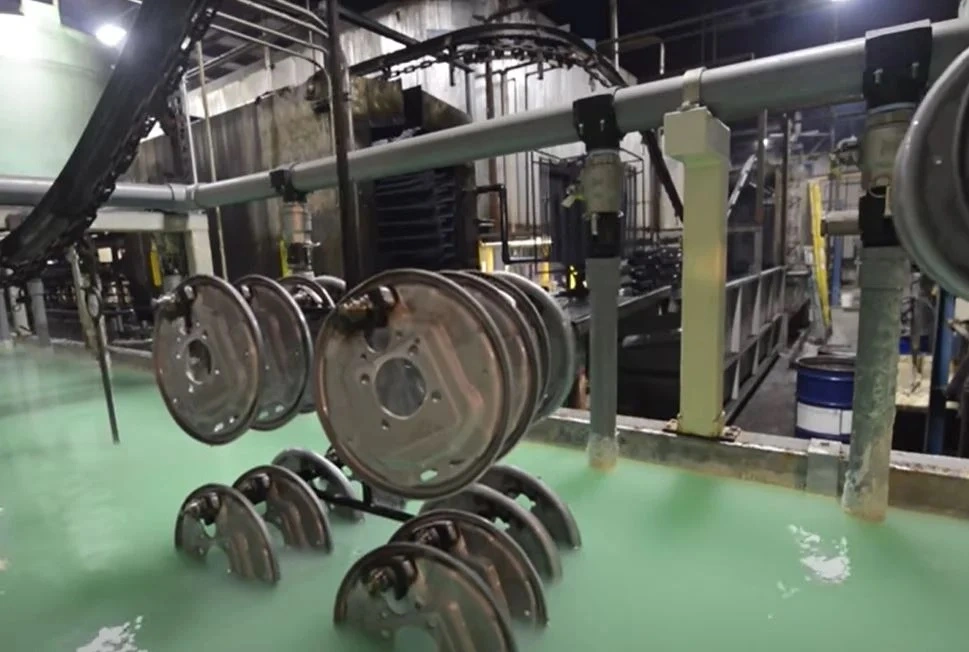
Before a single gram of powder is applied, surface preparation is critical. This phase of the powder coating production line removes contaminants and creates a surface for optimal adhesion.
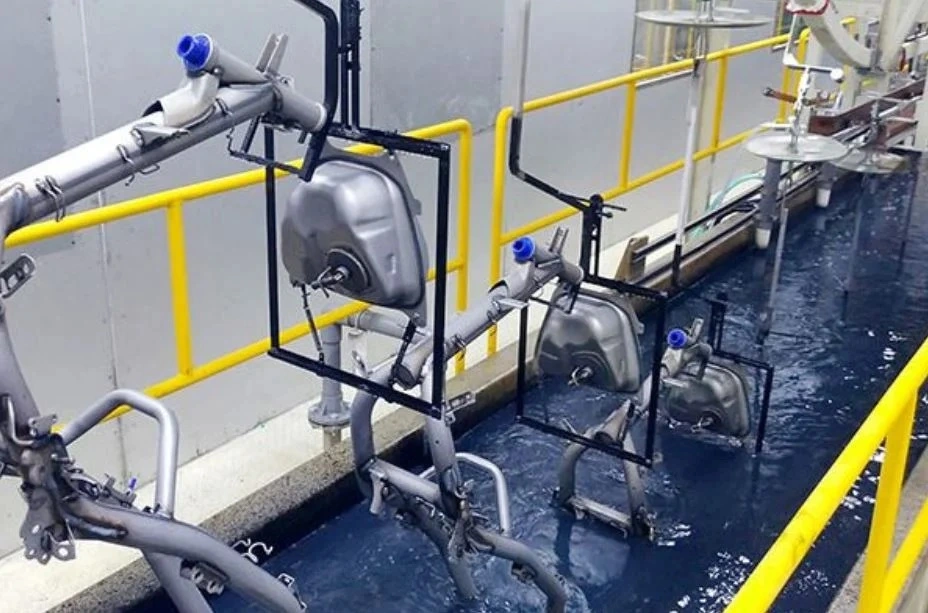
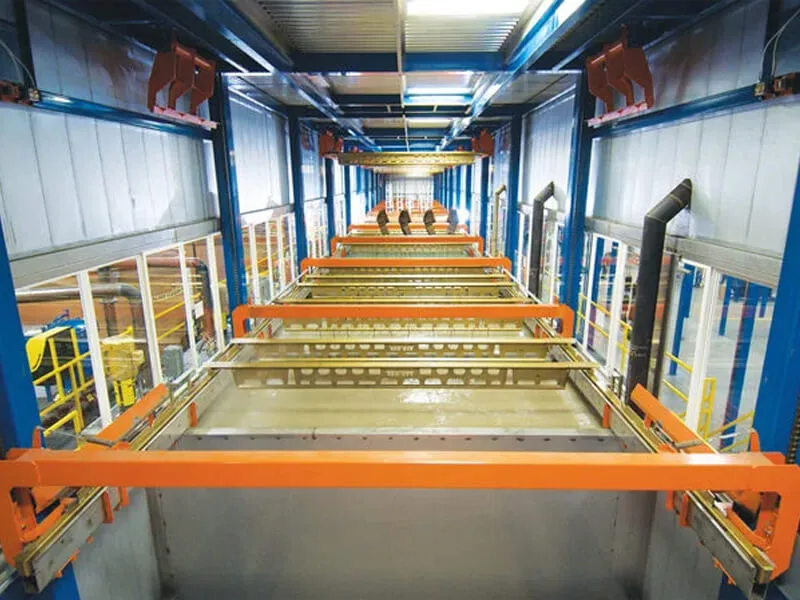
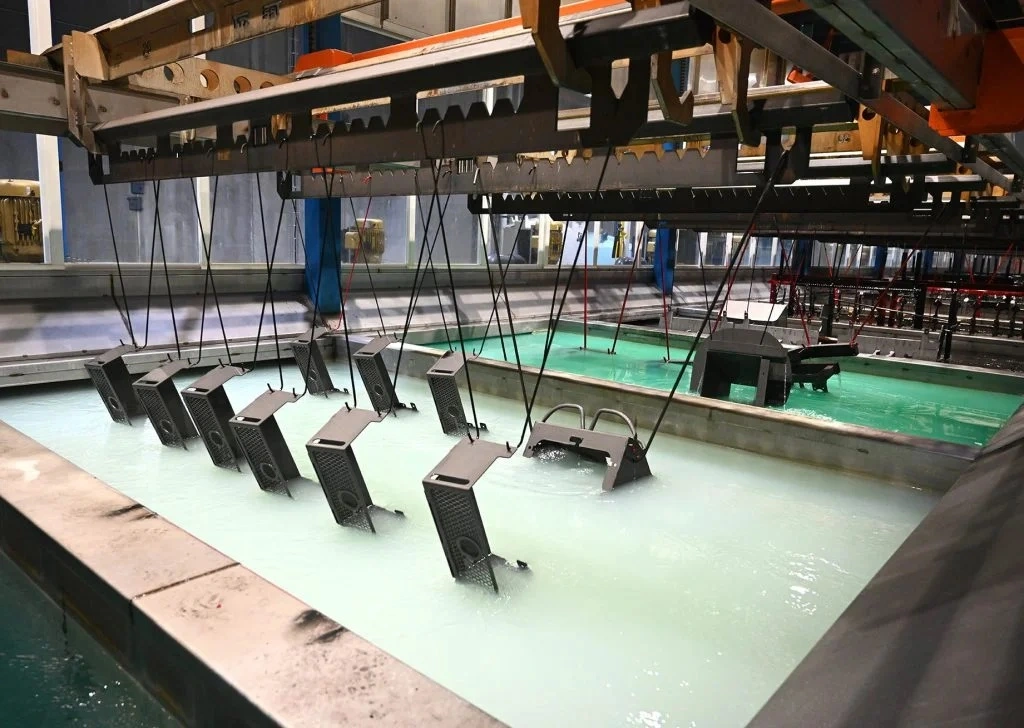
A typical pre-treatment sequence includes cleaning, rinsing, chemical conversion coating, and final rinsing. Stages often involve spray or immersion tunnels. The goal is a completely clean, chemically active surface.
Common conversion coatings include iron or zinc phosphates for steel, and chromium-free alternatives for various substrates. This layer inhibits corrosion and dramatically improves powder coating bond strength. Skipping or compromising here leads to adhesion failure.
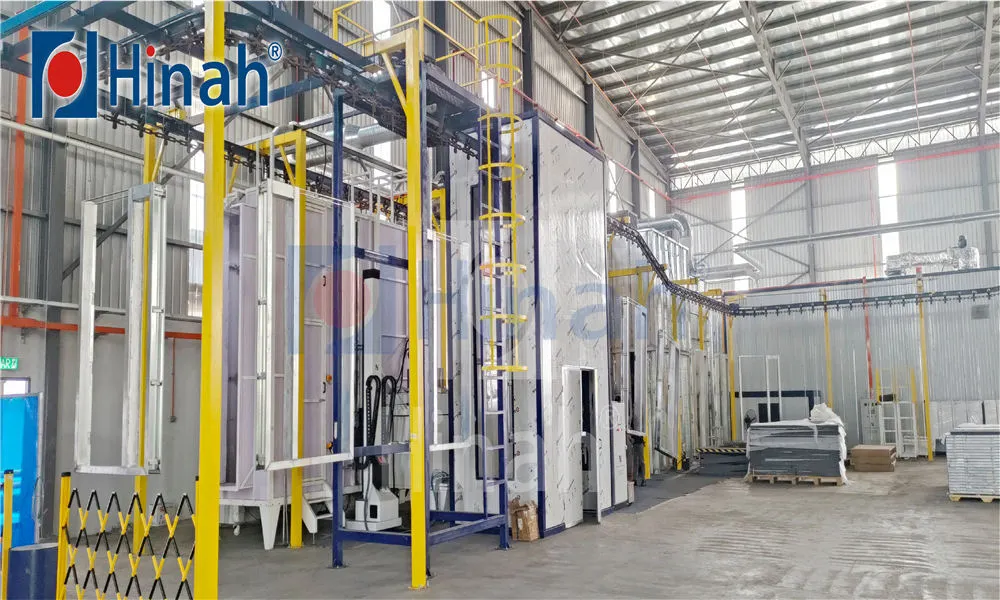
This is the most visible segment of the powder coating production line. Here, electrostatically charged powder is applied to the grounded part. Efficient application minimizes waste and ensures uniform coverage.
Two main applicator types are used: corona guns and tribo guns. Corona charging is common and versatile. Tribo charging, using friction, is excellent for coating parts with deep recesses or Faraday cage areas. Modern systems often integrate both.
A key subsystem here is the powder recovery unit. It captures overspray, filters it, and returns usable powder to the feed system. High-efficiency recovery, like from HANNA, can achieve reclaim rates over 95%, significantly reducing material costs and environmental impact.
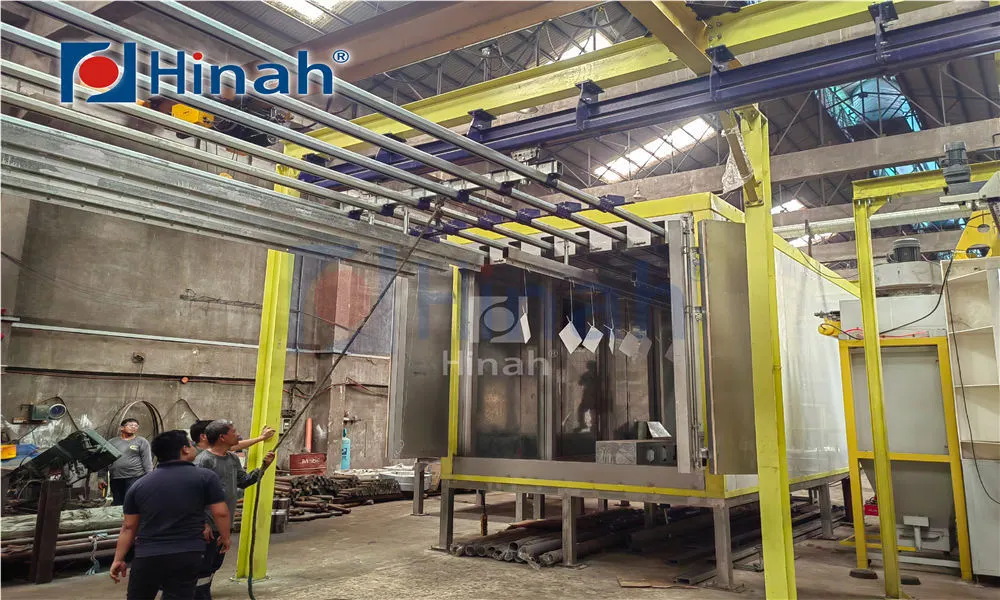
Curing is the chemical process that melts, flows, and cross-links the powder into a continuous film. The oven is a vital component in any powder coating production line.
Precise, consistent heat is mandatory. Curing ovens can be convection, infrared (IR), or a combination. Convection ovens are reliable for complex part shapes. IR ovens offer faster cure times for simpler geometries.
Temperature and time must match the powder manufacturer’s specifications. Under-curing results in a soft, poorly adhered film. Over-curing can cause discoloration and loss of mechanical properties. Accurate oven profiling is essential.
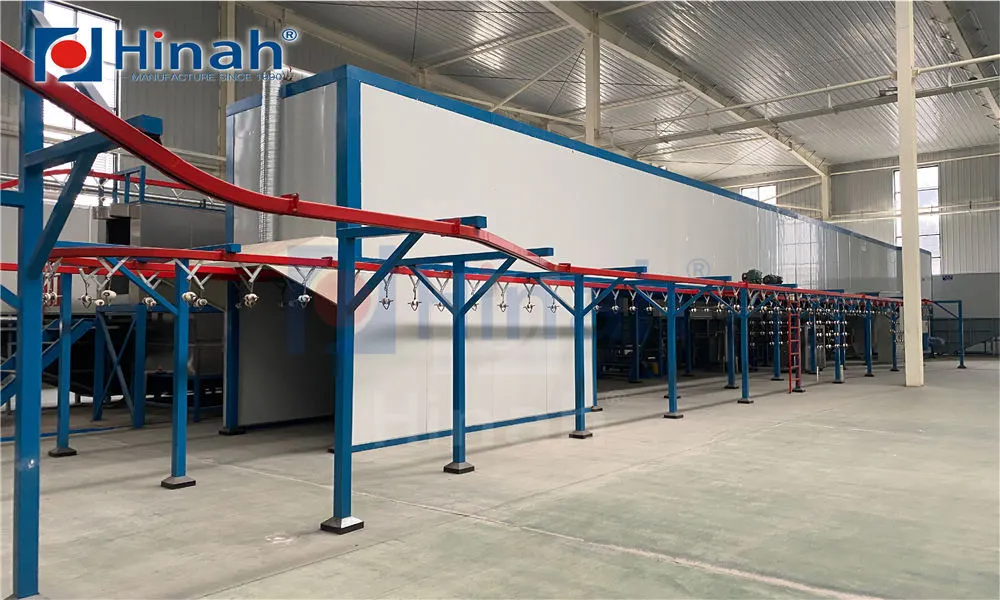
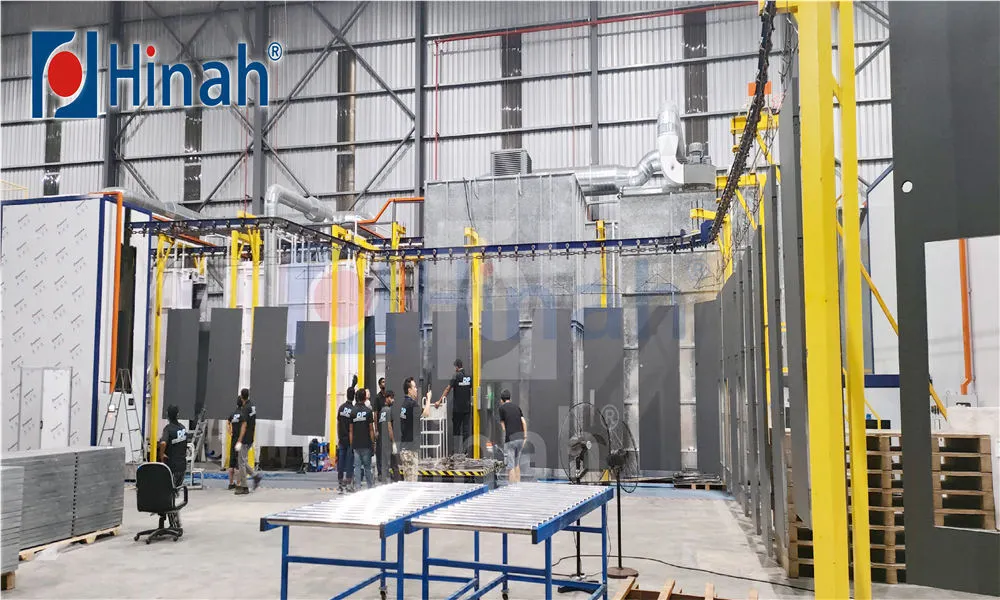
The conveyor binds all stages of a powder coating production line into a seamless process. It dictates line speed, production capacity, and handling flexibility.
Common types include overhead power & free (P&F) and monorail systems. P&F systems offer excellent flexibility for parking, sequencing, and accessing different lines. Monorails are often simpler and cost-effective for linear processes.
Design considerations include chain speed, load capacity, and transfer mechanisms. The system must handle the part's weight and withstand pre-treatment chemicals and oven temperatures without failure.
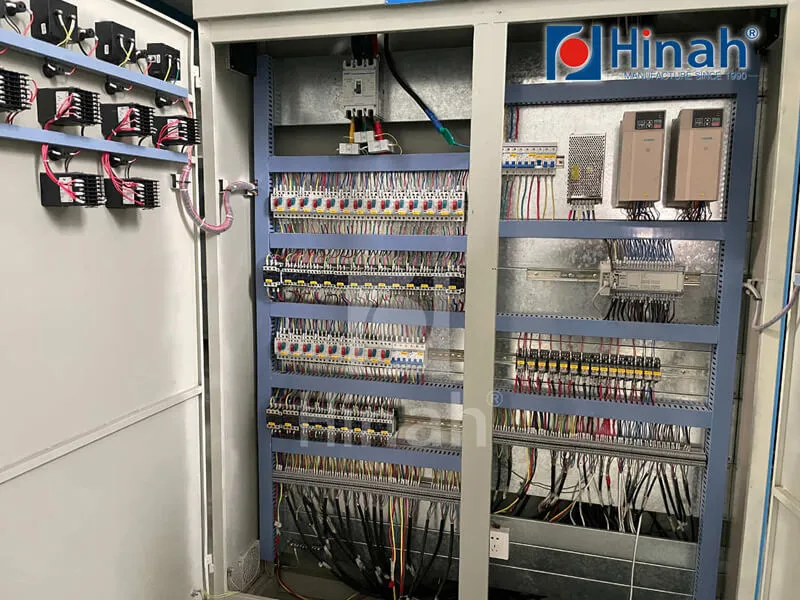
Modern lines integrate sophisticated controls. This includes programmable logic controllers (PLCs) and human-machine interfaces (HMIs) for monitoring and adjustment.
Automation can manage gun triggering, powder colour changes, oven temperature zones, and conveyor routing. This reduces human error, improves repeatability, and provides valuable production data. Integration is a hallmark of a mature powder coating production line.
Selecting disparate components from different suppliers can lead to compatibility issues and finger-pointing when problems arise. An integrated line from a single provider like HANNA ensures harmony.
HANNA designs each powder coating production line as a cohesive unit. From the pre-treatment chemistry balance to the curing oven profile, every stage is calculated to work in concert. This delivers predictable results, simplifies maintenance, and provides single-source accountability.
The outcome is maximized uptime, consistent finish quality, and lower total operating costs. HANNA’s expertise ensures your line is not just a collection of equipment, but a optimized manufacturing asset.
Ultimately, the success of your finishing department hinges on the reliability and integration of your entire powder coating production line. By understanding each critical stage and partnering with an experienced supplier like HANNA, you invest in quality, efficiency, and long-term profitability for your coating operations.
Q1: What is the typical floor space required for a powder coating production line?
A1: Space requirements vary greatly based on output and part size. A compact, basic line might need 200-300 sq. meters. Larger, high-volume systems with extensive pre-treatment and multiple ovens can require 1000+ sq. meters. HANNA engineers provide detailed layouts during the planning phase to optimize your available space.
Q2: How long does it take to install and commission a new powder coating production line?
A2: For a standard system, installation and commissioning typically take 8 to 14 weeks after equipment delivery, depending on line complexity and site readiness. This includes mechanical installation, electrical wiring, control integration, and process tuning. HANNA manages this process with detailed project timelines.
Q3: Can one powder coating production line handle multiple colours efficiently?
A3: Yes, but changeover time is a factor. Lines use quick-change powder hoppers or carts for small batch colour changes. For frequent changes, a dedicated multi-colour booth with multiple feed systems and fast purge technology, like HANNA's Quick-Change system, minimizes downtime to just a few minutes.
Q4: What are the most critical maintenance routines for a powder coating line?
A4: Daily tasks include checking powder recovery filters and cleaning application guns. Weekly, inspect booth cleanliness and conveyor mechanisms. Monthly, verify oven calibration and pre-treatment chemical concentrations. HANNA provides comprehensive maintenance schedules and training to prevent unplanned stoppages.
Q5: How does a powder coating production line compare in cost to a traditional liquid paint line?
A5: Initial capital investment can be higher due to the oven and recovery systems. However, operational costs are often lower. Powder coating lines eliminate solvents, achieve near 100% material utilization with recovery, and require less energy for ventilation. The long-term ROI is typically favourable due to less waste, lower VOC compliance costs, and superior finish durability.