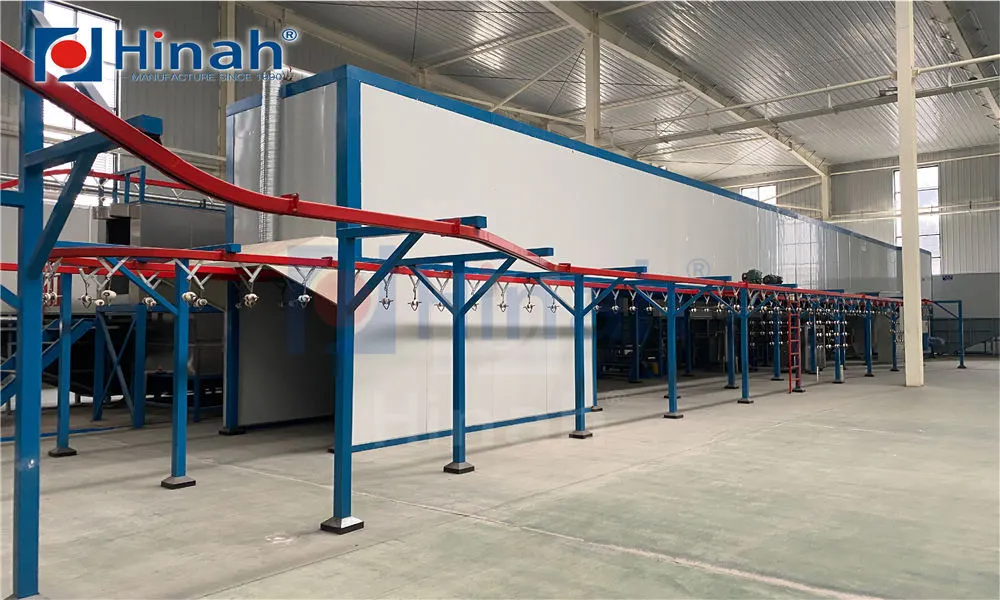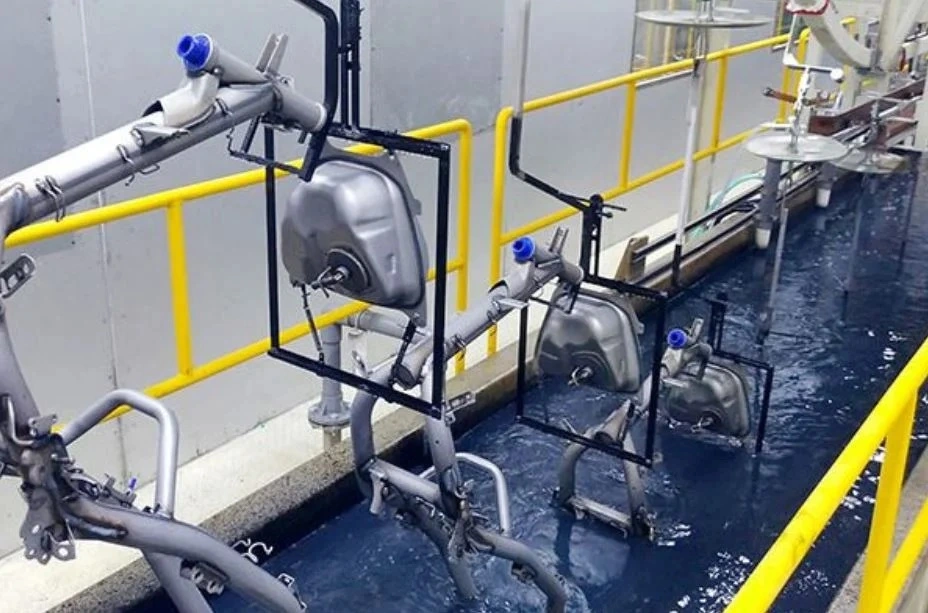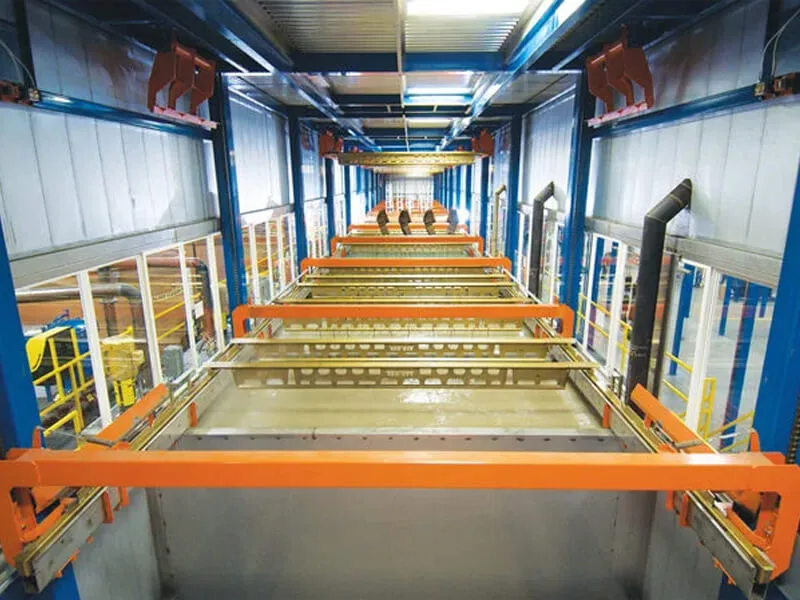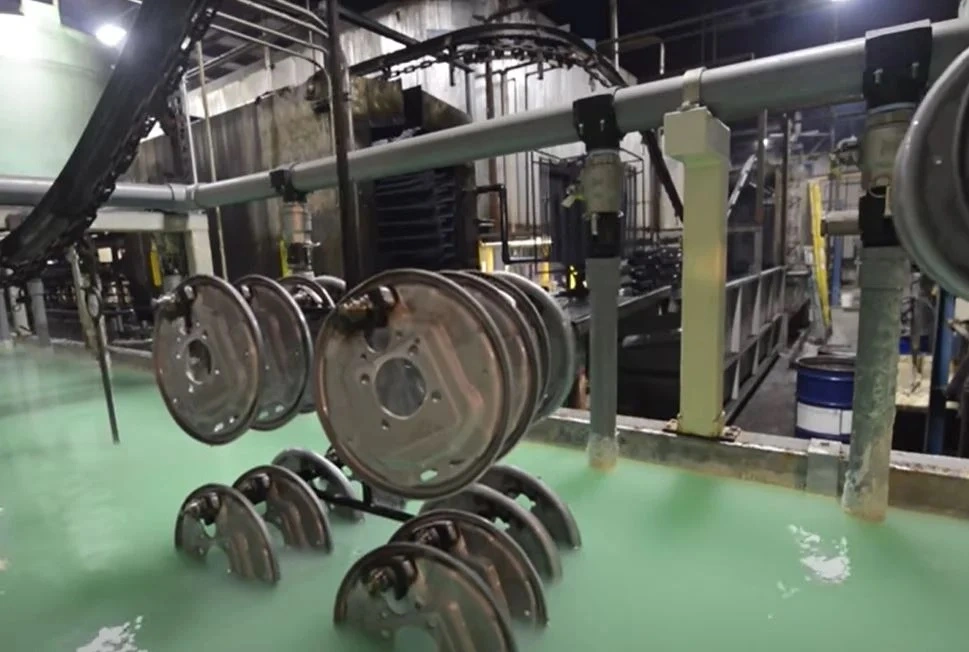

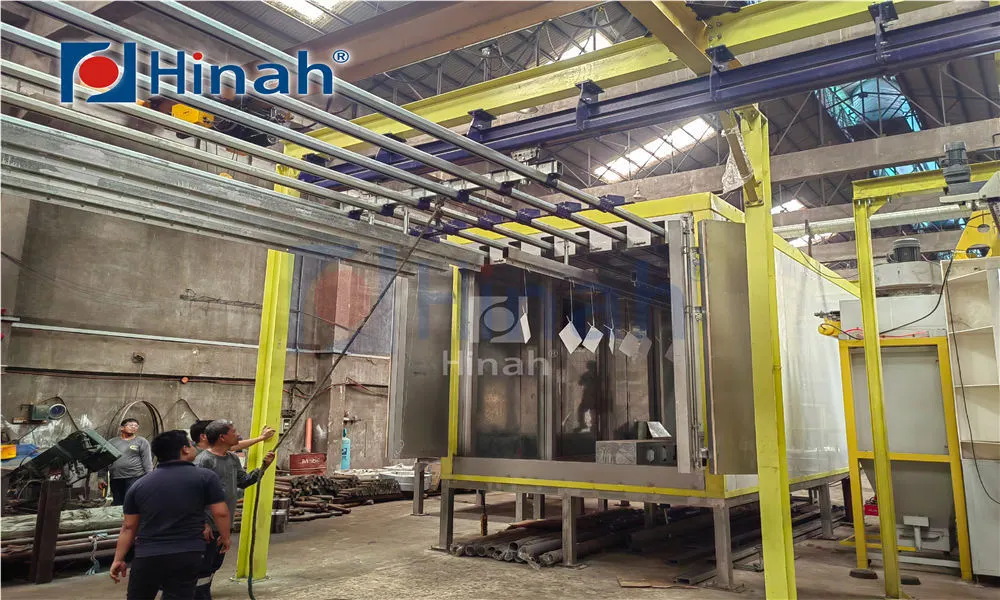
In modern industrial finishing, the powder coating oven and spray booth are no longer isolated components but a tightly integrated ecosystem. The precision of electrostatic application is rendered meaningless without a curing cycle that guarantees molecular cross-linking, while the most sophisticated oven profile cannot compensate for inconsistencies in powder deposition. For operations targeting first-pass yield rates above 95%, the engineering alignment between these two stations dictates total cost of ownership, energy efficiency, and final film integrity. This article dissects the technical specifications, process interdependencies, and engineering solutions that define high-performance coating lines, drawing on data from installations managed by HANNA across automotive, architectural, and heavy machinery sectors.
The curing oven is where thermoplastic or thermoset powders undergo phase transition and chemical cure. The primary objective is to bring the substrate to a specified metal temperature (typically between 180°C and 210°C) and maintain it for the required dwell time, usually 10 to 20 minutes depending on part mass and powder chemistry. However, the industry’s persistent challenge is temperature uniformity. A variance exceeding ±5°C across the part or within the oven chamber leads to under-cure (resulting in poor adhesion and chalking) or over-cure (causing discoloration and loss of mechanical properties).
While conventional convection ovens rely on air turbulence and heat transfer, modern high-throughput facilities often employ a hybrid approach. Gas-fired convection ovens remain the standard for mixed-product lines due to their ability to evenly heat complex geometries. However, they require meticulous recirculation design. Data from HANNA installations indicate that replacing standard axial fans with variable-frequency-drive (VFD) controlled centrifugal fans improves temperature uniformity by up to 40%, simultaneously reducing natural gas consumption by 18-22%.
For high-mass components or thin-gauge substrates, medium-wave infrared (IR) boosters are integrated prior to the convection zone. IR energy penetrates the coating film without excessively heating the substrate in the initial zone, preventing outgassing defects. The critical engineering metric here is the specific power density (kW/m²), which must be calibrated against line speed and part geometry to avoid "skin-over" effects where the outer layer cures before solvents or air are fully expelled from the substrate.
The powder coating oven and spray booth relationship begins with contamination control. A spray booth’s primary function is to contain overspray, maintain optimal humidity (40-55% relative humidity) for electrostatic charging, and ensure a Class 100,000 or better cleanliness level. The booth’s airflow pattern—whether cross-draft, downdraft, or semi-downdraft—directly influences Faraday cage penetration and film build consistency.
Modern booths utilize multi-stage filtration. High-efficiency cartridge filters with a rating of MERV 15 or higher capture particles down to 0.5 microns, ensuring that recirculated air does not reintroduce contaminants. For high-volume operations, fast-color-change (FCC) booths equipped with modular cyclone recovery systems minimize downtime. The engineering focus has shifted to booth wall geometry: anti-stick coatings (such as PTFE-infused panels) reduce powder adhesion, facilitating quicker purges. In a recent line upgrade for an agricultural equipment manufacturer, HANNA implemented a booth with a 45° plenum design that reduced color-change time from 45 minutes to under 12 minutes, directly improving OEE (Overall Equipment Effectiveness).
The conveyor system acts as the central nervous system linking the spray booth and the curing oven. Inconsistent indexing or variable line speeds create a cascade of defects. For example, if the conveyor hesitates before the oven entrance, parts may experience extended pre-gel dwell, leading to orange peel. Conversely, accelerating too quickly can reduce the effective dwell time in the oven.
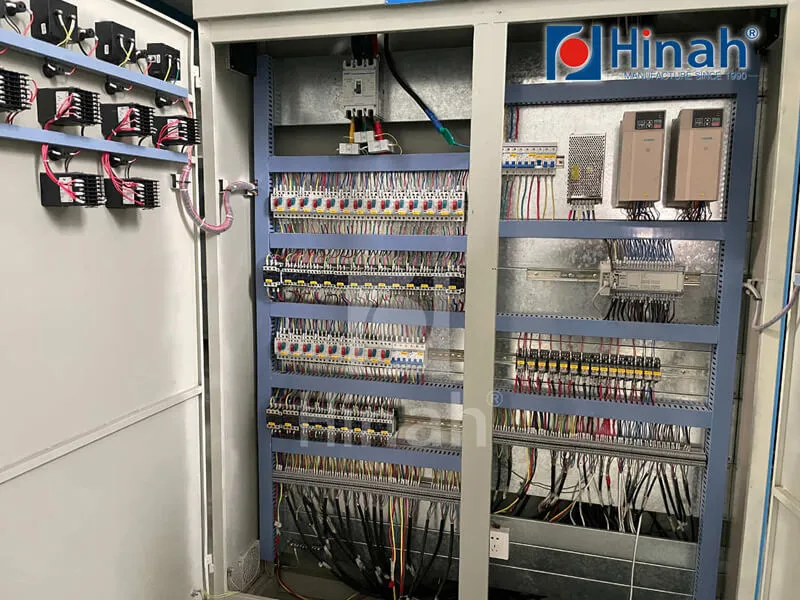
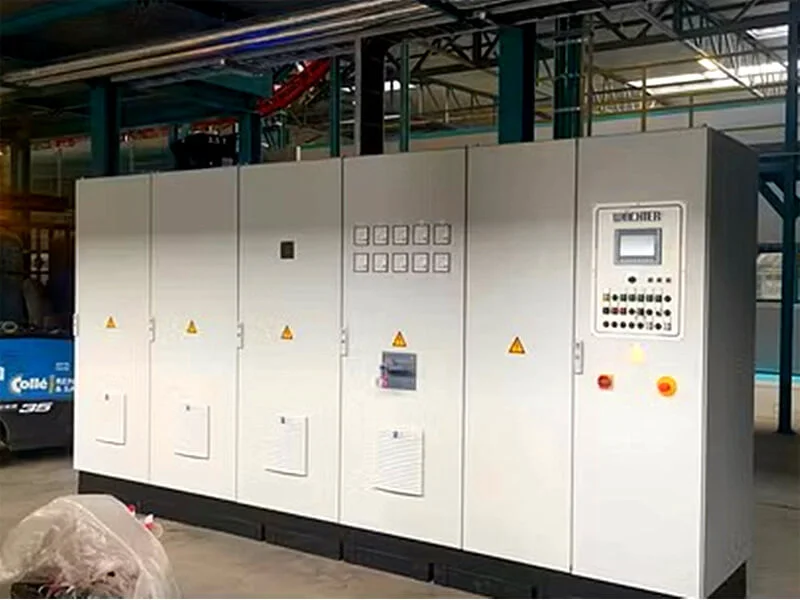
Advanced lines utilize inverter-controlled monorail or power-and-free systems that communicate with oven zone controllers via PLC (Programmable Logic Controller) networks. This allows for recipe-based control: when a heavy steel fabrication enters the line, the system automatically reduces line speed and adjusts oven zone temperatures to maintain the precise metal temperature curve. The convergence of Industry 4.0—using thermal imaging cameras and data loggers—provides real-time feedback loops to adjust burner modulation, ensuring that the powder coating oven and spray booth operate as a unified thermodynamic system.
To achieve a Six Sigma level of quality, engineers must preemptively address failure modes that span both the application and curing stages.
Contamination is the leading cause of rework in powder coating lines. Sources include:
Airborne particulates: Silicone residues from mold releases or ambient dust drawn into the spray booth or oven.
Outgassing: Porosity in castings or weld seams releasing gases during the cure cycle, causing pinholes or bubbles.
Cross-contamination: Residual powder from previous color cycles affecting color purity.
Solutions involve installing HEPA after-filters on oven makeup air units, implementing pre-heat outgassing cycles at 120°C for cast components, and using booth designs with sweep-air plenums to eliminate dead zones where powder can accumulate.
Mixed-product lines face the challenge of varying thermal mass. If a line
processes both 2mm sheet metal and 20mm castings in the same run, the lighter
parts may over-cure while heavy parts remain under-cured. The engineering
solution is zoned oven control with PID
(Proportional-Integral-Derivative) tuning and adjustable baffles. In
custom-engineered systems by HANNA, oven zones are
independently controlled, and the conveyor is divided into sections with varying
speeds. This "thermal zoning" approach reduces energy waste by 15% while
ensuring consistent cure across diverse product families. Energy consumption in finishing lines is dominated by the curing oven,
accounting for 70-80% of total utility costs. Modern engineering focuses on
reducing this footprint without compromising quality. Insulation upgrades: High-density mineral wool panels (6
inches thick with a thermal conductivity of 0.038 W/mK) reduce heat loss.
Retrofitting older ovens with such insulation typically yields a sub-2-year
ROI. Heat recovery systems: Exhaust air from the oven (rich in
BTUs) is passed through a plate heat exchanger to pre-heat fresh makeup air.
This reduces burner firing time by 25-30% in colder climates. Oven-to-booth air balancing: Maintaining a negative
pressure in the spray booth relative to the oven prevents hot, particulate-laden
air from migrating into the application zone. Pressure differential transducers
(accurate to ±0.01 inH₂O) are now standard in high-spec lines to maintain
atmospheric stability. The chemical composition of the powder coating directly impacts equipment
requirements. TGIC (Triglycidyl Isocyanurate) polyester powders, common for outdoor durability, require higher curing temperatures and
more precise dwell times compared to epoxy or hybrid formulas used for interior applications. Low-temperature cure powders (curing at
130-160°C) have gained traction due to their energy-saving potential, but they
demand ovens with exceptional temperature uniformity to avoid under-cure. Furthermore, the spray booth’s electrostatic generator must match the
powder’s resistivity. High-resistivity powders (above 10¹² ohm-cm) require
advanced charging systems, such as corona-free or triboelectric
guns, to prevent back-ionization—a defect where accumulated charge
repels powder particles, creating a rough surface. Integrating a booth with
digital voltage controls (adjustable from 30 kV to 100 kV) allows operators to fine-tune charging based on real-time powder chemistry and
part geometry. Investing in a harmonized powder coating oven and spray booth ecosystem yields
measurable financial outcomes. For a mid-volume manufacturer processing 2,000
parts per shift, typical data from HANNA system integrations
show: First-pass yield improvement from 88% to 96.5%, reducing rework costs by
60%. Powder consumption reduction of 12-18% due to optimized booth airflow and
Faraday cage penetration. Energy savings of 20-25% through integrated oven zoning and heat
recovery. Downtime reduction of 35% due to rapid color-change booth designs and
predictive maintenance sensors. These metrics underscore that treating the oven and booth as a singular
engineering challenge rather than discrete purchases is the only path to
maximizing capital expenditure efficiency. A1: The most pervasive defect is
contamination-induced cratering or fisheyes. If the spray
booth’s filtration system does not maintain a positive pressure relative to the
ambient environment, or if the oven’s recirculated air introduces silicone-based
contaminants from previous runs, the final finish will exhibit surface
imperfections. Proper integration requires that both systems share a balanced
HVAC strategy with HEPA filtration to ensure that the air entering the booth and
the oven is free of particulates and volatiles. A2: Complex geometries with deep recesses or thick walls
require careful analysis of thermal mass and air circulation.
For heavy castings, ovens must include pre-heat zones to stabilize temperature
gradients before the powder is applied. For tubular or skeletal parts, airflow
velocity must be regulated to prevent the "wind effect" which can disturb the
powder before gelation. Computational Fluid Dynamics (CFD) modeling is essential
during design to ensure that all surfaces achieve the required metal temperature
within the dwell window. A3: Maintenance schedules depend on production volume and
powder type. For lines running 8-hour shifts, cartridge filters should undergo
pulse-jet cleaning cycles every 2-4 hours. Full filter replacement is typically
required every 1,200 to 1,500 operating hours for standard polyester powders.
However, for high-gloss or metallic powders—which contain aluminum flakes that
can clog filter media—replacement intervals may shorten to 800 hours. Predictive
maintenance using differential pressure sensors (triggering alerts at 1.5 inH₂O
drop) is now industry best practice. A4: Yes, retrofitting with medium-wave IR panels is a common
upgrade. The IR zone is typically placed at the oven entrance to quickly bring
the powder to its gel stage, reducing the risk of sagging on vertical surfaces.
However, this requires a thorough electrical load analysis and
control system integration. The retrofitted system must synchronize IR intensity
with line speed; otherwise, you risk localized overheating. When executed
correctly, this hybrid approach can increase line speed by 15-20% without
expanding the oven’s physical footprint. A5: The critical KPIs include: For manufacturers seeking to optimize their finishing operations, the
convergence of high-efficiency spray booths and precision-curing ovens
represents the most significant lever for quality improvement. By leveraging
systems engineered with thermal accuracy, advanced filtration, and intelligent
controls—such as those deployed by HANNA—facilities can
achieve the dual goals of superior surface finish and operational
sustainability. The evolution toward Industry 4.0-ready lines ensures that the
powder coating oven and spray booth will continue to
advance, driven by data analytics and materials innovation.5. Energy Efficiency Metrics and Sustainability Engineering
6. Material Science Synergies: Powder Formulation and Equipment
Compatibility
7. Return on Investment: Quantifying the Integrated Approach
Frequently Asked Questions (FAQ)
Q1: What is the most common defect caused by improper integration between
the spray booth and curing oven?
Q2: How does part geometry influence the design specifications for a powder
coating oven?
Q3: What are the maintenance intervals for high-efficiency spray booth
cartridge filters?
Q4: Can I retrofit an existing convection oven with infrared technology to
improve cure consistency?
Q5: What are the key performance indicators (KPIs) to monitor for powder
coating oven and spray booth efficiency?
Oven: Temperature uniformity (standard deviation across data loggers), specific energy
consumption (kWh per square meter cured), and first-pass cure rate verified by
MEK (Methyl Ethyl Ketone) rub tests or differential scanning calorimetry.
Spray Booth: Transfer efficiency (percentage of powder
adhering to the part), air velocity uniformity across the face of the booth, and
color-change duration (minutes per color). Tracking these metrics in a central
SCADA system enables continuous process optimization.