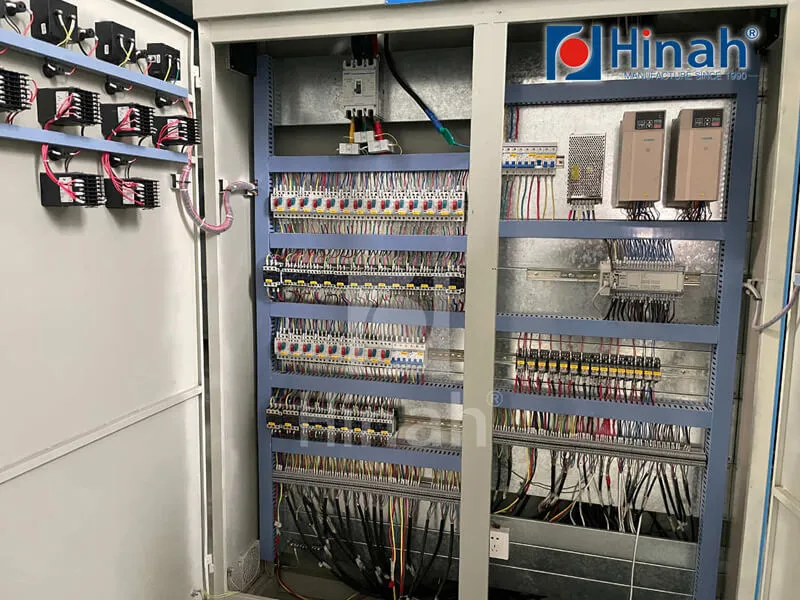

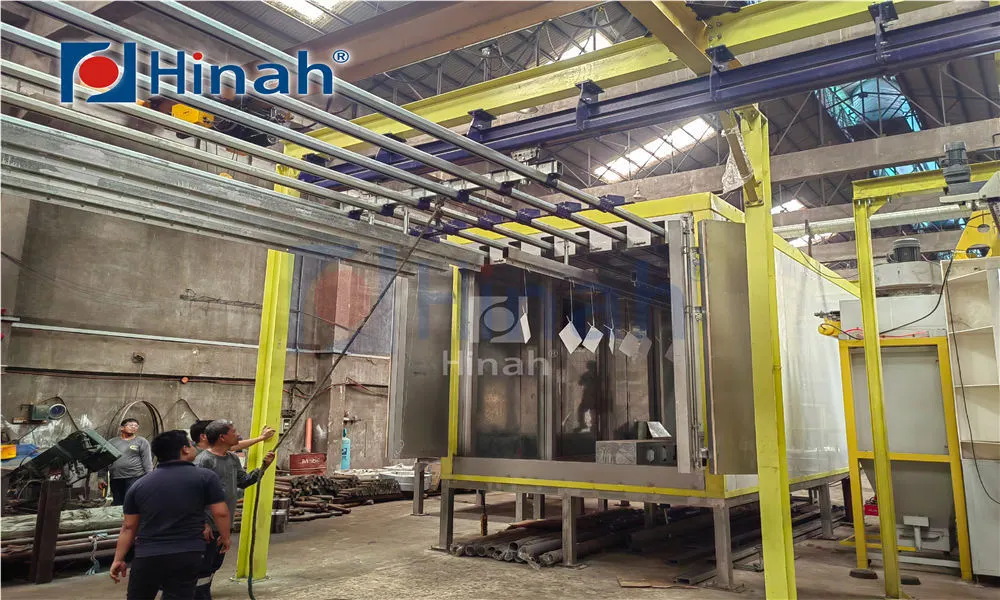
For industrial finishers, the powder coating system is not merely a collection of components—it is a precisely engineered ecosystem that determines throughput, finish quality, and environmental compliance. Over the past decade, the evolution from manual batch lines to fully automated, Industry‑4.0‑ready installations has redefined what manufacturers expect from their finishing equipment. This article dissects the core technologies, common bottlenecks, and measurable performance criteria that define today’s advanced powder coating system, with practical insights drawn from installations engineered by HANNA across automotive, architectural, and appliance sectors.
A modern powder coating system integrates five critical stages, each demanding specific engineering attention to avoid downstream defects.
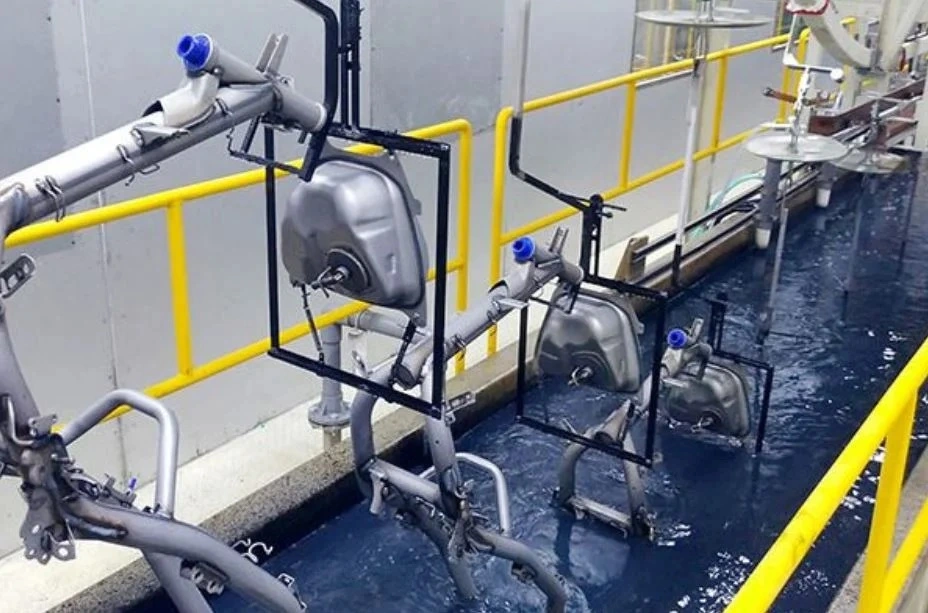
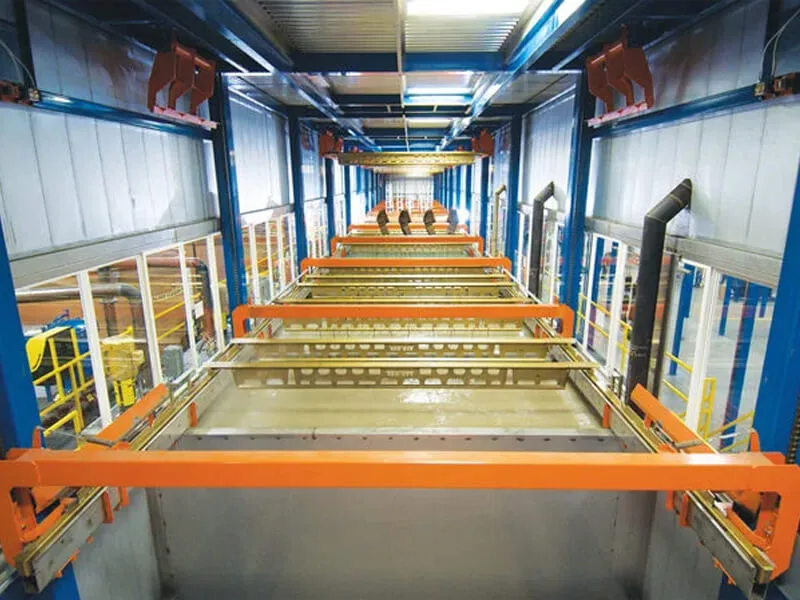
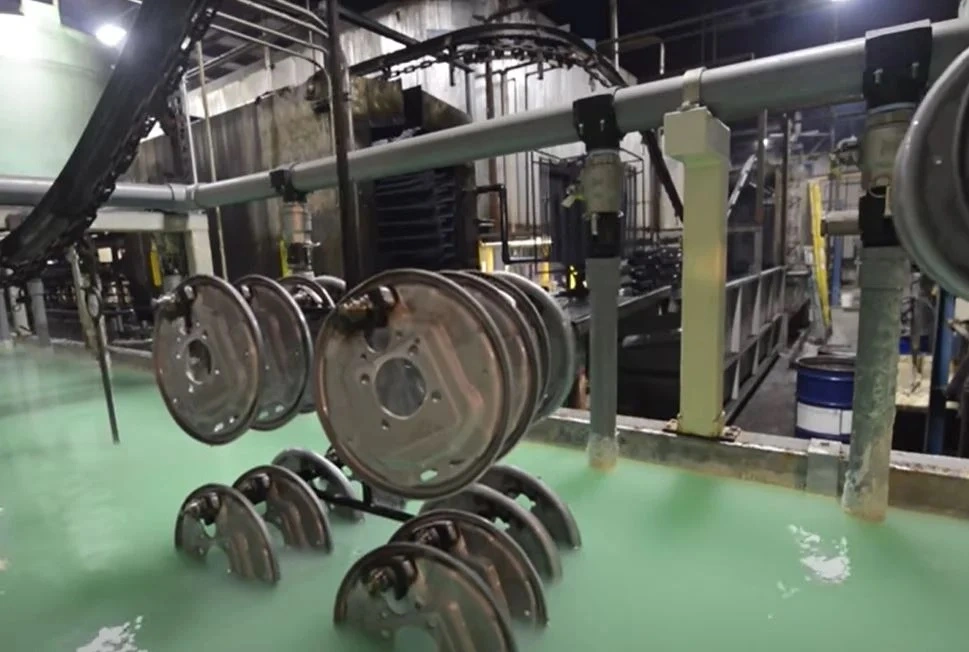
Surface preparation dictates long‑term adhesion and corrosion resistance. Today’s high‑throughput lines utilise multistage spray washers with zirconium‑based (nano‑ceramic) conversion coatings, replacing traditional iron phosphate. Data from HANNA installations show that nano‑ceramic pretreatment reduces process time by 30% and sludge generation by 90% while achieving 1000+ hour salt spray resistance on steel substrates. Key parameters include dwell time, nozzle configuration, and automated chemical dosing linked to conveyor speed.
The heart of any powder coating system is its booth. Two dominant architectures prevail:
Cartridge‑filter booths with automatic recovery: These systems recirculate air, maintaining consistent airflow (typically 0.5–0.7 m/s face velocity) to contain overspray while cartridge pulse‑cleaning returns powder to the feed hopper. Transfer efficiency (TE) here can exceed 85% with proper gun setup.
Cyclone‑plus‑polishing systems: For operations requiring frequent colour changes, cyclones separate powder from air, sending it to a storage container while the polishing filter handles exhaust air. Colour‑change downtime can drop below 10 minutes with this design—critical for just‑in‑time job shops.
Electrostatic parameters—corona voltage (usually 60–100 kV), current limiting, and gun‑to‑part distance—must be controlled to avoid Faraday cage effect in recessed areas. Advanced guns now offer variable wave‑form control, allowing operators to adjust charge characteristics for different powder chemistries (polyester, epoxy, hybrid).
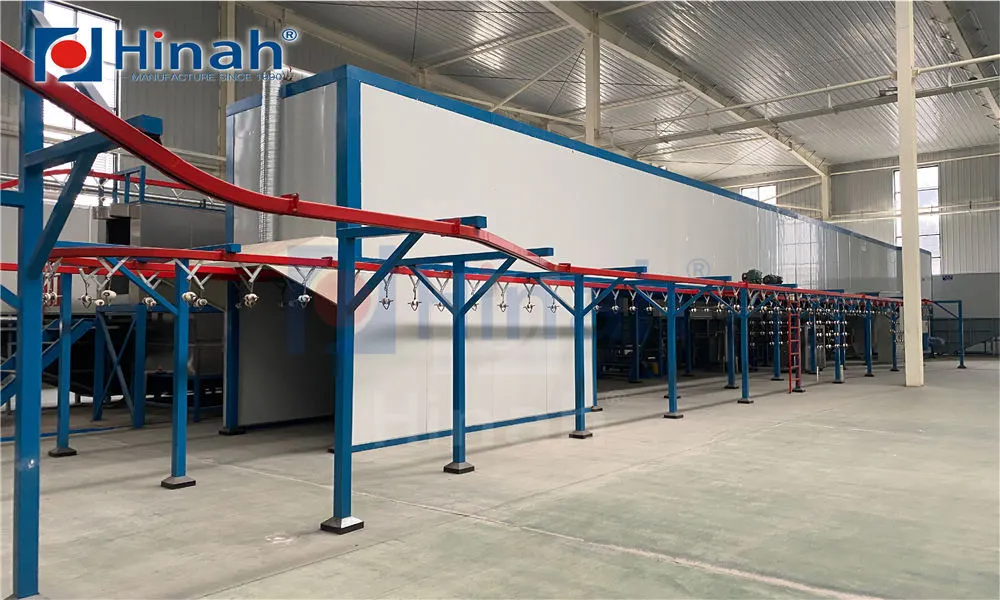
Cross‑linking of thermoset powders requires precise heat input. Convection ovens remain the workhorse, but infrared (IR) pre‑gel or full IR tunnels are increasingly used for thick substrates or high‑speed flat lines. A well‑designed combination oven (IR boost + convection hold) can reduce curing time by 40% while ensuring uniform metal temperature. HANNA engineers typically recommend multi‑zone temperature control with ±3°C accuracy to prevent under‑cure (poor adhesion) or over‑cure (yellowing, brittleness). Data loggers and chart recorders are now mandatory for ISO and automotive tier‑1 certifications.
Even the most robust powder coating system faces obstacles that directly impact cost and quality. Below are three frequent pain points and engineering countermeasures.
When spraying into interior corners or perforations, electrostatic lines of convergence cause powder to deposit heavily on edges while leaving recesses starved. Mitigation strategies include:
Using tribo‑charging guns (friction‑based) that impart charge without an external electrode, reducing back‑ionisation.
Reducing voltage and increasing air velocity to mechanically propel powder into recesses.
Adjusting part orientation on the conveyor to present difficult areas to the spray pattern first.
Real‑time film‑build monitoring systems, using laser triangulation or infrared sensors, now allow closed‑loop adjustment of gun outputs—a feature integrated into several HANNA automated lines.
For contract coaters, colour change speed directly correlates with profitability. Traditional systems may require 30–45 minutes of purge and cleaning. Innovations reducing this include:
Non‑stick booth walls (PTFE or stainless steel) and conductive plastic booth liners.
Automated nozzle cleaning of feed hoses and guns.
Dense‑phase powder transport, which uses less air and leaves less powder in the lines.
A 2023 benchmark study of 50 job shops showed that those employing dense‑phase technology reduced colour‑change powder waste by an average of 1.8 kg per change, translating to annual savings of €15,000–€25,000.
Ovens and washers are energy‑intensive. A typical 1.5 MW convection oven operating two shifts consumes approximately 2.8 GWh annually. Solutions gaining traction:
Heat recovery wheels on oven exhaust.
Insulated oven panels with low‑emissivity interiors.
Predictive temperature control algorithms that reduce idling during breaks.
HANNA offers a proprietary energy‑management module that monitors burner modulation and recirculation fan speed, reducing gas consumption by 12–18% in validated retrofits.
The versatility of powder coating systems allows tailoring to distinct market segments.
Automotive wheels and chassis components: Require high‑film builds (80–120 µm) and exceptional chip resistance. Systems often include dual‑pass booths with primer and clear‑topcoat capability.
Architectural aluminium: Must meet AAMA 2603/2604 specs. Horizontal flat‑line systems with quick‑colour‑change for extrusions are common, often integrated with in‑line mechanical pretreatment.
General industry (agricultural equipment, shelves): Mixed‑batch production favours batch booths with manual touch‑up and automatic gun movers.
When specifying a new powder coating system, move beyond basic line speed and part size. Consider these quantifiable factors:
Transfer efficiency stability: How does the booth design maintain TE across varying part densities?
Curing schedule flexibility: Can the oven handle both standard TGIC polyesters (180°C for 10 min) and emerging low‑cure powders (150°C)?
Filter loading and replacement intervals: High‑efficiency cartridge filters with PTFE membrane offer longer life and lower differential pressure.
Integration with MES/ERP: Digital interfaces allow recipe download and real‑time OEE tracking.
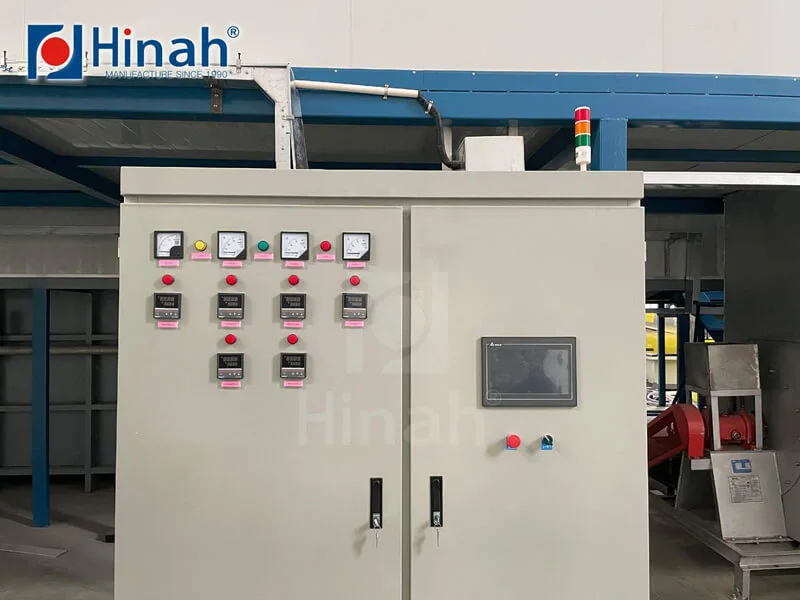
The next decade will see powder coating systems evolve through:
Digital twins: Simulating airflow, particle trajectory, and heat transfer to optimise designs before installation.
Low‑temperature cure powders: Enabling coating of wood, MDF, and temperature‑sensitive assemblies, expanding addressable markets.
AI‑driven diagnostics: Predictive maintenance of pumps, guns, and conveyor chains using vibration and current signature analysis.
HANNA is currently piloting a neural‑network‑based control system that dynamically adjusts booth airflow and gun parameters based on real‑time part geometry captured by 3D cameras—a leap toward fully autonomous finishing.
Q1: What is the typical capital expenditure for a turnkey industrial
powder coating system capable of handling parts up to 2m x 1m?
A1:
For a complete line including pretreatment, combination oven, spray booth with
automatic recovery, and conveyor, budgeting should start at approximately
€850,000 for a mid‑volume system (2–4 m/min line speed). Prices escalate with
automation level, material handling complexity, and environmental permitting
requirements. HANNA provides detailed ROI analyses based on your
specific part mix and projected throughput.
Q2: How does a powder coating system compare to liquid paint in terms
of environmental compliance?
A2: Powder systems emit virtually zero
VOCs and hazardous air pollutants, simplifying permitting. Overspray is
reclaimed and reused, achieving 95–98% material utilisation. Liquid lines
require scrubbers or carbon filters for VOC abatement, plus hazardous waste
disposal of sludge. For manufacturers aiming for LEED or ISO 14001, powder is
the superior choice.
Q3: What are the critical preventive maintenance tasks for a powder
coating booth?
A3: Three tasks dominate: (1) Daily checking and
replacement of worn gun tips and deflectors to maintain pattern integrity. (2)
Weekly cleaning of booth walls and cartridge filters to prevent powder buildup
and fire risk; differential pressure across filters must stay below manufacturer
limits (typically 1500 Pa). (3) Quarterly inspection of grounding systems
(conveyor hooks, hangers) – poor grounding can reduce transfer efficiency by
30%.
Q4: Can a modern powder coating system handle non‑conductive
substrates like plastic or wood?
A4: Yes, but with modifications.
For plastics, a conductive primer is applied first (often liquid), or the part
is preheated to promote electrostatic attraction. For wood/MDF, low‑temperature
cure powders (130–150°C) and infrared curing are used. However, the core
powder coating system components—guns,
booth, recovery—remain the same; only pretreatment and curing profiles
change.
Q5: What is the typical payback period when upgrading from a manual
to an automated powder coating system?
A5: Based on 2024 market
data, companies with two‑shift operations see payback between 18 and 30 months.
Labour reduction (often 3–4 operators per shift), material savings from higher
transfer efficiency (manual TE ~60–70% vs. automatic ~85–90%), and reduced
rework are the main drivers. HANNA offers free simulation using your
parts to project exact savings.
Q6: How do I calculate the required oven length for my powder coating
system?
A6: Oven length = (line speed in m/min) × (required cure
time at metal temperature) + allowance for ramp‑up. For example, with a line
speed of 3 m/min and a required cure time of 12 minutes at 200°C (including
heat‑up), you need at least 36 m of heated length. Oven zoning and air seals
must ensure uniform temperature throughout.
Q7: What are the most common powder defects originating from system
issues?
A7: Orange peel often points to incorrect atomising air or
gun distance; contamination (dirt spots) usually comes from booth filters or
pretreatment residues; thin edges indicate Faraday cage effect; blistering after
cure suggests trapped moisture or outgassing from the substrate—often corrected
by extended degas zones in the oven.
For detailed engineering consultations or to request a quote for a tailored powder coating system, visit HANNA’s official website.