
With the global powder coatings market projected to exceed USD 20 billion by 2029, the finishing industry is experiencing a paradigm shift toward efficiency, sustainability, and automation. At the heart of every high-quality powder coating operation lies the spray booth—the equipment that dictates transfer efficiency, color change speed, worker safety, and environmental compliance. When you are evaluating a powder coating booth for sale, a superficial comparison of dimensions and price tags is insufficient. This guide, written from the perspective of a B2B finishing authority, delves into the technical nuances that separate a profit-generating asset from a costly bottleneck.
Before analyzing specifications, you must match the booth architecture to your production reality. The wrong configuration will plague you with downtime and excessive maintenance.
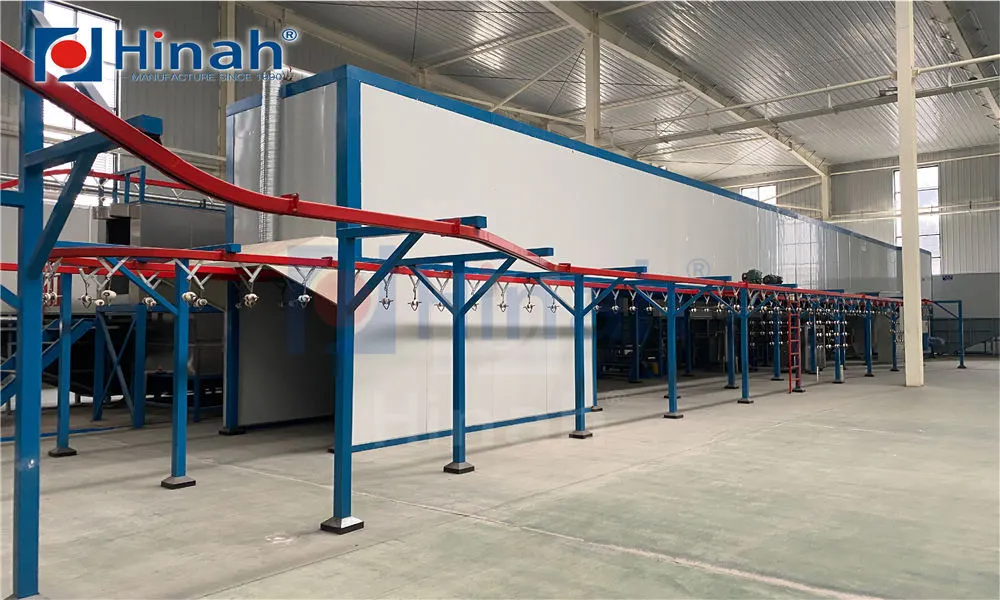
Batch booths are typically designed for job shops that run diverse parts in small to medium volumes. They allow manual spraying and are often sized to accommodate parts up to a certain dimension (e.g., 10 ft x 4 ft). In contrast, high-production inline booths are integrated with overhead conveyors and automatic gun arrays. If you are looking for a powder coating booth for sale for high-volume runs, ensure it supports continuous operation with features like self-cleaning mechanisms and PLC-controlled air balancing.
Cartridge booths: These utilize pleated cellulose or polyester filters to capture overspray. They offer 99.9%+ filtration efficiency and are ideal for single-color, high-volume environments. However, color changes can be time-consuming if the booth lacks a quick-change filter design.
Cyclone booths: A cyclone separator diverts the majority of powder into a collection canister before air reaches the final filters. This enables rapid color changes (often under 10 minutes) because only a small portion of the system needs cleaning. Cyclone systems are the gold standard for job shops with frequent color changes, though they have a higher initial investment.
Consider whether your operation requires a pass-through booth (conveyorized) or a side-draft/backdraft booth for manual operations. Airflow direction must maintain a capture velocity of at least 100 ft/min across all openings to contain powder per NFPA standards. Poorly designed airflow leads to powder fallout, rejects, and safety hazards.
When you see a powder coating booth for sale, the technical datasheet must be scrutinized beyond the brochure claims.
The booth’s cubic feet per minute (CFM) rating determines its ability to contain overspray. A simple rule: multiply the booth’s open face area (sq. ft.) by 100 ft/min to get the minimum required CFM. For example, a booth with a 4 ft x 8 ft opening (32 sq. ft.) requires at least 3,200 CFM. Undersized fans will cause powder to billow out, creating a messy and unsafe environment. Reputable manufacturers like HANNA provide verified airflow curves for their equipment.
Modern environmental regulations (EPA, local air quality boards) demand extremely low particulate emissions. High-efficiency cartridge filters should have a MERV 15 rating or equivalent, capturing particles down to 0.5 microns. Cyclone systems require secondary final filters to achieve the same emission levels. Always ask for test reports when considering a powder coating booth for sale; hidden non-compliance can lead to fines or shutdowns.
Powder coating generates combustible dust. Any enclosed space where powder is suspended must comply with NFPA 33 (in North America) or ATEX (in Europe). Look for booths with properly sized explosion venting panels, usually calculated based on the booth’s volume. The venting must be directed to a safe exterior area. Additionally, the booth's construction should include conductive materials grounded to prevent static discharge. HANNA integrates these safety features as standard, not as optional extras.
Capital expenditure is only one part of the total cost of ownership. A cheap booth can bleed money through inefficiency.
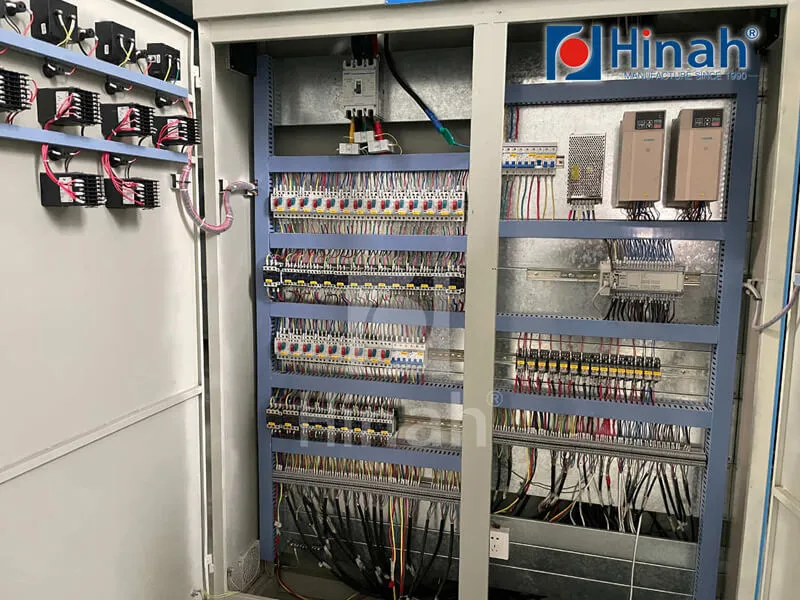
Installation and integration: Does the price include ductwork, fan silencers, and electrical control panels? Many standalone booths require extensive site preparation.
Color change downtime: A booth that takes 90 minutes to clean versus one that takes 20 minutes can cost you thousands in lost labor and production every week.
Filter replacement: Standard cartridge filters may need replacement every 6-12 months. High-quality, nano-coated filters last longer and reduce this recurring expense.
Energy consumption: The fan motor horsepower directly impacts your electricity bill. Variable frequency drives (VFDs) can optimize energy use when the booth is idle or running at partial capacity.
In a market flooded with generic equipment, HANNA distinguishes itself through precision engineering tailored to industrial realities. Their powder coating booths are designed with computational fluid dynamics (CFD) to ensure uniform airflow, eliminating dead zones where powder can accumulate. For customers seeking a powder coating booth for sale that minimizes color change downtime, HANNA offers patented cartridge and cyclone hybrid systems with smooth interior surfaces and quick-release filter mechanisms. Moreover, their smart control interfaces allow operators to monitor differential pressure, filter loading, and energy consumption in real time, aligning with Industry 4.0 initiatives.
The ideal booth for an automotive wheel supplier differs vastly from one used for architectural aluminum. Here’s how to tailor your search:
Automotive components: High-volume lines require durable, conveyorized booths with automatic gun positioning and rapid color-change capabilities for primers and topcoats.
Architectural aluminum: Extrusions often require long booths (20-40 ft) with multiple gun slots and consistent airflow to coat complex profiles evenly.
General metal fabrication: Flexibility is key. A modular powder coating booth for sale with adjustable height and width can accommodate a variety of part sizes from small brackets to large frames.
Medical and food equipment: These sectors demand booths with smooth, crevice-free interiors (often stainless steel) to meet hygiene standards, along with HEPA final filtration.
Use this expert checklist before signing any purchase order:
Define current and future production: List your largest part dimensions, daily part volume, and required color change frequency. Multiply your largest part by 2 ft in each dimension for clearance.
Map your facility: Account for floor space, ceiling height, and access for forklifts. Verify you have adequate electrical capacity (typically 480V 3-phase for industrial booths).
Verify local codes: Ensure the booth meets NFPA 33/ATEX, OSHA, and local environmental regulations. Request documentation of third-party testing.
Compare recovery efficiency: Ask for efficiency curves on powder recovery. A 98% efficient system wastes less powder and reduces filter loading.
Assess after-sales support: Does the manufacturer offer installation supervision, operator training, and a local stock of spare parts? HANNA provides comprehensive support packages that protect your investment long after the sale.
Q1: What is the average price range for a powder coating booth for sale?
A1: Prices vary widely based on size, configuration, and automation. A basic manual batch booth (10 ft x 8 ft) might start around $15,000-$25,000, while a fully automated, conveyorized high-production booth can exceed $150,000. Custom-engineered systems with cyclone recovery and environmental controls often fall between $50,000 and $200,000. Always request a detailed quote including installation and freight.
Q2: How do I calculate the required booth size for my parts?
A2: As a rule of thumb, allow at least 3 ft of clearance around the part on all sides for the operator and for airflow. For example, if your largest part is 4 ft wide x 3 ft deep x 5 ft high, you need a booth opening of at least 7 ft wide x 8 ft high. The depth should allow the operator to move around the part comfortably—typically 6-8 ft for manual booths.
Q3: What are the key differences between cartridge and cyclone booths?
A3: Cartridge booths capture overspray directly on filters; they are simpler and cheaper upfront but can be slower to clean during color changes. Cyclone booths separate powder using centrifugal force, collecting reusable powder in a canister; they offer faster color changes (5-15 minutes) and reduce waste, but have a higher initial cost and a larger footprint.
Q4: Can I retrofit an existing booth with new automation?
A4: Yes, many booths can be upgraded. Retrofitting options include adding automatic gun movers, PLC controls, VFDs on fans, and improved lighting. However, ensure that the booth structure can support the added weight and that airflow remains balanced. Consulting with a specialist like HANNA can help evaluate feasibility and ROI.
Q5: How often should filters be replaced in a powder coating booth?
A5: Filter life depends on usage and powder type. Typically, cartridge filters require replacement every 500-1000 hours of operation, or when the differential pressure exceeds the manufacturer’s recommendation (usually 1.5-2 in. w.g.). Regular cleaning via reverse pulse jets extends filter life. For cyclone systems, final filters may last 1-2 years as they see only cleaned air.
Q6: What safety certifications should I look for in a powder coating booth?
A6: In North America, look for compliance with NFPA 33 (Standard for Spray Application Using Flammable or Combustible Materials) and certification by a Nationally Recognized Testing Laboratory (NRTL) such as UL or CSA. In Europe, ATEX certification for zones 22 or 21 is essential. The booth should also meet OSHA standards for worker exposure to particulates.
Selecting the right powder coating booth for sale is a strategic decision that impacts your productivity, quality, and safety for years to come. By focusing on technical specifications, total cost of ownership, and choosing an experienced partner like HANNA, you ensure that your finishing line operates at peak efficiency. Visit https://www.autocoatinglines.com/ to explore engineered solutions that match your exact production needs.