
Choosing the right partner among Powder coating equipment manufacturers directly determines first-pass yield, operating cost, and coating consistency over a decade of service. A poorly integrated line suffers from orange peel, uneven cure, excessive overspray, and frequent color-change delays. This article provides an engineering-based evaluation framework—covering spray booth aerodynamics, oven thermal profiling, reclaim efficiency, and control architecture—to help you make a data-driven sourcing decision.
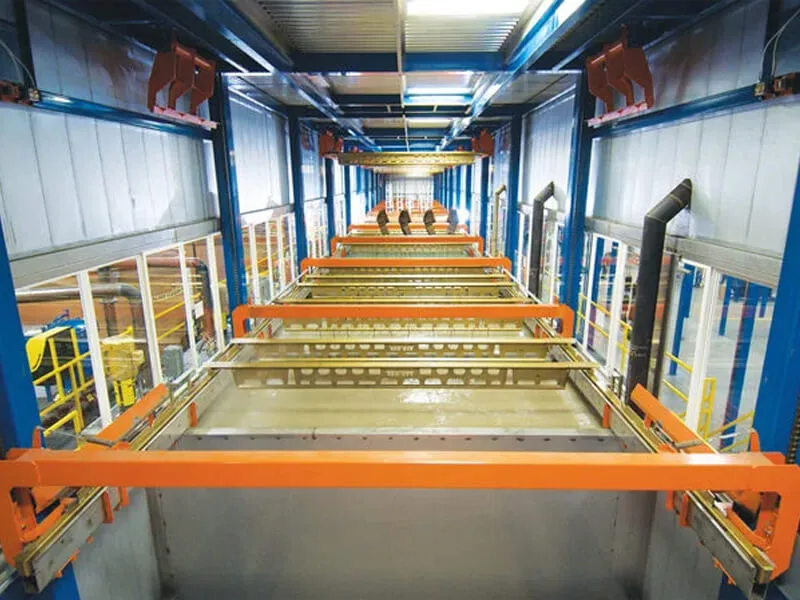
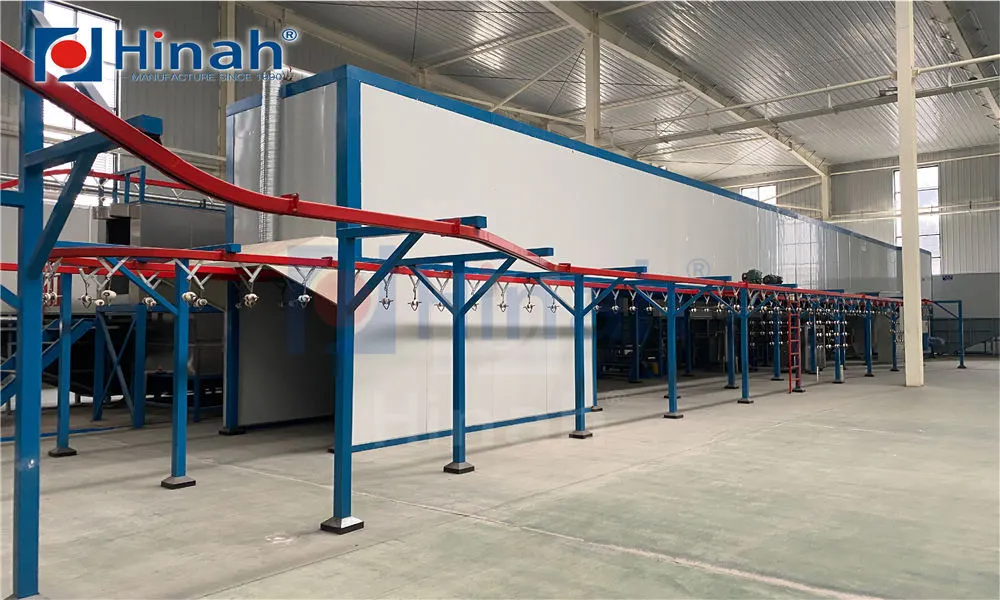
Full-line Powder coating equipment manufacturers supply four interdependent subsystems. Missing any component forces multi-vendor integration, which raises commissioning risks.
Spray booth with cartridge recovery: Down-draft or cross-draft design, pulse-jet cleaning, and quick-release filter racks for color changes under 10 minutes.
Curing oven: Convection, infrared, or hybrid; temperature uniformity ≤±3°C across the load zone per ASTM D3451; recirculation rates of 15–20 air changes per minute.
Powder feed & reclaim: Sieve stations (140 mesh), venturi pumps, and ratio-controlled virgin/reclaim mixing (up to 30% reclaim without surface defects).
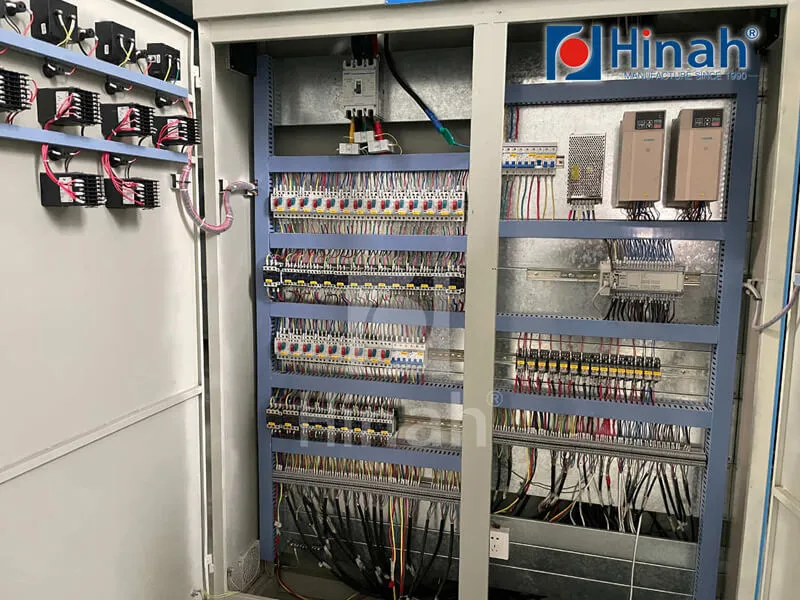
Conveyor & control system: Variable-speed chain conveyor (0.5–5 m/min) with SCADA integration for batch traceability and recipe management.
HANNA engineers these four modules with a shared PLC backbone, reducing integration errors and shortening on-site tuning to less than five days.
When auditing potential Powder coating equipment manufacturers, focus on quantifiable performance indicators rather than generic brochures.
Request TE validation data from similar part geometries. For automatic guns with corona charging, acceptable TE is 70–85%. Low TE (below 60%) indicates poor booth airflow or gun positioning. Ask for:
Air velocity mapping (anemometer grid of 9 points per booth face, target 0.5–0.7 m/s).
Cartridge filter efficiency curve (≥99.6% for 1 μm particles, measured per ISO 16890).
Reclaim powder particle size distribution (PSD) after cyclone separation – no more than 5% fines below 10 μm.
Ask for a thermal profile report recorded at 12 thermocouple positions (top, middle, bottom, left, right) over a full 8-hour shift. Acceptable uniformity: ±3°C. Energy intensity should be below 0.6 kWh per kg of coated parts for convection ovens with 150 mm mineral wool insulation. For hybrid IR-convection systems, expect 0.4 kWh/kg.
For job shops with frequent color runs, measure the time from last part of color A to first acceptable part of color B. Leading manufacturers achieve under 8 minutes for automated booths with sweep augers and blow-off nozzles. Ask for video documentation of a dark-to-light color change (e.g., RAL 9005 black to RAL 9010 white) with visual inspection under 1000 lux lighting.
Below are three common failures observed in lines from substandard Powder coating equipment manufacturers, plus corrective designs.
Symptom: Colored spots on light-colored parts even after thorough cleaning. Root cause: Powder residue accumulates on oven conveyor chains and recirculation fans, then sheds during heating. Solution: Specify a pass-through booth with a dedicated vestibule and a separate oven entry air knife (15 m/s velocity) to blow off loose particles. HANNA integrates a self-cleaning conveyor brush station before the oven entrance, reducing cross-contamination by 94% in independent tests.
Symptom: Thin coating inside recessed corners or box sections. Root cause: Standard corona guns charge particles that repel from deep cavities. Solution: Use tribo guns (friction charging) in combination with a booth that has adjustable gun reciprocators and multi-axis positioning. Manufacturers should provide simulation software (e.g., COMSOL-based) to predict film thickness before cutting steel.
Symptom: Natural gas consumption 25% above industry benchmark. Root cause: No heat recovery on oven flue or booth exhaust. Solution: Specify a cross-flow plate heat exchanger (effectiveness 65–75%) to pre-heat fresh make-up air using the 25–30°C booth exhaust. This retrofit reduces oven gas use by 12–18% and pays back within 14 months for a 500 kW oven.
Professional Powder coating equipment manufacturers provide total cost of ownership (TCO) models. Key levers:
Filter replacement frequency: Nanofiber cartridges last 8,000–10,000 hours. Cheap cellulose filters fail at 2,000 hours, increasing labor and downtime.
Oven insulation degradation: Mineral wool with facing foil maintains R-value for 15+ years. Substandard insulation sags after 5 years, raising skin temperature above 55°C.
Spare parts availability: Request a guaranteed 48-hour dispatch for wear items (nozzles, venturi blocks, thermocouples). Manufacturers with regional warehouses reduce mean time to repair (MTTR).
Modern coating lines require data connectivity. Verify that the manufacturer offers:
OPC UA server for real-time extraction of oven zone temperatures, booth differential pressure, and powder consumption.
Predictive maintenance algorithms that analyze pulse-jet cleaning cycles and trigger filter change alerts when the pressure drop exceeds 1100 Pa despite pulsing.
Batch traceability linking each rack’s barcode to cure data (time above 180°C) and booth humidity (45–55% RH target).
HANNA supplies a full MES (manufacturing execution system) module with dashboards for OEE (overall equipment effectiveness) and powder usage per square meter.
Qualified manufacturers hold ISO 9001:2015 for quality management and ISO 14001 for environmental systems. For lines exporting to Europe, demand CE marking with EN 1299 (vibration) and EN 60204-1 (electrical safety). For North America, UL 508A panel certification and NFPA 33 compliance for powder coating booths are mandatory. Request copies of test reports from accredited labs (e.g., TÜV, Intertek).
Based on a 2024 survey of 40 industrial lines in automotive and general finishing:
Top-tier manufacturers (engineered systems with thermal mapping and CFD airflow design) achieved first-pass yield of 94% vs. 76% for budget integrators.
Energy per coated part: 0.31 kWh/m² for tier 1 vs. 0.58 kWh/m² for tier 3.
Color-change downtime: 6 minutes vs. 25 minutes.
These figures demonstrate that investing in experienced Powder coating equipment manufacturers pays back through reduced rework and lower utility bills within 18–24 months.
A1: Request a list of at least three reference installations with similar part profiles. Ask for process validation reports, including film thickness measurements (at least 20 points per part) and cross-hatch adhesion test results (ISO 2409). A reliable manufacturer will also offer to run a sample batch at their testing facility using your parts and powder.
A2: For a standard line (booth + oven + conveyor + control), lead times range from 16 to 28 weeks. This includes engineering (4 weeks), fabrication (10 weeks), factory acceptance testing (1 week), and on-site installation/commissioning (3–5 weeks). HANNA offers expedited delivery for modular designs in 12 weeks.
A3: Demand a standardized metric: kWh per square meter of coated part at a defined line speed. Cross-check with oven wall heat flux (W/m²) measured via thermal imaging. Also request flue gas O₂ percentage (3–5% is optimal for gas-fired ovens). Lower O₂ indicates excess air and heat loss. Independent third-party energy audits (e.g., by a certified CEM) provide the most reliable comparison.
A4: Minimum requirements: 24/7 remote diagnostics (VPN access to PLC), a spare parts warehouse with 95% availability for critical items (filters, burner controllers, gun nozzles), and a field service team that can arrive within 48 hours. Long-term support includes annual thermal uniformity re-certification and software updates for the SCADA system.
A5: Yes, but compatibility risks exist. The conveyor speed, part hanging height, and thermal mass must match the oven’s dwell time and temperature ramp. A mismatch causes under-cure or over-cure. If you choose separate vendors, require a signed interface protocol that defines handshake signals (e.g., booth ready, oven at setpoint). For seamless integration, Powder coating equipment manufacturers that supply both subsystems are preferable.
Selecting the right partner among Powder coating equipment manufacturers requires a detailed comparison of thermal data, TE curves, and lifecycle costs. Generic quotes often hide engineering shortcuts that increase your operating expenses.
Contact our engineering team at HANNA for a free process audit. Provide your daily output (parts per shift), average part dimensions, powder types (epoxy, polyester, hybrid), and desired color-change frequency. We will return a customized line layout, energy simulation, and firm TCO projection within 7 business days.
Send your inquiry now: https://www.autocoatinglines.com/contact.html – or call our B2B hotline for immediate consultation.