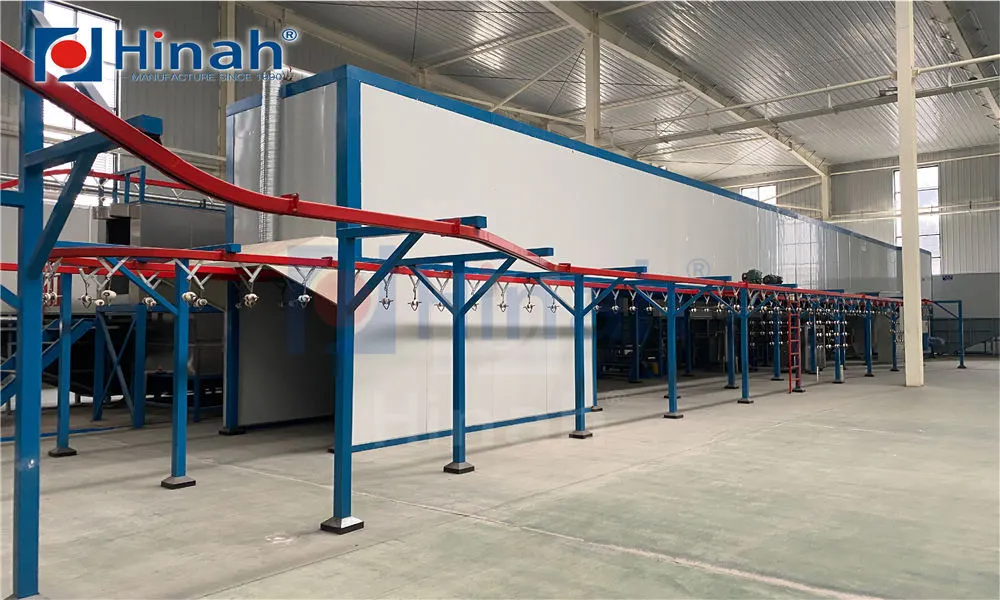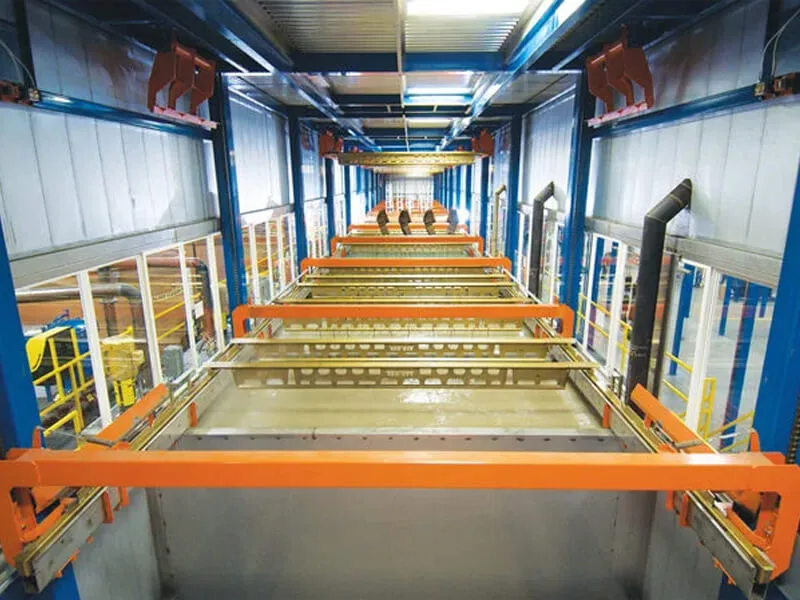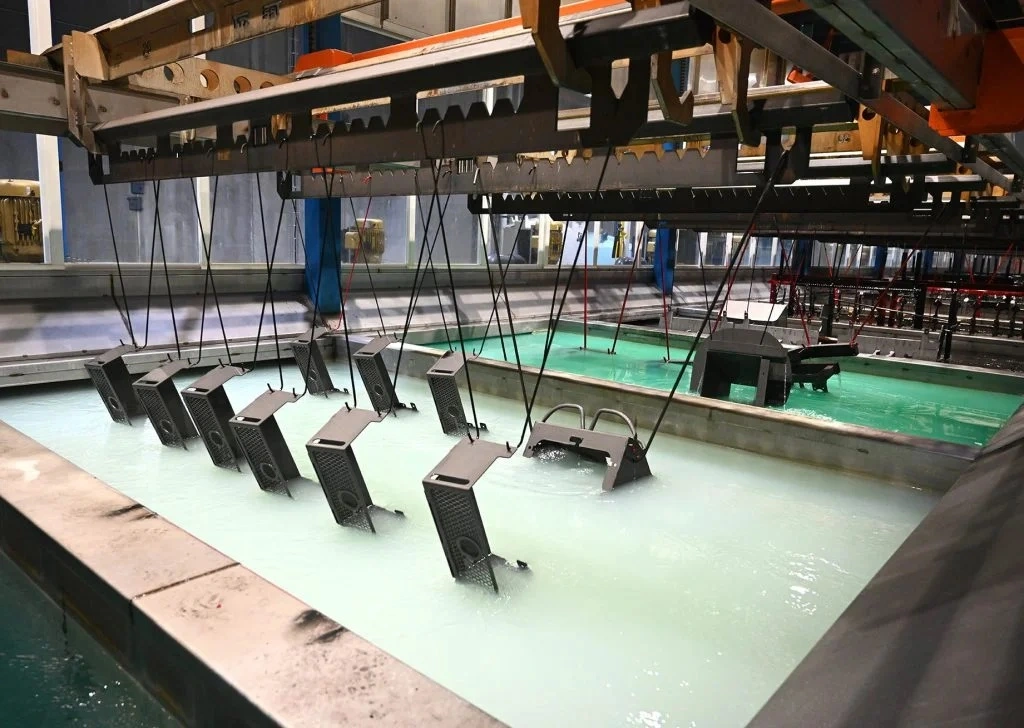
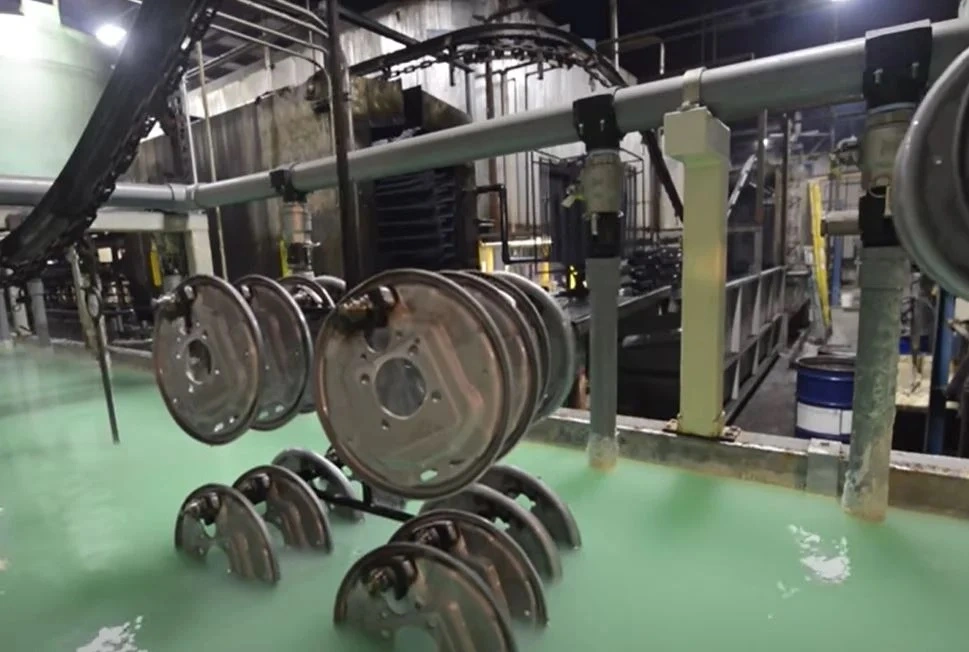

Purchasing a Powder coating oven for sale requires more than comparing brochure specs. An incorrectly specified oven causes under-cure, orange peel, and energy waste. This guide provides nine engineering checks to help you select the right unit for your finishing line.
We focus on measurable performance indicators—temperature uniformity, airflow design, and heat recovery. Every claim should be validated with data. Let's examine the critical factors.
When browsing a Powder coating oven for sale, first decide on heat transfer method. Each type suits different part geometries and production volumes.
Convection ovens: Best for complex shapes and heavy parts. They use recirculated hot air (up to 220°C). Temperature uniformity can reach ±3°C with proper baffling.
Infrared (IR) ovens: Medium-wave IR (2.5–4 μm) cures powder in 30–90 seconds. Ideal for flat or simple parts. Shadow areas may need supplementary convection.
Hybrid systems: IR booster at entrance + convection hold zone. This combination reduces floor space and energy while eliminating pinholes.
Ask the seller for a thermal simulation of your largest part. A reputable supplier will provide COMSOL or CFD-based analysis.
Poor uniformity leads to gloss variation and poor impact resistance. For any Powder coating oven for sale, request a temperature uniformity report (TUR) measured at 12 points across the load zone.
Acceptable tolerance per ASTM D3451 is ±3°C for convection ovens. IR ovens may have ±5°C but require zone control.
Ask for a 24-hour datalog. Cold streaks near door seals or fan dead zones indicate poor design. Manufacturers that refuse to share TUR data should be avoided.
Energy typically represents 25% of coating line operating costs. When comparing a Powder coating oven for sale, evaluate these efficiency indicators:
Insulation thickness: Minimum 150 mm mineral wool (density 128 kg/m³). Skin temperature should stay below 45°C.
Flue gas O₂ level: 3–5% for gas-fired burners. Higher O₂ means excess air and heat loss.
Heat recovery: Cross-flow plate exchangers can recover 65–75% of exhaust heat to pre-heat fresh air.
A well-insulated oven with recovery reduces kWh per kg by 30% compared to basic models. HANNA integrates these features into every unit, with documented energy savings from field installations.
The oven's dwell time must match your conveyor speed and part thermal mass. For a continuous line, calculate required oven length:
Oven length (m) = conveyor speed (m/min) × required dwell time (min)
For example, a 5 m/min conveyor and 10-minute cure needs a 50 m oven. If the Powder coating oven for sale is shorter, you cannot increase speed without under-curing.
Ask for a ramp-rate test on a sample part. Heavy steel (6 mm) requires slower heat-up than aluminum. Hybrid IR-convection can shorten length by 40%.
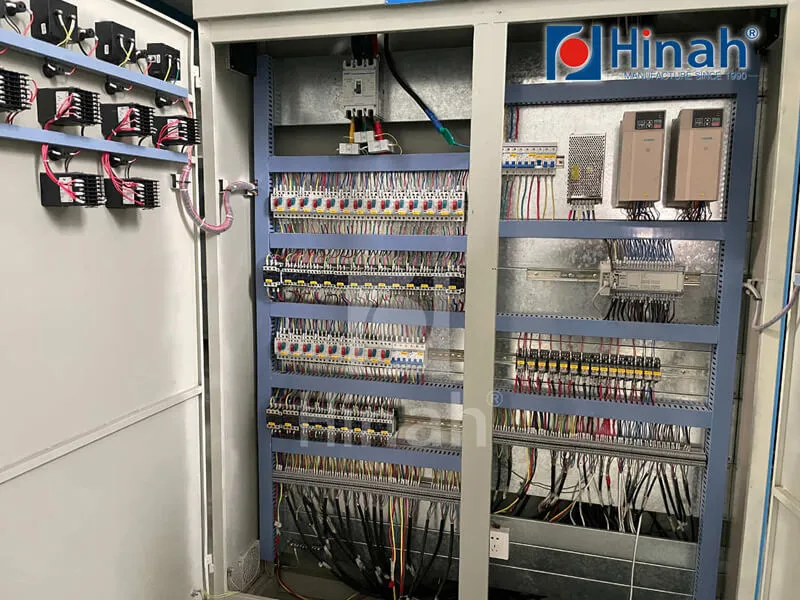
Basic ovens use on/off thermostats. Professional units include PID controllers with auto-tuning and zone management.
Key features to verify:
Multi-zone PID (at least 4 zones for ovens over 10 m).
High-limit safety with manual reset.
Data logging: record oven zone temperatures, setpoints, and alarm events for at least 30 days.
OPC UA or Modbus TCP for connection to your SCADA or MES.
Without data logging, you cannot prove cure compliance to customers or auditors. HANNA supplies ovens with a touch-screen HMI and full batch traceability.
Uniform airflow prevents temperature stratification. For convection ovens, the recirculation rate should be 15–20 air changes per minute.
Check the air distribution duct design. Perforated plates or adjustable louvers create even velocity. Avoid designs with only side nozzles—they create hot spots.
Request a velocity map (anemometer at 9 grid points inside the empty oven). Variation should be less than 20% from mean.
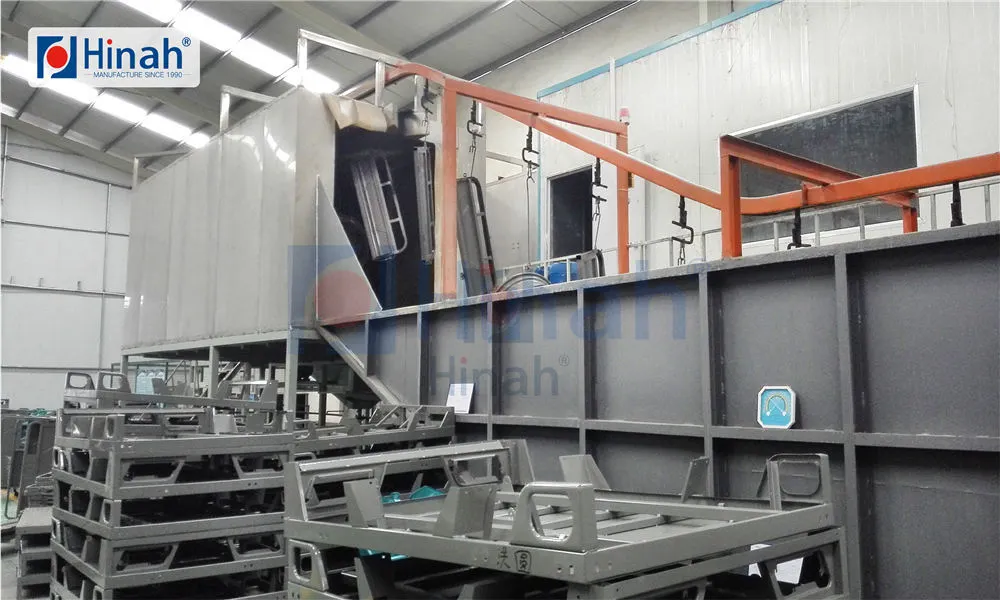
Industrial ovens operate 6,000–8,000 hours per year. Construction details determine lifespan.
Inner liner: 2 mm stainless steel (AISI 304) or 2.5 mm aluminized steel. Avoid 1.5 mm galvanized—it warps after 3 years.
Insulation: Rockwool with foil facing. Check for compression gaps around doors.
Door seals: Silicone rubber rated for 250°C continuous. Double-latch system prevents leakage.
Inspect welding quality. Poorly sealed panels leak heat and powder residue.
Before finalizing a Powder coating oven for sale, demand documentation for safety standards:
NFPA 86 for industrial ovens and furnaces (North America).
EN 1539 for dryers and ovens with flammable materials (Europe).
CE marking with technical file (including electrical safety EN 60204-1).
UL 508A panel certification.
Ask for the original test certificates from notified bodies (TÜV, Intertek). Missing certification exposes your facility to insurance and legal risks.
Purchase price is only 30–40% of 10-year TCO. Evaluate:
Energy cost: Compare kWh per kg at same production rate.
Maintenance intervals: Belt and bearing replacement every 8,000 hours vs. 3,000 hours for cheap components.
Spare parts availability: Guaranteed 48-hour dispatch for heaters, thermocouples, and fans.
Warranty should cover at least 2 years parts and 1 year labor. Extended warranties on insulation and structural frame (10 years) indicate confidence. HANNA provides a 3-year comprehensive warranty on all oven models.
A1: For a standard convection oven (length 10–30 m), lead times range from 12 to 20 weeks. This includes engineering (2 weeks), fabrication (8 weeks), factory acceptance testing (1 week), and on-site installation/commissioning (3–5 weeks). Modular ovens may ship in 10 weeks. Always request a detailed schedule before order.
A2: Yes, but it requires engineering. You can install medium-wave IR emitters at the entrance zone, but you must recirculate air to avoid overheating local areas. Also, the conveyor speed may need adjustment. Retrofits are viable if the existing oven has adequate insulation and control capacity. HANNA offers retrofit kits with zone controllers and airflow diffusers.
A3: Request an energy performance test report based on ISO 50001 methodology. The report should state kWh per square meter of coated part at a defined line speed and metal temperature. Ask for flue gas analysis (O₂, CO, efficiency) from a certified third party. A transparent seller will allow an on-site energy audit using your powder and parts.
A4: This depends on the conveyor chain rating and the oven roller spacing. For heavy parts (>50 kg per hanger), specify a chain with 6 mm pitch and 10 mm diameter pins. Oven rollers should be heat-resistant steel with bearings rated for 220°C. Always provide the maximum single part weight and hanger spacing to the manufacturer for stress calculation.
A5: Thermocouples (Type K) drift by ±2°C per year. Perform a two-point calibration (150°C and 200°C) every 12 months using a NIST-traceable simulator. PID controllers require recalibration every 24 months or after any firmware update. Many certification bodies (e.g., ISO 9001) mandate annual temperature uniformity surveys for curing ovens.
Choosing the right Powder coating oven for sale means balancing thermal performance, energy efficiency, and long-term reliability. Generic equipment often fails under high-mix production.
Contact the engineering team at HANNA for a free process evaluation. Provide your daily output (parts/hour), part dimensions, powder chemistry, and available floor space. We will return a customized oven specification, thermal simulation, and firm TCO projection within 7 business days.
Send your inquiry now: https://www.autocoatinglines.com/contact.html – or call our B2B hotline for immediate consultation.