
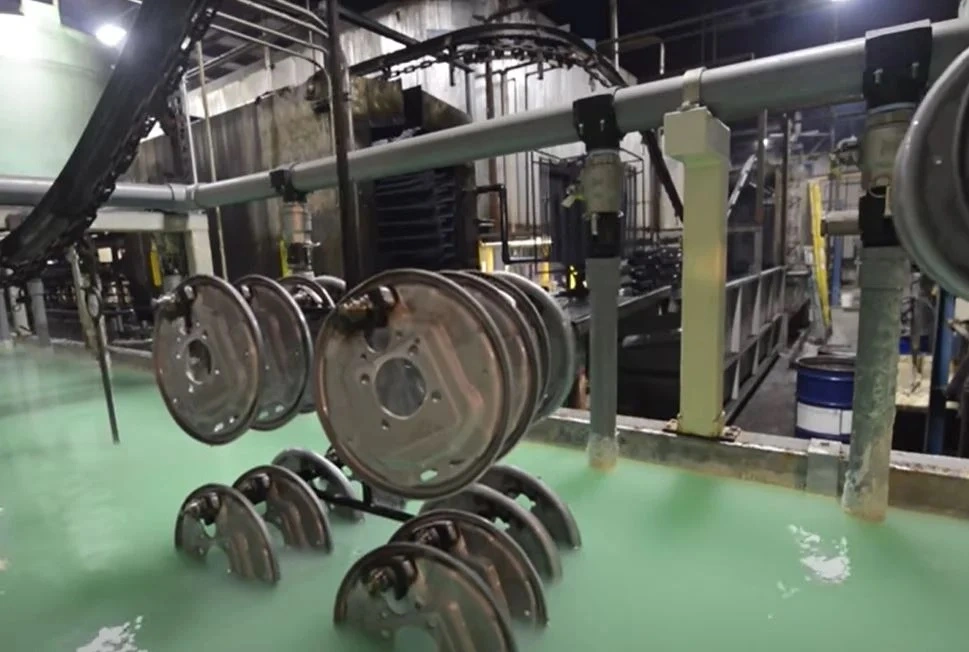

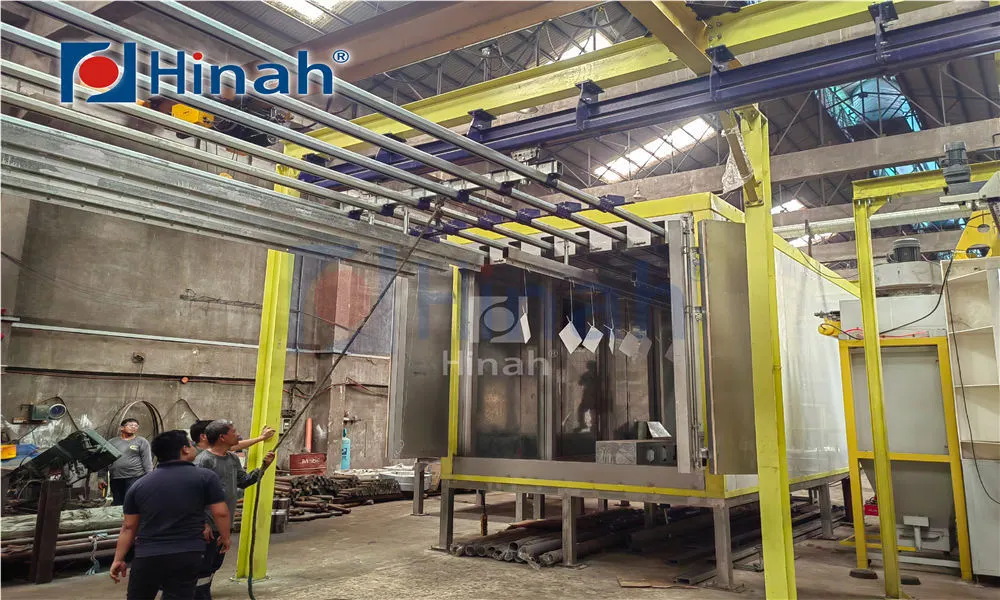
In industrial coating operations, the choice of a Powder coating plant supplier directly determines line availability, first-pass yield, and operational expenditure. For finishing lines handling automotive components, architectural extrusions, or household appliances, the plant’s engineering architecture—from powder delivery to curing thermodynamics—must align with production cadence and quality benchmarks. HANNA has engineered over 230 turnkey powder coating systems across North America and Europe, demonstrating measurable reductions in reject rates and energy consumption through precision component matching.
Core Modules of a Modern Powder Coating Plant
Any reliable Powder coating plant supplier must demonstrate mastery over five interconnected subsystems. Below are the critical units and their performance specifications:
Powder management & feed center: Dense-phase or fluidized hopper designs with vibratory sieving (mesh size 140–200 µm) prevent clogs and ensure consistent cloud density. LSI: powder coating system with automatic refill reduces downtime by 40%.
Spray booth & recovery: Cartridge or cyclone + post-filter recovery achieving >98% reclaim efficiency. Crossdraft vs. downdraft booth selection depends on part geometry and color-change frequency.
Curing oven & thermal profile: Gas-fired IR combined with convection zones for uniform heat distribution. Delta T ≤ ±3°C across the load is the industry standard for consistent crosslink density.
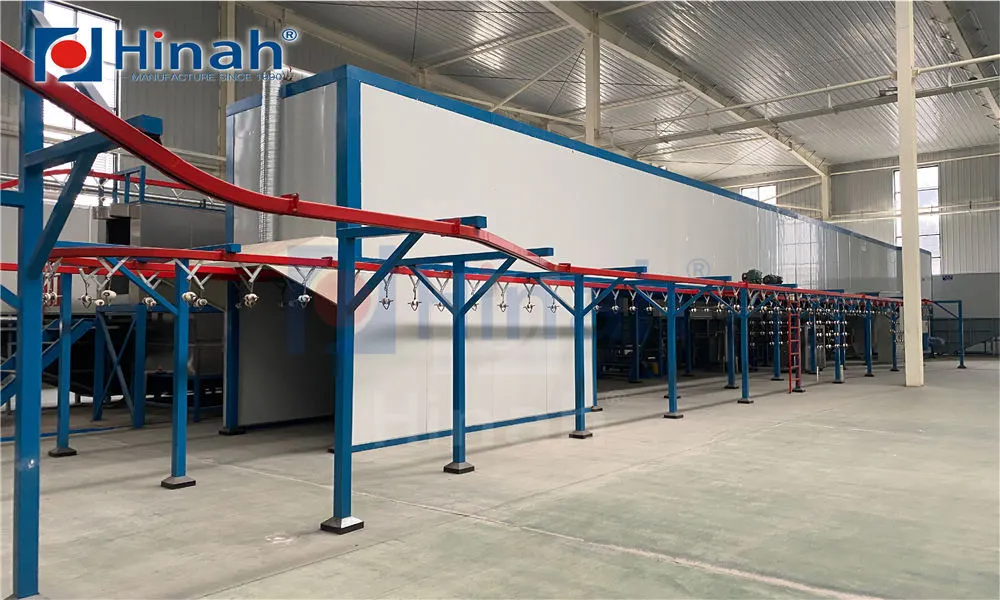
Conveyor & part handling: Overhead monorail or power-and-free systems with variable speed control. Inverted conveyors reduce contamination from falling debris.
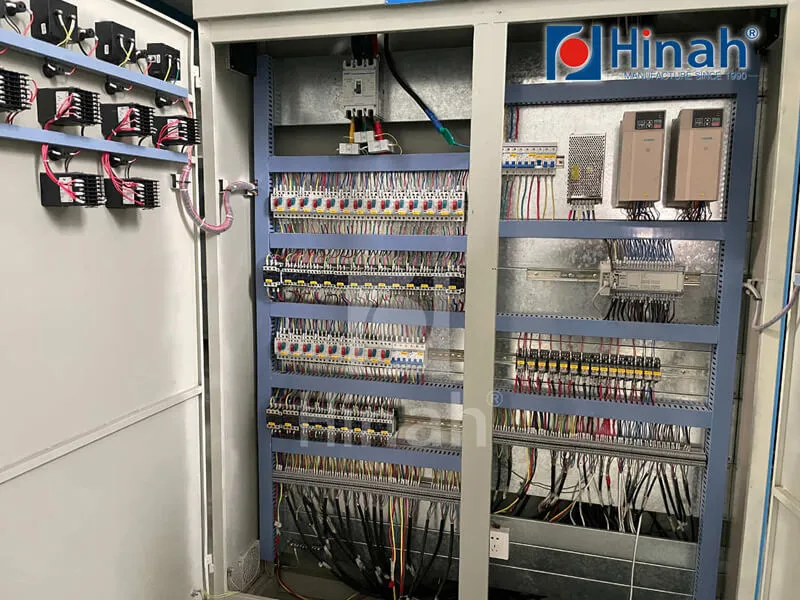
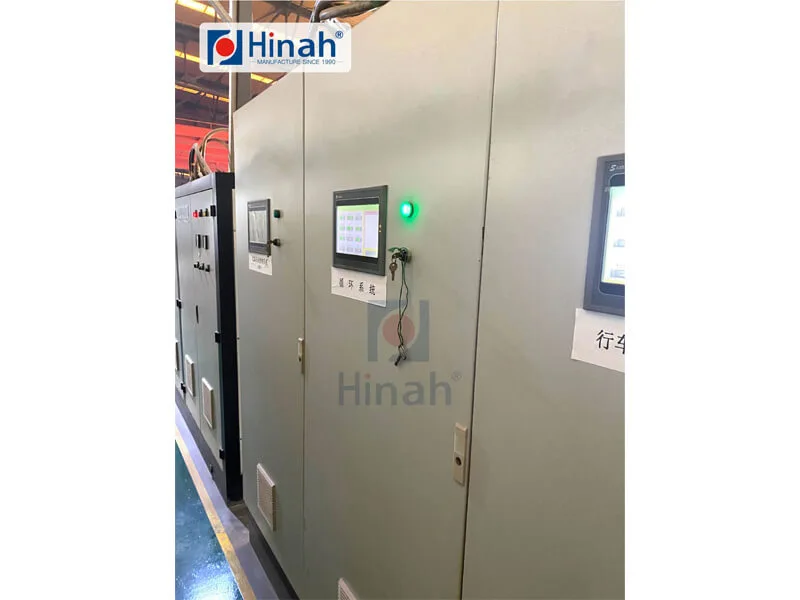
Process control & data acquisition: PLC/HMI with recipe management, humidity sensors, and real-time coating thickness feedback loops.
A reputable Powder coating plant supplier offers modular scalability—allowing manufacturers to start with a manual booth and later integrate automatic reciprocators or 7-axis robots without overhauling the base infrastructure. HANNA specifically designs its control architecture with decentralized I/O modules to simplify future line expansions.
Engineering Challenges in High-Volume Powder Coating Lines
2.1 Faraday Cage Area Coverage
Parts with recessed corners, inner flanges, or tubular assemblies create electrostatic shielding that inhibits powder deposition. Standard corona guns fail to wrap powder into these cavities. Advanced solutions from a specialized Powder coating plant supplier include:
Tribo-electric spray guns (nylon charging tube) that impart charge via friction, enabling deeper penetration into faraday zones.
Multi-stage voltage control (30–100 kV) with adaptive current limiting to avoid back-ionization.
Reciprocator stroke optimization using simulation software to map electrostatic field lines.
2.2 Rapid Color Change Without Production Loss
Job shops producing small batches face high downtime during color switches. A lean powder coating plant design incorporates:
Booths with seamless PP or stainless steel walls and automated blow-down nozzles (5–7 bar compressed air).
Quick-release cartridge filter banks (tool-less extraction) and cyclone pigging systems for powder feed hoses.
Color management software that preheats the next color’s fluidizing air, reducing conditioning time by 55%.
Data from lines using these features show color change intervals drop from 45 minutes to under 12 minutes—directly increasing OEE by 18%.
Industry-Specific Coating Solutions & Process Integration
Different sectors impose distinct technical constraints. A proficient Powder coating plant supplier must offer validated configurations for each application.
Automotive (Wheels, Suspension Parts, Engine Components)
Requirement: High film build (80–150 µm) with chip resistance and salt spray endurance >1000 hours.
Solution: Two-coat (primer + clear) powder application using tandem booths; integrated IR preheat for intercoat adhesion.
LSI term: powder coating equipment with inline cooling tunnels prevents recirculation of uncured powder on heavy parts.
Architectural Aluminum Extrusions
Requirement: AAMA 2604 compliance, uniform gloss (60° gloss meter variation ≤ ±3 units) on profiles up to 8m length.
Solution: Horizontal reciprocating guns with adjustable tilt angles; vertical reciprocators for super-long profiles; combined pretreatment with chromate-free zirconium conversion.
General Industrial & Heavy Equipment
Requirement: Corrosion protection on fabricated steel structures, weld seams, and sand-cast surfaces.
Solution: Automatic thickness feedback using non-contact sensors adjusting gun KV and powder output in milliseconds. HANNA integrates this closed-loop system across its powder coating lines, achieving CpK >1.33 for thickness tolerances.
Sustainability and Energy Efficiency in Plant Architecture
Industrial coating lines are energy-intensive. Optimizing a powder coating plant can lower natural gas and electricity consumption by 25–35% without compromising throughput. Key engineering tactics:
Heat recovery from oven exhaust: Recuperative burners preheat fresh combustion air. Crossflow heat exchangers capture waste heat to preheat wash water or plant makeup air.
Low-temperature curing powders: Formulations curing at 130–150°C instead of conventional 190°C reduce oven energy demand by 18–22% and cut carbon footprint by 12 metric tons/year per shift.
Variable frequency drives (VFDs): On booth extraction fans and conveyor motors—saving up to 40% electricity at partial load conditions.
Automatic idle mode: PLC logic that reduces airflow and conveyor speed when no parts are detected for 10 minutes, recovering instantly upon sensor input.
HANNA offers a sustainability audit protocol that measures each plant module’s specific energy consumption (SEC) in kWh/kg of coated parts and provides a roadmap to ISO 50001 certification. Many customers report full ROI on energy retrofits within 18 months.
Selecting a Powder Coating Plant Supplier: Technical Evaluation Matrix
Procurement teams often focus on initial capital cost, but the total cost of ownership (TCO) over 10 years varies significantly between suppliers. Use the following criteria when assessing any Powder coating plant supplier:
In-house component manufacturing vs. third-party assembly: Vertical integration of gun power supplies, booth panels, and control software ensures better compatibility and spare parts availability.
Test center availability: Can the supplier run your parts on a pilot line to validate Faraday coverage, transfer efficiency, and color uniformity before purchase? A credible powder coating system supplier should offer this service.
Global service infrastructure: Average response time for remote diagnostics, local stocking of consumables (filters, gun nozzles, injectors), and warranty terms on oven refractory panels.
Digital integration capabilities: OPC UA or MQTT interfaces to connect coating line data with MES or ERP for batch traceability and predictive maintenance.
In independent benchmark studies, lines supplied by vertically integrated suppliers showed 14% lower unplanned downtime and 9% better transfer efficiency compared to assembled-from-disparate-vendors plants. HANNA designs and fabricates all critical modules—booths, ovens, conveyor controls, and powder management—ensuring single-source accountability.
Economic Impact of Advanced Plant Design: ROI and Operational Savings
Moving from a legacy spray-to-waste system to a modern powder coating plant with high recovery and optimized curing yields compelling financial metrics. Consider a mid-volume line (coating 4,000 m²/shift):
Powder savings: Recovery efficiency increase from 70% to 98% reduces powder purchases by 280 kg/day. At average €8/kg, that’s ~€560/day or €145,600/year.
Energy savings: Low-cure powder + heat recovery cuts oven gas consumption by 210,000 kWh/year → €21,000 annual saving.
Labor and rework: Automated thickness control reduces reject rate from 7% to 1.5% → saves €88,000/year in stripping and recoating.
Total annual savings ≈ €254,600. With a fully automated plant investment around €650,000–€900,000 (depending on part mix), payback period sits between 2.5 and 3.5 years. After that, the line generates pure margin improvement.
Frequently Asked Questions (Technical Focus)
Q1: What is the typical transfer efficiency (TE) of a modern powder coating plant, and how can it be measured inline?
A1: Leading systems achieve 85–95% first-pass transfer efficiency, with tribo guns sometimes reaching 96% on simple geometries. Inline measurement uses gravimetric sensors on the reclaim hopper plus optical cloud density monitors. The formula: (weight of powder deposited on parts) / (total powder dispensed from feed center) x 100. A high-quality powder coating plant will display real-time TE on the HMI.
Q2: How does part temperature affect powder penetration in Faraday cage areas, and what is the recommended preheat strategy?
A2: Cold parts (below 15°C) cause premature powder condensation and poor wrap. Preheating to 40–50°C (using IR or convection) increases surface conductivity and improves powder attraction into recesses. However, excessive preheat (>70°C) can cause powder to gel before leveling. For thick steel fabrications, preheat plus dual-feed corona/tribo guns yields best faraday coverage.
Q3: What is the maximum allowable humidity level inside the powder booth without affecting fluidization and charge stability?
A3: Relative humidity (RH) should stay between 40% and 55% at 20–25°C. Above 60% RH, powder absorbs moisture, leading to clumping in the feed hose and reduced triboelectric charging. Below 35% RH, electrostatic discharge (ESD) can damage sensitive gun electronics. Many automated plants include dehumidifiers and humidity sensors linked to the PLC for active climate control.
Q4: What are the differences between cyclone + post-filter recovery vs. all-cartridge systems, and which one reduces color change time?
A4: Cyclone + post-filter (baghouse) systems separate overspray powder by centrifugal force, achieving high throughput but retaining more residual powder during color changes (requires thorough purge). All-cartridge systems (nanofiber filters) offer faster changeover because cartridges can be pulse-cleaned more aggressively and removed in modular cassettes. For multi-color operations (<10 batches/day), cartridge systems reduce changeover time by 30–40%. Powder coating equipment from HANNA provides both configurations with quick-release filter access doors.
Q5: How can a powder coating plant supplier guarantee uniform film thickness on complex parts with varying mass-to-surface ratios?
A5: This requires three integrated strategies: (a) Mass-flow control – powder output adjusted per gun based on part’s instantaneous surface speed; (b) Multi-zone electrostatic control – reducing kV for thin edges and raising kV for deep cavities; (c) Automated profile mapping – using 3D part scanning to pre-program reciprocator motion. Suppliers that offer offline simulation software (like powder coating plant simulation) can predict thickness variation before installation. Field data shows these methods reduce thickness deviation from ±25 µm to ±7 µm.
Engineering Partnership Beyond Equipment Supply
Selecting a Powder coating plant supplier is not a transactional purchase but a long-term collaboration on process chemistry, automation integration, and lifecycle performance. The right partner provides validated solutions for faraday coverage, rapid color change, energy recovery, and digital process control. HANNA has built its reputation on engineering these technical differentiators into every powder coating line, supporting manufacturers with real-time data, remote diagnostics, and a global service network.
To receive a customized technical proposal—including line layout, projected OEE improvements, and energy modeling—send your production specifications and coating requirements directly to our engineering team.
Request a detailed quotation or process audit: Submit your inquiry to HANNA’s industrial solutions group. Include part drawings, desired film thickness, weekly throughput, and color change frequency. A senior applications engineer will respond within 24 hours with a technical gap analysis and ballpark investment range.
For immediate assistance, use the inquiry form or call your regional HANNA office. All inquiries receive a confidential non-disclosure agreement and sample test reports from similar coating lines.