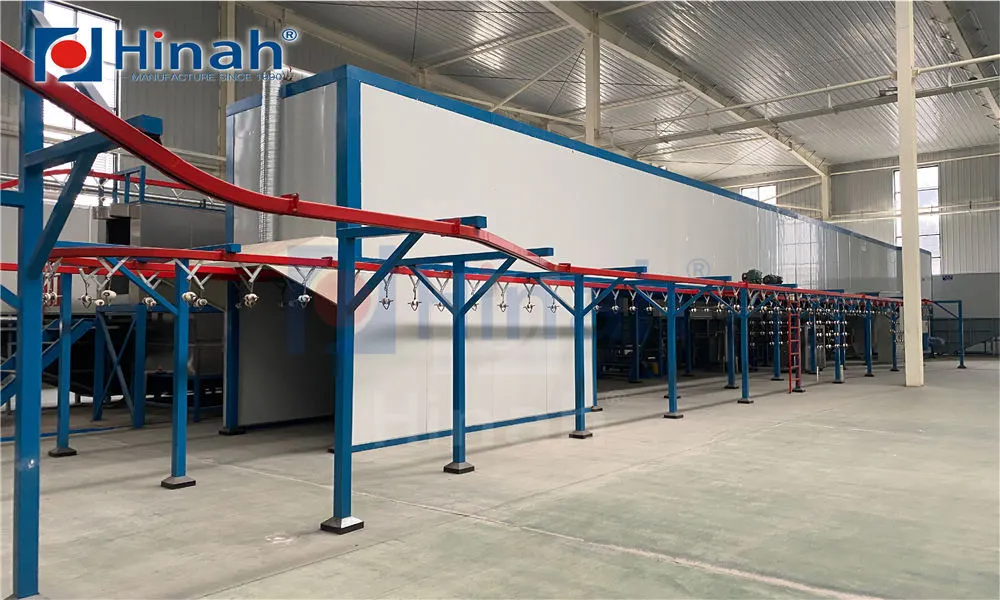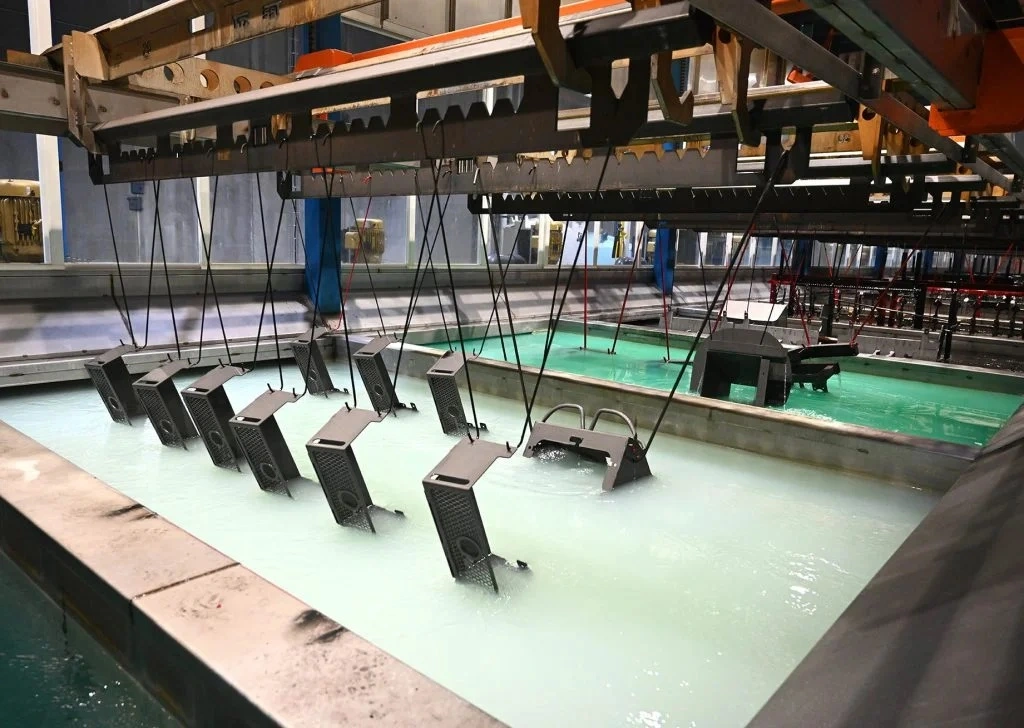
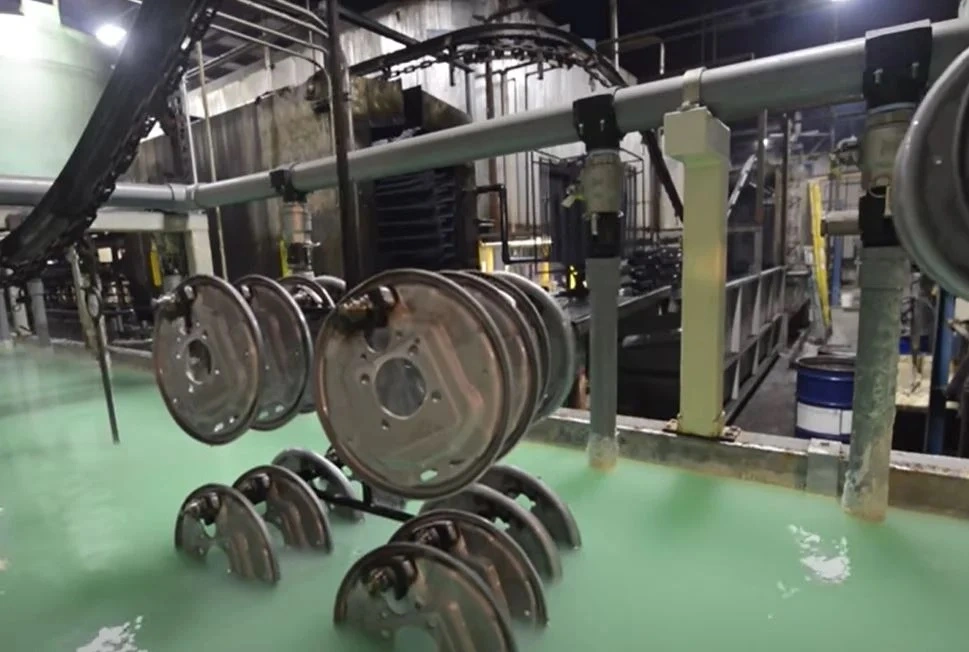

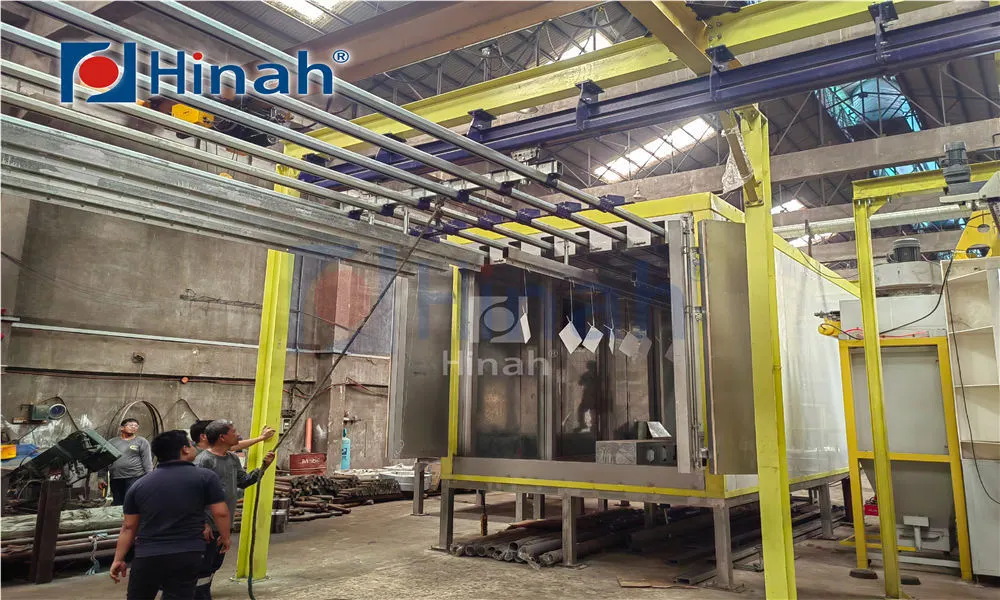
For industrial powder coating operations handling thousands of parts per shift, the conveyor curing oven represents the highest capital investment and the single largest consumer of energy. Unlike batch ovens, a continuous conveyor curing oven processes parts in a steady flow, with overhead monorail or power-and-free systems moving racks through temperature-controlled zones. The challenge lies in maintaining precise metal temperature uniformity across parts of varying mass, geometry, and loading density — all while the conveyor runs at speeds between 1 and 8 meters per minute. This article examines engineering principles, performance optimization strategies, and retrofit solutions for conveyor curing oven systems, drawing from HANNA‘s installations across automotive, appliance, and general finishing industries.
A properly specified conveyor curing oven balances thermal performance, line speed, and energy consumption. Critical parameters include:
Zone configuration: Ramp-up zone (IR or high-velocity convection), soak zone (uniform temperature), and optional hold zone for thick sections. Typical zone lengths: 4–8 m ramp, 12–20 m soak.
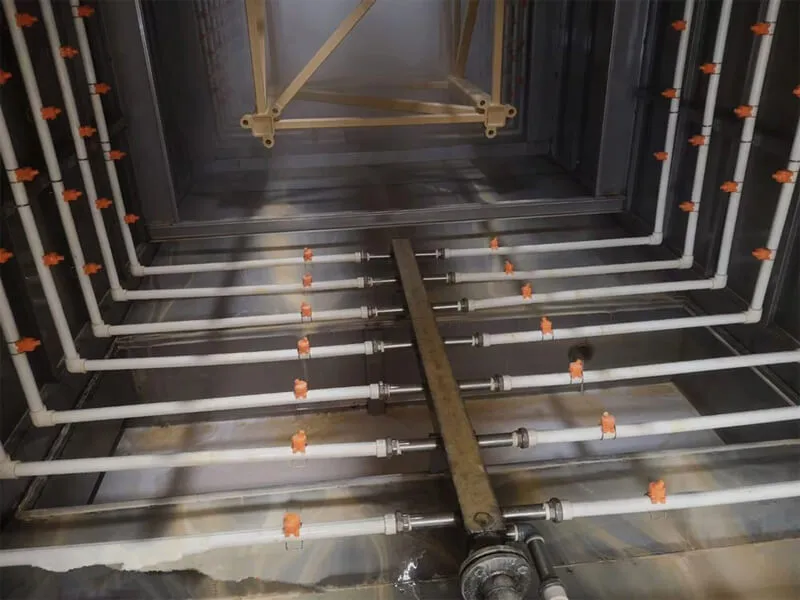
Air velocity profile: 0.5–1.2 m/s across the part cross-section. Higher velocities improve heat transfer but may disturb uncured powder on delicate features.
Temperature uniformity: ±3°C across the work envelope for standard industrial parts; ±1.5°C for automotive Class A surfaces.
Conveyor width and clearance: Minimum 300 mm clearance above tallest part and 150 mm on sides for airflow circulation.
Insulation thickness: 150–200 mm mineral wool with aluminum foil facing to reduce radiant heat loss.
Modern conveyor curing oven designs use computational fluid dynamics (CFD) to model airflow patterns and predict thermal gradients before fabrication. Powder coating plant integrators like HANNA perform thermal mapping during commissioning to validate performance.
The choice of conveyor system directly affects how parts are positioned inside the conveyor curing oven.
Most common for medium-to-high volume lines. Parts hang from trolleys attached to a continuous chain. Advantages include simple design, low maintenance, and ability to carry heavy loads (up to 500 kg per hook). However, the fixed spacing between hangers limits density, and parts may swing, affecting airflow patterns. For a conveyor curing oven with monorail, ensure that the chain speed remains constant (±2%) to avoid uneven dwell times.
Used in high-mix, high-volume lines where parts need to accumulate or bypass certain zones. Each carrier has its own drive, allowing independent speed control. Power-and-free systems enable “batch-in-continuous” processing — for example, holding heavy castings longer in the soak zone while lighter parts move through faster. The complexity adds cost, but for large powder coating plant operations, the flexibility reduces rework by 15–20%.
Used for small, flat parts that can rest directly on the belt (e.g., stamped brackets, heat sinks). Belt ovens offer excellent temperature uniformity because parts are not shadowed by hangers. However, the belt itself acts as a heat sink, requiring longer ramp-up times. HANNA recommends stainless steel mesh belts with open area >60% to allow airflow from below.
Maintaining cure conditions across varying load densities is the foremost challenge for any conveyor curing oven. Advanced control systems address this through:
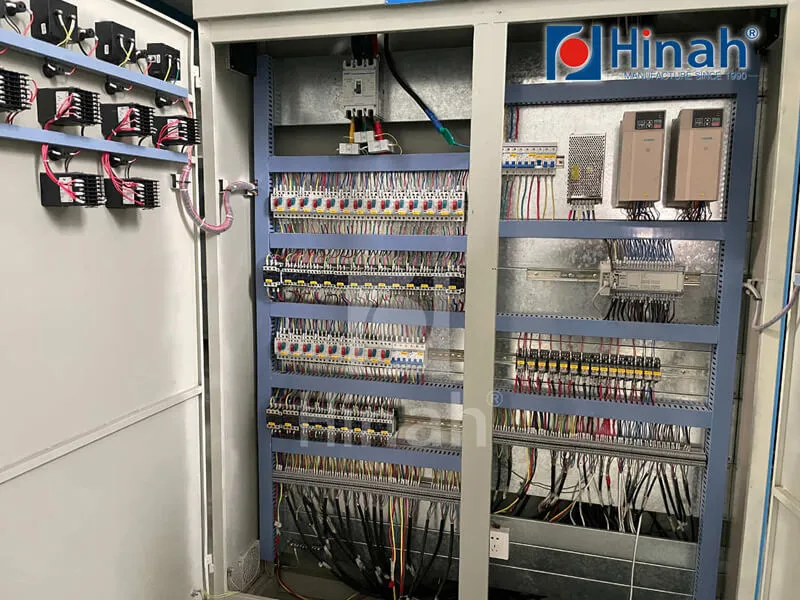
Multi-zone PID control: Each zone has its own thermocouple, burner, and recirculation fan. Zones operate independently, with setpoints adjusted based on real-time load feedback from infrared sensors at the oven entrance.
Load-based speed compensation: When a heavy rack enters, the control system temporarily reduces conveyor speed (or increases zone temperatures) to maintain metal temperature profile. This requires a variable-frequency drive on the conveyor motor and predictive algorithms.
Wireless part temperature sensors: Passive RFID tags with thermistors travel with the rack, transmitting data to the PLC. This enables closed-loop control of burner modulation, reducing temperature overshoot by up to 60% compared to fixed setpoints.
Data logging and traceability: For aerospace and medical device coating, the conveyor curing oven must record time-temperature profiles for each batch. SCADA systems archive this data for 10+ years.
Powder coating plant operators using HANNA’s SmartCure package report 95% reduction in under-cure events and 22% lower energy consumption through adaptive zone control.
Even a well-designed conveyor curing oven can produce defects if maintenance or operational procedures lapse. Below are four frequent issues and proven solutions.
Defect: Inconsistent gloss across the width of the
conveyor
Occurs when airflow is higher on one side due to blocked
nozzles or unbalanced dampers. Solution: Perform an air
velocity traverse at 10 points across the conveyor width. Target variation
<15%. Clean nozzles quarterly — cured powder buildup can reduce opening
diameter by 50% within six months. Install balancing dampers on each branch
duct.
Defect: Soft coating on the bottom side of hung
parts
Solution: Shadow effect caused by the part
itself blocking airflow from below. For a conveyor curing oven with monorail, add bottom-mounted nozzles
angled at 15° upward. Alternatively, rotate hangers 90° every 500 hours to
distribute wear patterns. For deep recesses, use IR emitters mounted on the oven
side walls to radiate heat into shadow zones.
Defect: Discoloration at the leading edge of parts but correct color
at trailing edge
Solution: Temperature spike at the
oven entrance due to burner overshoot. Adjust ramp-up zone PID settings — lower
proportional gain and increase derivative time. Install a baffle plate at the
zone entry to diffuse hot air. Verify that the conveyor does not stop inside the
oven during shift changes; if it does, program a retract sequence that moves all
parts out within 2 minutes.
Defect: Pinholes or bubbles in the cured
film
Solution: Outgassing from porous substrates
(castings, weld seams) or trapped moisture. Preheat parts to 120°C for 10
minutes before coating, using a separate preheat oven or the first zone of the
curing oven with reduced airflow. For high-pressure die castings, specify a
two-stage cure: 80°C hold for 5 minutes to drive off volatiles, then ramp to
190°C. Powder coating plant audits often reveal that conveyor speed
is too fast for the part’s thermal mass — reduce speed by 15% and
remeasure.
Continuous conveyor curing oven systems are energy-intensive, but targeted retrofits can achieve payback within 12–24 months. HANNA recommends the following:
Heat recovery from exhaust: Install a gas-to-air plate heat exchanger on the oven exhaust stack (typically 150–250°C) to preheat fresh combustion air. Recovering 50–60% of waste heat reduces gas consumption by 10–15%.
Variable-frequency drives (VFDs) on recirculation fans: Reduce fan speed during low-load periods (e.g., breaks, shift changes). A 25% speed reduction cuts fan power by 58% (affinity law).
Insulation upgrades: Replace compressed mineral wool (common in ovens over 15 years old) with high-density 160 kg/m³ panels. Add a 25mm ceramic fiber blanket over existing insulation to lower skin temperature from 60°C to 40°C, reducing standby losses by 30%.
Curtain seals at entrance/exit: Air infiltration at openings causes significant heat loss. Install double-row brush seals or inflatable silicone tubes that close around the conveyor chain. A single 2m wide opening with 2 m/s air velocity wastes 4,800 m³/h of heated air — equivalent to $8,000/year in gas.
Automatic idle mode: When production stops for >20 minutes, the control system lowers all zone setpoints to 120°C (minimum to avoid condensation) and reduces fan speeds to 30%. Resume full power 10 minutes before restart. HANNA‘s idle mode software has saved clients an average of $18,000 annually per oven.
A conveyor curing oven does not operate in isolation. Optimal performance requires coordination with:
Powder application booth: The booth’s airflow should be balanced with the oven’s air intake to avoid pressure differentials that pull uncured powder into the oven. A slight positive pressure (5–10 Pa) inside the oven prevents contamination.
Flash-off tunnel (for liquid paints): If the line processes solvent-borne coatings, a 3–5 minute flash-off zone at 60–80°C before the curing oven removes volatiles, reducing pinhole defects.
Forced cooling tunnel: After curing, parts must be cooled to <40°C before handling. A cooling tunnel with ambient or chilled air (5–10 m/s) reduces cool-down time from 30 minutes to 4 minutes, allowing faster unloading.
Conveyor lubrication system: Overhead chain lubricators prevent sticking and reduce friction. Use high-temperature grease (rated to 250°C) applied automatically every 100 operating hours.
For powder coating plant layouts, HANNA recommends a straight-through configuration with the oven positioned immediately after the booth, minimizing transport distance and heat loss.
A1: The formula is: Oven length (m) = Conveyor speed (m/min) × Total dwell time (min). Total dwell time = ramp-up time + soak time. Example: powder coating requires 4 minutes to reach 190°C metal temperature and 10 minutes soak → total 14 minutes. At conveyor speed 2 m/min, length = 28 meters. Add 20% margin for load variation and part geometry. For heavy castings (thermal mass > 5 kg per hook), increase ramp-up time by 50%. HANNA provides free line simulation upon request.
A2: For visible exterior parts (bumpers, trim), IATF 16949 requires ±3°C across the work zone. For structural components with hidden surfaces, ±5°C is acceptable. Aerospace standards (AMS 2750E) may demand Class 2 (±3°C) or Class 1 (±1.5°C). Uniformity is measured using a 9-point thermocouple grid under loaded conditions, with the conveyor running at production speed.
A3: HANNA recommends a full thermal uniformity survey every 12 months for continuous ovens. Additionally, perform a survey after any modification (burner replacement, ductwork repair, fan motor change) or when defect rates exceed 2%. Between professional surveys, use portable data loggers on 3–5 parts per week to verify cure conditions. Record results in an SPC chart — trending temperature drift indicates calibration or insulation degradation.
A4: Yes, but modifications are mandatory. Liquid paint ovens often use direct-fired burners (combustion products enter the oven) and have lower airflow velocities. For powder, you must convert to indirect heating (heat exchanger) to prevent soot or silicone contamination. Also increase recirculation fan capacity to achieve 0.8–1.2 m/s airflow. Install a fresh air purge system to remove volatiles. Finally, replace conveyor chain lubricant with a high-temperature, low-smoke grade. Powder coating plant specialists can advise on feasibility and cost.
A5: Banding perpendicular to the conveyor direction indicates temperature cycling caused by the hanger spacing. As each hanger passes through a burner zone, it momentarily blocks airflow to parts behind it. Solution: Increase the distance between hangers to >600 mm or install flow-straightening vanes inside the oven. Another cause: conveyor chain vibration at specific frequencies — measure chain tension and adjust the drive sprocket alignment. For severe cases, HANNA installs a perforated belt between the hangers and the part to homogenize airflow.
Whether you are replacing an outdated oven, expanding capacity, or building a new finishing line, HANNA provides turnkey engineering for conveyor curing oven systems. Our scope includes thermal CFD simulation, burner and fan selection, control system integration (PLC, SCADA, IoT-ready), and on-site thermal validation with certified reports. We also offer retrofits: adding IR boost zones, VFDs, heat recovery, or advanced zone control to existing ovens.
Send your part drawings, required throughput, and conveyor specifications to our technical sales team. We will respond with a detailed proposal, including energy consumption estimates, ROI calculation, and a 3D layout drawing.
Submit your conveyor curing oven inquiry to HANNA engineering or use the online form for a prompt consultation.