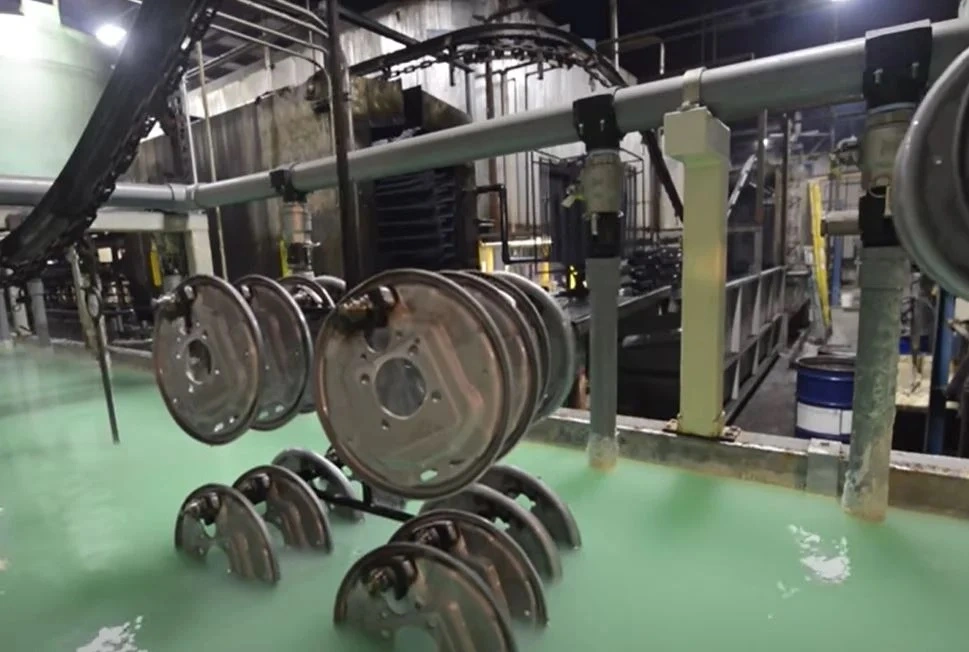
For industrial finishers, the choice of a powder coating system directly determines production throughput, finish quality, and operating margins. Unlike wet painting, powder application relies on electrostatic attraction and thermal fusion, which demands precise control over particle charging, airflow dynamics, and curing profiles. Over the past decade, advancements in booth design, recovery efficiency, and digital controls have transformed these systems into highly predictable, waste-free processes. This article examines the engineering principles, performance benchmarks, and problem-solving methodologies that define today's professional powder coating systems, offering actionable insights for operations seeking to reduce rework rates and material consumption.
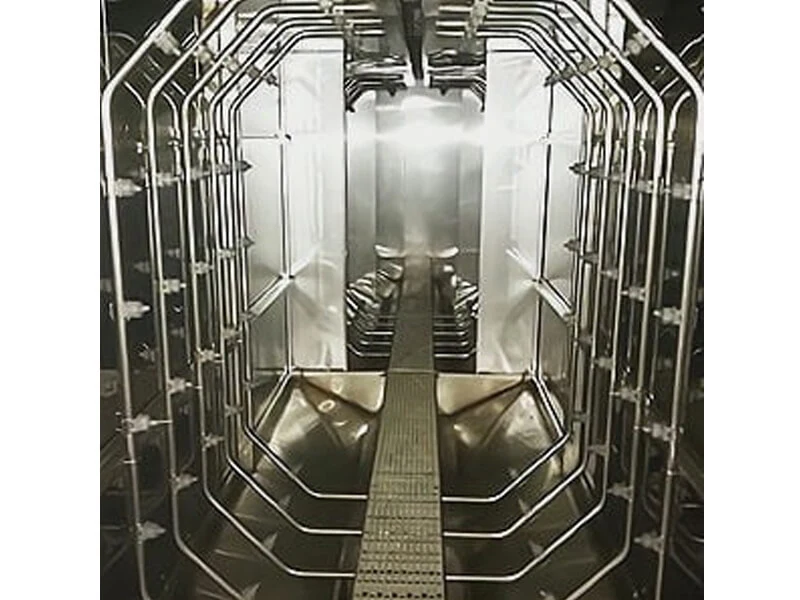
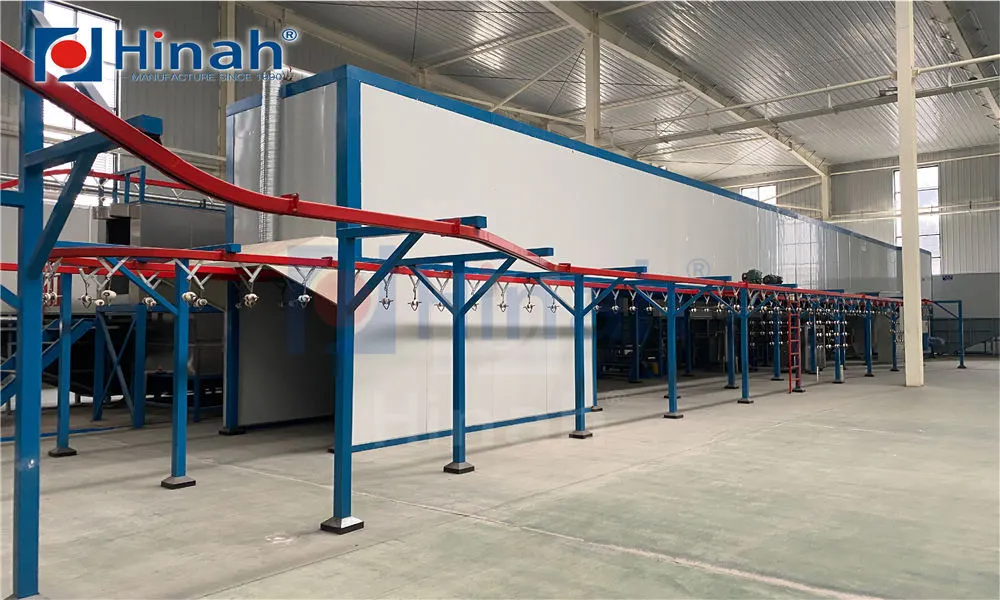
A robust powder coating system integrates four interdependent modules: the spray booth, electrostatic gun array, powder recovery unit, and curing oven. Each component influences transfer efficiency (TE) — the percentage of sprayed powder that adheres to the substrate. High-performance booths use stainless steel or polypropylene walls with laminar airflow patterns to minimize turbulence. The corona-charging guns operate at 60–100 kV, with adjustable current limiting to avoid back-ionization. Recent designs incorporate closed-loop feedback from part geometry sensors, automatically modulating voltage and powder output. For instance, when coating recessed areas prone to the Faraday cage effect, modern guns reduce voltage while increasing powder velocity, achieving uniform coverage at thicknesses between 60–80 µm. Recovery systems, whether cyclone or cartridge filter based, must maintain reclaim powder quality — excessive fines (particles <10 µm) degrade fluidization and cause orange peel defects. Professional powder coating systems now feature real-time particle size monitoring and automated sieve stations to maintain consistent reclaim ratios.
Surface finish and corrosion resistance depend on five controllable variables:
Electrostatic voltage & current: Higher voltage (80–100 kV) improves first-pass transfer but increases risk of dielectric breakdown on thin substrates. Optimal settings follow a part-specific lookup table derived from resistance measurements.
Powder flow rate (g/min): Regulated by dense-phase pumps, typical rates range from 150 to 450 g/min per gun. Deviation beyond ±5% leads to thickness variation exceeding 20 µm.
Atomizing air pressure: 0.5–2.5 bar; lower pressures produce softer sprays for intricate parts, while higher pressures increase pattern width for flat panels.
Curing temperature & dwell time: Polyester-epoxy hybrids require 10 minutes at 180°C (metal temperature). Infrared boosters can shorten ramp-up by 40% without compromising cross-linking density.
Relative humidity in booth: 40–55% RH is ideal; above 65% RH, moisture absorption leads to clumping and poor fluidization.
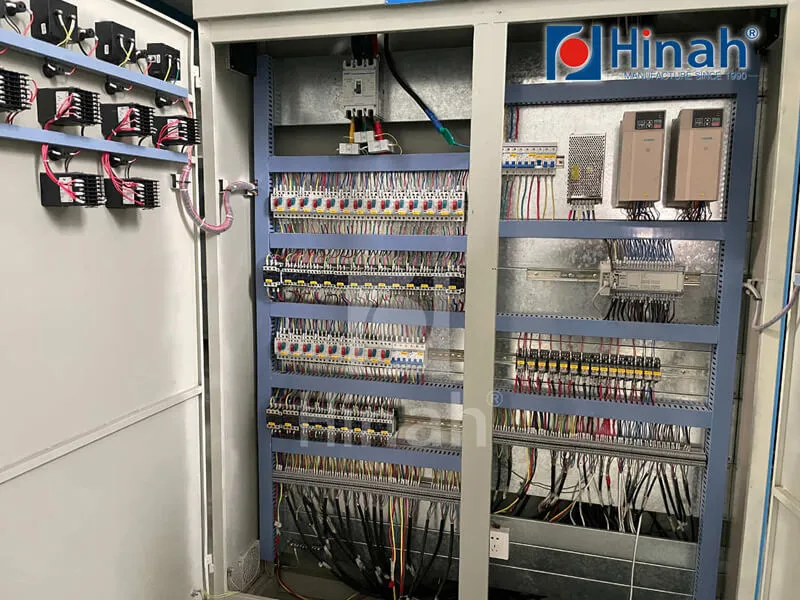
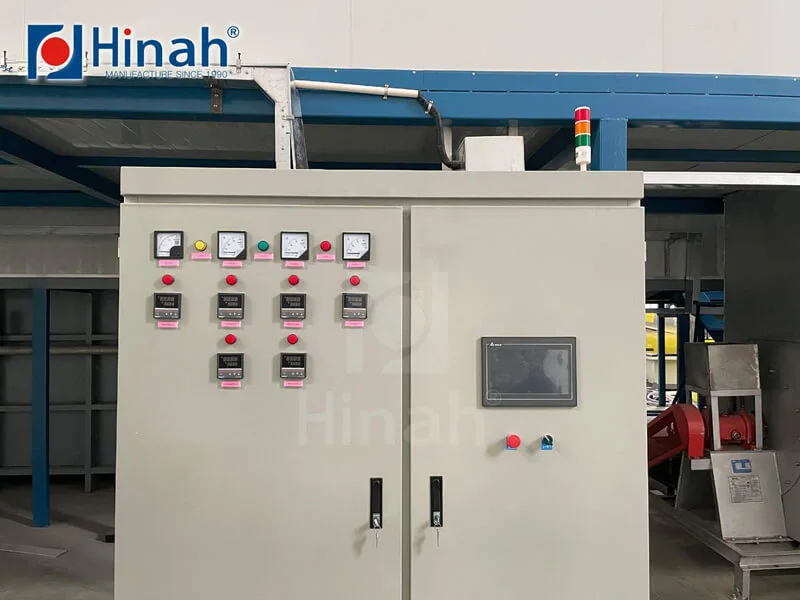
Data from a 2023 study on automotive wheel lines showed that closed-loop control of these five parameters reduced reject rates from 6.2% to 1.8% while cutting powder consumption by 23% annually. Leading integrators like HANNA embed these control loops directly into their equipment PLCs, enabling recipe-based changeovers across SKU families.
Different sectors impose unique demands on powder coating systems:
Requirements include chip resistance (gravelometer test <4 rating) and salt spray resistance exceeding 1,000 hours. Two-coat (primer + clear) systems are common, requiring automatic gun movers with ±1 mm positioning accuracy. Edge coverage is improved by using tribo guns for internal cavities, reducing Faraday cage failures by 70%.
Qualicoat standards mandate film thickness of 60–120 µm with no pinholes. Horizontal reciprocators with 8–12 guns per booth achieve line speeds of 4–6 m/min. Post-curing quenching baths control dimensional stability within 0.5 mm/m.
High color-change frequency (up to 15 times per shift) demands quick-clean booths with removable floors and cartridge filters that achieve 90% reclaim within 5 minutes. Automated purge cycles using compressed air at 6 bar reduce manual cleaning labor by 85%.
For each vertical, HANNA supplies customized powder coating systems that incorporate modular spray guns, rapid-color-change feed centers, and energy-saving IR/convection ovens — all validated via on-site FAT (Factory Acceptance Test) with customer parts.
Three operational headaches consistently impact line productivity:
Faraday cage effect: Powder particles follow electrostatic field lines, leaving recessed corners uncoated. Solutions include using multi-stage voltage ramping (starting at 40 kV then stepping to 70 kV) and mechanical agitation via secondary air jets. Real-world tests show that oscillating guns with 15° tilt angles improve inner-corner coverage by 55% compared to fixed guns.
Long color changeover time: Traditional booths require 30–45 minutes to clean guns, hoses, and booth walls. Modern dense-phase systems with "color on demand" reduce changeover to under 8 minutes by using removable powder hoses and vacuum-assisted booth cleaning. Some designs employ dual cyclone arrays that switch between two colors instantly.
Low reclaim efficiency: Standard cyclone separators recover only 85–92% of overspray, with 5–10% fines lost to exhaust. Upgrading to high-efficiency cartridge filters (HEPA 13) increases recovery to 98.5%, but requires pulse-jet cleaning at 6 bar every 15 minutes to prevent blinding. Annual savings from improved reclaim exceed $45,000 for a medium-volume line (500 kg powder per week).
Engineers at HANNA have developed a proprietary booth geometry that combines tangential air inlets with sloped walls, reducing powder accumulation by 40% and shortening color change intervals. This design has been independently validated by third-party testing labs to maintain TE above 88% even at high reclaim ratios (70% reclaim content).
Industry 4.0 connectivity transforms powder coating systems from static machines into adaptive production assets. Key features include:
Predictive maintenance: Vibration sensors on fan motors and differential pressure transmitters on filters trigger alerts when values deviate by 15% from baseline. This reduces unplanned downtime by 60%.
Recipe management: Cloud-based libraries store curing profiles, gun trajectories, and powder flow curves for 1,000+ part numbers. Changeover becomes a one-click operation.
Real-time thickness monitoring: Non-contact laser triangulation sensors measure film thickness immediately after the booth, providing feedback to adjust powder flow within ±2 g/min. One conveyorized line reduced over-coating from 15% to 3% after installing such closed-loop control.
Energy dashboards: Curing ovens account for 70% of total energy consumption. By analyzing part density and conveyor speed, the system dynamically lowers oven setpoints during low-mass product runs, achieving 12–18% energy savings.
Return on investment calculations for a medium-sized job shop (2,500 operating hours/year) show that implementing these digital controls pays back in 14 months, primarily through reduced powder waste (8,200 kg/year saved) and lower rework labor.
Unlike liquid coatings, powder formulations contain zero volatile organic compounds (VOCs), eliminating the need for abatement equipment such as oxidizers or carbon adsorbers. This simplifies permitting and reduces air compliance costs by approximately $0.12 per square meter coated. Furthermore, modern powder coating systems achieve material utilization rates exceeding 95% when reclaim is integrated, compared to 35–50% for conventional spray painting. The remaining 5% waste (e.g., overspray fines, booth sweepings) can be recycled into industrial filler compounds, achieving near-zero landfill. Lifecycle assessments conducted by the Powder Coating Institute indicate that switching from liquid to powder reduces cradle-to-gate carbon footprint by 38%, primarily due to elimination of solvent production and abatement energy.
Regulatory trends are accelerating this shift: the EU's Industrial Emissions Directive (IED) and the U.S. EPA's National Emission Standards for Hazardous Air Pollutants (NESHAP) both favor powder coating as a Best Available Control Technology (BACT). Facilities operating compliant powder coating systems benefit from reduced reporting burdens and faster permit renewals.
For operations planning to upgrade or install a new line, HANNA recommends a four-stage methodology:
Process audit: Measure current TE, film thickness distribution (using 30-point grid tests), and curing uniformity. Identify bottlenecks (e.g., Faraday cage zones, color change downtime).
Equipment selection: Specify gun density, booth length (based on part geometry and line speed), and oven type (gas IR for thick substrates, electric convection for heat-sensitive materials).
Installation & commissioning: Include 120-hour burn-in with standardized test panels; verify TE using gravimetric analysis (ISO 8130-10).
Operator training: Focus on daily maintenance (electrode cleaning, filter pulsing schedules) and troubleshooting (back-ionization detection via microscope).
Following this protocol, a recent agricultural equipment manufacturer achieved a 27% increase in line OEE (Overall Equipment Effectiveness) within six months of commissioning a powder coating system from HANNA, with payback at 19 months based on material savings alone.
Q1: What is the typical transfer efficiency of a professional powder
coating system, and how can I measure it on my
line?
A1: Modern electrostatic powder coating systems achieve transfer efficiencies
(TE) between 75% and 92% for manual guns, and 85–98% for automated
reciprocators. To measure TE, weigh the powder hopper before and after coating a
known number of parts (minimum 50 pieces). The formula is: (Powder deposited on
parts / Total powder consumed) × 100. For accurate results, use a digital scale
with 0.1 g resolution and correct for reclaim powder moisture content (dry at
60°C for 2 hours if humidity exceeds 50%).
Q2: How do I resolve persistent Faraday cage coverage issues on
complex extrusions?
A2: Faraday cage problems arise
when electrostatic field lines bridge across cavities. Three proven solutions:
(1) Reduce gun voltage to 40–50 kV and increase powder flow velocity by 15% —
this shifts particle trajectory from field-following to momentum-dominated. (2)
Install triboelectric guns (which charge powder via friction) that produce a
softer, more penetrating cloud. (3) Use mechanical assist: oscillating guns with
30° tilt or secondary air jets directed into recesses. Field data shows
combining all three reduces uncoated area from 12% to below 2% on profiles with
depth-to-width ratio of 3:1.
Q3: What is the maximum reclaim ratio I can use without degrading
finish quality?
A3: Industry guidelines recommend
limiting reclaim powder to ≤70% of the total mix for standard polyester-epoxy
formulations. Exceeding this ratio increases fines (<10 µm) concentration,
leading to orange peel and reduced fluidization. However, HANNA systems equipped with a cyclone classifier and vibrating screen (mesh 140) can
safely process reclaim up to 85% if the virgin powder has a particle size span
(D90/D10) below 2.5. Always perform a gloss and impact test (ASTM D2794) on each
reclaim batch — a drop of more than 15% in gloss units indicates excessive fines
accumulation.
Q4: How often should I replace cartridge filters in a high-volume
powder coating booth?
A4: Cartridge filter lifespan
depends on production volume and powder type. For a line coating 8 hours/day
with 70% reclaim, polyester cartridges typically last 1,200–1,500 operating
hours. Signs of end-of-life include: (a) differential pressure exceeding 2.5 kPa
at nominal airflow, (b) visible powder bleed from exhaust stack, (c) frequent
pulse-jet cycling (more than once per 90 seconds). Replace immediately if you
detect any pinhole breaches using a white cloth test — place a clean cloth over
the exhaust outlet; any powder stain indicates filter failure.
Q5: Can I retrofit existing conventional booths with advanced
electrostatic controls?
A5: Yes — most legacy
booths can be upgraded with modern digital power supplies and closed-loop
feedback sensors. Key retrofit components include: (1) IGBT-based voltage
generators with microsecond arc detection, (2) part proximity sensors that
modulate kV output, (3) powder flow control valves with mass flow meters.
Typical retrofit costs range from $35,000 to $70,000 per six-gun booth, yielding
18–25% reduction in powder consumption. HANNA offers
turnkey retrofit kits that integrate with Allen‑Bradley, Siemens, or Mitsubishi
PLCs, requiring only two days of installation downtime.