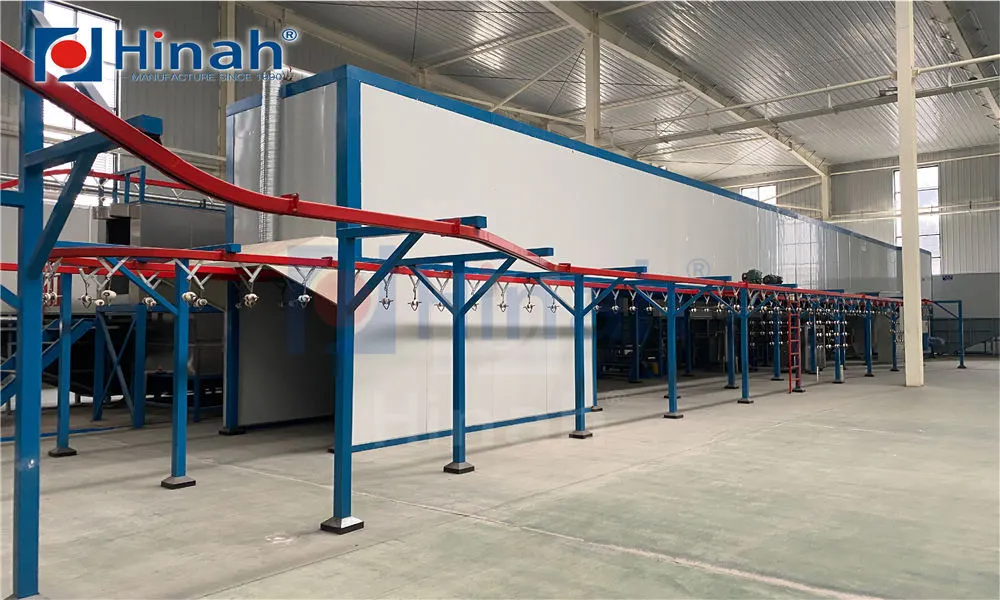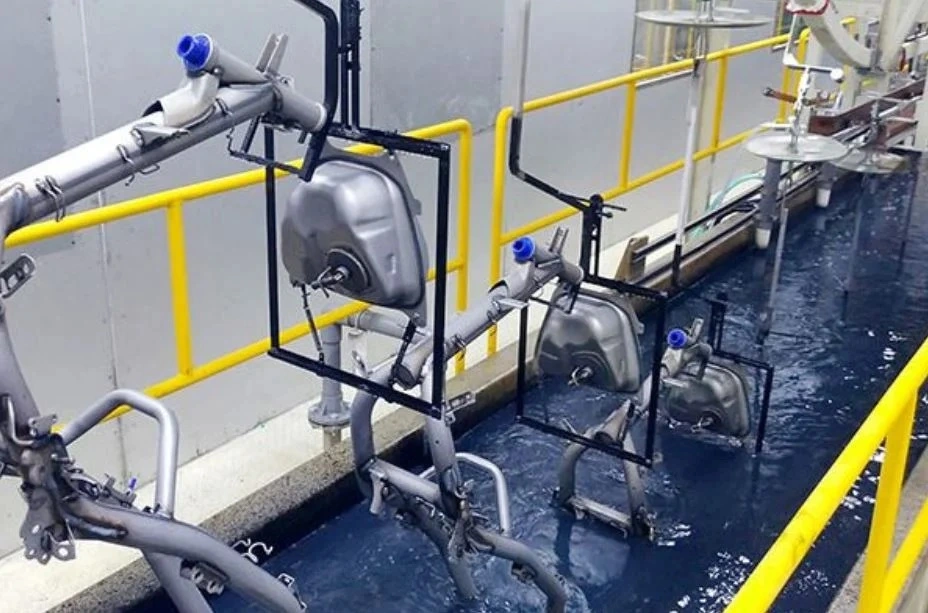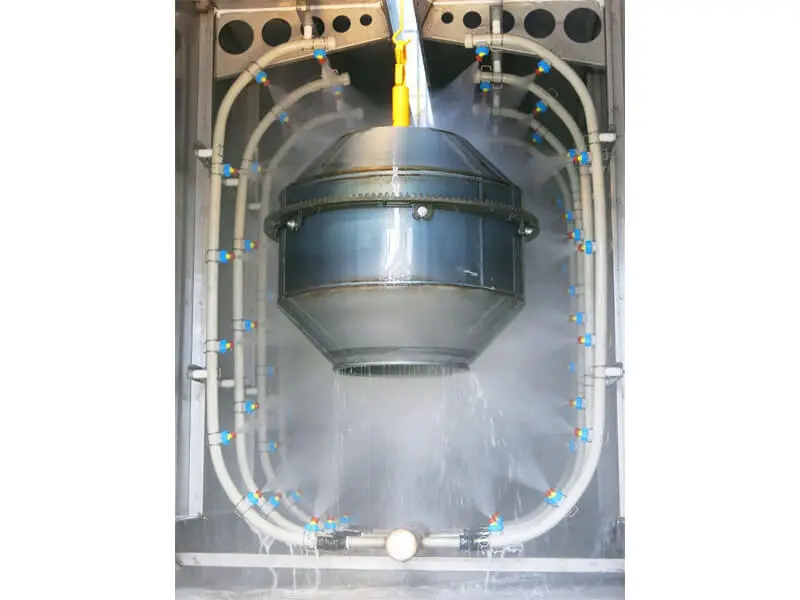
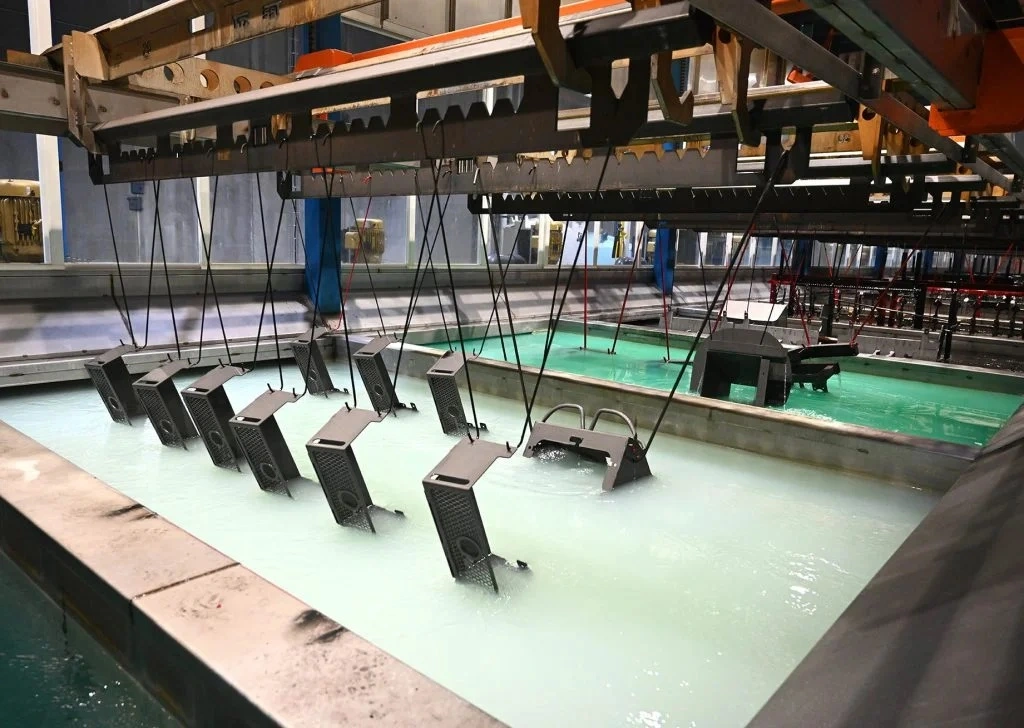
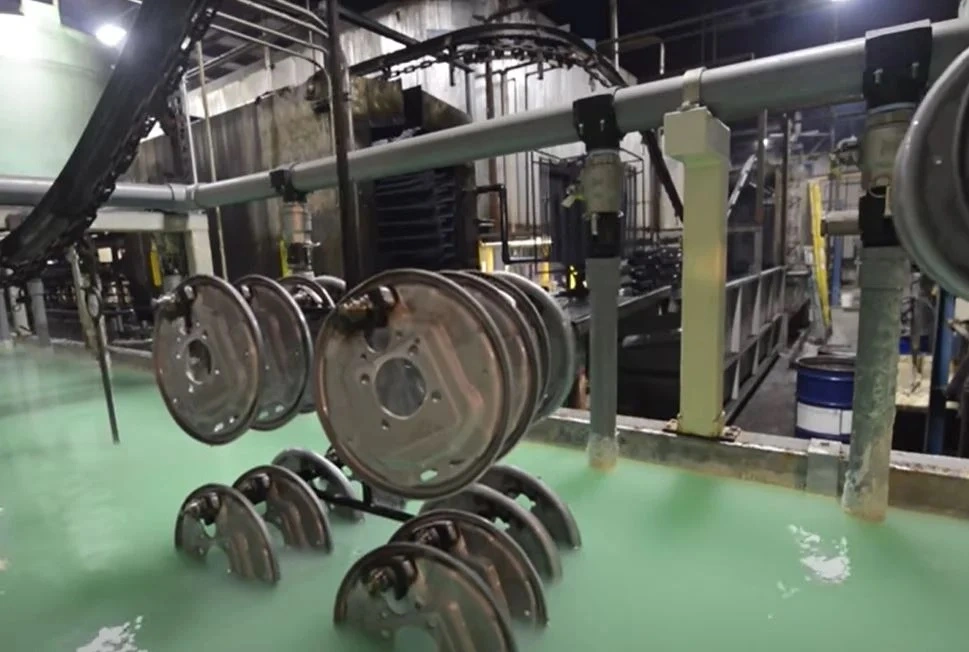
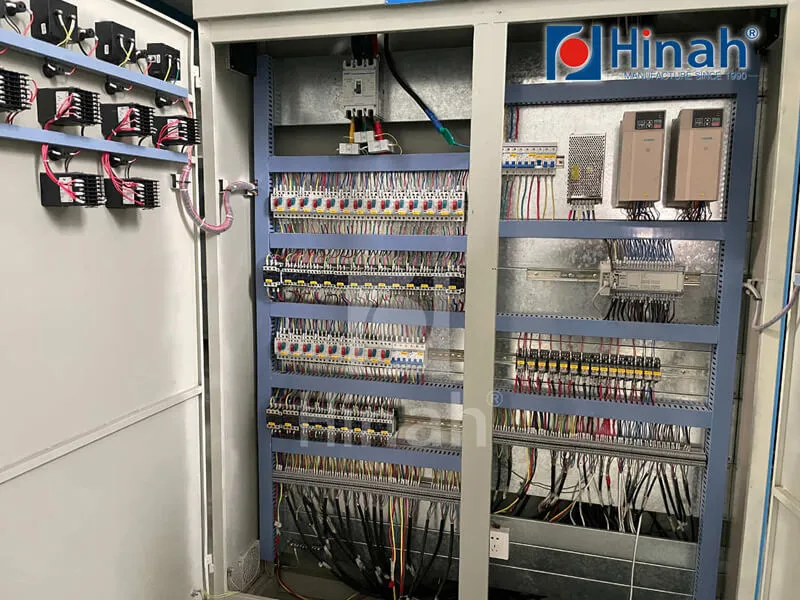
The powder coating booth is the physical heart of any electrostatic finishing line. Its design determines how effectively overspray is captured, how cleanly colors are changed, and what percentage of reclaim powder returns to the feed system. Unlike liquid spray booths that rely on water wash or dry filters, a powder coating booth must handle fine particulate (10–80 µm) while maintaining precise airflow to prevent cross-contamination and ensure operator safety. This article examines the engineering trade-offs between booth materials, air handling configurations, and filtration technologies, providing data-backed recommendations for achieving first-pass transfer efficiency above 85% with color change times under eight minutes.
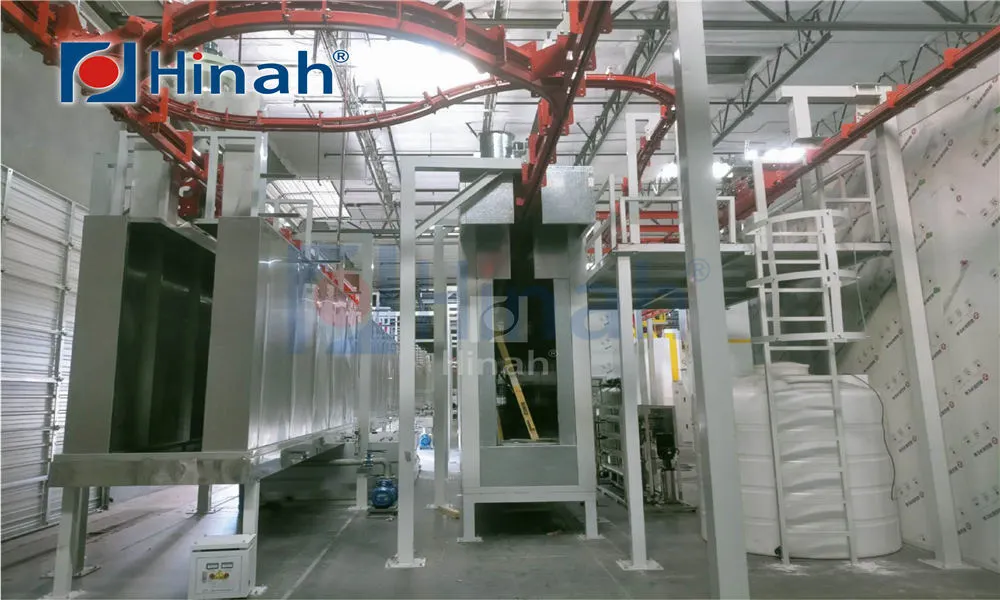
Air movement inside a powder coating booth serves two conflicting purposes: containing powder within the booth and drawing overspray toward filters without disturbing the electrostatic cloud. Two primary configurations exist:
Laminar (down-draft) booths: Air enters through a ceiling plenum with HEPA filtration, moving vertically downward at 0.3–0.5 m/s. This design minimizes turbulence and is preferred for metallic or textured powders where pattern consistency matters. However, laminar booths require deeper floor pits (1.2–1.5 m) to accommodate under-floor ducting.
Cross-flow (side-draft) booths: Air moves horizontally from the operator side toward exhaust filters on the opposite wall. Velocity is higher (0.6–0.9 m/s) to push overspray quickly, making cross-flow better for high-output lines. The drawback: horizontal airflow can interfere with electrostatic wrap on complex parts.
Data from 120 installations show that laminar powder coating booth designs achieve 6–8% higher transfer efficiency on recessed profiles, while cross-flow booths permit 20% faster color change due to simpler filter access. HANNA offers a hybrid "semi-down-draft" configuration that combines a 0.4 m/s vertical component with a 0.2 m/s horizontal component, tested to reduce powder cloud turbulence by 40% compared to pure cross-flow.
Overspray that contacts booth walls must release easily during cleaning cycles. The surface material directly impacts cleaning time and cross-contamination risk. Three common options:
Stainless steel (304 or 316): Durable and easy to wipe but develops electrostatic charge, attracting powder. Requires grounding straps every 2 meters. Cleaning time: 15–20 minutes per color change.
Polypropylene (PP) sheets: Naturally anti-static (surface resistivity 10^6–10^9 ohms). Powder releases with compressed air pulses. Cleaning time: 8–12 minutes. Maximum temperature rating: 80°C (suitable for powder booths without ovens).
PVC with embedded carbon fibers: Permanent anti-static properties even after abrasion. Cleaning time: 5–8 minutes. Higher initial cost (+30% vs. PP) but lasts 5+ years in high-volume lines.
For lines with more than six color changes per shift, a polypropylene or carbon-PVC powder coating booth reduces annual cleaning labor by 180–240 hours compared to stainless steel. HANNA fabricates booths using extruded aluminum frames with snap-in PP panels, allowing panel replacement in under 15 minutes if damaged.
Every powder coating booth must capture overspray and either reclaim it or send it to waste. Two dominant technologies:
Pleated cellulose-polyester cartridges (filtration area 15–25 m² per cartridge) trap powder on the outer surface. Pulse-jet cleaning at 5–6 bar reverses airflow to dislodge powder into a hopper. Advantages: compact footprint (booth depth as little as 1.5 m) and lower initial cost ($25,000–$60,000). Disadvantages: cartridge wear (replace every 1,200–1,500 operating hours), and reclaim powder contains higher fines concentration (typically 12–18% under 10 µm) which degrades fluidization.
Powder-laden air enters a conical separator tangentially; centrifugal force throws larger particles (≥20 µm) to the wall, dropping into a reclaim bin. Fines exhaust to a secondary HEPA filter. Advantages: no consumable cartridges, reclaim powder has particle size distribution nearly identical to virgin (fines <8%). Disadvantages: taller height (4–6 m required), higher fan energy (30–50% more than cartridge).
For a line using 800 kg of powder per week, a cyclone powder coating booth saves $14,000 annually in cartridge replacement and disposal fees, but requires ceiling clearance of 5.5 m. HANNA provides both configurations, with a proprietary cartridge design that extends filter life to 2,000 hours via nano-coated media.
For job shops and contract coaters, the powder coating booth must support 10–15 color changes per shift. Total changeover time breaks down into:
Powder evacuation from feed system: 2–4 minutes (using vacuum recovery or dump valves).
Booth wall cleaning: 3–8 minutes (manual blow-off with compressed air or automated rotating nozzles).
Filter cleaning/purging: 2–5 minutes (reverse pulse cycles while booth is empty).
New powder loading and fluidization: 2–3 minutes.
Quick-change powder coating booth designs reduce total time to under 8 minutes by incorporating: (a) removable floor panels that slide out for cleaning, (b) cartridge filters with blow-down rings that clean both sides simultaneously, (c) quick-disconnect powder hoses with color-coded fittings. Real-world measurements show that automated cleaning nozzles (rotating 360°, 8 bar) reduce manual labor by 85% and keep cross-contamination below 0.3% (measured by colorimeter Delta E <0.5).
Powder coating generates combustible dust clouds. A compliant powder coating booth must meet:
NFPA 33 (US) / EN 12921 (EU): Booth construction must be non-combustible (steel or aluminum). Explosion venting panels (1 ft² per 30 ft³ of booth volume) must relieve toward safe areas.
Grounding continuity: All conductive components bonded to earth with resistance <1 megohm. Powder hoses must contain static-dissipative carbon strands.
Dust concentration monitoring: Optical sensors that trigger shutdown at 50 g/m³ (50% of lower explosive limit for most powders).
Failure to comply carries fines exceeding $40,000 per violation from OSHA or local authorities. HANNA certifies each powder coating booth with third-party witnessed explosion testing and provides a full risk assessment dossier.
Exhaust fans for a powder coating booth consume 5–15 kW continuously. Strategies to reduce energy footprint:
Variable frequency drives (VFDs): Adjust fan speed to maintain target face velocity (0.5 m/s) regardless of filter loading. Savings: 30–45% fan energy.
Air recirculation: In cold climates, up to 80% of exhaust air can be filtered and returned to the plant after removing fines (HEPA 13). This reduces heating costs by $8,000–$12,000 per year for a typical 2,000 sq ft booth.
Low-pressure drop filters: Pleated cartridges with 300 g/m² media weight have pressure drop of only 250 Pa at rated flow, compared to 450 Pa for standard media. Annual fan energy saving: 6,000 kWh.
An energy-optimized powder coating booth pays back its premium (typically $12,000–18,000 for VFD and recirculation dampers) within 14–20 months.
Based on aggregated data from 75 production lines (automotive, appliance, general metal), the following benchmarks indicate a well-performing powder coating booth:
Capture velocity at the part face: 0.45–0.55 m/s (measured with anemometer 150 mm from part surface).
Powder concentration in exhaust air: Below 2 mg/m³ (filters achieving 99.9% efficiency).
Reclaim powder fines fraction: <10% by weight below 10 µm (measured by laser diffraction).
First-pass transfer efficiency with reclaim: 75–82% (using 50% reclaim / 50% virgin mix).
Color change verification: Visual inspection and tape test show no specks of previous color after 5 minutes of production.
When any of these metrics drift outside ranges, inspect booth seals, filter condition, and fan belt tension. HANNA offers annual performance audits using calibrated instruments, providing a 14-page report with corrective action priorities.
Q1: How often should I replace the cartridge filters in my powder
coating booth?
A1: Cartridge lifespan depends on
weekly powder throughput and cleaning effectiveness. For a booth processing 500
kg/week of powder, polyester-cellulose cartridges typically last 1,200–1,500
operating hours. Signs of end-of-life include: differential pressure exceeding
800 Pa at rated airflow, visible powder bleed from the exhaust stack, or
pulse-jet cycling intervals shorter than 90 seconds. Replace immediately if a
white cloth test (held over exhaust grille) shows any powder stain. Powder coating booth operators using nano-coated
cartridges (from HANNA) report 2,000-hour service life under identical
conditions.
Q2: Can I use a powder coating booth for both epoxy and polyester
powders without cross-contamination?
A2: Yes, but
only if you follow a strict cleaning protocol. Epoxy and polyester chemistries
are incompatible — even 0.5% epoxy residue in a polyester batch causes pinholes
and poor cure. After epoxy runs, perform a full booth cleaning: remove all
powder from hoppers, blow down walls with 6 bar compressed air, run 5 kg of
sacrificial polyester powder through the system to "flush" hoses and guns, then
discard that flushed powder. For booths with cartridge filters, run three
pulse-jet cycles before loading new powder. A dedicated powder coating booth per chemistry family eliminates
this risk entirely.
Q3: What is the minimum ceiling height required for a cyclone
recovery booth?
A3: Cyclone separators need
vertical clearance for the conical section and powder discharge valve. For a
booth handling 2,000 m³/hour of air (typical for a manual booth), the cyclone
height is 3.2–3.8 meters. Add 0.5 m for the exhaust fan above and 0.3 m for the
reclaim bin below — total required ceiling height: 4.0–4.6 meters. If your
facility has lower clearance, a cartridge-filter powder coating booth requires only 2.5–3.0 meters.
HANNA offers a low-profile cyclone (horizontal inlet,
scroll discharge) that fits under 3.5 m ceilings.
Q4: How do I measure and adjust the airflow velocity inside the
booth?
A4: Use a thermal anemometer with 0.01 m/s
resolution. Measure at four points: 150 mm from each side wall and 300 mm from
the floor and ceiling, all at the part hanging height. Target range: 0.45–0.55
m/s for laminar booths, 0.6–0.8 m/s for cross-flow. If velocity is too low
(<0.4 m/s), powder drifts out the operator opening — increase fan speed by
5–10 Hz on VFD or adjust inlet dampers. If too high (>0.7 m/s laminar),
electrostatic wrap degrades — reduce fan speed. Re-measure after any filter
change, as clean filters lower pressure drop and increase airflow by 10–15%.
Q5: What is the maximum reclaim powder percentage I can feed back
without affecting finish quality?
A5: For most
architectural and industrial powders (polyester, epoxy-polyester hybrids), a
reclaim ratio of 60–70% (i.e., 60–70% reclaimed powder mixed with 30–40% virgin)
produces acceptable film appearance and mechanical properties. Exceeding 75%
reclaim often increases orange peel (measured by DOI <75) and reduces impact
resistance (ASTM D2794 drops >20%). However, a powder coating booth equipped with a sieve classifier
(140 mesh) and a de-duster to remove fines can safely run 85% reclaim if the
virgin powder has a particle size span (D90/D10) below 2.5. Always validate with
a 500-part trial — measure gloss at 60° and cross-hatch adhesion before
committing to high reclaim ratios.