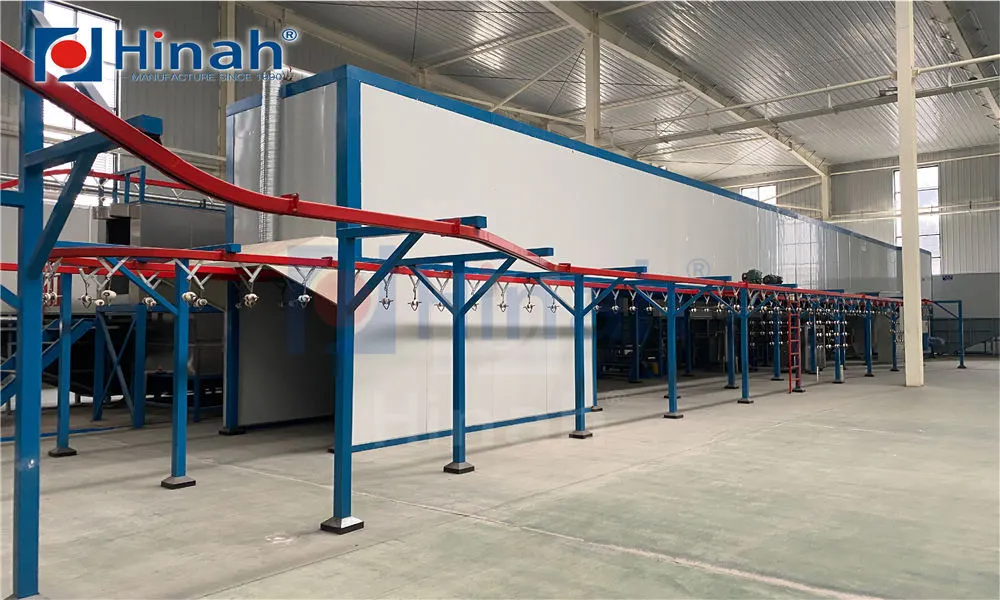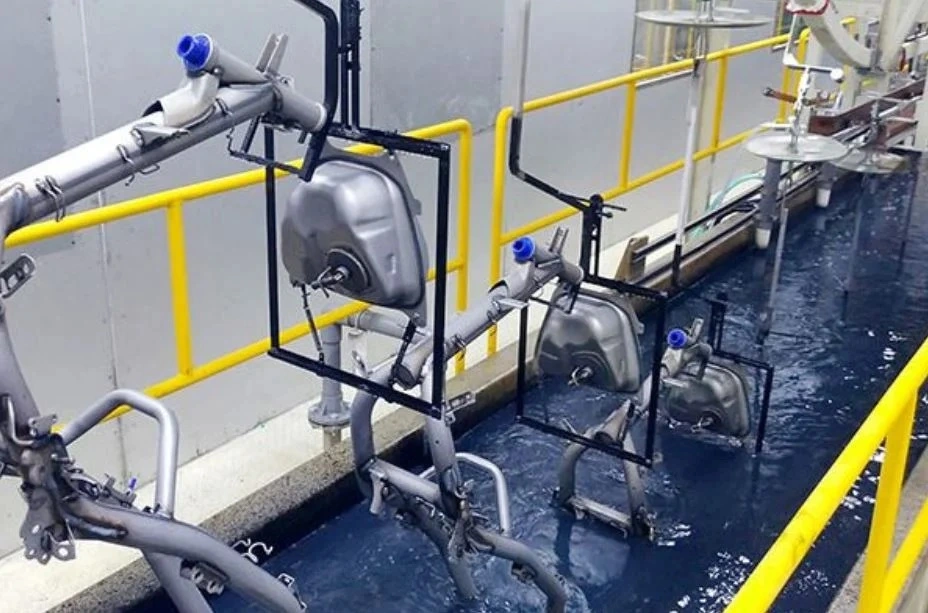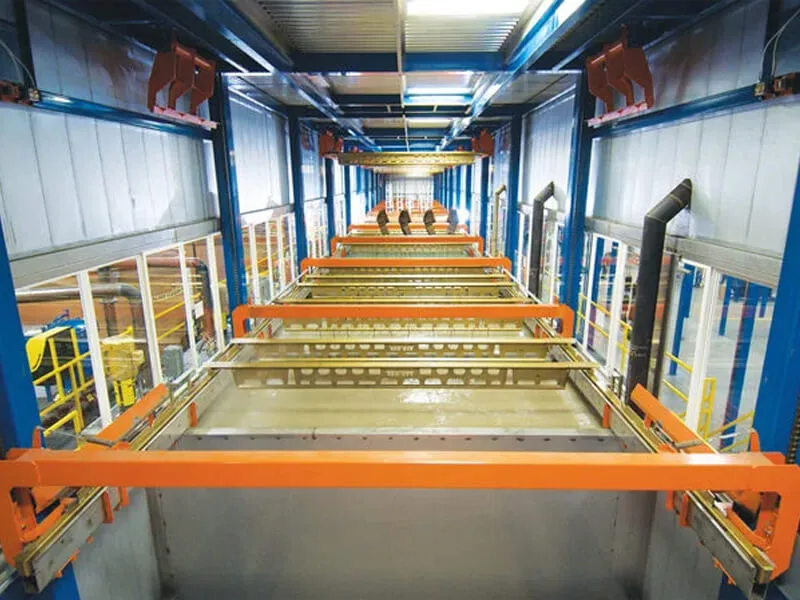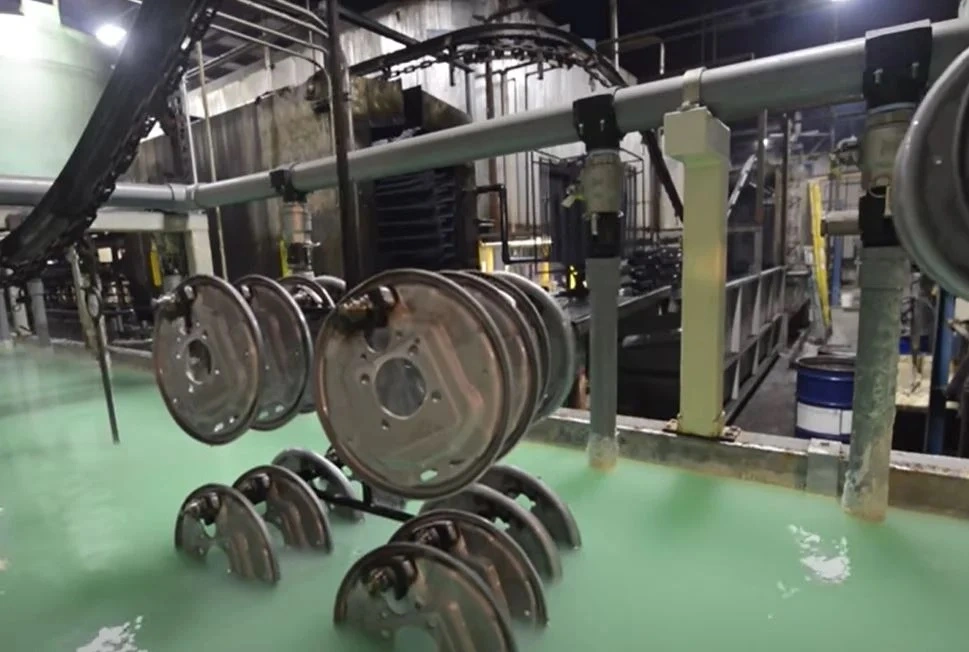

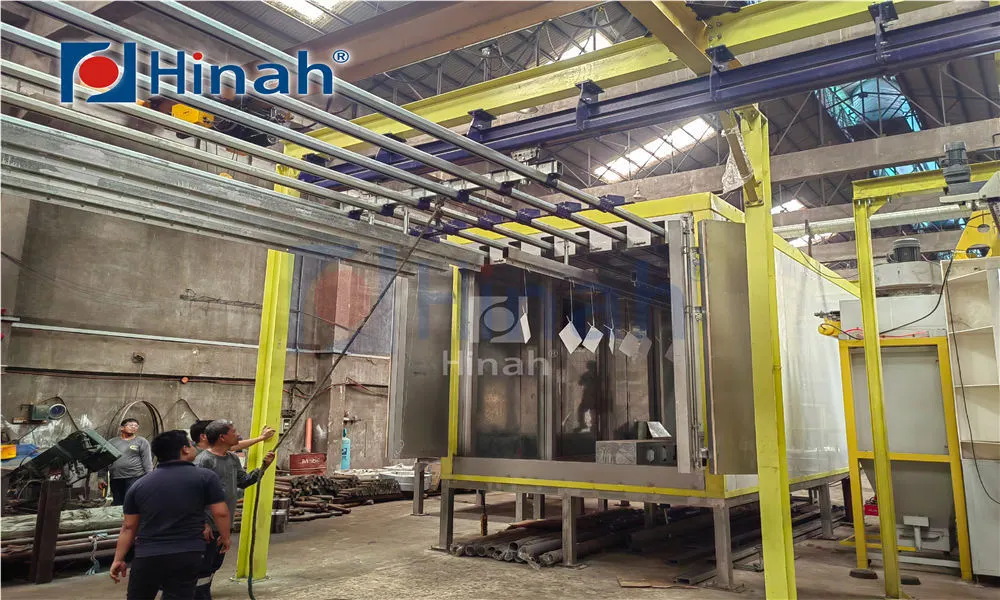
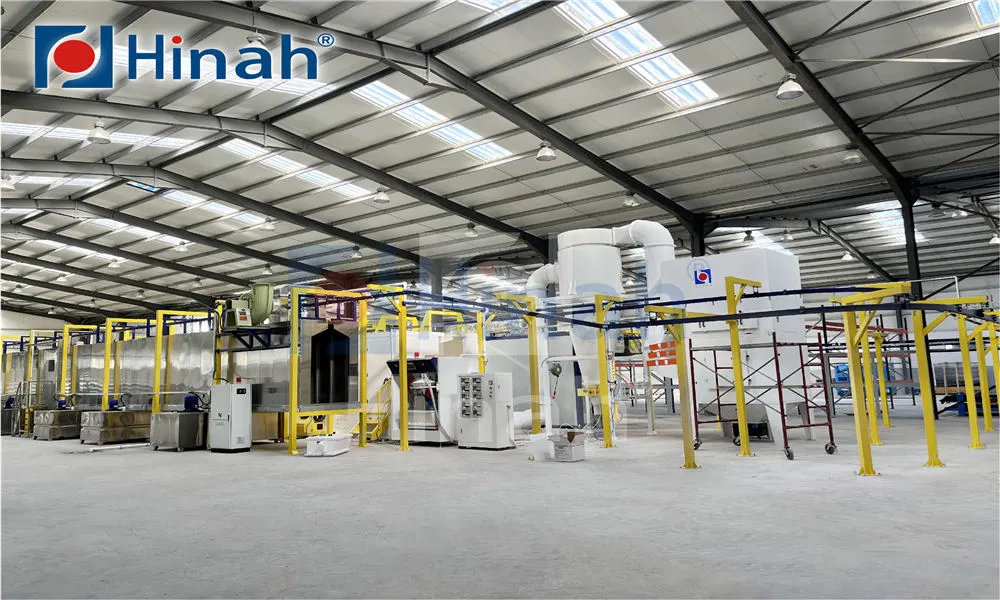
A complete powder coating system is more than the sum of its components. It requires synchronized operation of the pretreatment washer, dry-off oven, spray booth (manual or automatic), powder reclaim module, curing oven, and conveyor network. Any mismatch in line speed, temperature uniformity, or air handling creates bottlenecks – increased rejects, higher powder consumption, or extended color change downtime. This guide provides engineering criteria for selecting each subsystem, with field data from automotive, architectural, and general metal finishing lines. HANNA has designed and commissioned over 200 integrated lines, and the following insights help B2B buyers avoid costly missteps.
Before evaluating any powder coating system, understand the five mandatory process zones and their interdependencies:
Pretreatment (chemical or mechanical) – Ensures substrate cleanliness and phosphate/nanoceramic conversion. A poorly cleaned part will cause adhesion failure regardless of powder quality.
Dry-off oven – Removes moisture before powder application; must achieve 110–120°C part temperature. If residual moisture exceeds 2%, powder coating defects (pinholes, outgassing) increase by 40%.
Spray booth with powder application – Manual or automatic guns, plus overspray capture via cartridge filters or cyclones. The booth’s air velocity profile directly determines first-pass transfer efficiency (typically 55–75%).
Curing oven – Cross-link powder particles into a continuous film. Requires ±5°C uniformity and dwell time according to powder manufacturer’s schedule (usually 10–20 minutes at 180–200°C metal temperature).
Conveyor system – Transports parts through all zones at a consistent speed. Inconsistent indexing or speed drift will cause under-cured or over-cured parts.
When designing a powder coating system, the conveyor speed determines the length of each oven and the dwell time in the spray booth. For example, a line speed of 2 m/min requires a curing oven heated length of at least 30 m for a 15-minute cure. Many buyers underestimate this relationship, leading to ovens that are too short.
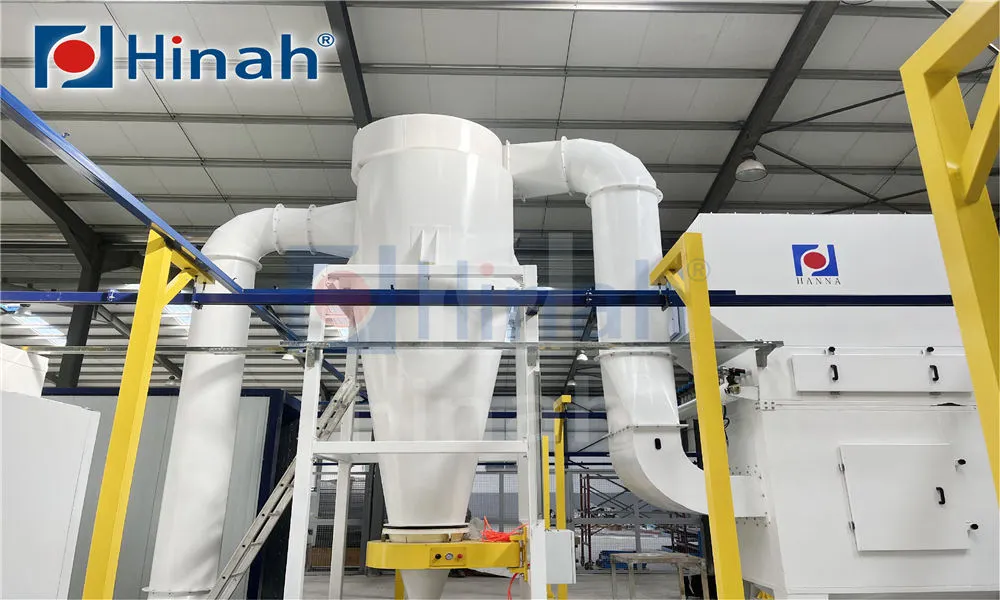
The booth is the heart of any powder coating system. Two dominant technologies exist:
Cartridge filter booth – Uses pleated nanofiber cartridges with pulse-jet cleaning. Best for frequent color changes (10–20 minutes) because the entire filter bank can be swapped or cleaned quickly. Collection efficiency >99.5% on particles >0.5 µm.
Cyclone + secondary filter booth – A cyclone separates coarse particles (≥10 µm) before final filtration. Better for high-volume, low-color-change operations (e.g., one color for weeks). Cyclones reduce cartridge load by 40–60% but require more headroom (typically 5–6 m).
Field data from 30 job shops show that a cartridge-based powder coating system achieves 18% lower labor cost per color change compared to cyclone systems, due to easier access and faster blow-down. However, cyclone systems have 12% lower annual filter replacement cost. The decision hinges on your weekly color change frequency: more than 3 changes per week favors cartridge; fewer favors cyclone.
HANNA offers a hybrid configuration with a movable cyclone that can be bypassed during color changes – this combines the recovery efficiency of a cyclone with the rapid color change of a cartridge booth.
The conveyor is often the most overlooked component of a powder coating system, yet it dictates line reliability and part orientation. Three common types:
Monorail (I-beam) chain conveyor – Most economical; parts hang from hooks. However, chain wear creates metal dust that can contaminate powder. Requires automatic lubrication and weekly hook cleaning.
Power & Free (P&F) conveyor – Allows accumulation and independent carrier movement. Ideal for mixed-product lines where parts need different dwell times. Higher initial cost (2–3x monorail) but reduces rejects by 15% due to precise indexing.
Flat belt / mesh belt – Used for small, flat parts (e.g., fasteners, brackets). Cannot handle hanging parts; limited to low-height ovens.
Critical specification: conveyor speed accuracy must be ±2% to ensure consistent film thickness and cure. Many low-cost powder coating plant installations suffer from speed drift due to AC inverter drift or worn sprockets. Specify a closed-loop encoder feedback system.
No powder coating system can perform without a properly profiled curing oven. Three design choices:
Single-zone oven – Entire oven at one temperature. Suitable for simple parts with low mass variation. Risk of over-curing thin sections while thick sections are under-cured.
Multi-zone oven (2–4 zones) – First zone brings part up to cure temperature quickly (high heat flux), subsequent zones maintain temperature. Reduces energy use by 12–18% and improves uniformity.
Infrared (IR) + convection hybrid – IR panels rapidly heat the outer surface, then convection air completes the cure. Best for thick parts (castings) or heat-sensitive substrates (MDF).
For a typical steel part (2 mm thickness), a 3-zone gas-fired oven provides the lowest TCO. The first zone operates at 230°C (high airflow), second at 200°C, third at 190°C. This profile reduces cure time by 15% compared to a single 200°C zone. When evaluating a powder coating system, request a thermal simulation of your heaviest and lightest parts to verify cure window compliance.
Modern powder coating system designs aim for >95% material utilization through reclaim. The reclaim circuit includes:
Cyclone or cartridge hopper – Collects overspray powder.
Sieving station – Removes agglomerates and contaminants using 150–200 µm mesh screens. Sieving is mandatory before feeding reclaim back to the spray gun; skipping it increases nozzle clogging by 70%.
Reclaim-to-fresh ratio controller – A volumetric feeder that blends reclaim (typically up to 30% of total) with fresh powder. Exceeding 30% reclaim can alter gloss and flow characteristics.
One automotive supplier reduced annual powder purchases by $124,000 after upgrading their powder coating plant with an automated reclaim management system. The key was real-time monitoring of reclaim particle size distribution (PSD) – fine particles (<10 µm) were removed because they reduce transfer efficiency. HANNA integrates laser diffraction PSD analyzers into the reclaim loop for consistent powder quality.
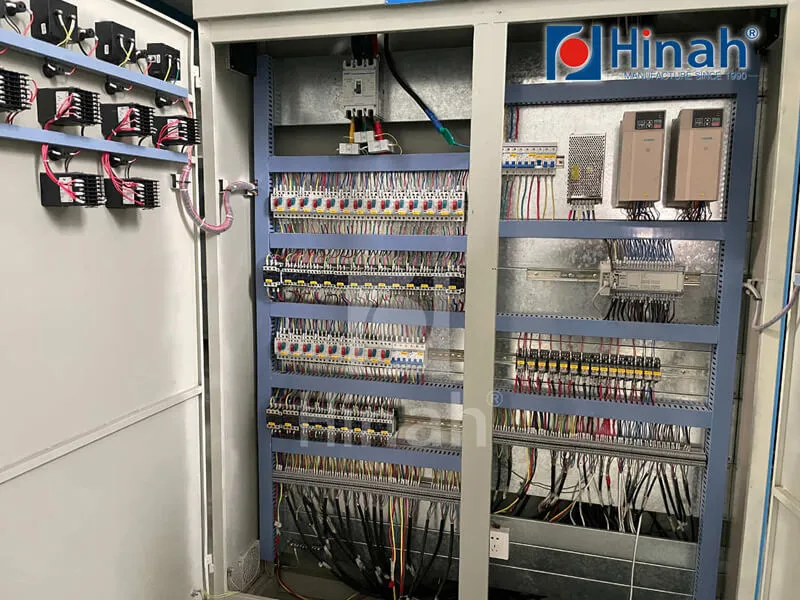
The control layer of a powder coating system determines data visibility and troubleshooting speed. Three levels:
Basic relay logic + individual PID controllers – Low cost, but no data logging. Operators cannot trace the root cause of rejects (e.g., oven temperature drop during a conveyor stop).
PLC-based with HMI (touchscreen) – Allows recipe storage, alarm history, and basic OEE tracking. Required for ISO 9001 compliance. Typical for mid-range lines.
SCADA / MES integration – Full data acquisition: per-part cure temperature, powder flow rate, booth differential pressure, and conveyor speed. Enables predictive maintenance and batch traceability. Recommended for high-volume automotive or aerospace work.
A SCADA-equipped powder coating system typically costs 15–25% more upfront but reduces scrap by 30–50% through early detection of drift conditions. The payback period is often less than 12 months for lines running two shifts.
Based on post-installation audits of 50+ lines, these are the most frequent mistakes when specifying a powder coating system:
Mismatched conveyor speed between dry-off and curing oven – If the dry-off oven is too short for the line speed, moisture enters the spray booth, causing powder clumping. Solution: design both ovens based on the same maximum line speed.
Insufficient booth airflow for large parts – When large flat parts move through a cross-draft booth, they can block airflow and cause powder fallout. Use downdraft or semi-downdraft booths for parts exceeding 1.5 m² surface area.
No temperature mapping after installation – Most suppliers provide a single-point thermocouple reading. Always demand a 9-point uniformity test (empty oven) and a 5-point loaded test with representative parts.
Undersized compressed air supply for pulse cleaning – Cartridge filter pulse cleaning requires high flow (6–8 bar at 20–30 L/s per filter). A small compressor causes incomplete cleaning, raising differential pressure and reducing capture efficiency.
HANNA provides a pre-installation checklist that covers these points, along with a 24-month performance warranty when our recommended air and gas utilities are installed.
When comparing quotes for a powder coating system, use this TCO model over 7 years:
TCO = Ccap + (Eannual × 7) + (Mannual × 7) + (Pannual × 7) + (Lannual × 7)
Ccap – Total installed capital (washer, ovens, booth, conveyor, controls).
Eannual – Energy (natural gas + electricity). A typical 10 m/min line consumes 800–1200 therms/month and 15,000 kWh/month.
Mannual – Maintenance: filter replacement, chain lubrication, burner service, bearing replacement. Typically 3–5% of Ccap per year.
Pannual – Powder consumption. A 10% improvement in transfer efficiency saves $15,000–$30,000 annually for a medium-volume line.
Lannual – Labor for color changes and reject handling.
Using this framework, a higher-quality powder coating plant with better insulation and automated color change may have a 20% higher Ccap but 35% lower Eannual and 50% lower Lannual, resulting in lower 7-year TCO. HANNA provides a customized TCO calculator as part of our proposal process.
Q1: What is the typical footprint for a complete powder coating
system processing 500 parts per shift?
A1: A mid-volume system with
batch washer, dry-off oven, manual booth, and batch curing oven requires
approximately 250–400 m². For a continuous conveyor system (same throughput),
expect 500–700 m² due to longer ovens and turn radii. Always include maintenance
access space (minimum 1 m around all equipment).
Q2: How do I calculate the required conveyor speed for my powder coating
system?
A2: Speed (m/min) = (parts per hour × part
length in direction of travel + gap between parts) / 60. Example: 300
parts/hour, each 0.8 m long, with 0.2 m gap = (300 × 1.0) / 60 = 5 m/min. Then
verify that the curing oven heated length = speed × required dwell time (e.g., 5
m/min × 15 min = 75 m oven length).
Q3: Can I add a powder coating system to an existing paint
line?
A3: Yes, but careful integration is required. Powder booths
need different airflow (lower velocity than wet paint booths) and explosion
venting. Curing ovens for powder typically operate at higher temperatures
(180–200°C vs. 80–100°C for liquid paint). Often, the existing conveyor and
pretreatment can be reused, but the ovens and booth must be replaced or heavily
modified.
Q4: What safety certifications must a complete powder coating system
have?
A4: In North America: NFPA 33 (spray booths), NFPA 86 (ovens),
and OSHA 1910.107. In Europe: EN 12981 (booths), EN 1539 (ovens), and ATEX 137
for dust explosion zones. Request a CE or UL mark on the control panel and a
signed declaration of conformity.
Q5: How long does it take to install and commission a custom powder
coating system?
A5: For a standard modular system (4–6 weeks
manufacturing), on-site installation takes 2–3 weeks, followed by 1–2 weeks of
commissioning and operator training. Total from order to production: 10–14
weeks. A fully custom line with special materials or automation can take 20–26
weeks. HANNA offers project
management with weekly progress reports.
Designing a reliable powder coating system requires balancing dozens of variables: part geometry, desired throughput, available floor space, energy costs, and future color change flexibility. HANNA provides end-to-end engineering – from concept layout and CFD airflow simulation to installation, commissioning, and operator training.
Send your inquiry today – please provide your part dimensions, weekly output (parts or kilograms), current coating method (if any), and preferred energy sources for ovens. Our B2B technical team responds within 24 hours with a preliminary line layout, equipment list, and TCO estimate.Contact HANNA: https://www.autocoatinglines.com/contact.html (or use the inquiry form on our website).
Free feasibility study: We analyze your existing finishing process and identify where a new powder coating system would deliver the fastest return on investment – no obligation.