
When a finishing shop searches for a powder coating oven for sale, the sheer number of configurations—batch walk-in, continuous conveyor, infrared-assisted, gas vs. electric—can be overwhelming. Beyond the sticker price, buyers must evaluate heating uniformity (typically ±5°C or better), insulation density, airflow patterns, and compliance with NFPA 86 or EN 1539 standards. This guide provides an engineering framework to compare ovens, avoid hidden operational costs, and match the equipment to your specific part mix and production volume. HANNA has supplied curing ovens to automotive, architectural, and general metal finishers worldwide, and the following insights are drawn from real installation data.
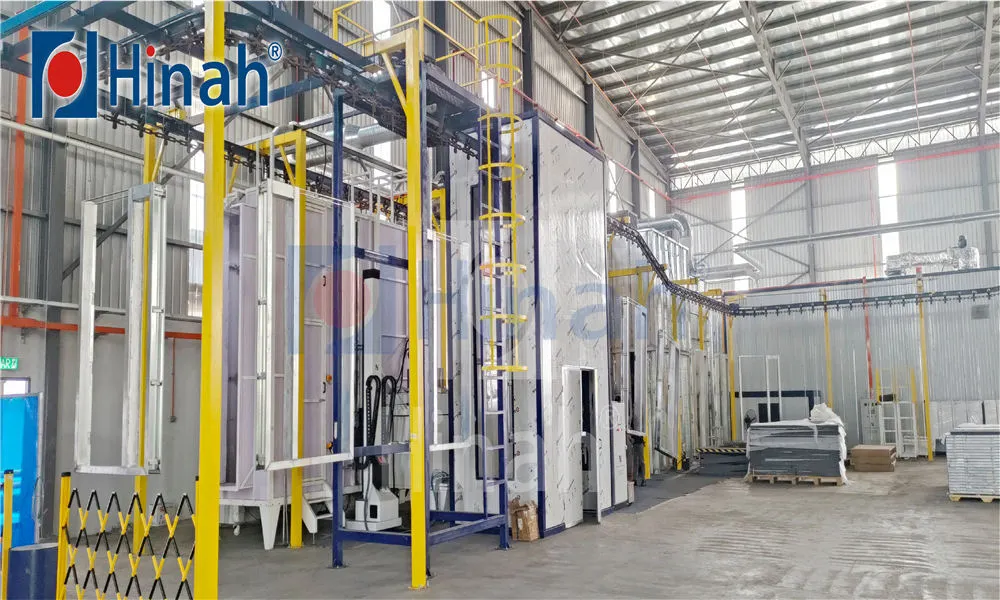
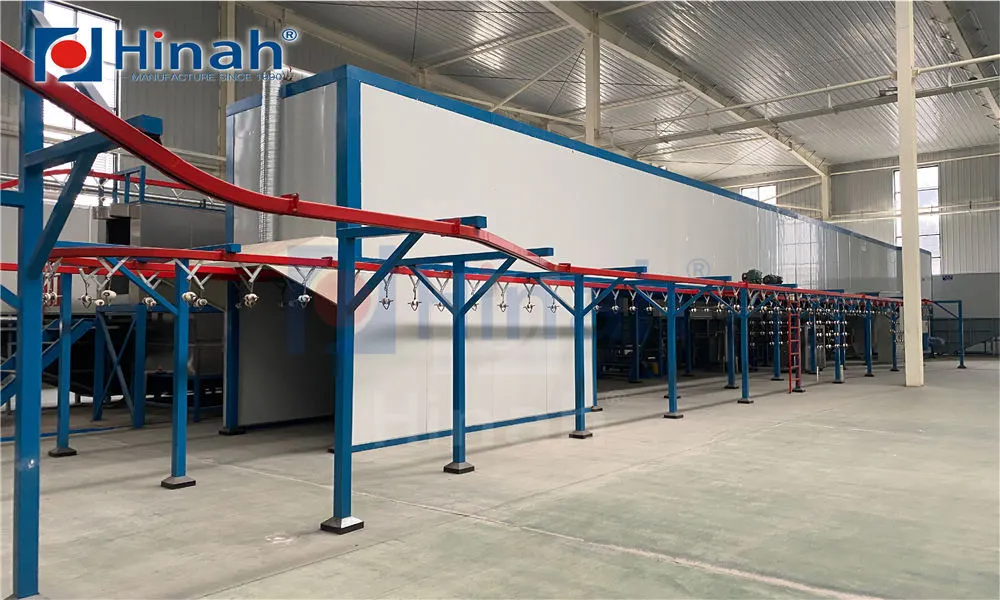
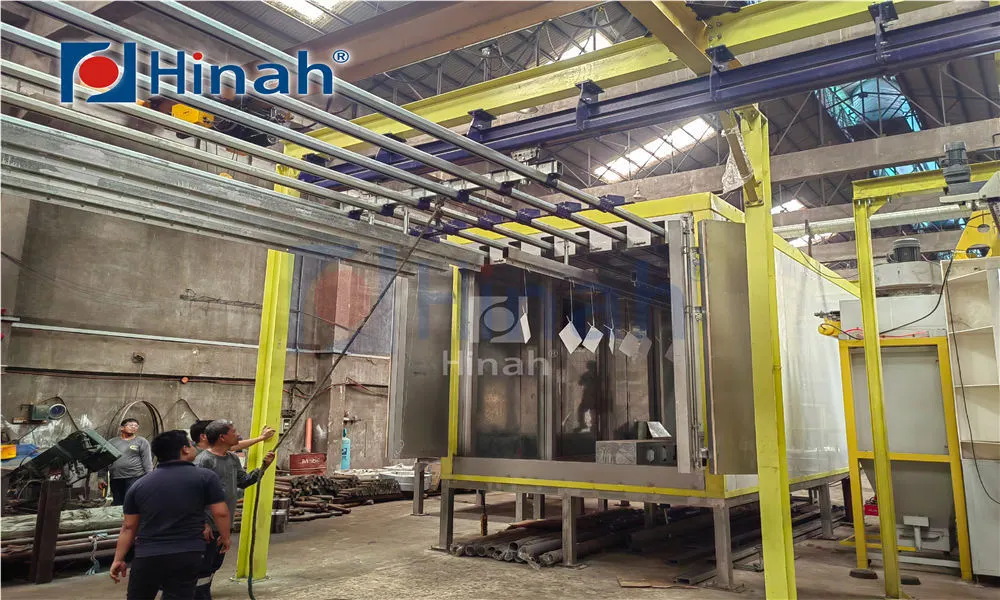
Most listings for a powder coating oven for sale fall into two categories: batch (intermittent) or continuous (conveyorized). Batch ovens require manual loading and unloading; they are cost-effective for low to medium volumes (100–500 parts per shift) and frequent color or part size changes. Continuous ovens integrate directly into an automated powder coating plant and deliver consistent curing for high-volume runs.
Key technical differentiators:
Heat recovery capability – Continuous ovens can incorporate flue gas recuperators because they operate steadily; batch ovens rarely justify heat recovery due to cycling.
Temperature recovery after door opening – Batch ovens need powerful burners (300,000–600,000 BTU/hr) to return to setpoint within 5–8 minutes. Poor recovery extends cycle times and raises energy use per batch.
Floor space efficiency – Continuous ovens require longer floor plans (12–30 m) but eliminate loading/unloading zones; batch ovens have a smaller footprint but need clear space in front of doors.
For a shop processing 800 parts per day across three colors, a batch oven would require 7–8 cycles daily, each with 45–60 minutes of curing. A continuous oven running at 2 m/min would cure the same volume in a single shift. When evaluating a powder coating oven for sale, always request a cycle simulation based on your part dimensions and powder chemistry.
Each energy type changes the operating cost profile and temperature uniformity. Below is a comparison based on field measurements from 20 industrial ovens:
Direct gas-fired (recirculating) – Most common for powder coating oven for sale in North America. Efficiency: 75–82% LHV. Best for thick parts requiring long dwell times. Operating cost: $0.30–$0.60 per kilogram of cured powder (gas at $0.80/therm).
Electric infrared (medium-wave) – Heats parts directly without heating the air. Ideal for thin sheet metal and complex geometries. Efficiency: 90–95% but electricity cost per kWh is higher. Operating cost: $0.45–$0.90 per kilogram depending on local rates.
Hybrid (gas + IR) – Gas provides background temperature (120°C), IR finishes the cure. Reduces energy use by 15–25% compared to pure gas. Available from some manufacturers as a custom powder coating oven for sale.
If natural gas is unavailable or expensive (> $1.20/therm), electric IR becomes competitive. However, electric ovens often require a 480V three-phase supply and higher amperage (200–600A), increasing installation costs. Always perform a 5-year TCO analysis before purchasing any powder coating oven for sale.
When evaluating a used or new powder coating oven for sale, request documentation for these parameters:
Temperature uniformity test report – A 9-point or 16-point grid test according to AMS 2750. Acceptable variation: ±5°C for standard powder, ±3°C for specialty low-cure or matte finishes.
Insulation type and thickness – Mineral wool (density ≥128 kg/m³) with 100 mm minimum; 150 mm for ovens operating above 200°C. Avoid ovens with fiberglass insulation (compresses over time).
Airflow velocity at part level – Between 1.5 and 3.0 m/s is optimal. Below 1.5 m/s risks temperature stratification; above 3.0 m/s can blow powder off parts before curing.
Ramp rate capability – From ambient to 200°C, a well-designed oven should reach setpoint within 20 minutes (empty). Slower ramps indicate undersized burners or poor circulation.
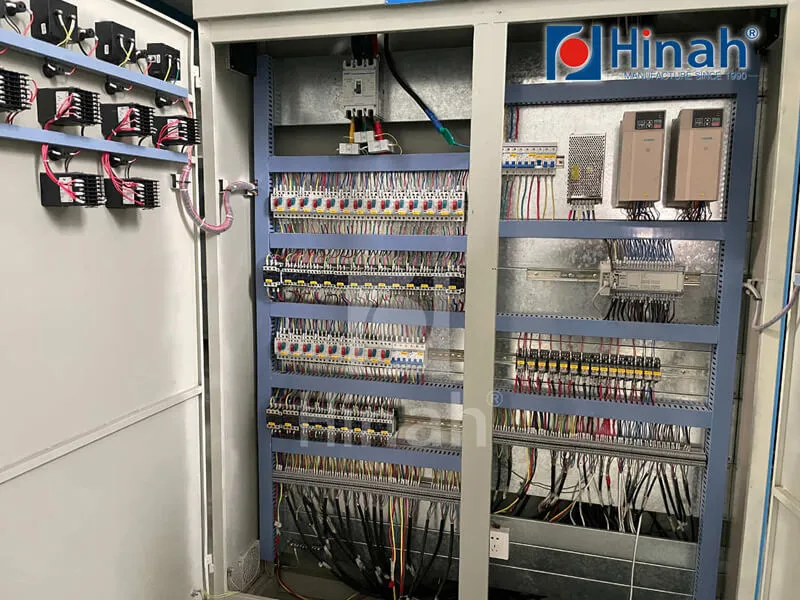
Controller features – PID with auto-tuning, data logging (SD card or Ethernet), and recipe storage for at least 10 different parts.
HANNA provides a pre-delivery checklist for every powder coating oven for sale that we supply, including thermal imaging of panel joints and fan vibration analysis.
Many finishers look for a used powder coating oven for sale to reduce capital expenditure. While savings can be 40–60% off new prices, used ovens carry specific risks:
Insulation sagging – Older mineral wool panels may have settled, creating cold spots and increasing heat loss by 30% or more.
Burner flame safeguard components – UV scanners and flame rods have a 5–7 year lifespan. Replacing them adds $1,200–$2,500.
Circulation fan bearings – High-temperature bearings (rated for 200°C+) wear out; replacement cost $800–$1,500 per fan.
Door seal degradation – Silicone or fiberglass rope seals harden after years of thermal cycling; replacement requires disassembly.
If buying used, request a recent temperature uniformity survey and a combustion analysis report. Factor in a refurbishment budget of 15–25% of the purchase price. For mission-critical production lines, a new powder coating oven for sale from a reputable manufacturer often provides lower TCO over 7 years due to higher efficiency and lower maintenance.
Incorrect sizing is a frequent mistake when selecting a powder coating oven for sale. An undersized oven forces operators to crowd parts, blocking airflow and causing under-cured rejects. An oversized oven wastes floor space and energy. Follow this three-step method:
Step 1 – Determine maximum part envelope (length, width, height). Add 300 mm clearance on all sides for air circulation.
Step 2 – Calculate required dwell time based on powder technical data sheet (typical: 10–20 minutes at 180–200°C metal temperature). For thick parts (>6 mm steel), add 2 minutes per additional millimeter of thickness.
Step 3 – Match oven length (conveyor) or chamber size (batch) to desired throughput. For batch ovens: chamber volume (m³) × 4 = approximate parts per hour (for medium-density racks). For continuous ovens: conveyor speed (m/min) × heated length (m) = dwell time in minutes.
A common error is specifying an oven based on external dimensions rather than usable interior dimensions. Always verify the clearance between the interior walls and the part rack. HANNA offers free layout optimization using your CAD models to prevent sizing mistakes.
Any powder coating oven for sale intended for industrial use must meet local safety codes. In North America, NFPA 86 (Standard for Ovens and Furnaces) is mandatory. European buyers require EN 1539 (Dryers and ovens in which flammable substances are released). Key compliance elements include:
Purge timers – A pre-ignition purge of at least 4 air changes to clear any combustible vapors.
High-limit safety thermostat – Independent, non-resettable, set at 30°C above maximum operating temperature.
Pressure switches for combustion air – Ensure adequate airflow before gas valves open.
Manual reset gas valve train – With two safety shutoff valves and a proof-of-closure switch.
Exhaust interlock – The exhaust fan must run before the burner can fire.
Ask the seller for a signed Certificate of Compliance with the relevant standard. Do not accept an oven that lacks these safety features, even if the powder coating oven for sale price is attractive – retrofitting safety components later can cost $8,000–$15,000.
The advertised price of a powder coating oven for sale rarely includes site preparation and commissioning. Budget for these additional items:
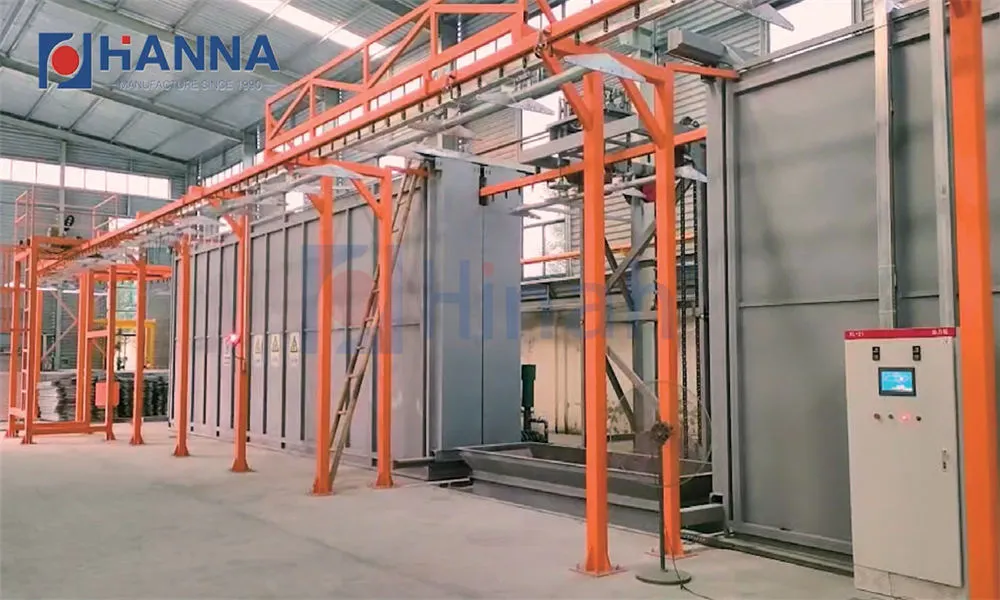
Concrete foundation – A continuous oven weighing 5–10 tons requires a level, reinforced slab with expansion joints. Cost: $2,500–$6,000.
Gas line extension – From the meter to the oven location, including sediment trap and manual shutoff valve. Typical $1,200–$3,000.
Electrical upgrades – New circuit breakers, contactors, and wiring for fans, burner controls, and conveyor. $1,500–$4,500.
Rigging and positioning – Using a crane or forklift to place the oven sections. $800–$2,500 depending on access.
Commissioning & training – Burner tuning, thermocouple calibration, and operator training (2 days). $1,500–$3,000.
When comparing multiple quotes for a powder coating oven for sale, request a turnkey price that includes these items. A lower base price may end up costing more after installation.
A job shop in Ohio replaced their inefficient batch oven with a new high-efficiency powder coating oven for sale from HANNA. The old oven consumed 85 therms per batch (2,500 parts/week). The new oven, with 150 mm insulation, VFD on the circulation fan, and a recuperator, used 47 therms per batch. At $0.85/therm, weekly savings = (38 therms × $0.85) = $32.30 per batch × 10 batches/week = $323/week, or $16,800/year. The new oven cost $42,000 installed, giving a payback of 2.5 years. After 5 years, total savings exceeded $84,000. This example demonstrates that focusing only on the purchase price of a powder coating oven for sale is short-sighted; operating efficiency dominates long-term costs.
Q1: What is the typical price range for a new gas-fired batch powder
coating oven for sale (2m x 2m x 2m interior)?
A1: A standard batch
oven with 100 mm insulation, 300,000 BTU burner, and basic PID controller ranges
from $18,000 to $28,000. Adding data logging, a powered roof lift, or stainless
steel interior increases the price to $32,000–$42,000. Always request a detailed
quote including delivery and commissioning.
Q2: How do I verify the temperature uniformity of a used powder
coating oven for sale before purchase?
A2: Ask the seller for a
recent (within 12 months) 9-point temperature uniformity survey performed at
your target curing temperature (e.g., 190°C). If not available, negotiate a
contingency that allows you to perform a survey after installation; if
uniformity exceeds ±6°C, the seller must accept a return or provide a price
reduction.
Q3: Can I convert an electric oven to gas, or vice
versa?
A3: Conversion is rarely economical. Electric ovens lack
burner mounting flanges, flue ports, and gas train compartments. A conversion
would require replacing the entire heating system, often costing 70–90% of a new
oven. It is better to select the correct energy source from the start when
looking for a powder
coating oven for sale.
Q4: What maintenance contract should I budget for after buying an
oven?
A4: Annual maintenance should include: combustion analysis
($400–$800), fan bearing greasing and vibration check ($300–$500), thermocouple
replacement (every 2–3 years, $150 each), and door seal inspection ($200–$400).
Budget $1,200–$2,000 per year for a batch oven, and $2,500–$4,000 for a
continuous conveyor oven.
Q5: How long does delivery take for a custom powder coating oven for
sale?
A5: Standard batch ovens (stock sizes) ship in 4–6 weeks.
Custom-built ovens (specific width, multiple zones, or special materials)
require 10–14 weeks. Used ovens are available immediately but carry the risks
mentioned earlier. HANNA offers expedited
manufacturing for critical projects (adds 15% to cost).
Selecting the right powder coating oven for sale requires balancing capital budget, energy costs, part geometry, and production targets. HANNA provides:
Custom oven sizing based on your part CAD and powder cure schedule.
5-year TCO comparison between batch, continuous, and IR hybrid designs.
On-site thermal mapping for existing ovens (to justify replacement).
Turnkey installation including gas, electrical, and ventilation integration.
Send your inquiry today – include your average part dimensions, weekly output (parts or kilograms), and preferred energy source. Our B2B engineering team responds within 24 hours with a preliminary oven layout, energy consumption estimate, and firm delivery schedule.
Contact HANNA: https://www.autocoatinglines.com/contact.html (or use the inquiry form on our website).
Free consultation: Let us review your current curing process and identify where a new powder coating oven for sale would deliver the fastest payback.