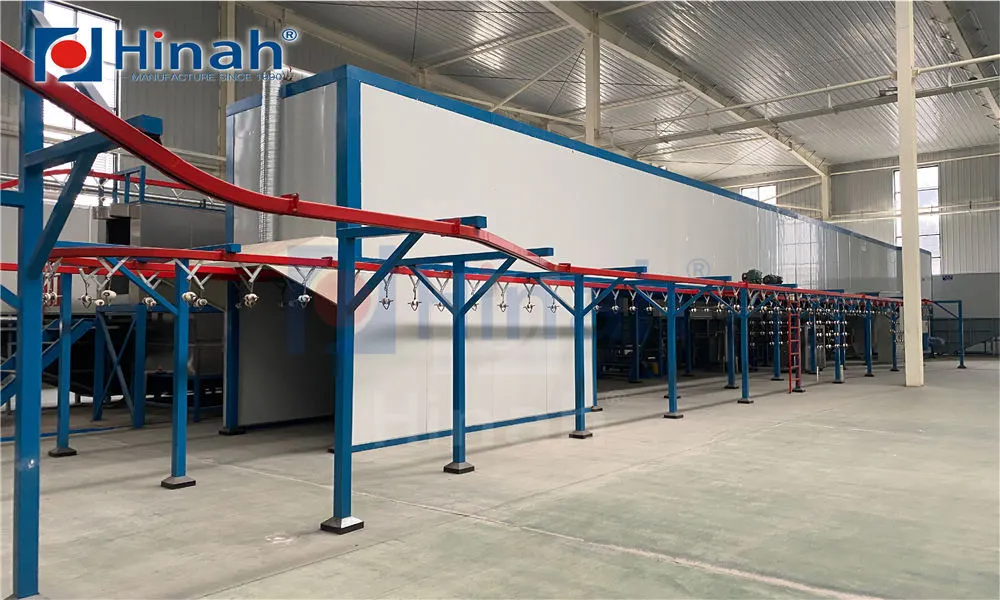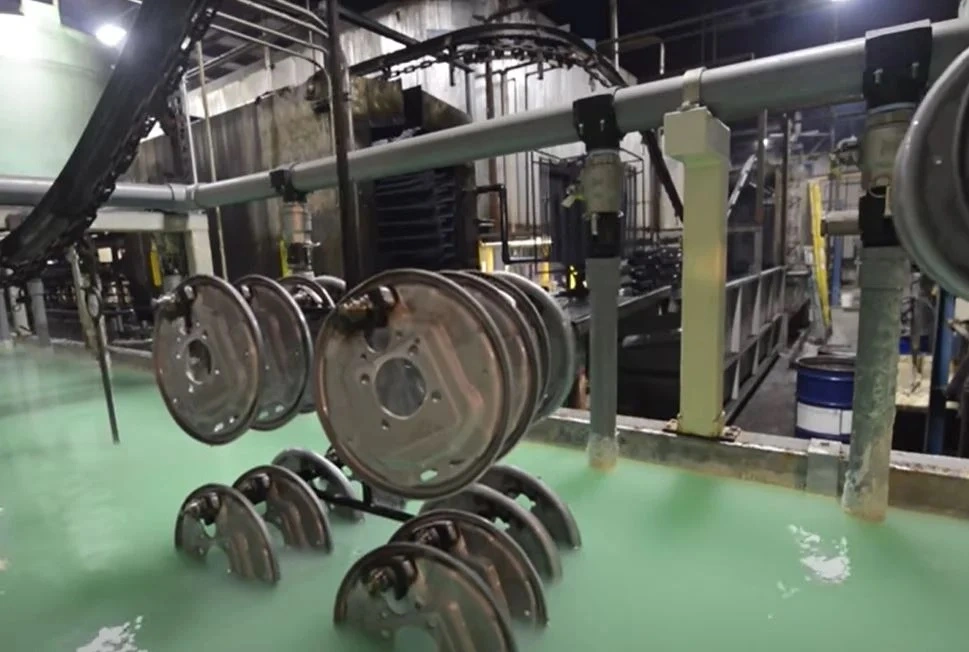
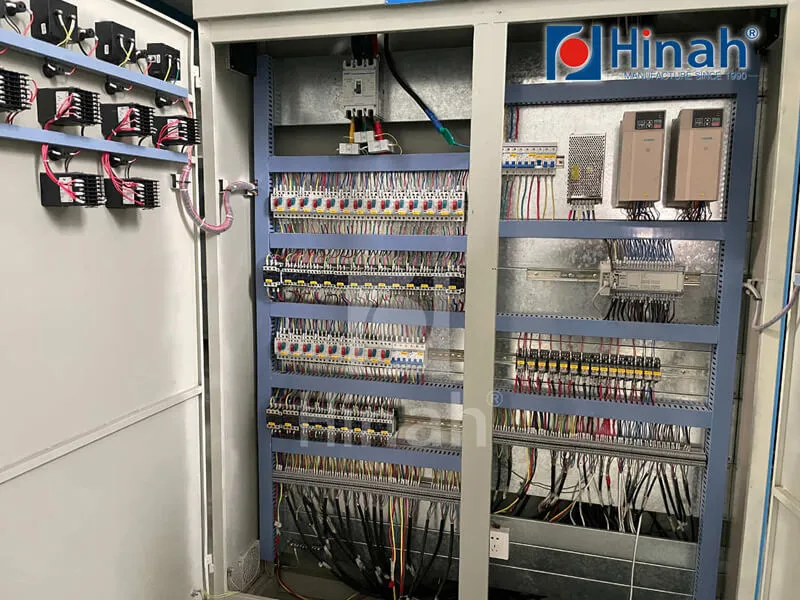

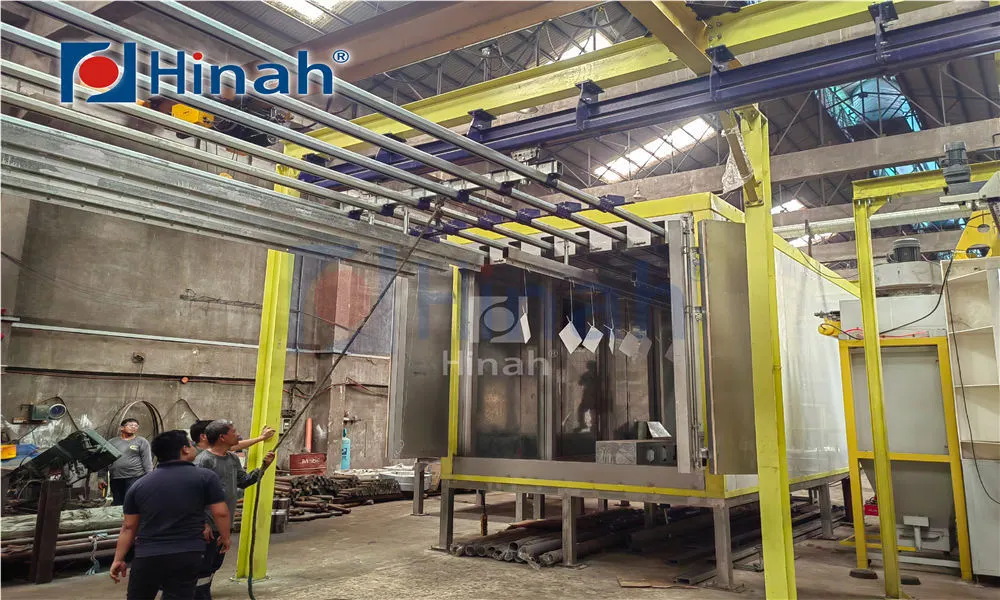
A Curing oven is the final but most consequential stage in any powder coating line. Even a perfectly applied powder layer will fail if the cross-linking reaction is incomplete or uneven. This article provides measurable benchmarks for evaluating oven performance, common failure modes, and retrofit solutions backed by field data from over 150 installations.
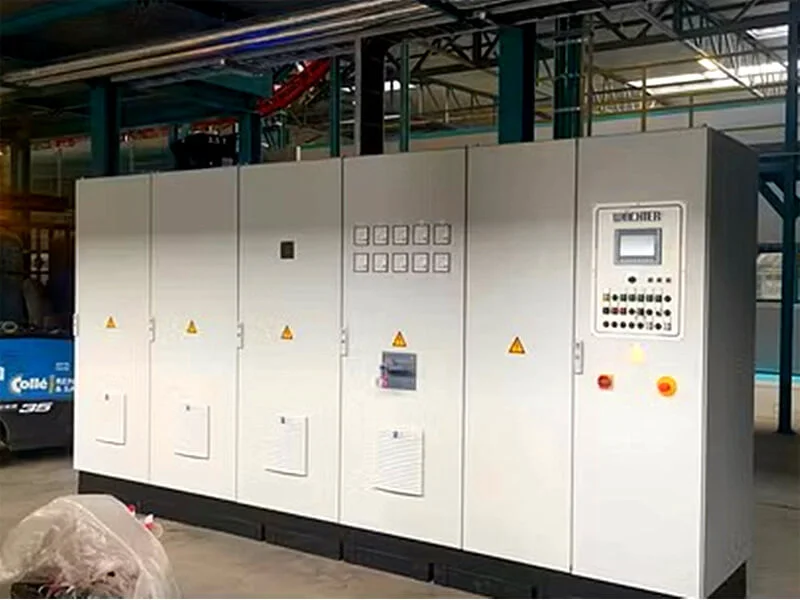
Lack of uniformity is the number one cause of rejects in powder curing. A Curing oven must maintain ±3°C across the entire work zone for standard powders, and ±1.5°C for thin-film architectural or automotive clear coats.
How to verify? Request a 9-point thermal profile (ASTM D3451 or AMS 2750E). The test should use data loggers attached to actual parts, not empty racks.
Under-cured zones: Poor impact resistance (<20 in-lb), failed solvent rub (MEK >100 double rubs).
Over-cured zones: Yellowness (ΔE >1.5), gloss loss >15% from specification.
Solution: Multi-zone PID controllers with independently tunable heating elements.
Leading integrators like HANNA guarantee ±2°C uniformity on all new systems, validated by third-party thermography.
The speed at which a Curing oven raises part temperature from ambient to cure setpoint directly influences surface smoothness. A ramp rate exceeding 15°C per minute often causes “orange peel” – the powder skins over before trapped air escapes.
Ideal ramp rate: 8–12°C per minute for hybrid and polyester powders. For epoxy systems, slightly faster (up to 15°C/min) is acceptable.
Solution: Install an infrared (IR) pre-heat zone that gently raises powder temperature to the gel point (around 130°C) before the convection section completes the cure.
Selecting the wrong architecture leads to capacity bottlenecks or excessive energy waste. Below is a side‑by‑side comparison based on real production data.
Best for: Job shops, large/irregular parts, low to medium volumes (10–500 parts/day).
Typical footprint: 20–50 m².
Energy consumption: 0.9–1.2 kWh per kg of coated parts (heat loss during door openings).
Changeover time: 15–30 minutes between different powder chemistries.
Best for: High-volume automotive, appliance, or extrusion lines (2000+ parts/day).
Energy consumption: 0.45–0.65 kWh/kg – 40% lower than batch due to vestibule air seals.
Temperature recovery: <2 minutes after a heavy part enters, thanks to oversized recirculation fans.
Integration: Must be matched to conveyor speed. A common mistake is buying a powder coating plant where the oven length is insufficient for the required dwell time.
To eliminate thermal stratification, a Curing oven must exchange the chamber air 10–20 times per minute. This is achieved with high-static pressure centrifugal fans.
Air velocity at part surface should be 2.5–3.5 m/s. Below 2 m/s, heat transfer becomes uneven. Above 4 m/s, uncured powder can be blown off edges.
Critical design detail: Adjustable air deflectors (louver vanes) allow tuning the flow pattern for different part geometries. Fixed nozzle systems often leave shadow zones.
Both options are available for any Curing oven on the market. However, total cost of ownership differs significantly.
Electric: 100% thermal efficiency at point of use. No flue losses. Zero combustion emissions. Ideal for facilities with strict air permits. Lower maintenance (no burner nozzles or gas valves). Typical element life: 25,000+ hours.
Gas: Lower fuel cost per BTU but loses 15–25% through exhaust stacks (even with recuperators). Requires annual stack emissions testing. Higher maintenance due to burner scaling and fan bearing wear.
Case study: A midwest automotive supplier replaced a 15-year-old gas oven with an electric Curing oven from HANNA. Energy costs dropped by 22%, and maintenance downtime fell from 36 hours/year to 8 hours/year.
Based on field audits of 85 powder coating lines, three problems account for 70% of curing-related rejects.
Root cause: Moisture or volatiles trapped inside substrate porosity expand during rapid heating. Solution: Add a pre-dry zone before the Curing oven (10 minutes at 110°C). Also reduce ramp rate to 8°C/min for the first 5 minutes.
Root cause: Air velocity differences between center and edges of the oven cross-section. Solution: Install a recirculation fan with variable frequency drive (VFD) and balance dampers. Measure velocities with a hot-wire anemometer at 9 points.
Root cause: Fixed-speed fans and on/off heating elements run at full power even with low part density. Solution: Specify SCR power controllers and VFDs. A modern powder coating plant with load-sensing controls reduces energy by 35% at 50% conveyor fill.
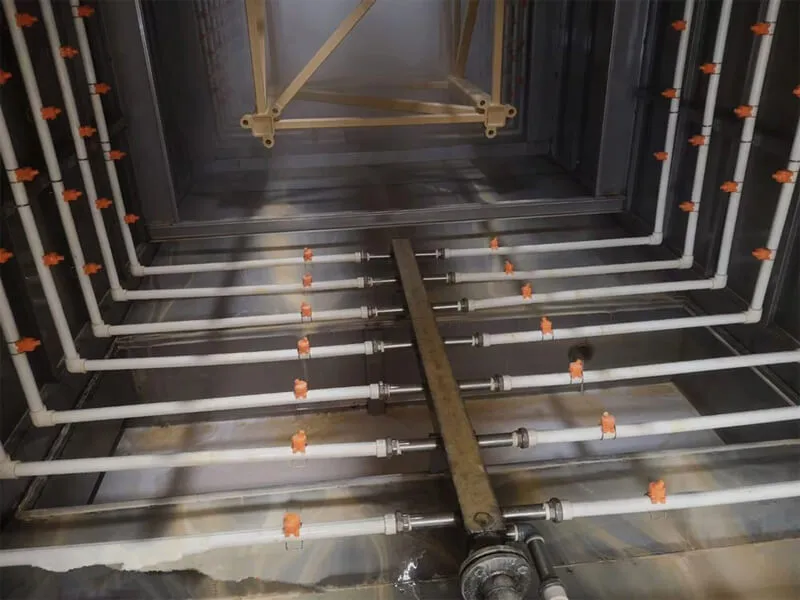
Any industrial Curing oven must comply with NFPA 86 (Standard for Ovens and Furnaces). Key requirements:
Over-temperature limit controller independent of the main thermostat, wired to cut power if setpoint exceeds 15°C above maximum.
Interlocked access doors that disconnect heating elements when opened.
For gas ovens: flame supervision with UV scanners and purge timers (minimum 4 air changes before ignition).
Periodic thermographic inspection of electrical connections – loose terminals cause 30% of oven failures.
HANNA provides NFPA 86 compliance certificates with every oven, including field verification during commissioning.
When an existing Curing oven shows temperature drifts beyond ±5°C, you have two options: retrofit or replace.
Retrofit (new controls + fans + insulation): Cost $30,000–$60,000. Typical energy savings 15–25%. Payback 12–18 months. Extends oven life by 5–8 years.
New oven: Cost $80,000–$250,000 depending on size and automation. Energy savings 30–45% compared to a 20-year-old unit. Payback 24–36 months. Includes modern data logging and remote diagnostics.
Always perform a thermal uniformity test before deciding. If the oven shell insulation is degraded (hot spots >60°C on exterior), replacement is usually more cost-effective.
A1: Request the technical data sheet from your powder supplier. It will specify “metal temperature” and “time at temperature” (e.g., 180°C for 10 minutes). Then run a trial with a data-logging thermocouple attached to the thickest section of your part. Adjust conveyor speed until the thermocouple records the required time above the minimum cure temperature. Never rely on air temperature alone.
A2: Not recommended. Liquid paint ovens typically have lower air velocity (1–1.5 m/s) and may lack the rapid heat recovery needed for powder. Powder also requires higher uniformity (±3°C vs. ±5°C for wet paint). Retrofitting a paint oven with new fans and controls costs 60–70% of a dedicated Curing oven but rarely achieves the same performance.
A3: Under normal operation (8,000 hours/year at 180–200°C), tubular sheathed elements last 5–7 years. Signs of end-of-life: uneven amperage draw between phases (>10% imbalance), visible red spots on the sheath, or longer ramp-up times. Always keep spare elements on site; lead times from manufacturers can be 2–4 weeks.
A4: Annually as a minimum. For high-reliability industries (automotive, aerospace), perform the survey every 6 months or after any major repair (fan replacement, insulation repair). Also do a survey whenever you start coating a completely new part family with different thermal mass. Many powder coating plant operators schedule surveys during holiday shutdowns.
A5: This indicates a “thermal mass effect.” Empty oven air circulates freely, but densely packed parts block airflow, creating cold shadows. Solution: Increase recirculation fan speed (if VFD-controlled) or add side-mounted air nozzles to direct flow between hanging parts. Also verify that conveyor hangers are not spaced too tightly – allow at least 150 mm clearance between parts.
A6: For general industrial powder coating, ±3°C is acceptable. For architectural finishes requiring AAMA 2604 compliance, the variation must be ≤±1.5°C. If your oven exceeds these values, check for worn fan belts, dirty air filters, or misaligned air deflectors. A quick fix: clean the recirculation fan blades – powder residue buildup can reduce airflow by 30%.
A7: Yes, IR modules can be retrofitted at the oven entrance. This reduces total cure time by 25–40% and improves flow on complex geometries. Requirements: additional electrical capacity (typically 40–80 kW for a 2m zone) and a separate temperature controller. Several HANNA clients have added IR modules to legacy ovens, achieving payback in under 18 months from productivity gains.
Selecting or upgrading a Curing oven requires technical rigor. Use the eight parameters above to create a data-driven request for quotation. Verify uniformity reports, energy calculations, and safety certifications before committing. A well-specified oven operates consistently for 15+ years with minimal intervention.